
Affiliate disclosure: This post may contain affiliate links. Please see full disclosure.
Borage, asparagus, and bush beans are three of the most reliable companion plants for strawberries, and getting the pairings wrong, especially anything from the tomato family, can introduce a soil disease that takes out the whole bed.
I’m an organic permaculture specialist, and companion planting is the technique I lean on hardest in my own strawberry patch. It earns its keep too, cutting pest damage, feeding the soil, and putting bigger berries on the plant, without ever reaching for a spray bottle.
Growing your own strawberries doesn’t take much effort on its own. Getting the biggest, healthiest harvest out of them does, and that’s where the right neighbors in the bed make the difference.
A good strawberry companion earns its space in the bed. It should keep pests off the berries, feed the soil, or both, and a lot of my favorites double as something useful in the kitchen too.
What Makes a Good Companion Plant for Strawberries
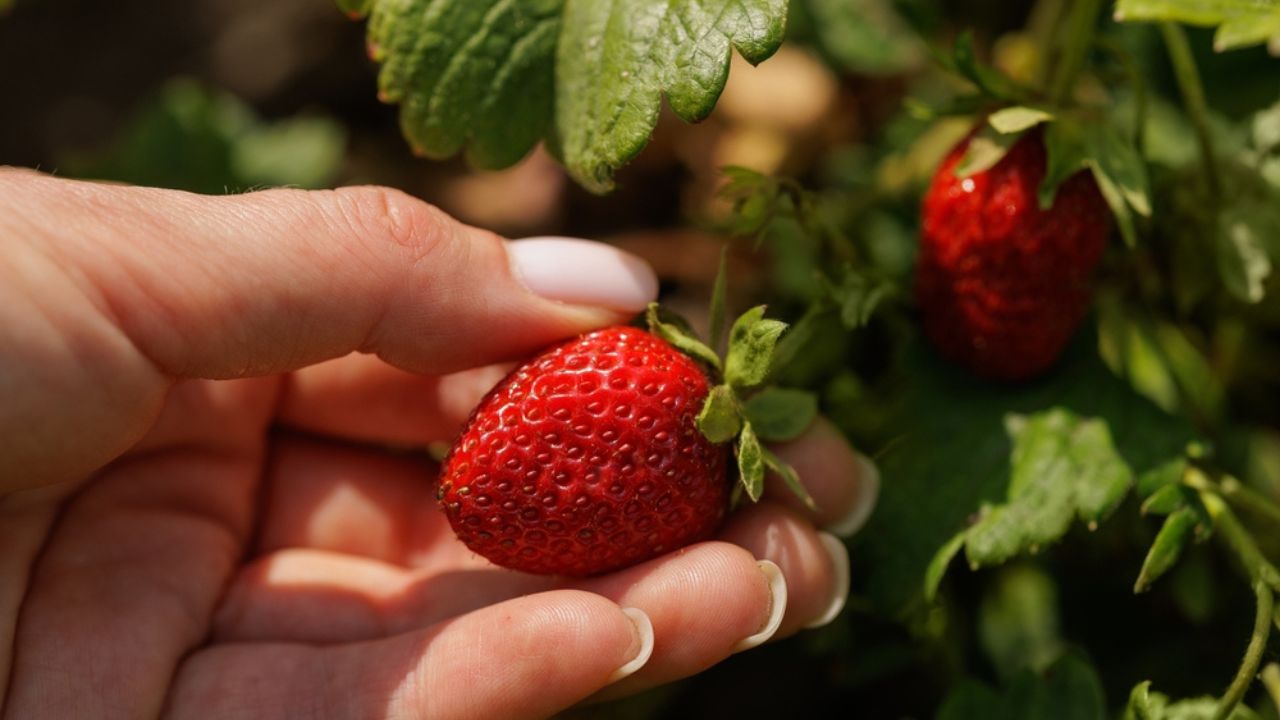
Companion planting is placing two or more crops close together so each one benefits the other, whether that’s repelling pests, adding nutrients to the soil, or making the most of limited space. For strawberries specifically, a good companion has to handle the same growing conditions the berries need without competing for them.
Strawberries need at least eight hours of direct sun a day to produce well, which rules out any companion tall or bushy enough to shade them out. Give plants 12 to 18 inches of space so runners don’t turn the bed into a tangled mat, and aim for soil in the 5.8 to 6.5 pH range strawberries prefer. They’re shallow rooted and thirsty too, needing about 1 to 1.5 inches of water a week during fruiting, so anything you plant nearby needs to tolerate the same watering schedule without rotting or drying out.
Strawberries are also prolific spreaders once they’re happy. They send out runners, wiry little stems that root wherever they touch soil, and a single healthy plant can produce a dozen or more daughter plants in one season. That’s great for filling a bed, but it also means strawberries will out-compete anything slow-growing or shallow-rooted for water and nutrients if you don’t manage it. If your strawberry leaves are curling instead of spreading the way they should, that’s usually a different issue, and I’ve written a full breakdown of what causes it.
So when you’re choosing what to plant with strawberries, look for plants that fix nitrogen or otherwise feed the soil, don’t need much room, attract pollinators or predatory insects, and won’t be an open invitation to whatever’s already eating your berries.
RELATED POST: The Best Organic Fertilizer for Strawberries
The Best Strawberry Companion Plants
Whether you’re planting starts, growing strawberries from scraps or seed, or managing an established patch, the plants you put around your strawberries can measurably improve how much fruit you get and how healthy the bed stays.
Asparagus
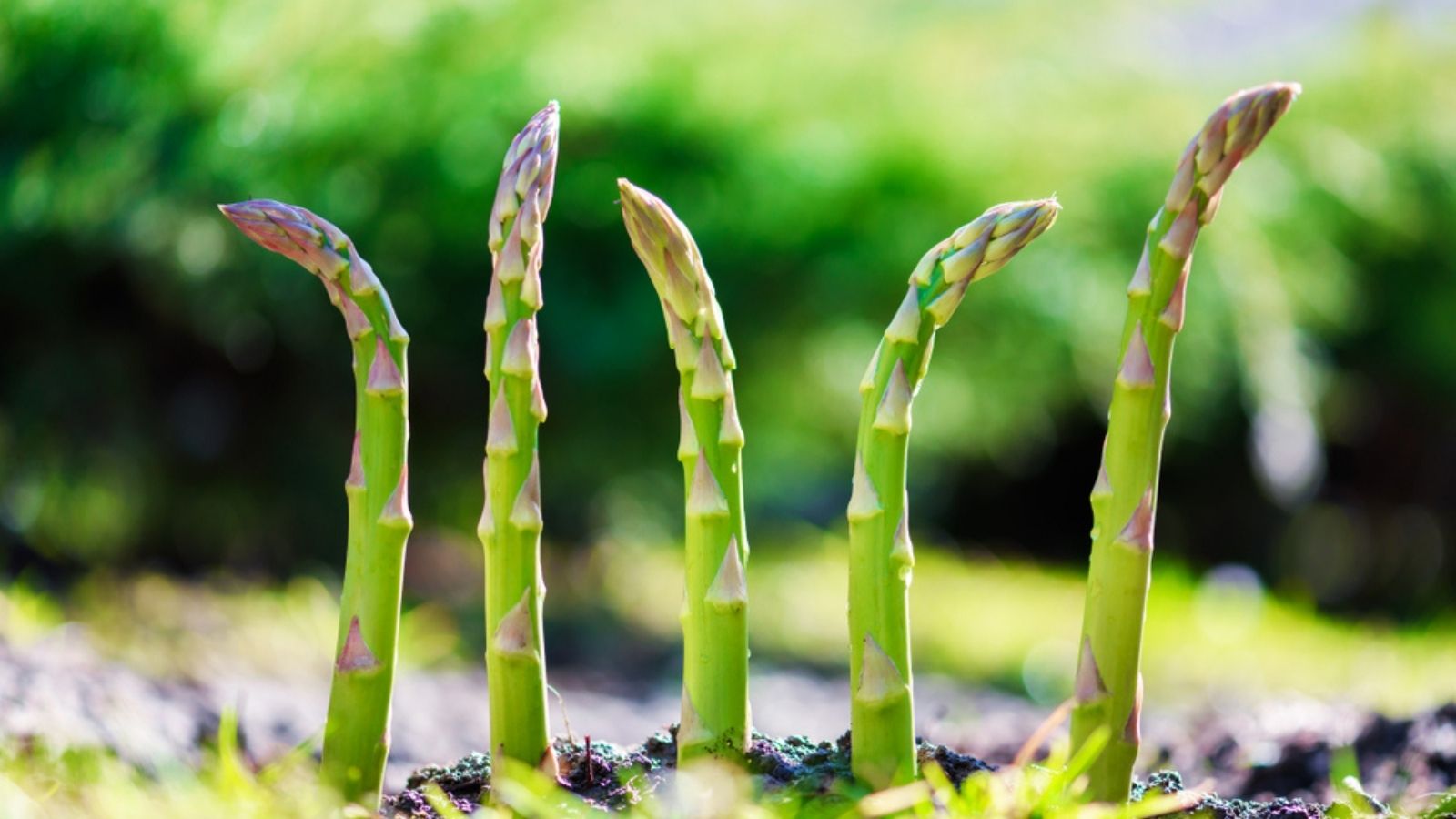
Asparagus and strawberries are one of the classic perennial pairings, and the reason is simple. Their roots grow at completely different depths, so they’re not competing for the same water and nutrients. Asparagus sends established roots several feet down, while strawberry roots stay shallow, within the top 12 inches or so of soil. Both also get going early in spring, right around the same time, which makes them easy to manage on the same schedule.
I like tucking a strawberry border around an established asparagus bed. The strawberries act as a living mulch, keeping weeds down around the asparagus crowns, while the asparagus gives some light afternoon shade without ever blocking the sun strawberries need.
Borage
Hands down, borage is one of the best strawberry companion plants there is. Also known as starflower, this herb has fuzzy green leaves and clusters of star-shaped purple flowers, both edible and both used in home herbal remedies.
Borage earns its place by doing two jobs at once. It repels insects that go after strawberry leaves and fruit, and its flowers pull in bees and other pollinators that improve your fruit set. I’ve also had luck with borage bringing in predatory insects like praying mantis, which handle a lot of the pest pressure I’d otherwise be dealing with by hand. It grows fast from seed, tolerates poor soil as long as it drains well, and self-seeds so generously that once you plant it, you’ll likely have volunteers coming up in the same spot for years.
Caraway

Caraway is an herb with feathery foliage and small white flowers, grown mainly for the seeds that flavor rye bread, sausage, and pickling spice. In the strawberry bed, it earns its space by drawing in the predatory wasps and other insects that feed on weevils and other pests that damage the fruit and foliage.
It doesn’t ask for much room, so tucking a few caraway plants between strawberry rows costs you almost nothing in bed space. Let a few plants go to seed at the end of the season and you’ll have caraway seed to dry and use in the kitchen too.
Bush Beans
Bush beans pull triple duty in a strawberry bed. They keep beetles off the berries, they host the bacteria that convert nitrogen from the air into a form strawberries can actually use in the soil, and at the end of the season, you get a crop of beans out of it too.
That nitrogen-fixing process matters because strawberries, like most fruiting plants, need a steady nitrogen supply to produce healthy foliage and big, juicy berries. Bush beans thrive in the same full sun and well-draining soil strawberries need, which makes them an easy, low-maintenance pairing.
Lupin

Lupin is one of the best companion plants for strawberries, and it earns the spot on looks alone before you even get to the benefits. It’s part of the legume family, so like bush beans, it hosts nitrogen-fixing bacteria on its roots and helps repel beetles while attracting bees.
Lupin grows tall without taking up much floor space, and it tolerates full sun without casting heavy shade or crowding out the strawberries around it.
CAUTION! Lupin is toxic to dogs, especially the seeds and pods, and can cause vomiting, drooling, and in severe cases tremors or breathing trouble if eaten. If your dogs have free run of the garden, keep an eye on where you plant it, or skip it in favor of a companion with a cleaner safety record.
Garlic and Onion
Garlic and onion are part of the same strong-smelling allium family, and that pungency does real work in a strawberry bed. Pests that hunt strawberries by scent lose the trail once garlic or onion is in the mix, and you get a garlic or onion harvest out of the deal too.
Strawberries and alliums also share space well physically. Garlic and onion bulbs grow below ground with just a thin stalk above, so they don’t compete with strawberries for light or leaf room the way a bushier companion would.
There’s one caveat worth knowing. Some growers report reduced strawberry yields when garlic is planted too close, possibly from compounds garlic releases into the soil. The evidence isn’t conclusive either way, but if you want the pest-deterrent benefit without the risk, onions and chives are the safer bet of the allium family.
Marigolds

If you’ve read my other companion planting posts, you already know I plant marigolds everywhere I can fit them. They’re just as useful alongside strawberries.
Marigolds draw in pollinators along with predatory insects, hoverflies especially, that help keep aphid populations down. They also repel root knot nematodes, which are genuinely destructive to strawberry roots, and their strong scent helps mask the smell of ripening berries from pests hunting by smell. I’ve written more about my favorite companion herbs and flowers if you want more combinations to try.
Nasturtiums
Nasturtiums are one of the best trap crops you can plant, and they work just as well tucked into a strawberry bed as anywhere else in the garden. Aphids are drawn to nasturtiums over almost anything else nearby, so once they find your nasturtiums, they tend to stay there instead of moving on to your strawberries.
Their bright flowers also pull in hoverflies, lacewings, and ladybugs, all of which feed on aphids and help keep numbers down everywhere else in the bed. The flowers are edible too, with a sharp, peppery bite that’s good in salads if you want to make use of them.
Yarrow

Yarrow is a strong choice around strawberries for the beneficial insects it brings in. This tall, feathery herb has small, tightly clustered flowers with a pungent smell that draws in pollinators and predatory insects, both of which help boost fruit set and keep pest numbers like aphids in check.
Yarrow isn’t a nitrogen fixer the way legumes like bush beans and lupin are, but its deep, fibrous root system does real work loosening compacted soil and improving drainage around your strawberries, which matters since strawberries are shallow rooted and don’t tolerate soggy ground well. It’s also one of the toughest plants you can put in a strawberry bed, tolerating heat, drought, and poor soil without complaint.
Certain Leafy Greens
Lettuce and spinach are an unusual answer to what to plant with strawberries, since neither one flowers or has much of a scent to do the usual pest-deterrent work. What they do instead is hide the berries. Their broad leaves cover ripening fruit from birds looking for an easy meal, which matters most in a bed that isn’t netted or caged.
Spinach also contains natural compounds called saponins that some growers believe help suppress fungal and bacterial issues in the soil, though the evidence for this is more folklore than proven fact, so treat it as a nice-to-have rather than the main reason to plant it. Both greens like the same well-draining soil strawberries do, and they’re shallow rooted enough not to compete hard for water.
What Not to Plant With Strawberries
Equally as important as learning about good companion plants is learning what not to plant near strawberries. In some cases, certain plants may spread disease to your strawberry plants and ruin your crop. In other cases, it’s the strawberries themselves that make bad neighbors.
Tomatoes, Peppers, and Everything Else That Carries Verticillium Wilt

Keep strawberries well away from tomatoes, peppers, potatoes, and eggplant, since all of them are susceptible to Verticillium wilt, a soilborne fungal disease that clogs a plant’s water-conducting tissue and eventually kills it. Verticillium doesn’t need direct contact to spread. It lives in the soil itself, sometimes for years, so if one susceptible plant gets infected, anything else susceptible planted in that same ground later is at risk too.
The nightshade family gets most of the attention here, but the host list is longer than most companion planting guides let on. Along with tomatoes, peppers, potatoes, and eggplant, Verticillium wilt also affects melons, okra, mint, brambles like raspberries, stone fruit trees, chrysanthemums, and roses. If you’ve got any of these growing elsewhere in your yard, don’t rotate strawberries into that ground for at least four years, and don’t plant strawberries and any of these together in a shared bed.
Beyond the disease risk, strawberries and tomatoes share another problem. They look similar enough, and smell similar enough to some pests and birds, that whatever finds one is likely to sample the other too. Between the shared pests and the shared disease susceptibility, it’s simplest to keep tomatoes and their relatives in a completely separate part of the garden from your strawberries.
Cabbage

Cabbage family plants won’t hurt your strawberries, but the reverse isn’t true. Strawberries send out runners aggressively, and those runners will crowd out slower growing neighbors like bok choy, broccoli, brussels sprouts, cauliflower, collard greens, and kale, sometimes badly enough to kill them outright.
So while cabbage family plants make perfectly fine neighbors for strawberries, strawberries themselves make poor neighbors for cabbage family plants. If your garden space is tight and you want both, growing strawberries vertically or in containers while keeping your brassicas in the ground solves the problem without giving up either crop.
RELATED ARTICLE: Ways to Grow Strawberries
FAQ
What is the best companion plant for strawberries?
Borage is the companion plant I’d recommend first. It repels pests that go after strawberry leaves and fruit, draws in the pollinators that improve your fruit set, and self-seeds so reliably that once it’s established, you won’t need to replant it. Asparagus and bush beans are close behind for the soil and space benefits they bring.
Can you plant strawberries and tomatoes together?
No. Strawberries and tomatoes are both susceptible to Verticillium wilt, a soilborne fungal disease that can kill both crops, and they attract many of the same pests and birds. Keep them in separate parts of the garden, and avoid planting strawberries in any bed where tomatoes, peppers, potatoes, or eggplant have grown in the past four years.
Is mint a good companion plant for strawberries?
No. Mint spreads aggressively enough to overrun a strawberry bed within a season, and it’s also on the list of plants susceptible to Verticillium wilt, the same soilborne disease that threatens strawberries planted near tomatoes. Grow mint in a container instead, well away from your strawberry bed.
Does companion planting actually increase strawberry yield?
Companion planting won’t replace good soil, consistent watering, and full sun, but it does measurably help once those basics are covered. Nitrogen-fixing companions like bush beans and lupin feed the soil for free, pollinator-attracting plants like borage and yarrow improve fruit set, and trap crops like nasturtiums pull pests away from the berries before they do damage. In my own beds, the difference shows up mostly in fewer pest losses rather than more flowers, which adds up to more fruit actually making it to harvest.
What should never be planted near strawberries?
Avoid tomatoes, peppers, potatoes, eggplant, melons, okra, mint, brambles, stone fruit, chrysanthemums, and roses, since all of them can carry Verticillium wilt into the soil. Also avoid planting cabbage family crops like broccoli, cauliflower, and kale directly next to strawberries, since strawberry runners will crowd them out over a season.
Companion Planting Strawberries For the Biggest, Juiciest Berries
Strawberry plants are prolific growers, but bugs and birds are a real threat, and they’ll happily eat your harvest before you get the chance to.
The companions above are the ones I actually use and trust in my own strawberry patch, not just a list copied from a chart. Borage, asparagus, and bush beans do the heaviest lifting, and marigolds, nasturtiums, and yarrow round out the pest control. Give a few of them a try in your strawberry patch this season, skip the chemicals entirely, and taste the difference for yourself. Go organic.
You might also like…
How to Grow Strawberries From Scraps
15 Strawberry Recipes to Make the Most of the Season
10 Easy DIY Ways to Grow Strawberries for Big Harvests in Small Spaces