
Affiliate disclosure: This post may contain affiliate links. Please see full disclosure. AI-assisted.
Some Hazel-Atlas Moderntone butter dishes and sugar bowls originally came with metal lids. That’s the part I’d look for first. The glass gets your attention, especially when it’s a rich cobalt blue, but a loose metal cover can look like a stray kitchen spare. And with the sugar bowl, there’s a wrinkle. Hazel-Atlas also sold it open, so an uncovered bowl can be complete exactly as it is.
Look for the rings in the glass
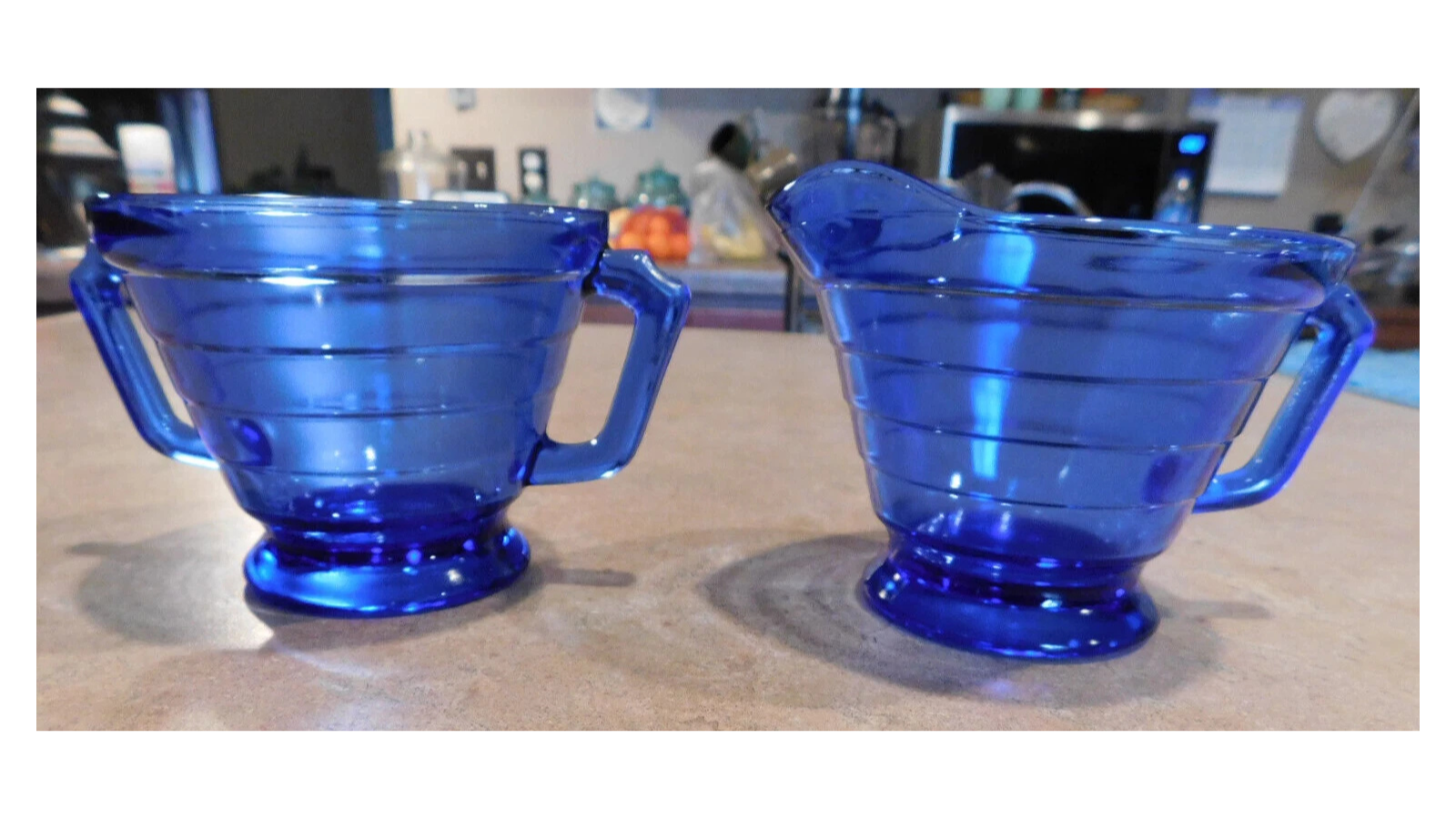
Hazel-Atlas made transparent Moderntone from 1934 to 1942. The pattern is all about those clean, raised bands. On a bowl they run around the sides, one above the next. On a plate or saucer they form concentric circles around the rim and leave the center plain. Tilt a piece sideways under a light and you can see the profile of the rings, even when dark blue glass looks almost black on a crowded shelf.
Cobalt, also known as Ritz blue, is the color I’d learn to recognize first. The early transparent range also included clear glass and a deep purple Hazel-Atlas called Burgundy. Later, the company used the pattern in opaque Platonite, including pastel pieces with color applied over white glass. Those are genuine Moderntone too, and you may prefer them if you like softer colors.
Color only gets you so far when you’re sorting through vintage dishware patterns. Hazel-Atlas used the same blue for other designs, including Aurora and Royal Lace. I’d check the bands and the shape of the piece before deciding what I was holding. Get those details right before worrying about whether the lid beside it belongs.
The butter dish starts with a cereal bowl
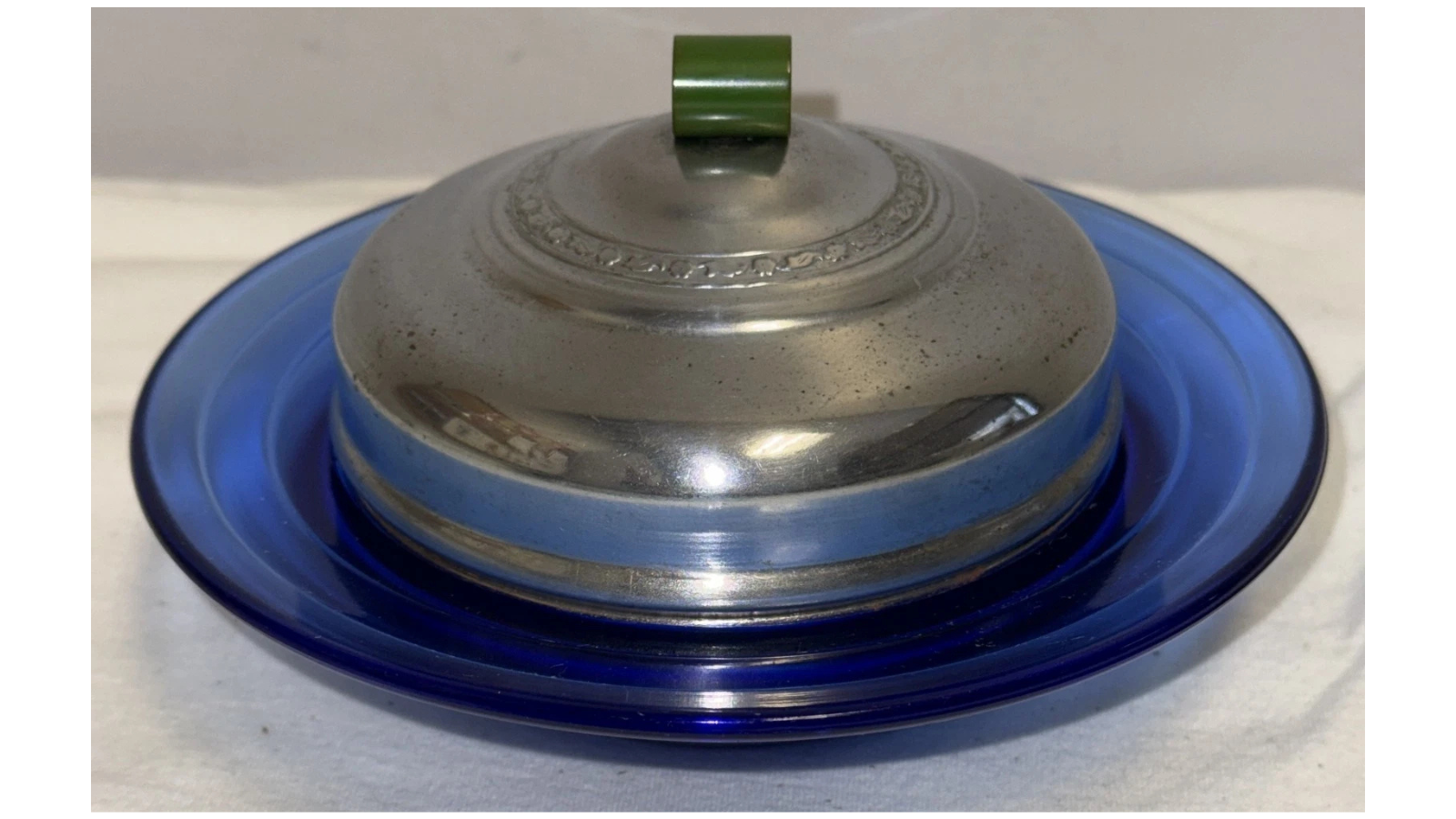
A Moderntone butter dish looks like a shallow, round bowl because that’s what it started as. Other companies bought Hazel-Atlas glass and sold it with metal covers. For the butter dish, they used the roughly 6½-inch rimmed cereal bowl. That flat rim gives the cover somewhere to sit. It’s a clever way to turn a piece that was already in production into something different for the table.
A complete covered butter dish pairs that rimmed glass bowl with the correct round metal cover. The cover is smaller across than the bowl’s outside edge, so measure the part of the rim where it actually sits if you’re trying to match one. A lid that happens to sit neatly is a promising start. Compare its profile and underside with a documented example before counting it as original.
If I find the bowl on its own, I judge it as a bowl. I’d happily bring home a sound one I wanted anyway. If what I really want is the covered butter dish, I’d wait for a convincing pair. It’s easy to come home with two nearly right pieces and still have nothing that fits.
The sugar bowl was sold both ways
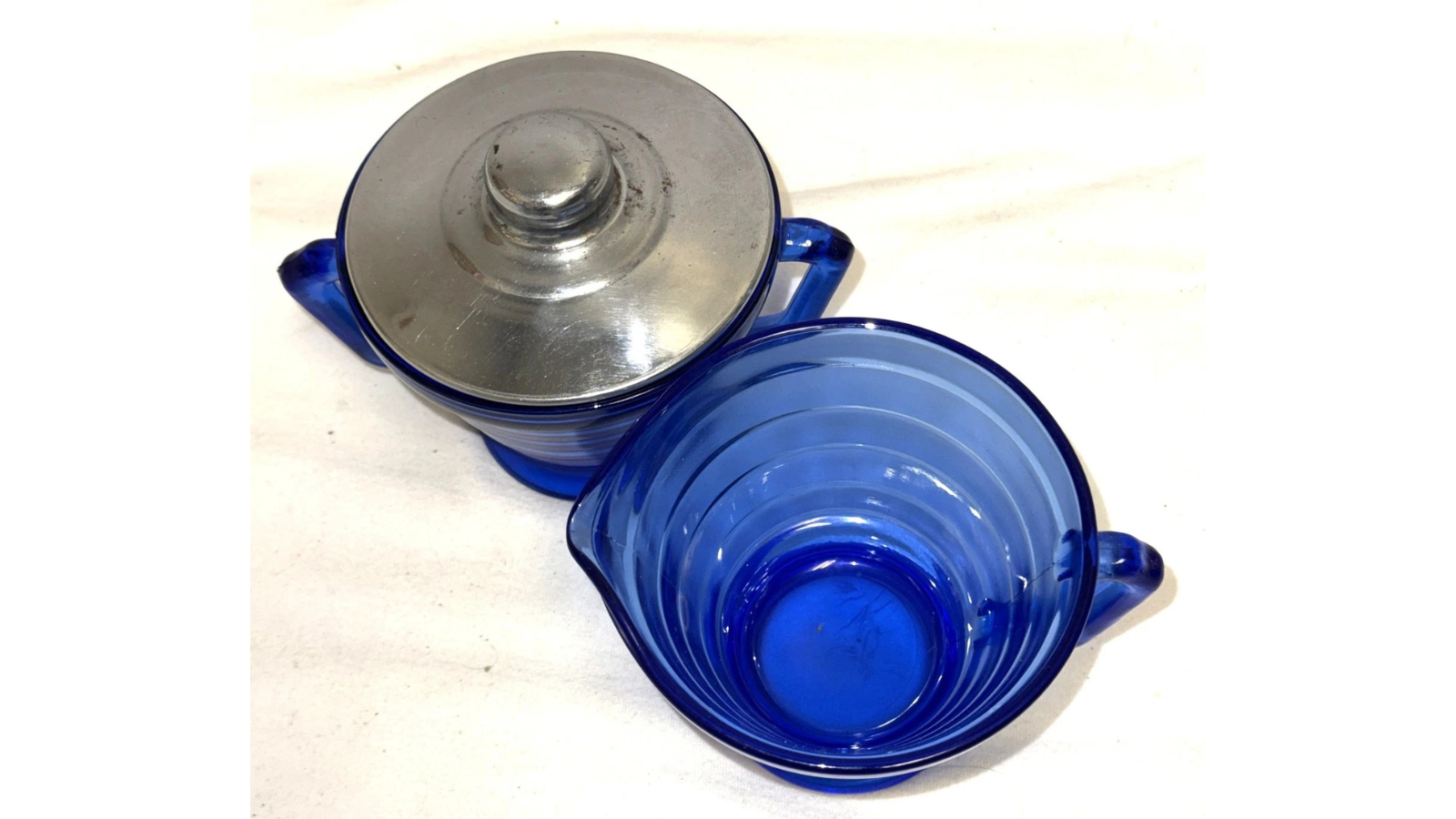
Hazel-Atlas marketed an open sugar bowl, and a two-handled bowl can be complete in that form. The separately sold covered sugar bowl is the version to look for if you want that striking combination of dark blue glass and a metal top. A complete example of the covered version has both the glass bowl and its proper metal lid, including the knob.
When you’re looking at an open sugar bowl next to its matching creamer, there’s no need to start chasing a cover. If a thrift store has a loose lid near the bowl, ask before trying it on. Set both pieces on a flat counter, lower the top gently, and see how it rests. A lid that shifts sideways at a touch or sits higher on one side deserves a closer look at both the metal edge and the glass beneath it.
Check under the lid before you bring it home
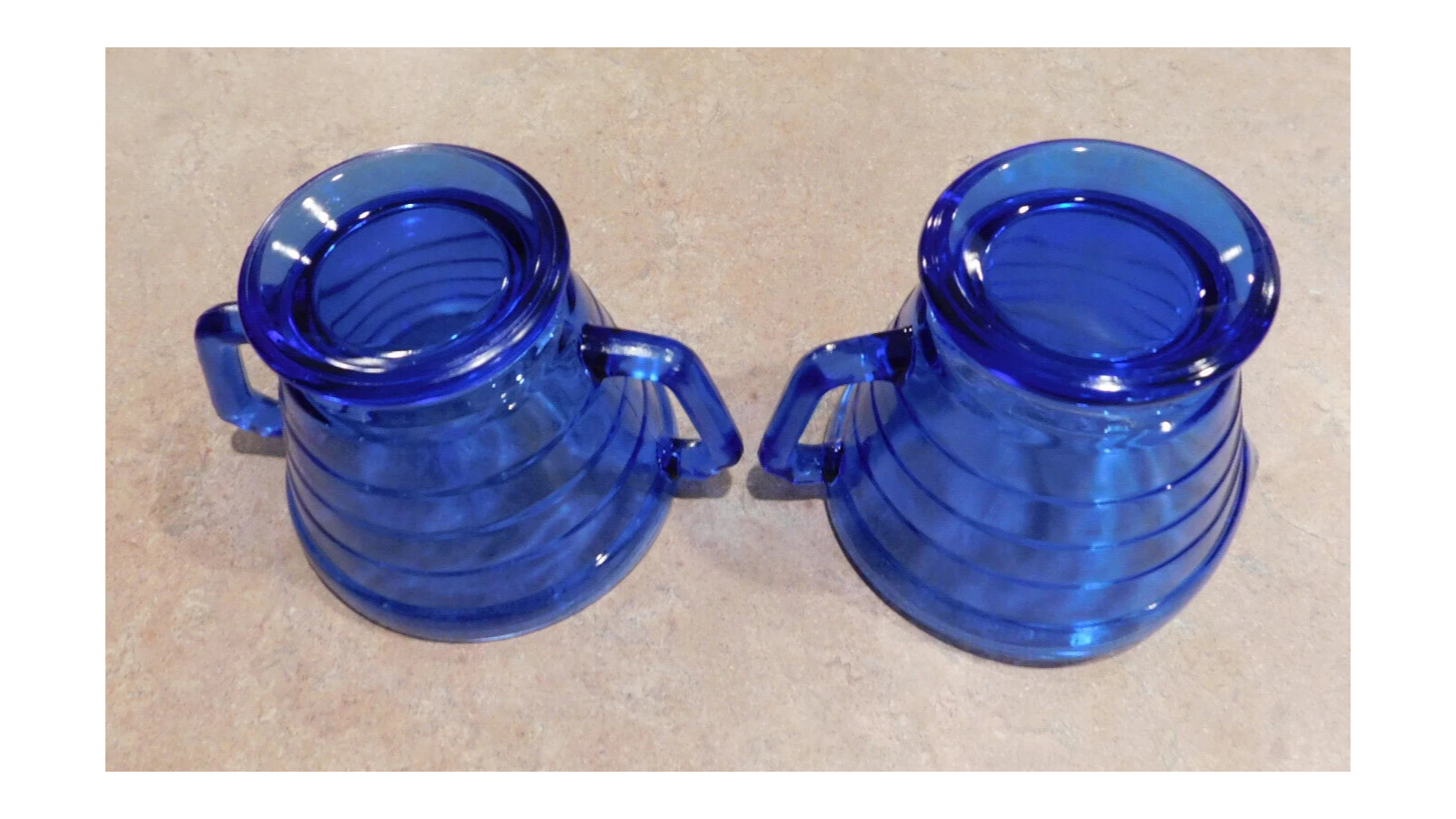
I thrift a lot of old household pieces, and a lid can hide exactly the damage I want to see. Lift it off and turn the glass slowly under a light. Check the inside edge of the butter bowl, where Moderntone’s flat rims are prone to chips, and look closely around the sugar bowl’s handles and foot. Give the bottom a look too. Scratches show up easily in those broad, plain areas.
Turn the lid over and look for dents along the edge, flaking finish, and any looseness where the knob meets the metal. I can live with a little dullness on a piece I want to display. A wobbly knob or a sharp, bent edge would bother me every time I picked it up. If I were looking online, I’d ask for a photograph of the underside and one with the lid sitting on the bowl. A straight-on photo can make almost any two pieces look as though they belong together. For a loose lid, ask for a measurement across the edge that meets the bowl. The distance across the widest part can be a different number.
Once you know what you’re looking at, it’s worth glancing through the loose lids and kitchen bits as well as the glassware. The blue bowl is the easy thing to spot. The little metal top is the find I’d be hoping to make.
You might also like…
The CorningWare Pattern Collectors Dream Of Finding At A Thrift Store
The Blue-And-White Pyrex Pattern Collectors Dream Of Finding At A Thrift Store
The Pink Pyrex Pattern Collectors Dream of Finding at a Thrift Store

