
Affiliate disclosure: This post may contain affiliate links. Please see full disclosure.
Some vintage cookie jars are instantly recognizable, with painted faces or brightly colored fruit. Others are easy to mistake for ordinary kitchen pottery, especially when they’re sitting on a crowded thrift store shelf. One particularly interesting example looks more like an old-fashioned metal cooking vessel than something made to hold cookies.
It has a dark, hammered-looking finish, a curved spout, and a tall metal handle. There’s nothing particularly flashy about it. But the details matter, because two very similar versions were made years apart, and one is considerably harder to come across.
The short-lived McCoy teapot cookie jar
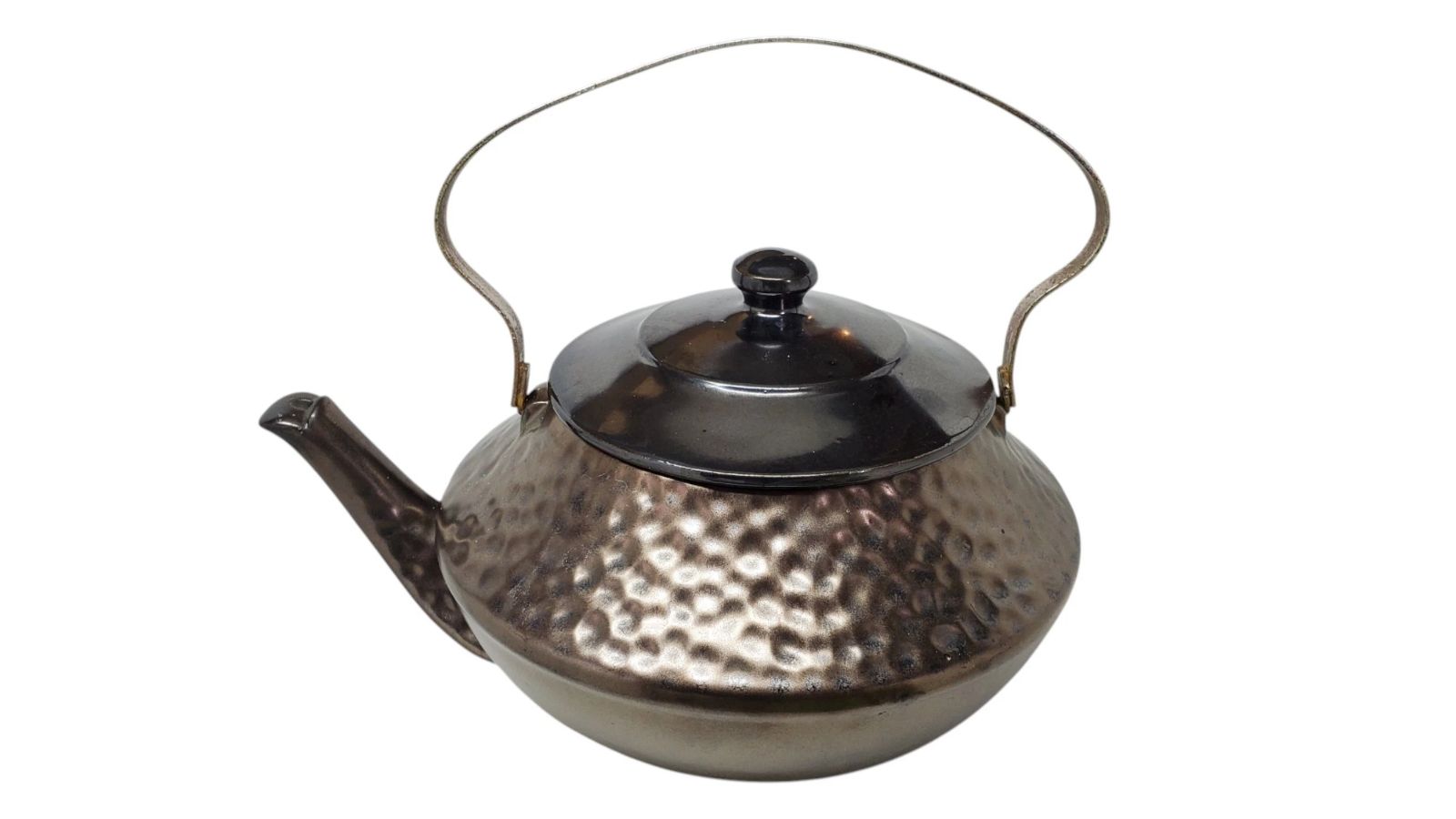
The jar worth looking for is the McCoy Pottery Teapot No. 185, produced in 1974. Its textured Antique Bronze finish mimics hammered metal, although the body is ceramic. A copper-colored metal bail handle arches over the top, giving it the look of a piece of old kitchen equipment.
What makes this particular McCoy cookie jar interesting is its short production run. The earlier, similar-looking Kettle No. 209 was made from 1962 to 1964. The Teapot No. 185, however, was made for just one year. That doesn’t automatically make every surviving example precious, but it does make finding an intact one rather satisfying.
How to tell the teapot from its look-alike

The 1974 teapot and the earlier kettle share the same Antique Bronze color and hammered texture. At a glance, they can look almost identical, so don’t rely on the finish alone. The distinguishing features are the shape and size of the jar, the lid, the handle, and the markings.
The No. 185 teapot body stands about 6 3/8 inches tall, with a width of approximately 6 1/2 inches. The earlier No. 209 kettle is taller and wider, at around 7 1/4 inches high and 7 1/2 inches across. Those measurements refer to the pottery itself, not the raised handle.
The handles are especially useful for identification. The teapot’s metal bail has a gently wavy profile and stands about 12 inches high when upright. The kettle’s handle has a more angular, barn-roof shape, reaching around 11 inches. The small lugs that hold the handles differ, too, so they’re not straightforward replacements for one another.
Now look at the lid. The No. 185 has a flatter lid, while the earlier kettle has a more domed one. The lids may appear interchangeable, but a kettle lid sits loosely on the teapot. If a thrift-store find looks right until you lift the lid, that poor fit is worth investigating rather than dismissing as normal wear.
For the clearest comparison, the McCoy Pottery Collectors’ Society has documented both jars, including their measurements, original handles, and lid differences.
Check the markings, but don’t stop there
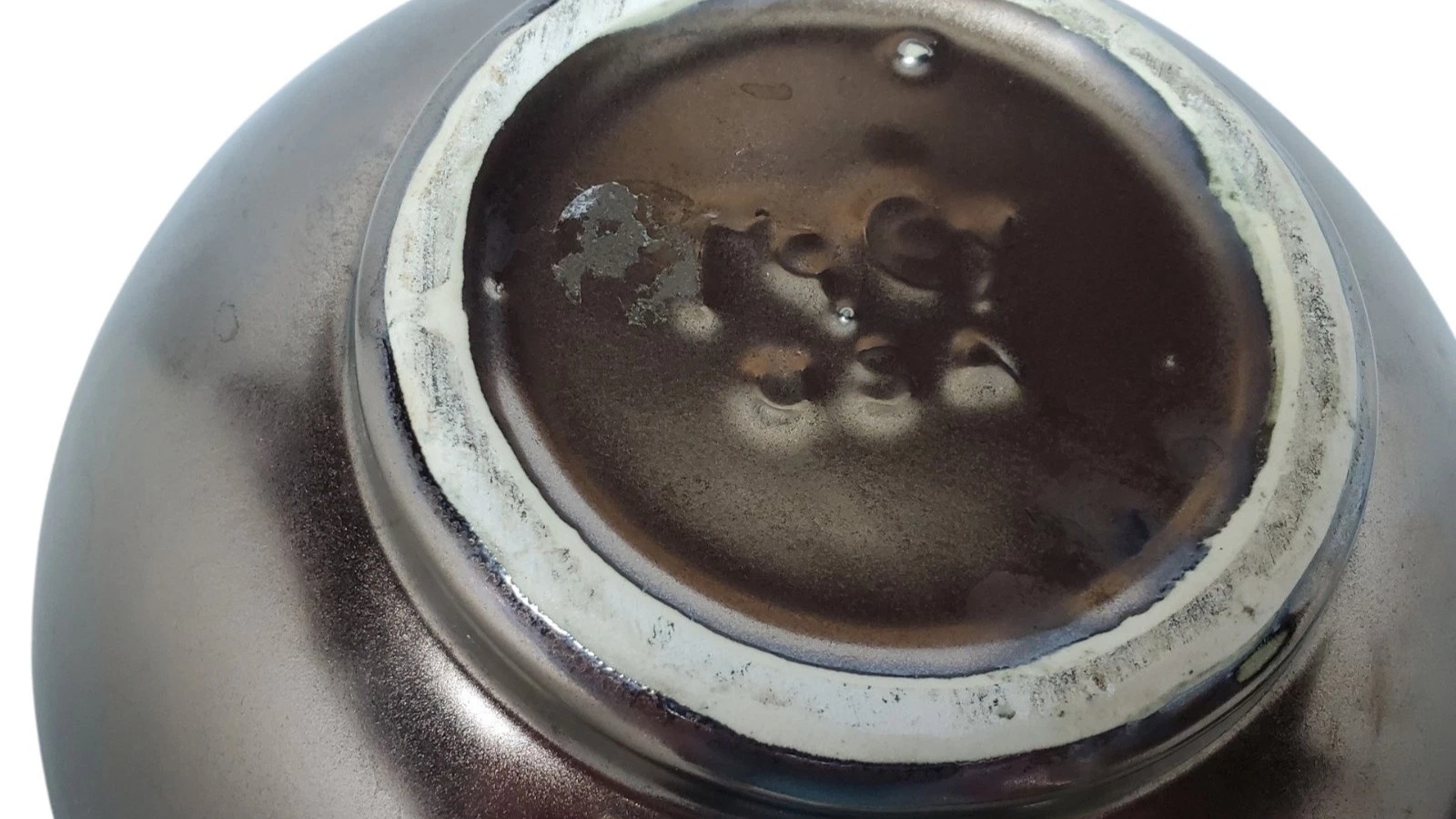
Turn the pottery over carefully and look at its base. An authentic No. 185 may be marked “McCoy USA” or “McCoy USA 185.” The underside of its original lid is marked 185. These details give you more to work with than a quick glance at the front.
I’d check the lid first, then the base, and then compare the handle and measurements. Any single detail can be misleading, particularly if an old jar has been repaired or had its lid replaced. A complete set of matching features is much more convincing.
Also, don’t assume that anything stamped McCoy must be authentic. Collectors have documented numerous fakes and look-alikes, including jars that the original company never made. A mark is useful evidence only when the shape, dimensions, glaze, and known production history agree.
This is where a little patience pays off. If you’re not confident about a jar, take clear photos of the front, base, lid underside, and handle fittings. Compare them with a reliable collector reference before deciding exactly what you’ve found.
What I would inspect before bringing one home

With vintage ceramic kitchenware, I always care more about structural condition than a bit of honest age. Small surface wear can be part of a piece’s charm, but cracks and badly repaired breaks are another matter. Check the rim where the lid rests, the spout, and the points where the handle attaches. They’re all places that can suffer knocks.
Lift the lid gently and look for chips around its edge. Check that it rests reasonably evenly and that the 185 marking is present. Then inspect the metal bail for bends, looseness, corrosion, or signs that someone has fitted a substitute.
I wouldn’t automatically reject a jar because its glaze has a little wear or the metal has darkened with age. I’d be far more cautious about a crack running through the body, a poorly matched lid, or a handle that doesn’t look original. Those are harder to put right, and an ill-fitting lid changes the whole feel of the piece.
If you want to use your find in the kitchen, remember that a vintage ceramic jar isn’t an airtight modern food container. It’s sensible to keep cookies in a food-safe bag or container inside it, particularly if the interior glaze is worn or its food-contact safety is unknown. Hand-clean gently rather than subjecting old pottery and metal fittings to a dishwasher.
Why it’s such a satisfying thrift-store find

The appeal of the No. 185 isn’t a sensational price tag. It’s the combination of recognizable McCoy craftsmanship, an unusually brief production history, and tiny design differences that are easy to overlook unless you know what you’re holding.
One thrift store might have the common-looking kettle sitting among other brown ceramics; another might have the later teapot tucked away behind a stack of plates. Knowing to check the handle, lid, and base gives you a real chance of recognizing the difference.
That’s the kind of find I love: something useful and full of character, with a bit of history hiding in its everyday design. And finding one with its original lid and handle still together would be a very good day indeed.
You might also like…
The CorningWare Pattern Collectors Dream Of Finding At A Thrift Store
The Blue-And-White Pyrex Pattern Collectors Dream Of Finding At A Thrift Store
The Pink Pyrex Pattern Collectors Dream of Finding at a Thrift Store

