
Affiliate disclosure: This post may contain affiliate links. Please see full disclosure. AI-assisted.
A wide-eyed owl perched on a grinning pumpkin is an odd choice for a Halloween lamp. But that’s exactly what makes Star Band’s vintage Owl & Pumpkin Lamp so appealing. Instead of another witch, ghost, or plain jack-o’-lantern, you get two wonderfully cartoonish characters in one light-up decoration, with a surprisingly short production history behind them.
This cheerful little plastic lamp comes from the 1970s, when Halloween decorations were often bright, playful, and just a bit peculiar. It’s worth recognizing when you’re thrifting.
The owl and pumpkin that make an unlikely pair
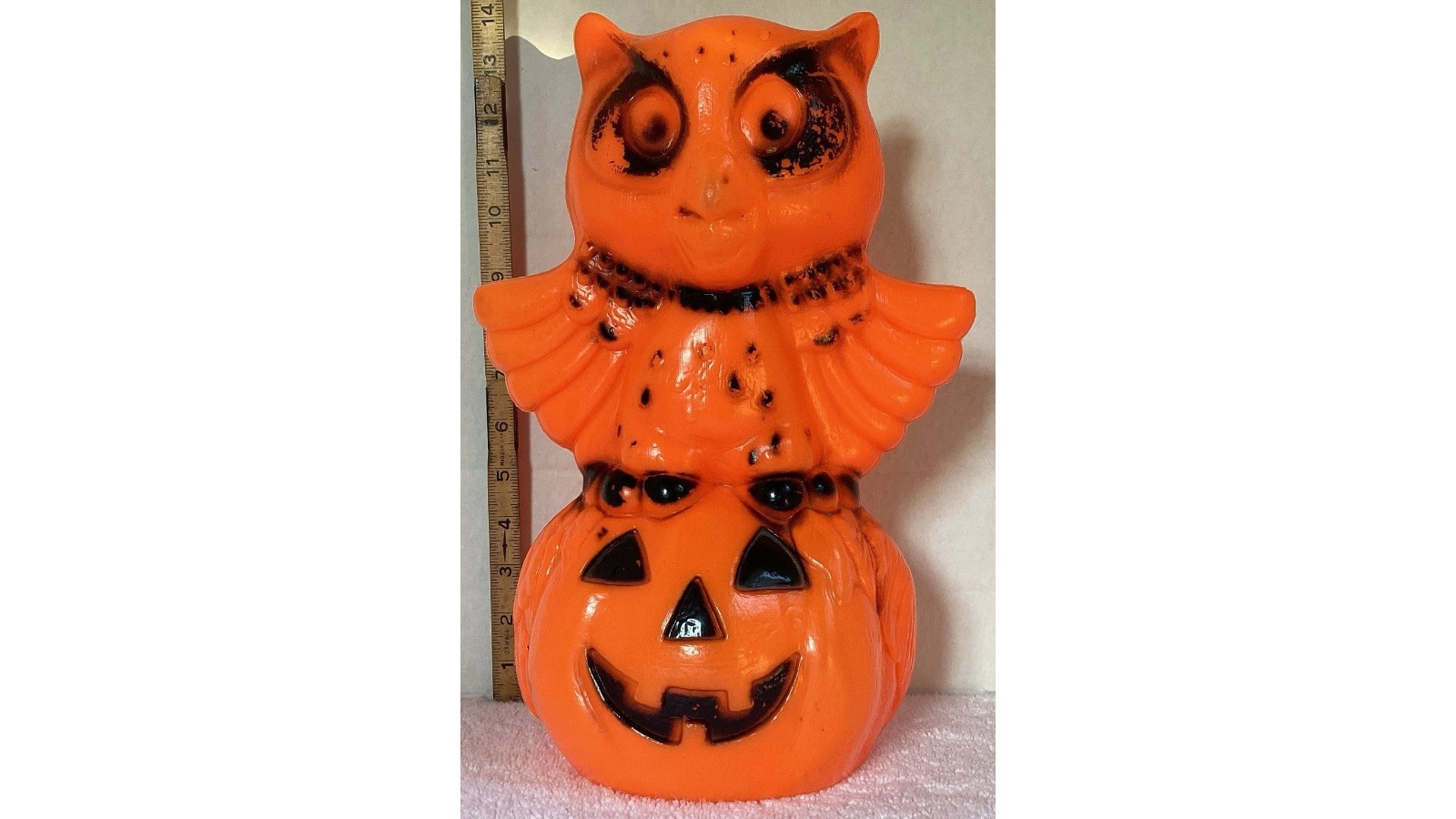
The lamp combines a molded owl with a jack-o’-lantern beneath it. The owl’s big eyes, rounded body, and exaggerated features give it a comic expression, while the pumpkin supplies the familiar Halloween grin. It’s hardly a terrifying combination. Frankly, that’s why I like it.
A surviving example measures around 13 inches tall, making it a manageable tabletop decoration rather than a giant lawn ornament. The hollow plastic body was designed to be lit from inside, so the lamp could glow on a table, shelf, or covered display. Its orange, black, and yellowish painted details look unmistakably seventies, without needing fake cobwebs or flashing lights to get the point across.
The material is blow-molded plastic, formed when air pushes softened plastic against a mold. That made it possible to produce lightweight, shaped holiday decorations with plenty of character. The charm is in the sculpted expressions and painted color.
Why the Star Band name matters

The history behind this peculiar lamp is almost as interesting as its appearance. Star Band Plastics began in New York in 1948, founded by Leon Cardon and Carl Marc, before moving to Portsmouth, Virginia. Its early products included satin-wrapped Christmas ornaments, and the company later became associated with aluminum Christmas trees. Plastic holiday masks and wall decorations followed, with light-up blow molds joining the range by the 1960s.
The Owl & Pumpkin Lamp was produced around 1974 to 1976. Star Band also made a similarly playful Cat & Pumpkin Lamp during that period. They’re related designs, but not interchangeable: the pumpkin faces differ, as do the animals sitting above them. If you’re identifying a thrift-store find from a photograph, it’s worth looking at the whole figure instead of stopping at the pumpkin.
Then the company’s story took a turn. By 1976 Star Band was in financial difficulty, and its assets were liquidated. General Foam Plastics acquired its blow-mold and Christmas-tree divisions. Although General Foam went on to produce many familiar seasonal plastic decorations, the owl-and-pumpkin and cat-and-pumpkin lamps do not appear to have been reissued from those acquired molds.
It makes a genuine Star Band example a little slice of 1970s Halloween history. And it’s a better reason to appreciate one than an enthusiastic seller describing everything old as impossibly rare.
What I’d look for on a thrift-store find
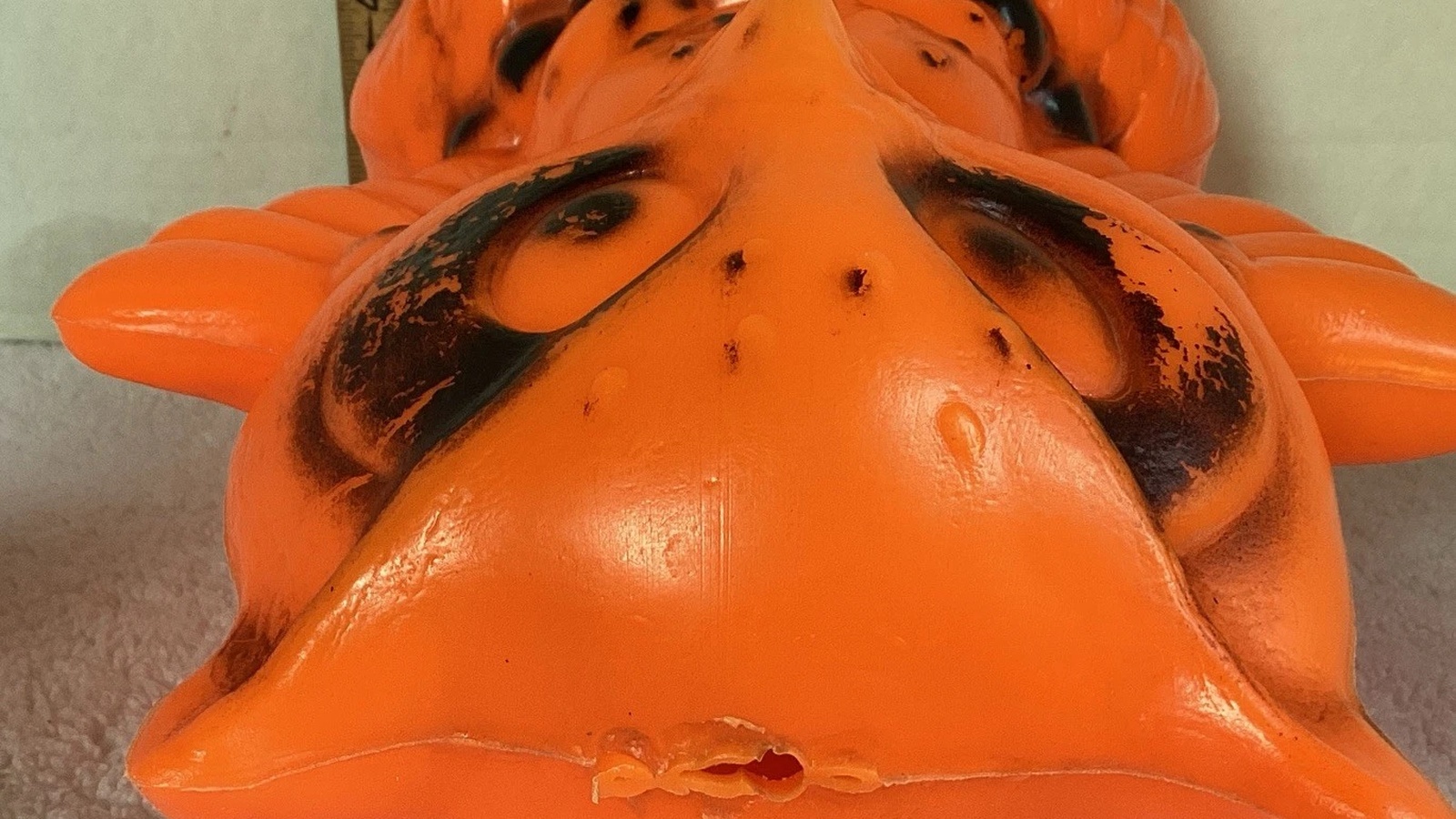
As someone who spends a great deal of time thrifting and collecting, I always recommend checking an unusual decoration in person before getting too attached to the description on its tag. Start with the overall shape. The owl should sit above the jack-o’-lantern as part of a molded light-up figure, rather than being a separate ceramic bird perched on a pumpkin.
Compare the painted eyes, owl face, pumpkin grin, and body proportions with documented examples. Surviving examples and period advertising provide much firmer identification clues than a modern marketplace title. One specialist listing also describes unusually thick, sturdy plastic, although weight and thickness alone can’t authenticate a piece.
Check the underside and back for original markings and the light fitting. Not every old decoration retains its original label, cord, or bulb, so a missing component isn’t automatically proof that it’s a fake. Equally, an old-looking electrical cord doesn’t prove that the rest of the lamp dates to the 1970s. Look at the evidence together.
Condition matters more to me than spotless paint. A little fading, small scuffs, and signs of years of October displays can be perfectly acceptable. Cracks through the owl’s face, damage to the beak, distorted plastic around the light opening, or a base that no longer stands straight need much closer attention. They’ll still be there when you display it.
Keep the old lamp looking good

With any old illuminated plastic decoration, I treat the wiring as untested until it’s been properly checked. Never plug in brittle, frayed, or altered wiring just to see a vintage piece glow. Have suspect parts assessed by someone competent, use only a compatible replacement lamp assembly and bulb, and keep it away from moisture and heat. Old plastic and the wrong bulb are not a combination worth experimenting with.
For cleaning, start with a dry, soft cloth and gently remove loose dust. If it needs more, use a barely damp cloth with a little mild dish soap, keeping the electrical parts completely dry. Test an inconspicuous spot first. Avoid scouring pads, solvents, and aggressive scrubbing that could lift the old paint. I would rather keep a little honest wear than accidentally erase half an owl’s face.
Display it indoors or somewhere genuinely sheltered, where it can be seen without getting knocked about. I think these small, characterful blow molds look particularly good among vintage black cats, paper Halloween cutouts, and simple autumn decorations. Give the owl and pumpkin room to be the stars instead of surrounding them with everything else you own.
When Halloween is over, store the lamp dry in a sturdy box with soft padding around it, not piled beneath heavy decorations. Its cheerful expression might look indestructible, but decades-old plastic deserves a little kindness.
For me, the appeal of vintage Halloween collecting isn’t about turning every unusual discovery into a price tag. It’s knowing what you’ve found and enjoying the peculiar details that newer decorations often miss. Star Band’s owl and pumpkin might be a strange pairing, but they’ve certainly earned their place in Halloween history.

