Affiliate disclosure: This post may contain affiliate links. Please see full disclosure.

Disclosure: This post contains affiliate links. Click here to read my affiliate policy.
Chicken mites are common external parasites that are found on even healthy chickens. While they don’t typically present a problem in low numbers, especially since birds can rid themselves of the mites through dust bathing and preening, large mite populations could cause your poultry to become sick or even die. Worse, these bugs have been known to bite humans, so you’re at risk, too, during an infestation.
Learn how to treat poultry mites naturally so you can avoid dangerous chemicals that can affect both chickens and chicken keepers.

Treat Mites Using Natural Remedies
While parasites can be a serious concern when raising chickens, there are several natural methods for eliminating them. When you stay on top of treatment with these safe options, you don’t have to turn to poisonous chemicals to rid your birds of this major pest.
Apple Cider Vinegar (ACV)
Adding one tablespoon of ACV (we use this one) to each gallon of your chicken’s drinking water will act as a natural repellent — the parasites don’t care for the way your chickens’ blood tastes after this treatment.
You can also use ACV as a soak to kill mites directly. Use the same ratio in bath water, and soak your infested chickens for about 30 minutes.
Garlic Juice
Garlic juice is an extremely effective mite killer that’s also completely natural and safe. To use, pour 1 tablespoon of garlic juice and 10 ounces of water into a spray bottle. Because garlic has a strong smell, also consider adding a teaspoon of your favorite essential oil.
To kill mites, spray your chickens every day for two weeks. Be sure to concentrate your efforts at the base of their feather shafts as this is where the parasites congregate.
You can also use garlic spray to prevent chicken mites by dousing your chickens every two weeks once the infestation is under control.
Diatomaceous Earth
Food-grade diatomaceous earth (like this one) is another excellent option for helping eradicate mites. This powdery substance acts like glass shards when it comes in contact with the bugs, slicing their exoskeletons and causing them to die of dehydration.
Because the mite lives its entire life cycle on a chicken, using a direct-contact method is one of the best ways to get rid of them.
To use diatomaceous earth, put on a pair of gloves and rub the powder directly on to your chicken’s skin, concentrating on the vent and under their wings. Repeat the process two or three times a week, and also be sure to add the powder (and wood ash) to your chickens’ dust baths so they can continue treatment every time they bathe. Top up each dust bath once per week.
Iron-Rich Foods
Unlike lice that feed on dead skin, mites are like tiny vampires that feed on a chicken’s blood. When your poultry have a severe poultry mite infestation, the loss of blood can lead to anemia and possibly death.
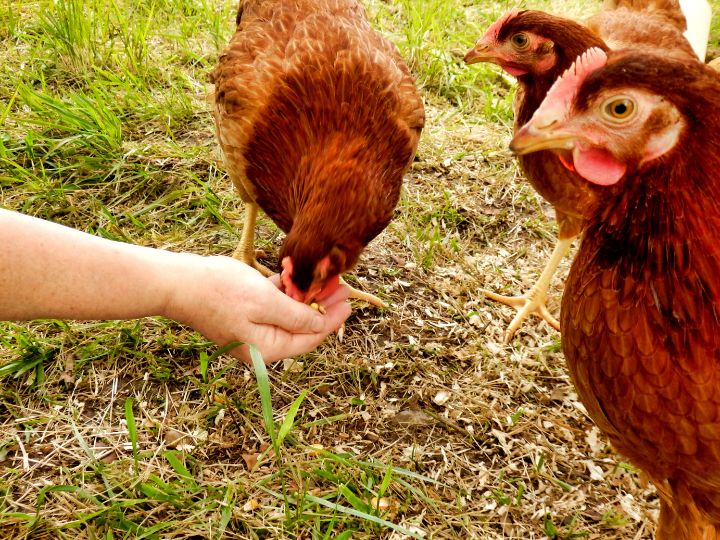
Feeding your birds iron-rich foods won’t kill off the chicken mites, but it’s an important part of treatment because it will help your poultry regain their strength. Some good feeding options include:
- Cooked eggs
- Cooked seafood
- Meat scraps
- Spinach
- Sweet potato
- Watermelon
RELATED READING: How to Care for Chickens In Winter
Clean the Chicken Coop Thoroughly
To break the chicken mite life cycle, it’s imperative that you treat your birds and thoroughly clean their coop at the same time. Treating the chickens alone isn’t enough because the coop could house hatching eggs and adults that have fallen off your birds. To prevent mites from jumping right back on your poultry, you must do both.

Dispose of Bedding
The first thing you should do when cleaning the chicken coop is get rid of all the old bedding from the nest boxes. If you live in an area that allows it, you should strongly consider burning the mite-infested bedding. If that’s not an option, wrap it tightly in a bag and take it straight to the dump.
Mites live on chickens and don’t typically care to stay in the birds’ bedding, but they may fall off when your hens are roosting.
Use a Natural Mite Spray
Once you have a coop clean of old bedding and other debris, use a natural mite spray before adding new bedding to kill any bugs that may be hiding in nooks and crannies.Here are two recipes you can try. Each will produce roughly one gallon of spray.
Recipe 1
- 5 ounces neem oil
- 5 ounces apple cider vinegar
- 1 gallon water
Recipe 2
- 5 cups cooking oil
- 5 tablespoons dish soap
- 10 cups water
Whichever spray you choose, be sure you are thorough when treating the coop. Shake the mixture well, and then spray every inch of the hen house, including the nesting boxes and underneath roosts.
Repeat this treatment twice per week until the mite infestation is under control.
RELATED READING: How to Identify Poultry Worms
Use Chemical Treatments as a Last Resort
For the safety of your family and your backyard flocks, you should only turn to chemical mite treatments like permethrin or sevin dust when natural options are not working well enough or fast enough to keep your chickens from becoming seriously ill.
Should you choose one of these chemicals, be sure to read the product label carefully and only use it as instructed. Don’t use more than the label prescribes, and cease use as soon as the infestation is resolved.
RELATED ARTICLE: Why Are My Chicken’s Feathers Turning White?
FAQs
It’s typically wild birds and other animals that introduce parasites to your backyard chickens. When your poultry spend time in the same places as these birds, the bugs just hitch a ride.
Taking a two-pronged approach of treating the birds and the treating the coop at the same time is the fastest way to get rid of mites. While you may think that using a chemical may speed up the process, keep in mind that it could be harmful to you or your flock.
Some common symptoms of a poultry infestation include:
- skin irritation around the feather shafts, especially in the vent area
- feather loss from excessive preening
- reduced egg production in laying hens
- pale comb and wattle due to anemia
- reluctance to roost in the chicken coop
- visible bugs or egg clusters
Mites are typically black or gray in appearance, unless they’ve just fed, in which case they’re usually red. They’re very small, so you may have difficulty seeing them until the infestation gets worse.
The most common mites to infest birds are northern fowl mites and red roost mites. The northern fowl mite is most often seen in the United States, while red mites tend to pop up more frequently in Europe.
Scaly leg mites are another typical mite seen in poultry. Or rather, the scaly leg mite it too small to see, but you’ll see their damage on a chicken’s legs in the form of dry, raised scales.