
Affiliate disclosure: This post may contain affiliate links. Please see full disclosure.
Strawberries rot before they ripen almost always because of one of three fungal diseases, and the single most effective prevention for all three is a 2-3 inch layer of clean straw mulch under and around your plants. That one step cuts off the main infection route for every disease on this list. But if you’re already mid-season and watching berries turn soft and gray on the plant, there’s more to it than that. The solution depends on which disease you’re actually fighting, and on what else might be going on in the bed.
I’ve grown strawberries for years, and I’ve had seasons where the rot felt relentless. A cold, wet spring followed by a warm, humid June is practically a perfect storm for fungal disease in the strawberry patch. What helped me most wasn’t spraying everything in sight. I’m an organic grower and permaculture specialist, so I always go for cultural controls and natural solutions. I learned to recognize what was actually happening, then fixing the conditions that made it possible.
What’s causing your strawberries to rot before they ripen?
The vast majority of pre-harvest strawberry rot comes down to one of three fungal diseases, each with distinct visual signs and different trigger conditions. Getting the diagnosis right before you start treating means you’re solving the actual problem rather than just the most visible symptom.

Gray mold (Botrytis cinerea)
Gray mold is the most common cause of strawberries rotting before they ripen. It’s caused by the fungus Botrytis cinerea, which thrives in cool, moist conditions, with an optimal temperature range of 65-72°F (18-22°C). That happens to be exactly the range that makes strawberries grow lushly, which is part of what makes this disease so difficult to avoid. The moisture requirement is just as specific: Botrytis takes hold fast once foliage stays wet for 14 hours or more. In a cool, rainy early summer, those conditions can hold for days at a stretch.
What makes botrytis particularly frustrating is that it can infect flowers during bloom and then lie dormant in the plant tissue for weeks, only showing itself when the fruit starts to ripen. By then you’re already behind. You’ll see small brown lesions, usually starting under the calyx or where two berries are pressed together. Within a day or two, those lesions sprout the fuzzy gray coating that gives the disease its name. On green berries the spots expand slowly. On ripening fruit they move fast. In wet weather, a single infected berry can turn an entire cluster gray and rotten inside 48 hours.
Leather rot (Phytophthora cactorum)
Leather rot is caused by Phytophthora cactorum, which is technically an oomycete rather than a true fungus, though it behaves like one in the field. It’s primarily a drainage and soil-splash problem. The pathogen lives in the soil and its spores travel on water droplets, splashing up from the ground surface onto developing fruit during rain or overhead irrigation.
On green berries, you’ll see firm, brown patches with a leathery texture. On ripe fruit it’s harder to spot visually. The berry may look slightly washed-out or off-color, fading to beige or mottled pink-brown rather than healthy red. The most reliable identifier is the smell. Leather rot-infected strawberries have a distinctive, pungent, chemical odor quite unlike the usual smell of rotting fruit. If you’ve picked a berry that looks almost fine but smells deeply wrong, that’s almost certainly leather rot. The flesh tastes bitter, too.
Anthracnose fruit rot
Anthracnose fruit rot is caused by Colletotrichum species and shows up as circular, sunken, water-soaked depressions on fruit at any stage of development. In warm, humid weather you’ll often see salmon-colored or orange spore masses oozing from the centers of those lesions. That’s the clearest visual identifier, and the point at which spread is most rapid.
Anthracnose is a warm-weather disease, with an optimal temperature range of 75-82°F (24-28°C) and infections favored when foliage stays wet for as little as 7 hours. Because its spores spread primarily via water splash rather than air, it moves fast in driving rain or when overhead irrigation runs through warm weather. Like botrytis, anthracnose can infect early in the season without showing symptoms until the fruit starts to ripen. Once it’s established in a bed, it moves quickly and is difficult to manage mid-season without removing infected material aggressively.
Slug damage
This is the connection most gardening articles miss entirely, and it’s why some growers keep losing berries even after addressing their fungal disease problem properly.
Slugs don’t cause rot directly. What they do is wound the fruit. Fungal spores are always present in the air and soil, and they enter through those wounds. The berry then appears to rot from outside in, quickly, with no obvious fungal cause. If you look closely at a rotting berry before the mold fully establishes, you’ll often see irregular gouge marks beneath the soft area rather than the clean circular lesions of anthracnose or the classic fuzzy gray of botrytis. Get out with a flashlight after dark and check around the base of your plants. If slugs are the trigger, they’ll be there.
This matters practically because treating fungal disease without addressing slug damage gives you partial results at best.
How to fix strawberries rotting before they ripen
You can’t fix strawberries that are already rotting on the plants. If rot has set in, that particular berry is lost. Not necessarily the whole plant, but the affected berries are unsavable. Sorry to be the bearer of bad news. But not all hope is lost. There are quite a few things you can do to ensure the rest of the harvest goes smoothly, so you can enjoy those beautiful summer fruits.

Remove infected strawberries immediately
The very first thing to do when you spot rot in the bed is remove every infected berry. Not this evening. Now.
Botrytis sporulates rapidly on infected fruit. A single moldy berry left on the plant can release millions of spores in a day, spreading infection to neighboring healthy fruit. Remove infected berries and destroy them. Bag them and trash them, or burn them if you can. Don’t leave them on the soil surface, and don’t put them in the compost pile. Botrytis spores survive composting.
How you remove them matters as much as the speed. Always pick all your healthy fruit first, then remove infected berries last. Spores transfer from infected fruit to your hands, and from your hands to every healthy berry you touch afterwards. I’ve made this mistake, going into a badly affected patch to clear it out and then picking clean fruit with the same hands, and the effect is not subtle. The rot spreads noticeably faster in the days that follow.
Mulch with a thick layer of straw
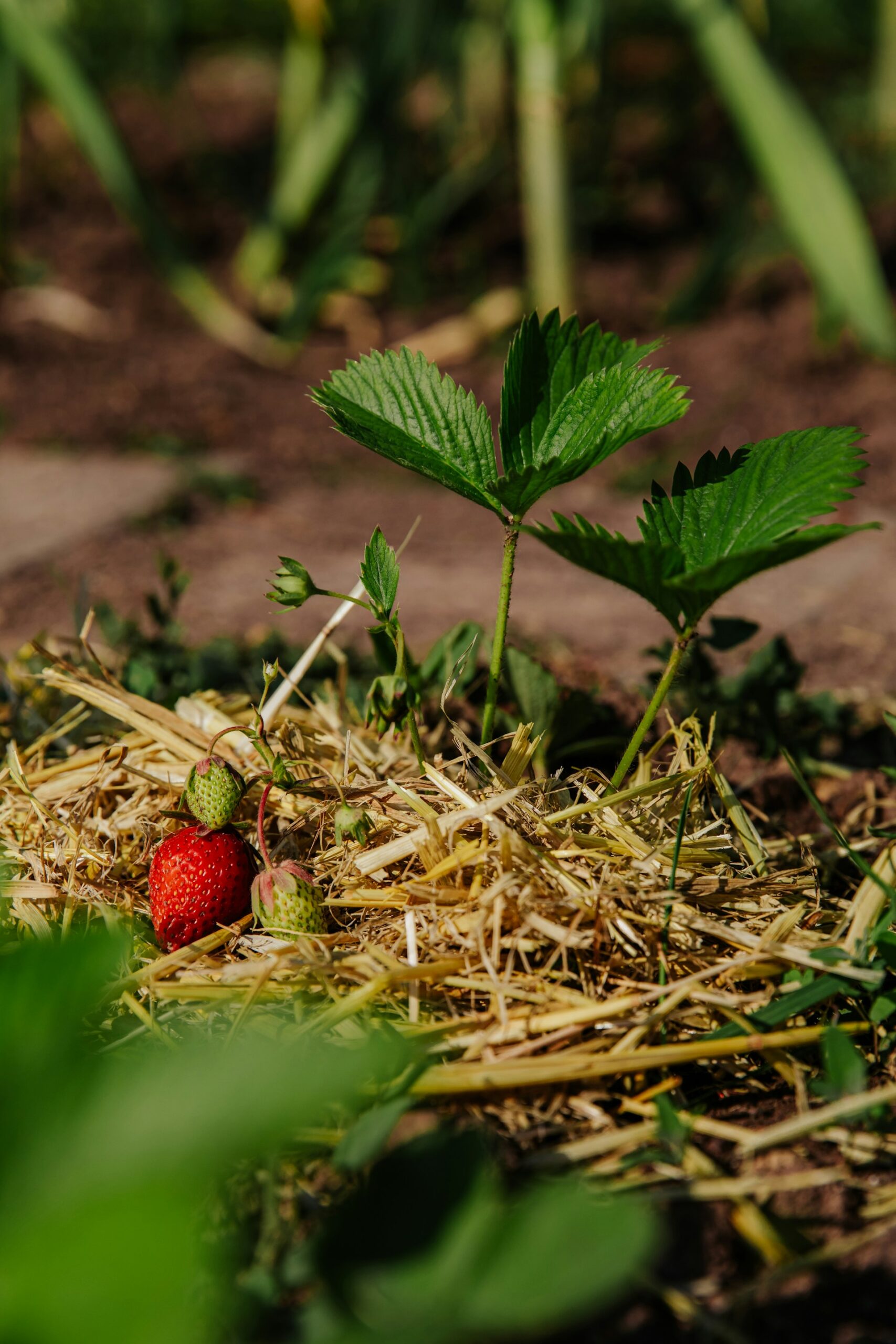
A 2-3 inch layer of clean straw under and around your strawberry plants is the single most impactful thing you can do to prevent rot, and it works on all three diseases simultaneously. This is the fix I’d insist on if I could only give someone one piece of advice.
Here’s what straw mulch actually does. It lifts developing fruit off the soil surface so berries don’t sit in damp earth. It creates a physical barrier that prevents rain and irrigation water from splashing pathogen-laden soil particles up onto flowers and fruit, which is the primary infection route for both leather rot and anthracnose. It reduces humidity around the base of the plants by allowing air to circulate between the soil and the canopy. And it makes conditions harder for slugs, which move and feed most easily on bare, moist soil.
Apply it before flowering begins if you can. A mid-season application still helps with fruit that’s still forming, so don’t skip it just because you’re late. The straw doesn’t need to be pristine, but it should be clean and dry when you put it down. Old, damp barn-bottom straw can introduce mold rather than prevent it.
One important note: don’t substitute black plastic sheeting. Plastic can cause water to pool and puddle underneath the canopy, which actually makes leather rot worse. Straw, hay, and wood chip all work well. I use straw because I can usually get it cheaply from a local farm, and once fruiting finishes I pile it up around the crowns as winter frost protection. In spring I pull it back from the centers and let the new growth push through.
Improve airflow around your strawberry plants
Strawberries in crowded beds stay wet for several hours longer after rain than those with decent space around them. Extended moisture on foliage and fruit is precisely the condition botrytis needs to take hold, so improving airflow is one of the most direct preventative steps you can take.
The recommended spacing is 12-18 inches between plants, with rows oriented so the prevailing wind runs along them rather than across them. That wind exposure speeds drying after rain or irrigation. If your bed is already established and crowded, thinning out the densest sections and removing the oldest, woodiest crowns that are no longer fruiting well makes a real difference, and it’s something you can do now without disrupting the whole planting.
RELATED POST: 15 Reasons Why Your Strawberry Plants Aren’t Producing Fruit
Go easy on the nitrogen
Overfeeding strawberries with nitrogen is a genuine rot trigger, and it’s one that surprises most people. Too much nitrogen pushes an explosion of lush, leafy growth. That dense canopy shades the developing fruit from sun and airflow, keeping berries in still, moist shadow for much of the day. It’s exactly the microclimate fungal disease loves.
Strawberries need feeding, but with a balanced fertilizer rather than anything nitrogen-heavy. Once flowers have set and fruit is developing, switch to a high-potassium feed that supports berry growth without pushing more leaves. I use comfrey liquid feed at this stage, diluted to roughly half the standard concentration. It gives the plants what they need without producing the kind of jungle growth that invites rot. If your plants look very dark green and lush with fruit barely visible underneath the canopy, overfeeding is worth considering as a contributing factor.
Stop watering strawberries overhead

Overhead watering wets foliage, flowers, and fruit directly. It creates exactly the conditions botrytis needs and actively spreads anthracnose spores around the bed in water droplets. This is one of those cases where a well-intentioned habit is actively making the problem worse.
Switch to drip irrigation, with a drip irrigation kit like this one from Rain Bird or water at the base with a hose or watering can directed at the soil, not the plant. Strawberries need about 1-1.5 inches of water per week during the growing season, and all of that should go to the roots. If you water in the morning rather than the evening, any incidental splash on foliage has time to dry before nightfall, which helps considerably.
Pick strawberries more often, and always early in the day
Most gardeners harvest when they get around to it, and that’s understandable. But picking every 2-3 days during the fruiting season makes a measurable difference to rot levels.
Every overripe or damaged berry left on the plant is a potential sporulation site. Frequent picking removes that material before the fungal load builds up, and it gives you a regular opportunity to catch new infections early, before they have time to spread. Think of it as active disease management rather than just harvesting.
When you pick matters as much as how often. Always harvest in the morning, once dew has dried off the plants but before the heat of the day. Never harvest when the plants are wet from rain. When you reach into wet foliage, you carry spores on your hands and clothing from plant to plant across the whole bed. I know the temptation to go out straight after a rain shower to check what’s been lost, but if you’re carrying spores, you’re spreading them. Pick clean and healthy fruit first, remove any infected or damaged berries last, and wash your hands before handling anything else.
Control slugs if you want to harvest any healthy strawberries

Because slug damage opens the door to fungal rot by creating wound sites for spores to enter, controlling slugs is a genuine part of rot prevention rather than a separate problem to deal with later.
Food grade diatomaceous earth, this one has good reviews from Natures Wisdom, sprinkled around the base of your plants works well in dry conditions, physically deterring slugs as they try to cross it. Beer traps are effective too. Bury a shallow container to soil level, fill it with cheap beer, and empty it every day or two. Removing slug shelter is arguably the most important long-term measure. Clear plant debris, weeds, loose stones, and scraps of wood from around the bed, because slugs spend daylight hours hiding in cool, moist spots and emerge at night to feed.
If you want a realistic sense of how bad your slug problem actually is, go out with a flashlight two hours after dark and walk the bed slowly. Most gardeners are genuinely surprised by what they find. Once you’ve seen it, you understand why so many apparently disease-free berries are rotting with no obvious cause.
RELATED POST: How to Control Slugs Naturally
Use low tunnels for persistent wet summers and strawberry rot
If you lose strawberries to rot every single season regardless of what else you do, and you garden in a climate with reliably wet, cool summers, low tunnels are worth serious consideration. This is the recommendation that’s almost completely absent from mainstream gardening advice aimed at home growers, and that’s a shame, because it works.
A low tunnel is a simple frame of wire or plastic hoops covered with polythene sheeting, positioned over the strawberry bed to keep rain off flowers and developing fruit. Research has found that tunnels dramatically reduce both botrytis and anthracnose incidence. In some trials they essentially eliminated fruit rot symptoms even without fungicide. The polythene keeps rain off the berries while open ends allow ventilation to prevent overheating.
A polytunnel hoop kit, like this one, and a roll of clear polythene is all the setup requires. I used this approach during a particularly brutal wet summer when nothing else was keeping pace with the botrytis, and it saved the second half of the season entirely. If you’re in the Pacific Northwest, the upper Midwest, or anywhere that regularly gets cold, wet summers, the investment is worth it.
Clean up the strawberry bed properly at the end of the season
Botrytis, anthracnose, and Phytophthora all overwinter on plant debris, old mulch, and dead foliage left in the bed. Skip fall cleanup and you’re starting next season with a full reservoir of disease inoculum already in place and waiting.
After your last harvest, cut the foliage back hard, down to about 3-4 inches above the crowns. Remove all the cut material and replace the old mulch completely rather than topping it up. Don’t compost anything that was diseased. Add a fresh layer of clean straw over winter to protect the crowns from frost, then pull it back from the centers in early spring when new growth starts.
If you’ve had a serious, persistent disease problem in one section of the bed, it’s worth thinking about rotation. Strawberry beds ideally move to a new spot every 3-4 years. Phytophthora oospores can survive in the soil for many years, and moving the bed away from heavily infected soil makes a real difference to how the next planting performs.
FAQs
Can I eat a strawberry if only part of it has gone moldy?
No. Botrytis produces mycotoxins that can penetrate into the fruit tissue beyond the visibly moldy area, so cutting away the bad part and eating the rest isn’t reliable or safe. Healthy-looking berries picked from the same plant as infected fruit are generally fine to eat, but any berry showing visible mold should go in the trash.
Is there anything I can spray on strawberries to prevent rot?
For home growers, a bicarbonate of soda solution applied to foliage in the evening can help suppress botrytis. Mix 1 tablespoon of baking soda into 1 gallon of water with a small drop of liquid soap and spray it over the plants. It raises the surface pH and makes conditions less hospitable for spore germination. It won’t cure an established infection, but as a preventative through the season it’s worth trying. Reapply after rain. I’m an organic gardener, and while copper-based sprays are OMRI-approved for certified organic production, I prefer to exhaust every cultural control first before reaching for them. If you’re in the middle of a genuinely bad season and nothing else is holding the disease back, a copper soap spray is the least-invasive product option.
Why do strawberries rot so fast after picking?
Strawberries carry fungal spores on their surface, and once picked, the humidity of the fridge gives botrytis everything it needs to progress quickly. Never wash strawberries before storing them. Moisture dramatically accelerates post-harvest rot. Refrigerate them dry, in a single layer if you can manage it, and use them within 2-3 days. Wash them only immediately before eating.
Can strawberry rot spread from one plant to the others?
Yes, and quickly. Botrytis spores are airborne and transfer easily on air currents, on hands, on clothing, and on tools. A single infected berry can spread spores to neighboring plants within hours in warm weather. This is why prompt removal of infected fruit, picking healthy berries before infected ones, and staying out of the bed when it’s wet all matter so much. Every one of those practices limits how far and fast the disease travels.
My strawberries only rot in one part of the bed. Why?
A localized rot problem almost always points to a drainage or microclimate issue in that area. Low-lying sections where water pools after rain create ideal conditions for leather rot. Dense, crowded sections that are shaded from sun and wind will have slower drying and worse botrytis. Check whether water drains freely from the affected area, thin the planting if it’s crowded, and prioritize your straw mulch in that patch. If the same area causes problems every year regardless of what you do, that’s a strong case for relocating the bed.
Does rain always cause strawberries to rot?
Not always, but heavy or prolonged rain during flowering and fruit development significantly raises the risk of all three main diseases. Rain keeps foliage and fruit wet for extended periods and splashes pathogen-laden soil particles up onto developing berries. A wet, cool spring followed by warm, humid early summer is the highest-risk combination. Botrytis in particular thrives in exactly those conditions. Straw mulch reduces the impact considerably by preventing soil splash even in heavy downpours. Low tunnels, if you’re set up for them, eliminate rain contact with the fruit almost entirely.
What’s the best mulch for preventing strawberry rot?
Clean straw is the best mulch for preventing strawberry rot, applied 2-3 inches deep under and around your plants before flowering begins. Hay works too, though it can introduce weed seeds. Wood chip is a solid alternative if straw isn’t available locally. The one mulch to actively avoid is black plastic sheeting, which can cause water to pool underneath the canopy and actually makes leather rot worse. Whatever you use, the layer needs to be thick enough to genuinely prevent soil from splashing up onto developing fruit during rain.
Are some strawberry varieties more prone to rotting than others?
Yes, and variety choice matters more than most people realize. Certain cultivars, including Camarosa and Seascape, are significantly more susceptible to anthracnose fruit rot than others. If you’re in an area with warm, wet summers, choosing a variety with documented disease resistance gives you a head start before the season even begins. Your local cooperative extension office is the best source for region-specific recommendations, since resistance performance varies depending on which disease is dominant in your climate.
You might also like…
How to Grow Strawberries From Scraps