

Affiliate disclosure: This post may contain affiliate links. Please see full disclosure.
The best way to keep potatoes from sprouting before winter ends is to cure homegrown tubers properly, then store them somewhere cool, completely dark, and well ventilated. Aim for roughly 40 to 45°F (4 to 7°C) for long-term table-potato storage if you can manage it without freezing them. A warm kitchen cupboard might look dark enough, but the potatoes can still start sprouting months before you’re ready to use them.
I grow a substantial amount of my own food, and I think storing the harvest well is every bit as important as growing it. Losing a box of potatoes to rot or premature shoots is a miserable return on months of work. You don’t need an elaborate root cellar, but you do need to understand why a damp, freshly dug potato needs different treatment from one that’s been cured and is ready for winter.
Cure homegrown potatoes before storing them

If you’re storing your own harvest, choose mature maincrop potatoes with firm skins. Lift them carefully in reasonably dry weather, and don’t wash them. Brush off loose soil once the surface has dried, but leave any thin coating of soil that doesn’t come away easily. Washing introduces extra moisture and can shorten storage life.
Spread the potatoes in a shallow layer or ventilated crates somewhere dark, with good airflow and relatively high humidity. Cure at about 50 to 60°F (10 to 16°C) for roughly two weeks. This gives the skins time to toughen and allows small harvest scuffs to heal. Don’t leave them in direct sun to dry, because light encourages greening.
Curing doesn’t repair badly cut, bruised, or diseased potatoes. Set those aside rather than trusting them to survive months in a box. Use sound but slightly scuffed potatoes first, and discard anything soft, leaking, or rotten. Commercially sold mature potatoes may already have been cured, so you don’t need to repeat this stage with a grocery-store bag.
Keep the storage temperature cool and steady

Once they’re cured, move your potatoes to their winter home. Around 40°F (4°C) with high relative humidity is an excellent target for long-term storage of table potatoes, while a practical range of about 40 to 45°F (4 to 7°C) suits many home setups. Above 50°F (10°C), you can start seeing sprouts after just two or three months.
Don’t freeze them. Extremely cold storage also changes potato sugars, which can affect flavor and how they brown when fried or roasted. The ordinary refrigerator isn’t my first choice for a big winter harvest, although it can be a reasonable fallback for smaller quantities when a house is consistently warm. It’s better than leaving potatoes beside a radiator.
A cool basement, frost-free garage, insulated shed, or unheated pantry may work, depending on your climate. Put a simple thermometer in the proposed spot and check it for a few days before moving the crop. In very cold regions, an unheated garage can plunge below freezing overnight, while in warm climates that same garage might never get cool enough.
Store them in complete darkness
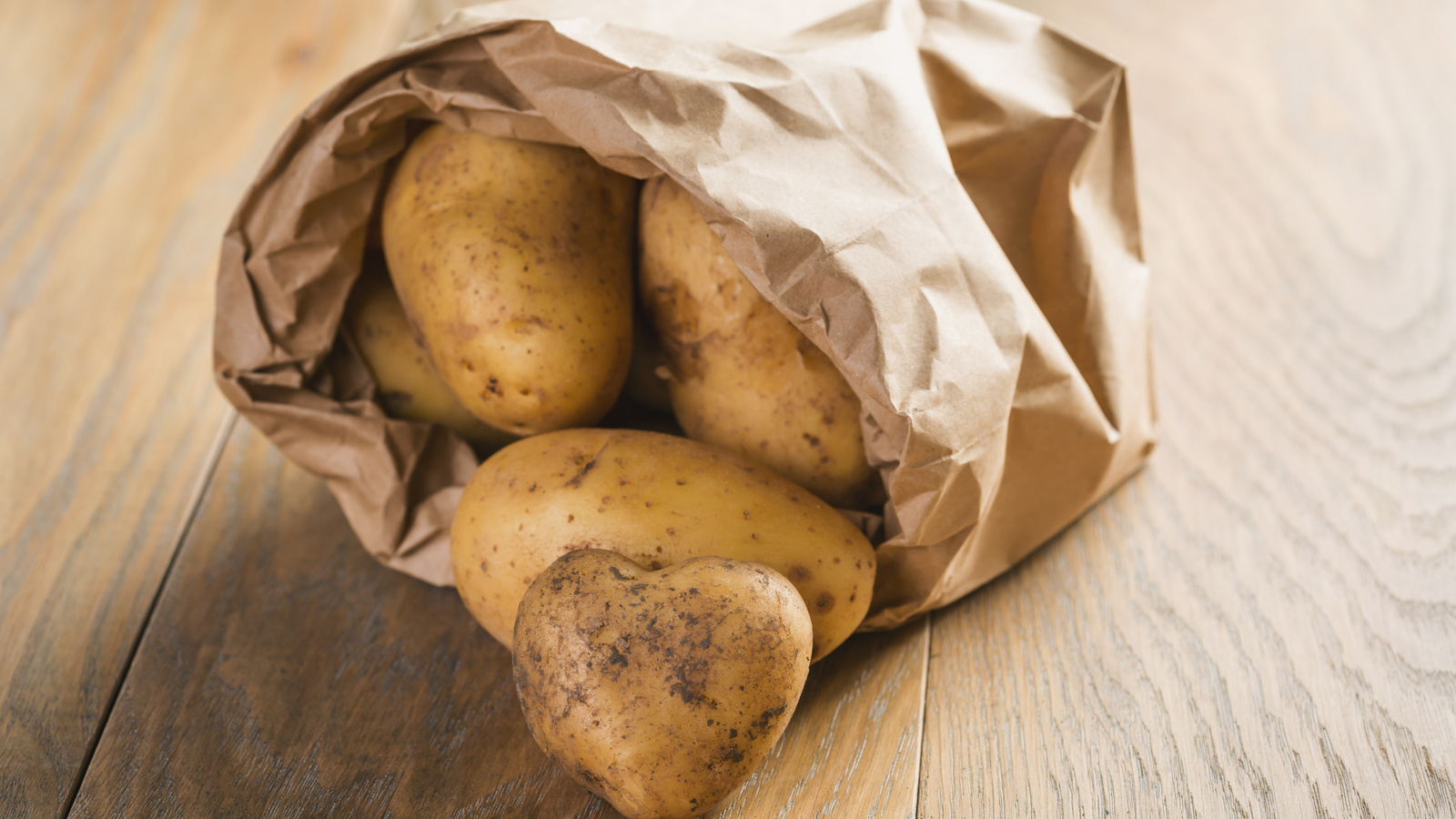
Light is a real problem, not just a cosmetic one. Potatoes exposed to light can turn green, and greening is a warning that potentially harmful glycoalkaloids may have increased. Protect stored potatoes from light from the day you lift them.
A paper sack, ventilated cardboard box with a loose cover, or wooden crate in a dark room works well. If you cover a crate, use a breathable material and don’t block every gap. Avoid clear plastic bags and open baskets on a bright shelf. I’d rather have a simple, properly dark box than a fancy storage container that lets daylight through.
Don’t attempt to rescue a heavily green, bitter, or extensively sprouted potato by peeling a sliver off and hoping for the best. Discard it. Small sprouts on an otherwise firm, ungreened potato can sometimes be removed generously before cooking, but softness, extensive sprouting, green flesh, and an unpleasant taste are reasons to reject it.
Give your potatoes air without drying them out

Potatoes are living tubers, and they keep respiring after harvest. Good airflow helps prevent condensation in stored potatoes. Choose slatted crates, ventilated boxes, or breathable sacks rather than sealing everything inside plastic.
I prefer smaller batches over one enormous pile. They’re easier to inspect, and a rotting tuber is less likely to go unnoticed in the middle. Don’t pack potatoes tightly against a damp wall or directly onto a cold, wet floor. Keep them raised a little so air can circulate underneath.
They also need fairly high humidity to avoid shriveling. That’s different from leaving them wet. If the air is excessively dry, potatoes wrinkle and lose quality; if water condenses on their skins, rot becomes more likely. Aim for a cool, humid environment with ventilation, not a sealed, sweaty bag.
Keep potatoes away from onions and ripening fruit
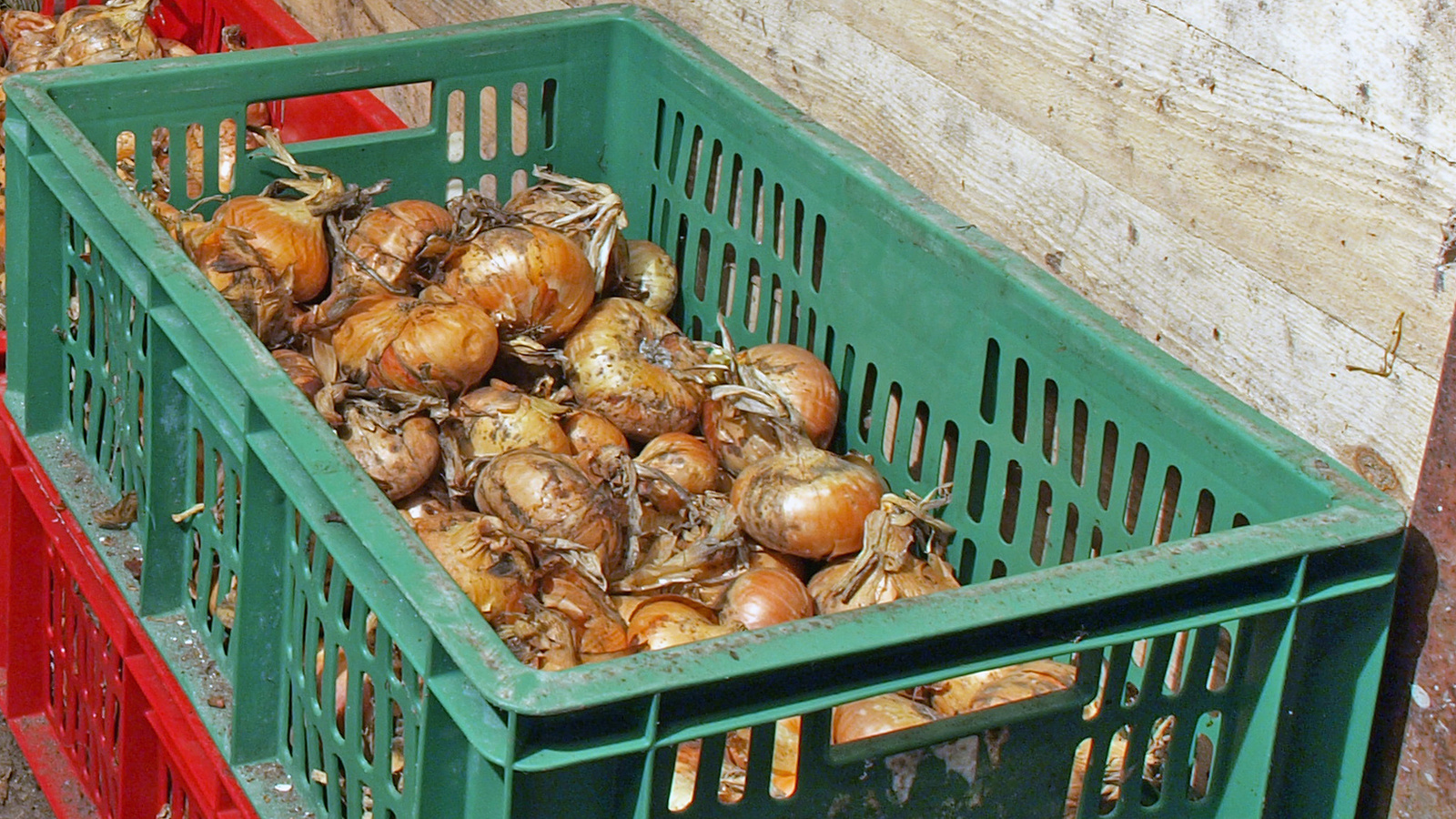
Potatoes and onions are both pantry staples, but I don’t recommend storing them together in the same box or basket. Onions keep best in a drier environment than potatoes, so a storage space optimized for one isn’t ideal for the other. Their strong odors can also affect potato flavor. Separate storage helps protect potato quality.
You’ll often hear that onions automatically make potatoes sprout because of ethylene gas. That explanation is too simplistic. The clearer sprouting warning is for ripening fruit such as apples, which releases ethylene. Keep apples, bananas, and other ripening fruit away from your potato store as well. Fruit-generated ethylene can encourage potato sprouting.
You don’t need separate buildings. A cool potato box in one part of the pantry and onions in a drier, well-ventilated area can be enough. Just don’t treat a crowded mixed-vegetable basket as a long-term storage system.
Check the boxes before one bad potato spoils the rest
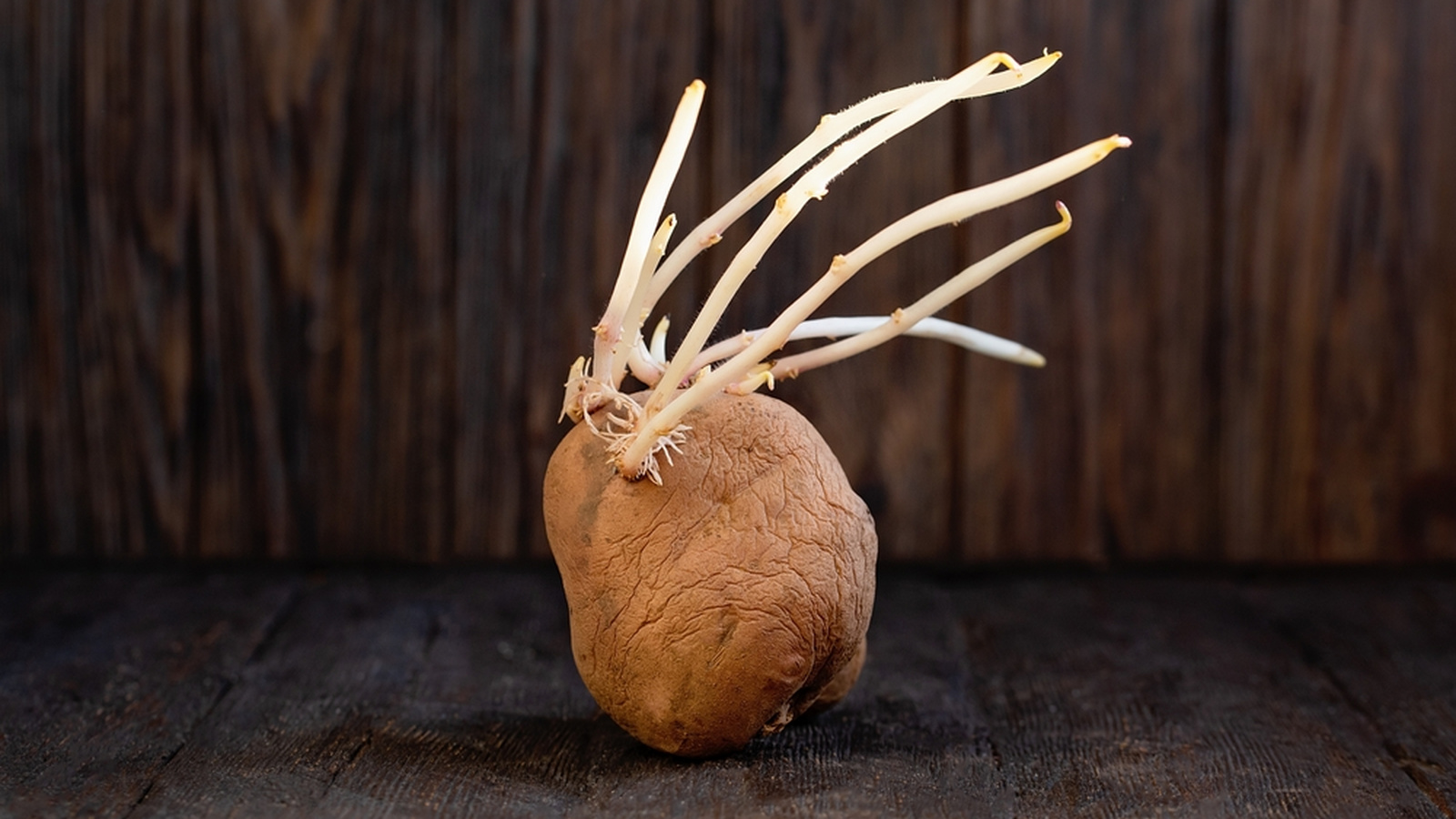
Every couple of weeks, have a quick look through your stored potatoes. Remove any that are soft, leaking, moldy, or starting to rot. Use sound potatoes that are beginning to wrinkle or show tiny shoots sooner rather than later, provided there’s no greening or other sign of spoilage.
If many potatoes are sprouting, check the temperature first. If they’re going soft or showing wet patches, look for condensation, poor ventilation, and damaged tubers. If they’re shriveling while still firm, the air may be too dry. Fix the condition rather than simply shifting the same box from one warm cupboard to another.
Variety and maturity matter, too. Early or thin-skinned potatoes are usually better eaten promptly, while mature storage varieties give you a better chance of keeping a winter supply. Maincrop potatoes are better suited to winter storage than tender new potatoes.
Even well-stored potatoes won’t last forever, and a home pantry won’t always match a purpose-built cold store. But with proper curing, darkness, steady cool temperatures, ventilation, and regular checks, you can keep far more of the harvest in good condition for winter meals instead of watching it sprout away.
You might also like…
How to Plant Sprouted Potatoes (Easy Method for Big Harvests!)

