
Affiliate disclosure: This post may contain affiliate links. Please see full disclosure.
Lunar planting is timing garden tasks like sowing, transplanting, and harvesting to the moon’s phases, based on the old belief that the moon’s gravity pulls water in soil and plants the same way it pulls ocean tides. Gravity theory falls apart under real scientific scrutiny, but there’s a smaller, genuinely interesting effect from moonlight itself that doesn’t, and there’s a free way to test both for yourself this season without risking your harvest.
I’ve grown vegetables for years going purely by frost dates and soil temperature, so I didn’t expect to find much worth taking seriously when I went digging into the lunar planting claims. Most of what’s out there is recycled folklore. But a handful of interesting studies changed my mind about part of it, and I want to walk you through exactly what’s real, what isn’t, and how to use any of it without messing up your growing season.
Lunar Planting Follows the Moon’s Four Phases
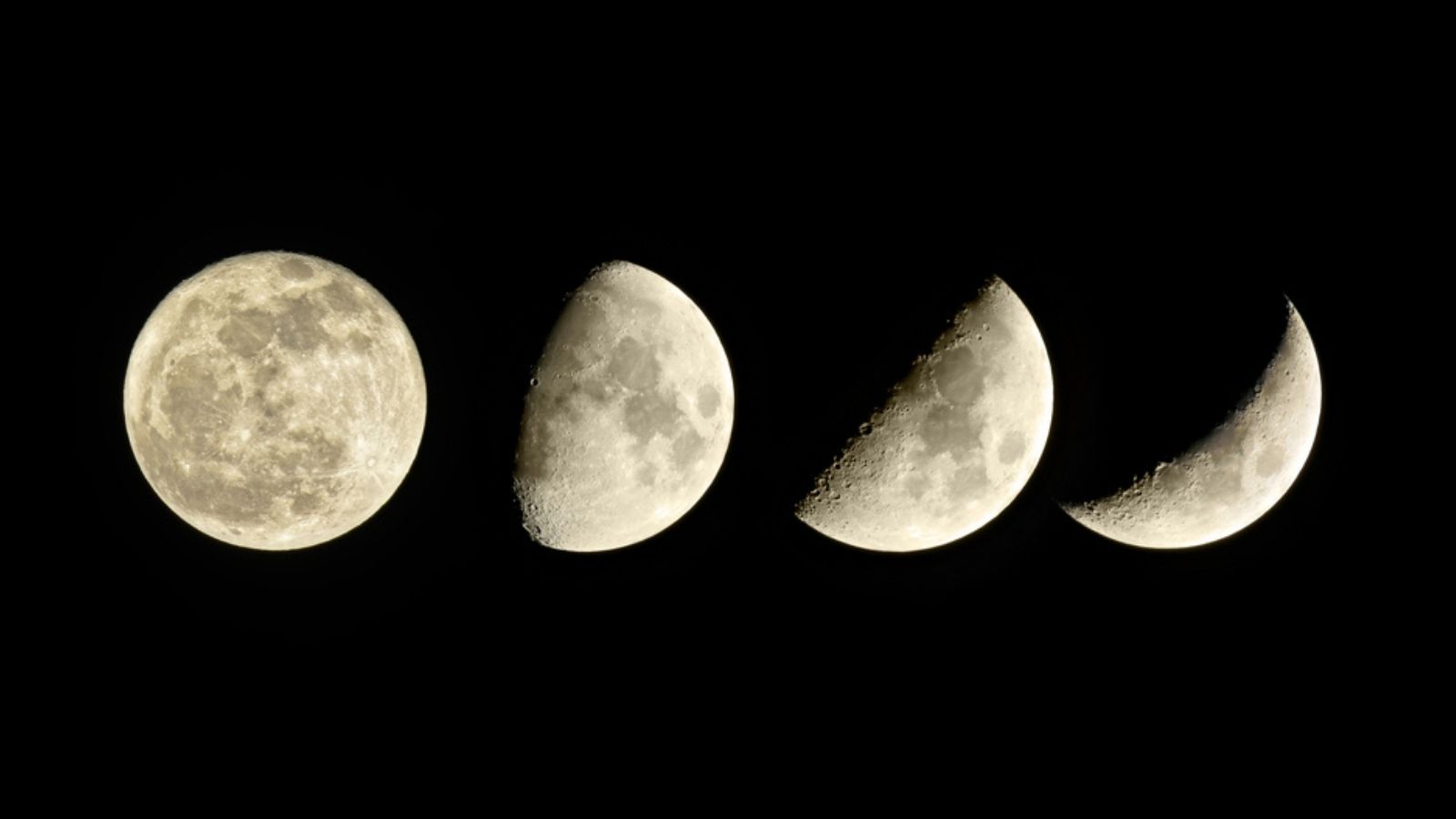
Lunar planting divides the roughly 29.5-day lunar cycle into four phases, each assigned to different garden tasks: new moon, waxing (first quarter) moon, full moon, and waning (last quarter) moon. The system traditionally pairs above-ground, leafy growth with the two weeks the moon is waxing, growing brighter each night, and root growth, bulbs, and below-ground crops with the two weeks it’s waning.
New Moon Favors Leafy Greens and Above-Ground Sowing
The new moon is traditionally the best time to sow leafy annuals like lettuce, spinach, and herbs, on the idea that rising soil moisture at the start of the waxing cycle helps seeds germinate faster. I sow lettuce successionally every couple of weeks regardless of moon phase, so if there’s anything to this, my beds have been testing it by accident for years.
Waxing Moon Favors Fruiting Annuals
The first quarter, roughly a week after new moon when the moon is about half full and growing brighter each night, is considered the window for fruiting annuals that produce their crop above ground, such as tomatoes, peppers, beans, and squash.
Full Moon Favors Transplanting

The full moon, at the midpoint of the cycle around day 14 or 15, is traditionally the best night for transplanting, on the claim that moonlight and rising sap give transplants a boost getting established. This is also the one point in the cycle where the folklore and the actual moonlight research overlap, more on that below.
Waning Moon Favors Root Crops and Storage Harvests
The waning moon, the two weeks after full moon, is traditionally reserved for root crops, bulbs, and garlic like carrots, potatoes, onions, and beets, along with pruning and dividing perennials. It’s also considered the best window for harvesting crops meant for storage, since moisture content in the plant is believed to be lower.
The Tradition Goes Back Thousands of Years
Lunar planting dates back to some of the earliest agricultural civilizations, including ancient Egypt and Babylon, where farmers connected the moon’s obvious pull on ocean tides to their crops and built calendars around it. Layer “planting by the signs” on top, an astrological system that assigns each day to one of the twelve zodiac signs and its associated element (earth, water, fire, or air) to fine-tune the timing further, and you get the more elaborate versions still sold today. The practice survived largely thanks to publications like the Farmers’ Almanac, which has printed lunar planting tables for generations and kept the tradition alive long after most other pre-scientific farming methods fell away.
The Science Doesn’t Support a Gravity Effect on Garden Soil
A 2020 review of the scientific and agricultural literature found no reliable evidence that lunar phases affect plant physiology, after searching plant-science textbooks, agronomy references, and peer-reviewed journals for anything that would justify the practice. The researchers behind that review also checked the physics, and the gravitational pull strong enough to move oceans is nowhere near strong enough to meaningfully move water in a raised bed or a plant’s stem.
Tides happen because oceans are enormous, connected bodies of water held in place by almost nothing except gravity and the seafloor. Your garden soil is nothing like that. Soil holds water through capillary action and organic matter, forces that completely dwarf anything the moon can exert on a patch of dirt roughly 240,000 miles away. That’s why you don’t see a tide in your rain barrel, and it’s why sap doesn’t rise and fall with the moon in any way instruments can detect.
Moonlight Itself May Have a Small, Real Effect
Separate from the gravity claim, a handful of recent peer-reviewed studies have found that moonlight itself, not the moon’s pull, triggers measurable changes in plant cells. Full moonlight, often shortened to FML in the research, is simply the reflected sunlight reaching plants on clear nights around the full moon, roughly 400,000 times dimmer than direct sunlight but still detectable by plant photoreceptors. A 2023 study published in the journal Plants exposed mustard and tobacco seedlings to about five hours of full moonlight over three consecutive nights and found changes in gene expression and cell structure, along with significantly higher seedling growth compared to seedlings kept in darkness.
This was a controlled growth room study on two specific species, not a field trial on tomatoes or squash in someone’s backyard. A 2025 follow-up study confirmed the fresh and dry weight increase in mustard seedlings under full moonlight, though later work has found the underlying cellular signals aren’t fully consistent from study to study, so researchers are still working out exactly what’s happening. It’s a genuinely interesting line of research and the closest thing to real evidence in this entire topic, but it’s early, it’s about light exposure rather than calendar dates, and it doesn’t remotely justify the elaborate phase-and-sign systems sold as gardening gospel. Think of it as one small, real thread in an otherwise unsupported tapestry.
Waiting for the Right Phase Can Cost You Your Planting Window
If you garden in a short season, holding off on planting to wait for the “correct” lunar phase can push you past your actual frost-safe window, and that’s a far bigger risk to your harvest than anything the moon is doing. A full lunar cycle runs about 29.5 days, which means the “ideal” phase for a given crop can land two or three weeks after your soil has already warmed up and your last frost date has already passed.
I’ve seen new gardeners get so anxious about hitting the exact right moon phase that they delay direct-sowing beans or transplanting tomatoes by two full weeks. In a 100-day growing season, that’s a real chunk of your harvest gone for nothing. If you’re gardening somewhere with a long, forgiving season, this matters less. If you’re working with a short window, your frost dates and soil temperature should always win.
Try Lunar Planting as a Bonus, Never a Substitute
Use lunar planting as a fun, free layer on top of proven timing methods, never as a replacement for them. Your frost dates, soil temperature, and days-to-maturity numbers are the real drivers of a successful harvest. If you want to see whether the moon adds anything for yourself, here’s a low-risk way to find out.
Pick one crop you grow in enough quantity to split, lettuce or bush beans work well. Sow half a row on your normal schedule and half timed to the appropriate lunar phase, keeping soil, spacing, and watering identical between the two, then track germination speed and final yield at harvest. Do that for a season or two and you’ll have your own honest answer, which is worth more than anything a calendar can tell you. And even if the biology never holds up, using moon phases as a garden task reminder, sow this week, transplant next week, prune after that, is a genuinely handy organizing habit in its own right.
FAQs
What’s the difference between planting by the moon and planting by the signs?
Planting by the moon uses only the four lunar phases, new, waxing, full, and waning, to decide what to plant when. Planting by the signs adds a second layer on top, assigning each day to one of the twelve zodiac signs and its associated element to supposedly fine-tune the timing further. Planting by the signs is the more elaborate, astrology-based version of the same underlying tradition.
Which moon phase is best for transplanting?
Traditional lunar planting guides recommend transplanting around the full moon, when moonlight is strongest and sap is believed to be rising. There’s no reliable evidence that transplant success depends on moon phase, so the more useful rule is to transplant on a cloudy, calm day regardless of the date, since that reduces transplant shock far more reliably than lunar timing does.
Does the moon phase affect when you should harvest?
Lunar tradition says to harvest crops you plan to store during the waning moon, when moisture content is supposedly lower and crops keep longer. There’s no measurable evidence behind this specific claim, and the timing that actually determines storage life is harvesting at the right maturity stage and curing crops properly afterward.
Is there a reliable free lunar planting calendar?
Most moon phase apps and almanacs, including the Farmers’ Almanac’s online moon phase calendar, will tell you accurately which phase the moon is in on any given date, since that part is just astronomy and isn’t in dispute. Where these calendars get shakier is the specific planting advice layered on top, which is folklore rather than science, so use them for phase tracking and make your own planting decisions based on your local frost dates.
Why do so many experienced gardeners still swear by it?
Part of it is genuine tradition passed down through families and communities, and part of it is that lunar planting calendars often accidentally line up with sensible seasonal timing anyway, since a 29.5-day cycle naturally spreads sowing dates out in a way that resembles good succession planting. When someone follows the calendar and has a good harvest, it’s easy to credit the moon rather than the fact that the timing happened to be reasonable regardless.
Does moon timing matter for pruning too?
Traditional guides recommend pruning during the waning moon, believing sap draws down into the roots and reduces stress on the plant. There’s no scientific backing for this specific claim, and the timing that actually matters for pruning is the plant’s dormancy and the weather. Prune most woody plants in late winter while they’re dormant, and avoid pruning right before a hard frost or during active summer growth.
Lunar planting won’t ruin your garden, but it won’t save it either. The gravity-based version of the tradition doesn’t hold up against real physics or the peer-reviewed literature, and the one part that does have genuine research behind it, moonlight’s effect on plant cells, is still early and doesn’t map onto a simple “plant tomatoes on the full moon” rule. Use your frost dates first, use the moon as a fun experiment or a task reminder second, and you’ll get everything useful out of this tradition without any of the risk.
You might also like…
The Three Sisters Garden: Companion Planting Corn, Beans, and Squash