
Affiliate disclosure: This post may contain affiliate links. Please see full disclosure.
An olla is an unglazed clay pot that you bury in your soil and fill with water, and it can cut your garden watering time dramatically while using up to 70% less water than a hose or can. These are brilliant for conserving water, making watering low-maintenance, and keeping your garden sufficiently moist. They are invaluable if you’ve got lots of things that need watering, and they are, in my opinion, better than drip lines, soaker hoses, and other “low effort” watering methods. The ancients really knew what they were doing in the garden. And yeah, I know I’m a food-growing, history-loving weirdo, but seriously, we can learn from those ancient people.
What an Olla Is (and Why It Beats Watering by Hand)
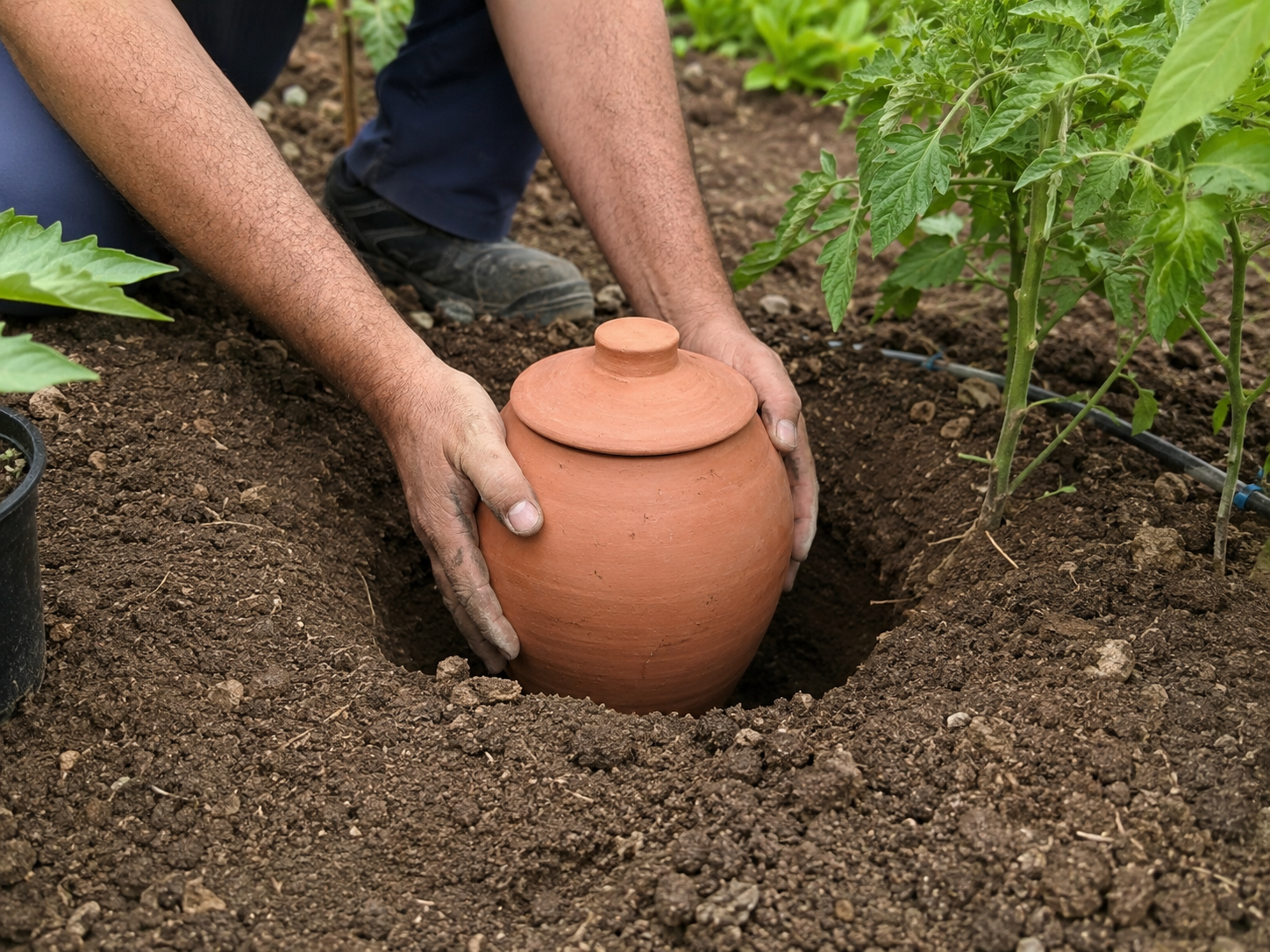
An olla is a bulbous clay pot with a narrow neck and a lid, buried in the ground up to that neck and filled with water. Soil moisture tension is the pull that dry soil exerts on water, drawing it out through the pot’s porous, unglazed walls exactly where roots need it, and slowing down the moment the surrounding soil is already damp. That’s the whole trick. No pump, no timer, no fiddly drip lines to untangle in spring.
People have been doing this for roughly 4,000 years. The earliest written record traces to China and North Africa, and similar clay pot irrigation shows up independently in Greek, Roman, and Native American growing traditions as it spread through arid regions of the world. The soil next to a working olla stays evenly moist a few inches down, never soggy on top, never bone dry underneath.
How to Make Your Own Olla for Next to Nothing
You can make a working olla from any unglazed terracotta pot, as long as you seal the drainage hole so water seeps out through the porous sides instead of gushing straight out the base. Pick a pot with relatively thin walls, since thick ones slow the seepage to a crawl. Plug the hole with some cork, an old tile, or even a large pebble. You’ll also need to cover the top of the pot to stop wildlife falling in and drowning. I love how little this costs. If you don’t have any terracotta pots, you can pick them up at yard sales for next to nothing.
Burying and Using Your Olla in the Garden
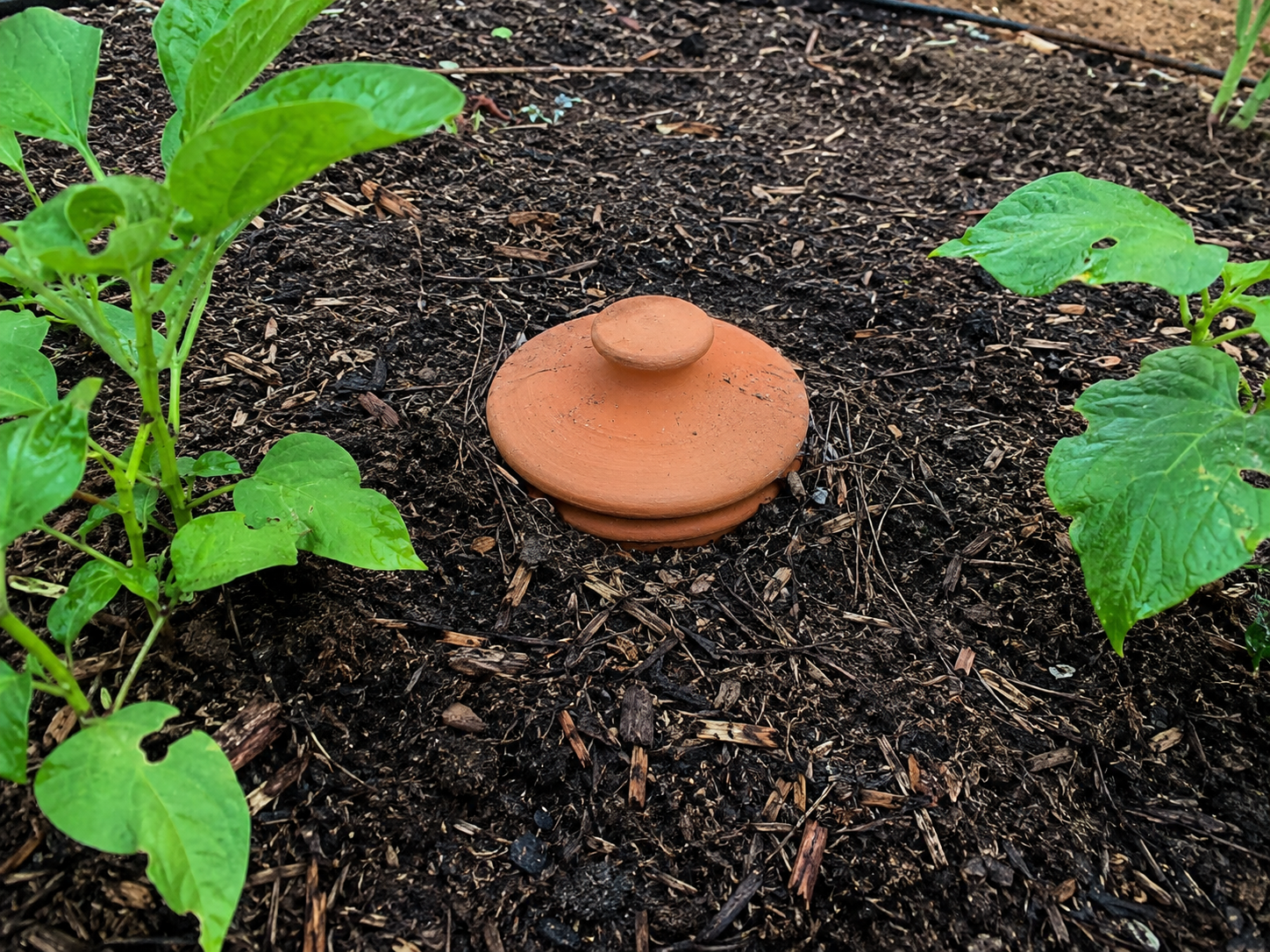
Dig a hole deep enough that only the last inch or two of the neck pokes above the soil, pack the soil firmly against the sides so there are no air gaps, and plant your thirstiest crops within about half the pot’s diameter. A one-quart olla waters roughly a one-foot circle of soil, while a gallon-sized one stretches to closer to two feet.
Top it up every few days in hot weather and check the level rather than waiting for plants to show stress. Never let it run completely dry, or you’re basically starting the saturation process over from scratch once you refill. Skip liquid fertiliser in the water itself, since the particles clog the pores over time and turn your reservoir into a fancy paperweight. If you’re anywhere that gets hard freezes, lift the olla out before the ground freezes solid, since water expands as it turns to ice and will crack the terracotta.
Best Plants for Olla Watering (and a Few to Skip)
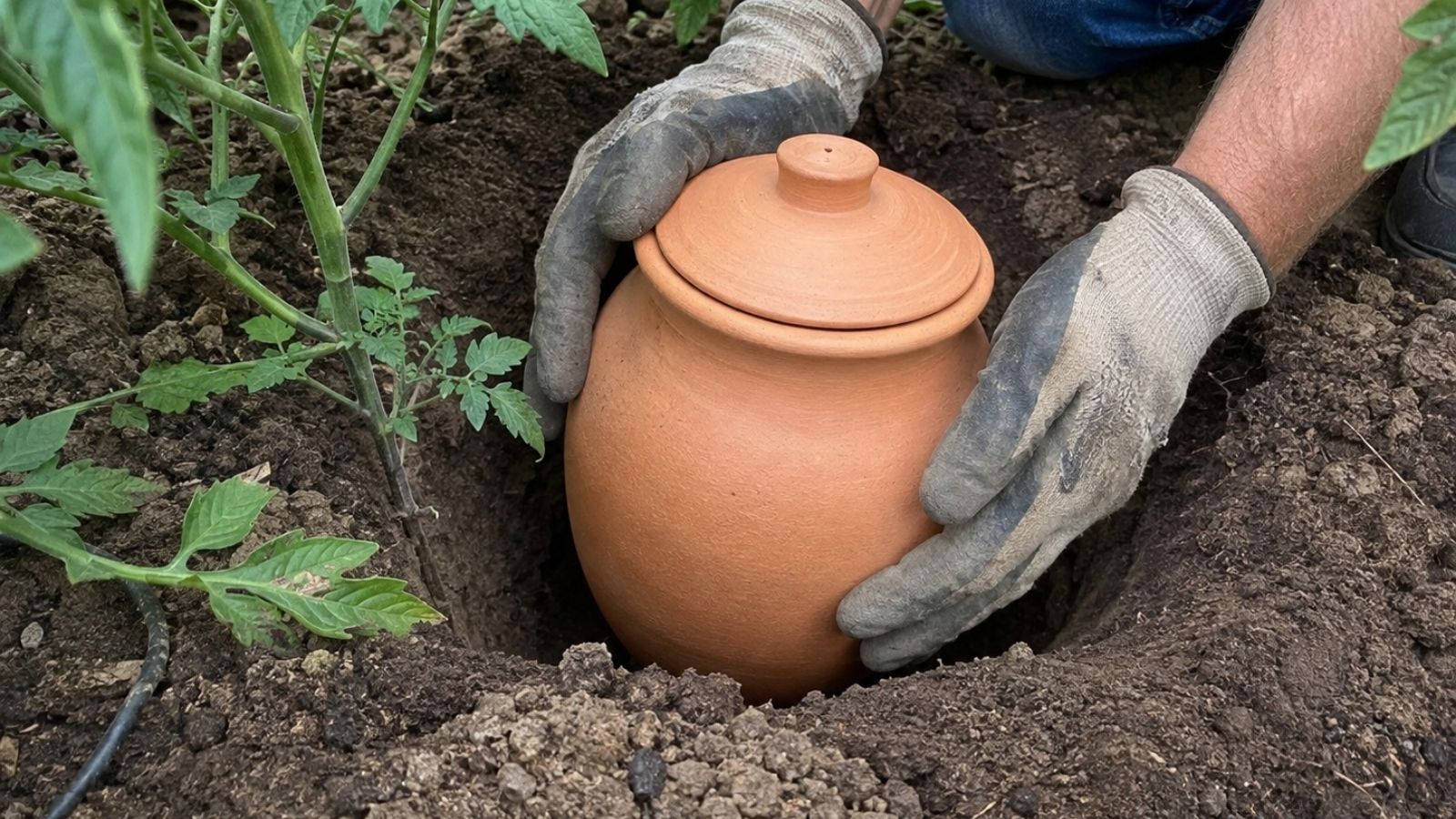
Tomatoes, squash, peppers, cucumbers, and leafy greens are the standout performers with ollas, because their fibrous roots spread out in every direction and happily seek out moisture wherever it is. I run three ollas through my tomato bed every summer and haven’t hand watered a single plant in that bed for years.
Carrots and other long taproot vegetables tend to curve toward the pot instead of growing straight down, which won’t kill them but will leave you with some oddly bent roots at harvest. Grains like wheat cover too much surface area for one small pot to keep up with, so I’d stick to a hose or drip line for anything grown at that scale. For everything else in a typical vegetable bed, an olla earns its keep fast.
FAQs
Do ollas work in raised beds and containers, or only in-ground gardens?
Yes, ollas work well in raised beds and large containers, not just open ground. Use a smaller olla in a container, generally one that holds a quart or less, so there’s enough soil volume around it for the moisture to spread before it hits the wall.
How often do I need to refill an olla?
Most ollas need refilling every five to seven days in average summer weather, though hot spells and sandy soil will drain them faster. Check the water level rather than working to a fixed schedule, and top it back up once it drops below about half full.
Does hard tap water cause problems in an olla over time?
Yes, hard water gradually clogs the clay’s pores with mineral deposits, slowing how well the olla releases water. Use rainwater when you can, and give the pot an annual soak and scrub with distilled water to keep it working properly.
Do I need to dig up my olla for winter?
If you get regular hard frosts, yes. Water left inside an olla will freeze and expand, and that’s usually enough to crack unglazed terracotta. Lift it out before the ground freezes, let it dry fully, and store it somewhere sheltered until you’re ready to plant again in spring.
You might also like…
What Is Lunar Planting, and Should You Try It?