
Affiliate disclosure: This post may contain affiliate links. Please see full disclosure.
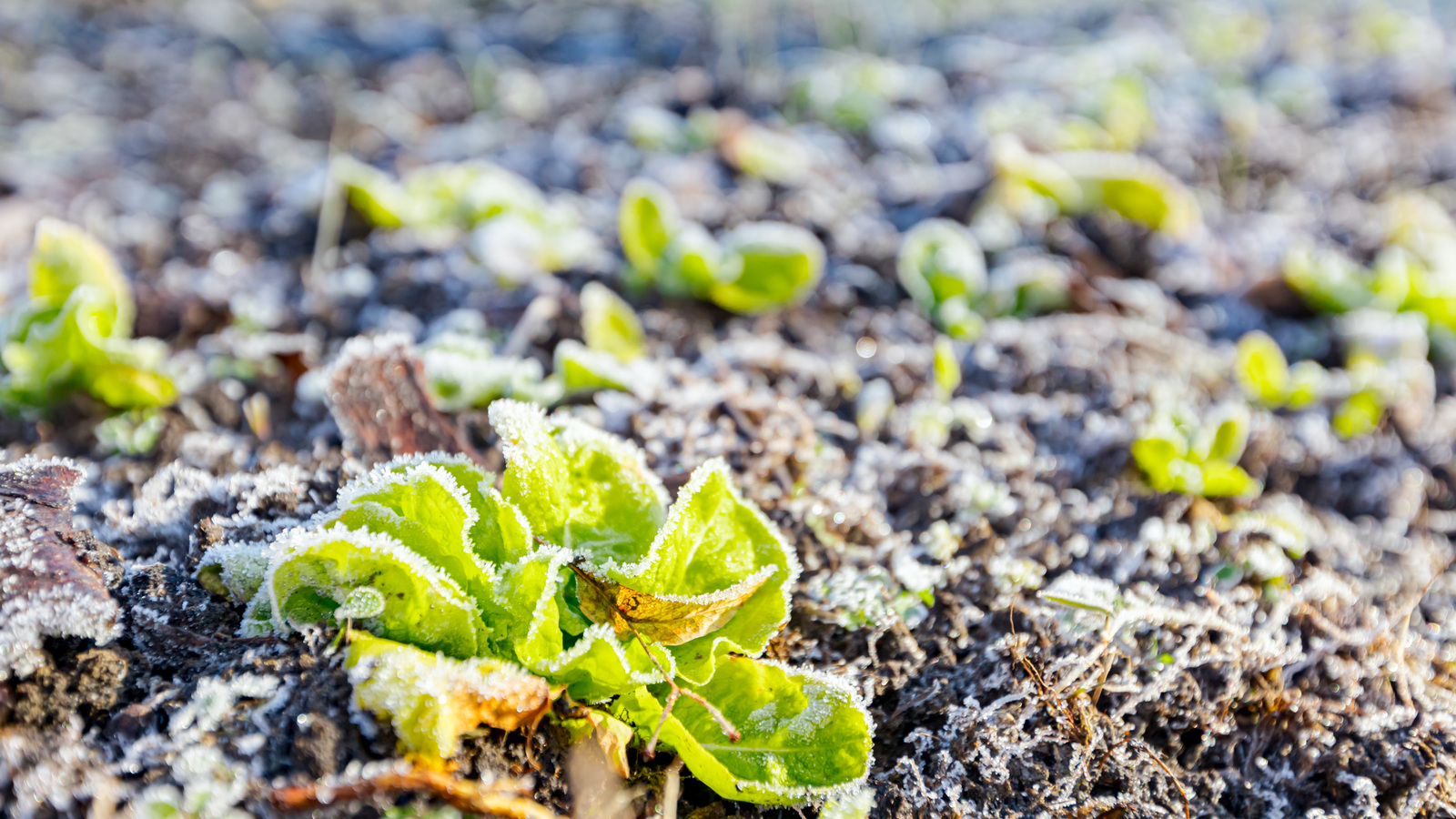
Lettuce will often survive a brief light frost, so you don’t need to clear the bed just because freezing weather is forecast. Cover vulnerable plants before evening, harvest ready heads if a harder or longer freeze is coming, and leave any frozen leaves alone until they’ve thawed naturally.
The useful question is how much cold your particular crop can take while staying worth eating. A plant can survive with damaged outer leaves, but that doesn’t give you the salad you were hoping to pick. I’d rather harvest a good head today than gamble it for a little extra growth.
Check the hourly forecast, not just the overnight low
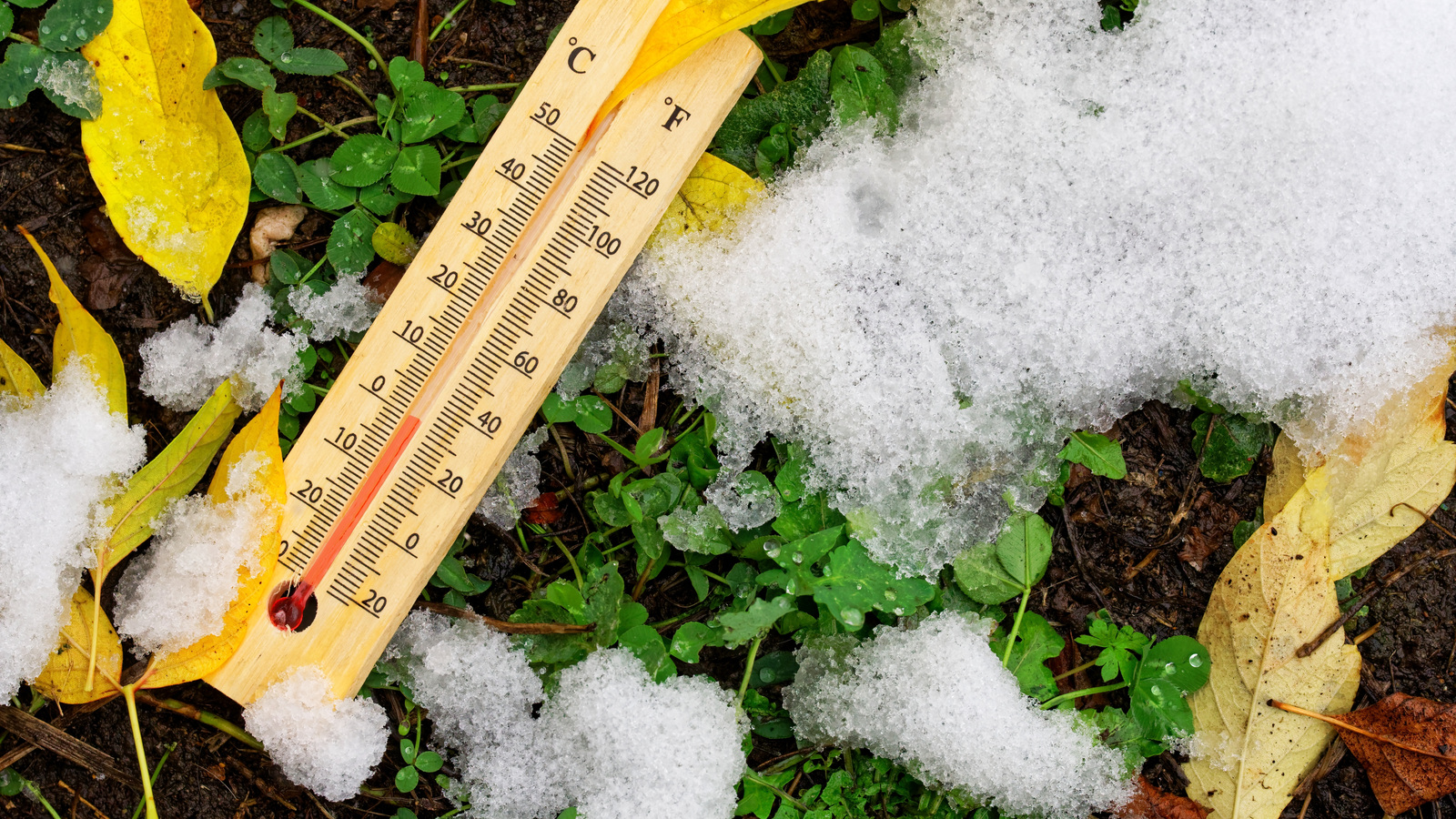
Lettuce is a semi-hardy crop that tolerates light frost around 28 to 32°F (-2 to 0°C). Treat that as a general guide, not a promise that every variety and every leaf will come through untouched.
Look at how long the temperature is expected to stay below freezing and whether the following day warms up. A short dip just before dawn is a different problem from a whole night below freezing followed by another cold day. Repeated or prolonged freezes increase the risk of injury.
Below about 28°F (-2°C), I’d be more cautious, particularly with ready-to-harvest heads or a crop whose cold tolerance is unknown. If a prolonged freeze is forecast and all you have is a thin sheet, harvest what you can use before it arrives.
Remember that the forecast describes the wider area. On a clear, calm night, leaves near the ground can become colder than the reported air temperature. Low pockets in the garden can also collect cold air. A minimum thermometer at lettuce height helps you learn what your own bed experiences.
Judge the variety and its growing history together

A lettuce selected for autumn or winter growing has a better starting point than a variety chosen mainly for summer production. Check the seed packet or supplier’s description if you still have it. For example, ‘Winter Density’ is selected for winter hardiness, but its name doesn’t make it immune to a severe freeze.
Plant history matters, too. Lettuce that has grown outside through gradually cooling weather has had time to acclimate. A soft transplant recently brought out of a warm greenhouse hasn’t had the same preparation. Give those newly exposed plants priority when cover is limited.
Don’t assume the biggest plant is the toughest. Well-hardened immature lettuce can tolerate cold that damages plants nearing harvest maturity. A small, established autumn plant and a newly planted greenhouse seedling may be the same size but respond very differently.
If you don’t know the variety, work with what you can see and the weather it has already experienced. Covering an unknown crop through a light freeze is a sensible precaution. Expecting it to overwinter without a suitable setup is a much bigger gamble.
Harvest the finished crop and cover what still has value
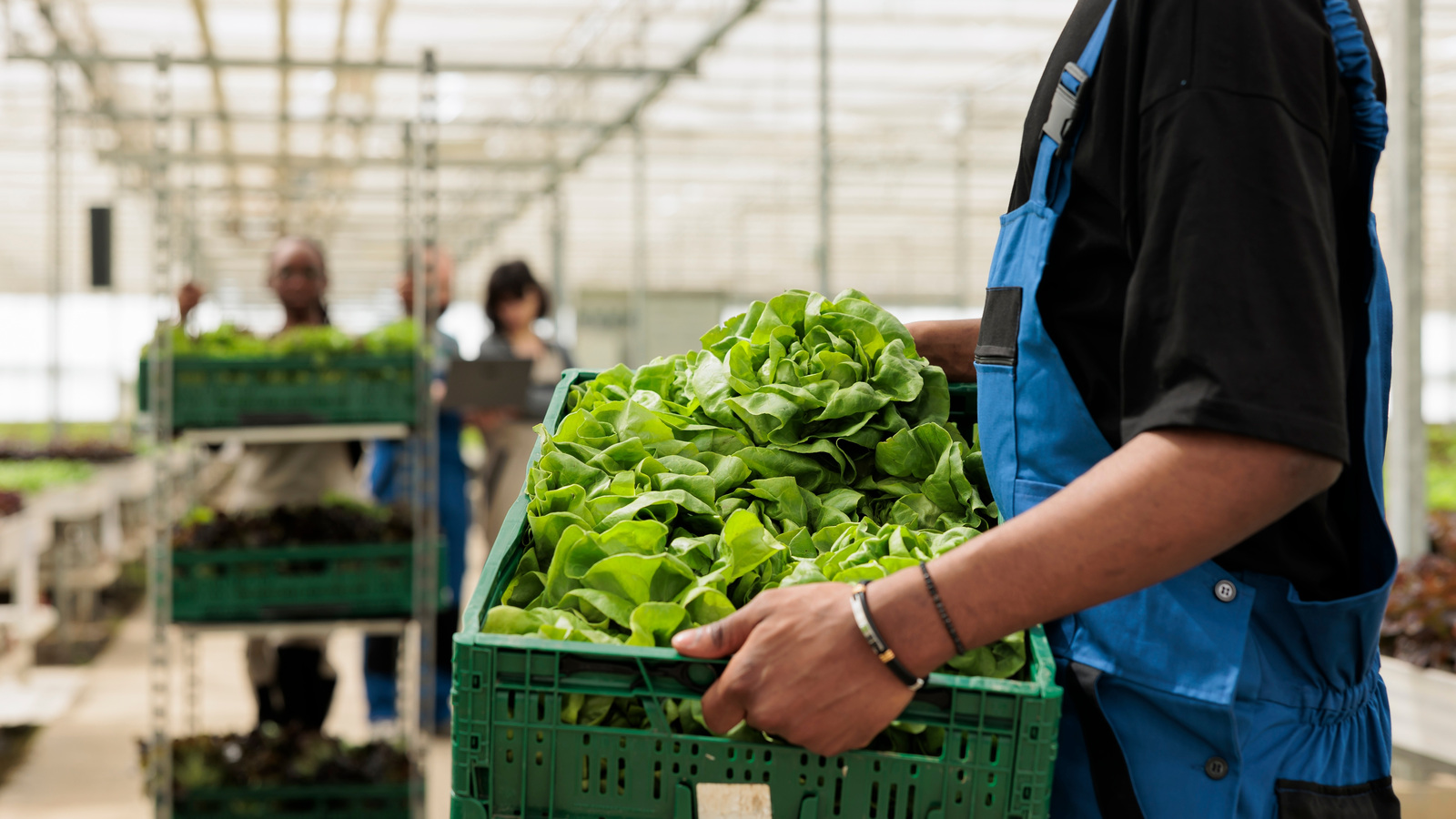
Before a substantial freeze, pick firm, ready heads and usable leaves you expect to eat. Harvest while the leaves are thawed and dry enough to handle, then refrigerate promptly. There’s little advantage in leaving a finished head outdoors simply to prove that it can survive.
For loose-leaf lettuce, take a modest picking of usable outer leaves if conditions suit, leaving the growing center intact. Don’t strip every plant down to a tiny center and expect a quick replacement crop as daylight and temperatures fall.
Keep healthy, smaller plants under protection when the forecast offers more growing or harvesting weather afterward. Covers can buy useful time, but they won’t create summer growth in a dark, cold week.
Use frost fabric and anchor it to the ground

For a bed you want to keep harvesting, breathable horticultural fleece or frost-rated row cover is convenient. Check the material’s weight and stated frost protection. Thin insect mesh and insulating frost fabric aren’t interchangeable, and heavier fabric usually admits less light.
The protection row cover provides depends on its weight. It gives you a margin of warmth, not a guaranteed minimum temperature beneath it. Wind, soil warmth, gaps around the edges, and the length of the freeze all affect the result.
Set low hoops over the lettuce, drape the fabric over them, and secure the edges all the way around with boards, soil bags, or suitable staples. Leave enough room for the leaves and keep the fabric from flapping against them. For a small planting, a properly secured cloche can do the same job.
Cover before the bed loses its daytime warmth. Bring the covering down to the soil on every side so it can help retain heat released from the ground. Wrapping only the tops of the leaves, with open gaps underneath, misses much of the benefit.
Improvise carefully if you only need one night’s protection
A clean sheet over supports can help during a light frost if that’s what you have available. Keep heavy blankets off the lettuce itself, secure the edges, and remove opaque coverings when the cold has passed. These are temporary covers, not something to leave over salad plants for days.
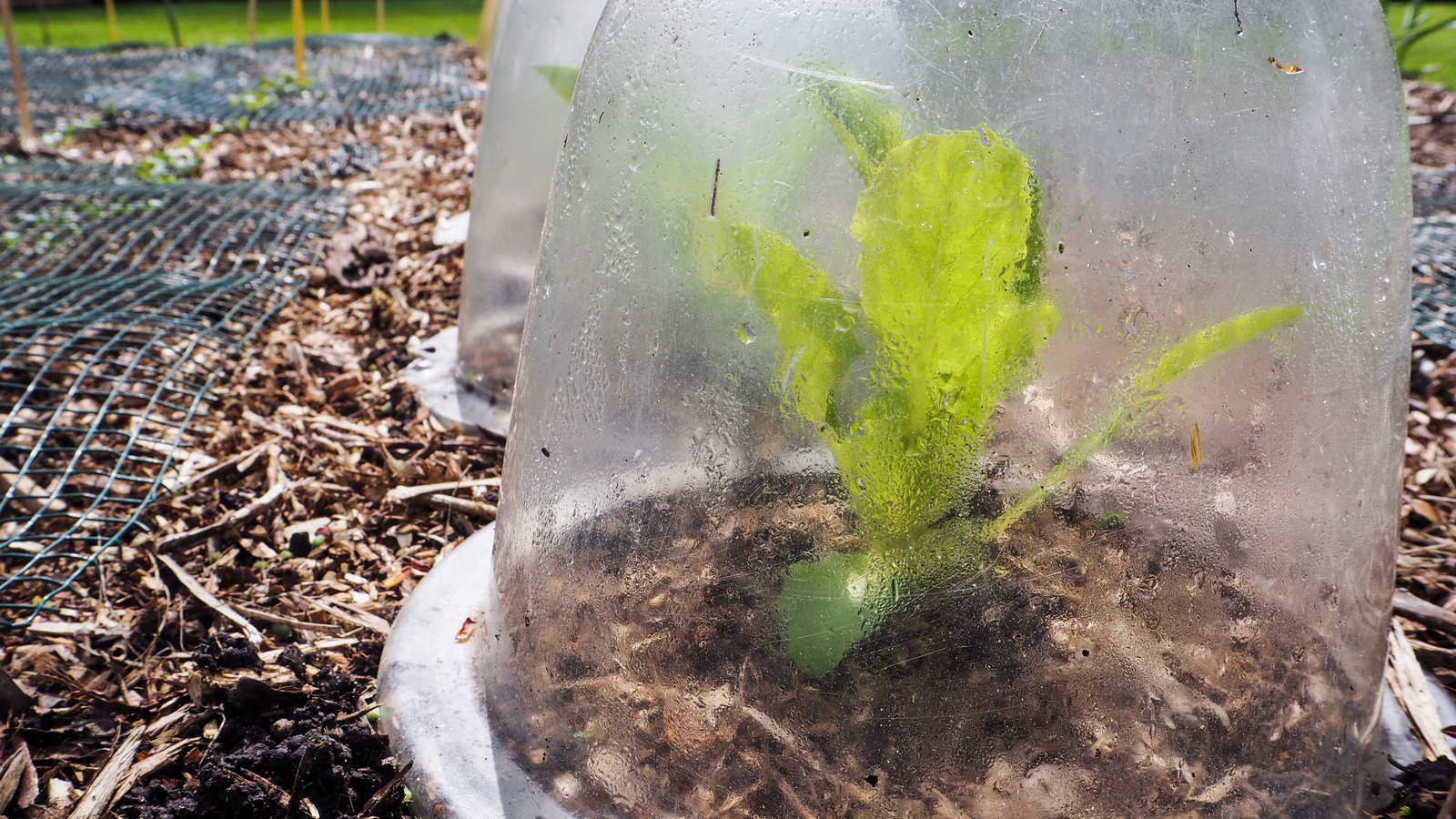
If you use plastic, support it above the crop so it doesn’t touch the leaves. A clear plastic cloche or tunnel also needs daytime ventilation. Don’t drape a plastic bag directly over a lettuce head and assume it provides the same protection as frost fabric.
Small containers can be moved to a sheltered, frost-free place for the night if you can lift them safely. Return them to suitable light afterward. An unheated greenhouse or shed may still freeze, so check conditions there rather than assuming a roof guarantees protection.
Vent or remove covers when the weather changes

Remove sheets and blankets once temperatures are above freezing and the foliage has thawed. With a clear cloche, cold frame, or plastic tunnel, check early on sunny mornings and open vents or lift the cover as needed. Sunshine can heat a small enclosure even when the air outside feels chilly.
Breathable row cover can stay on during suitably cool days, but heavier covers can trap too much daytime heat and reduce light. Open or remove them when conditions warm, and replace them before evening if another freeze is forecast.
Check soil moisture beneath covers, particularly where plastic keeps rain out. Water when the soil needs it, preferably early enough for wet foliage to dry. Constantly damp leaves and a closed, poorly ventilated cover aren’t a good long-term arrangement.
Let frozen leaves thaw before you touch or pick them
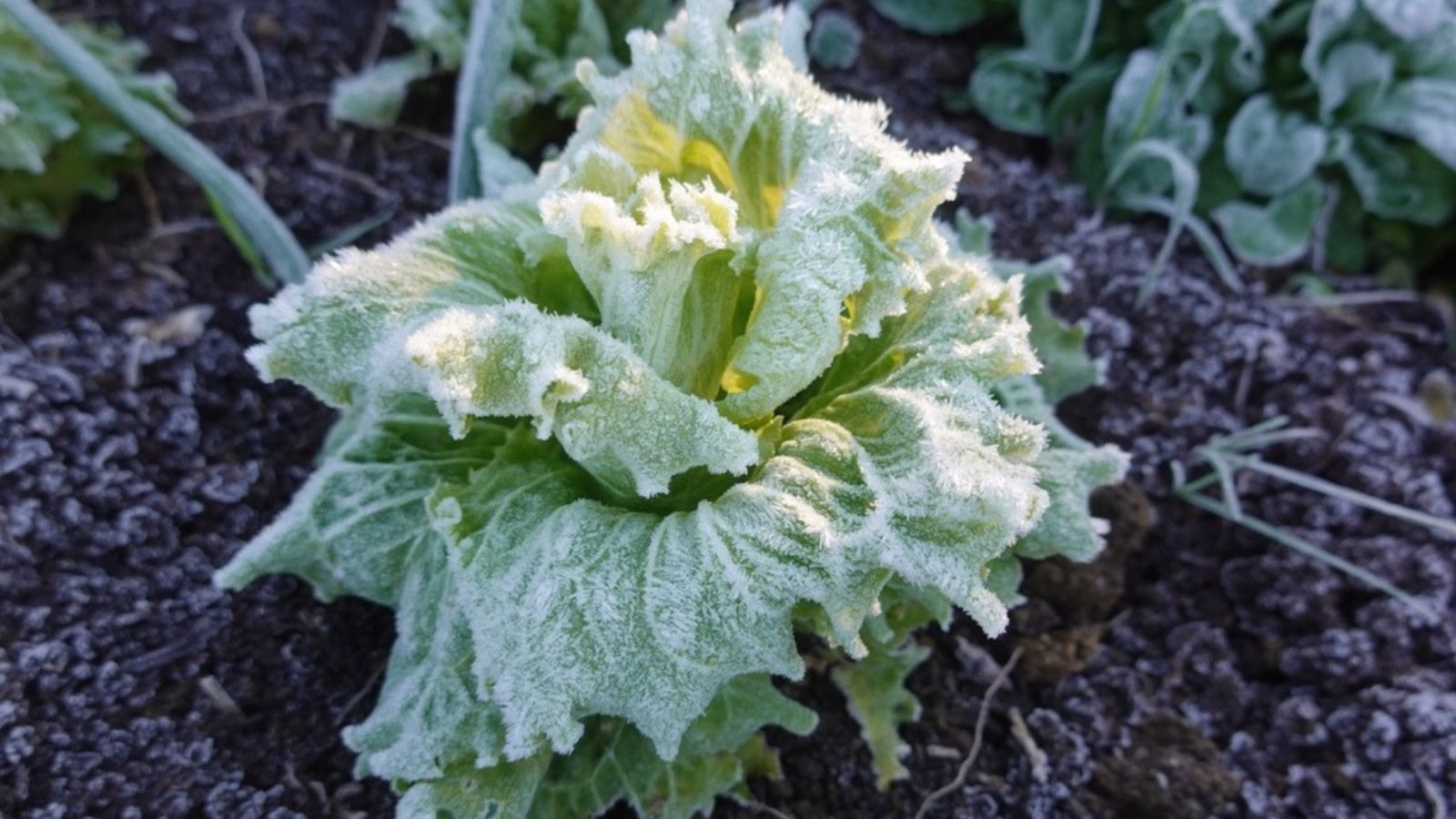
If you find frosted lettuce in the morning, wait. Don’t harvest leaves while they’re frozen; let them thaw naturally on the plant. Avoid rubbing, squeezing, or pulling them apart to see whether they’re all right. If cover material has frozen onto the foliage, don’t tug it free.
Judge the crop after thawing. Leaves that regain their normal shape and firmness may still be usable. Water-soaked patches, collapsed tissue, and areas that later turn brown suggest freeze damage. Dead tissue won’t recover, even if the center of the plant survives.
Remove badly damaged leaves once you can handle the crop normally. Keep harvesting sound growth if the plants recover, but discard slimy or rotting material. If another deep freeze is coming, bring in the remaining usable crop rather than repeating the same gamble.
For tonight, start with the lettuce that’s ready to eat. Harvest that if the forecast is doubtful, secure a suitable cover over the rest, and leave tomorrow’s frozen leaves alone until they thaw.
You might also like…
10 Ways to Protect Plants From Frost