
Affiliate disclosure: This post may contain affiliate links. Please see full disclosure.
Laundry bluing is an old-fashioned way to make yellowing white clothes and linens look brighter without reaching for chlorine bleach. It sounds rather ridiculous to add blue to white laundry, but there’s a good reason generations of households did exactly that. A tiny amount of blue counteracts the yellow tones that make otherwise clean fabrics look dull.
And this wasn’t some obscure household trick. Bluing was once a normal part of washday, particularly for white cotton sheets, table linens, shirts, and other items that had lost their crisp appearance. It’s still available today, although you need a surprisingly small amount to get the effect.
Why adding blue makes whites look whiter

White cotton and linen can develop a yellowish cast with age, washing, and ordinary wear. Because blue and yellow sit opposite each other in color theory, a very faint blue tint visually offsets some of that warmth. The fabric appears cooler, cleaner, and whiter to your eye.
That’s the clever part. Bluing doesn’t actually remove the yellowing. It isn’t a stain remover, detergent, or bleach. Instead, it leaves a very small amount of blue color in the fabric to change how you perceive the white. The effect gradually washes out, so it can be repeated when needed.
If you’ve got white sheets that are freshly washed but still look a bit tired, that’s the sort of problem bluing may help with. But if they’re grubby, greasy, or stained, I recommend dealing with the dirt first. There’s little point making dirty fabric look a slightly different shade of dirty.
The little blue bag that used to be part of washday
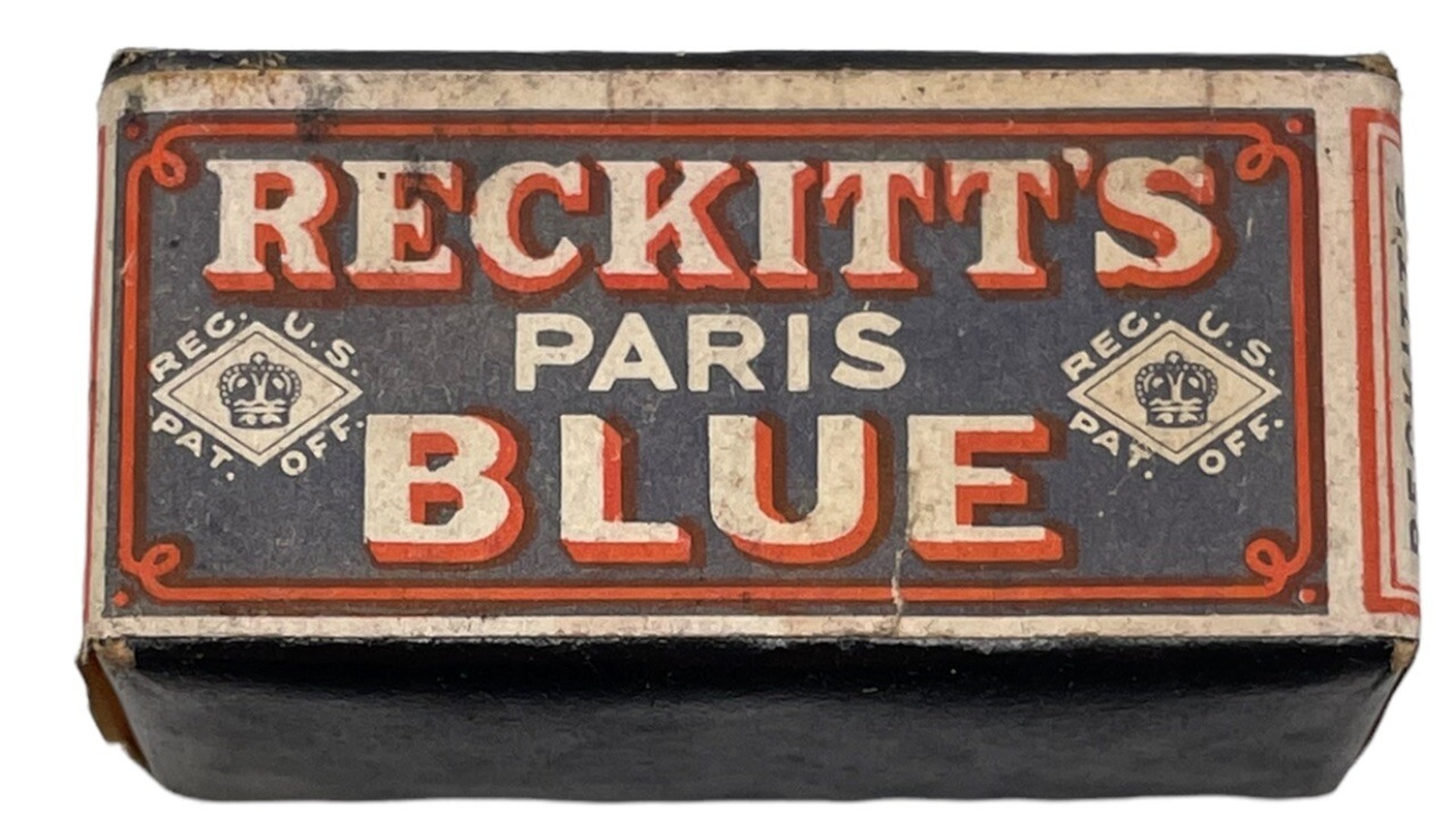
Long before modern detergents came with whitening additives, people used different forms of laundry blue. Some early preparations contained indigo or Prussian blue; later products commonly used synthetic ultramarine. In Britain, Reckitt’s Blue became a familiar household name, and its small blocks or bags were an especially practical way to use the pigment.
A blue block might be wrapped in muslin or flannel, or sold already enclosed in a small cloth bag. After the whites had been properly washed and rinsed, the bag was swished through a tub of clean water until it took on a faint blue color. The washing then went through that final blue rinse before being wrung out and hung to dry.
The trick was getting the water evenly tinted, not dropping pigment directly onto the cloth. A leaking bag or poorly mixed blue could leave spots. Considering the effort already involved in hauling, boiling, scrubbing, and rinsing laundry by hand, ruining the sheets at the very last stage would have been particularly annoying.
Bluing turns up in nineteenth-century American household instructions, too. So although the names and preparations varied, the basic principle was familiar on both sides of the Atlantic.
How to use laundry bluing today
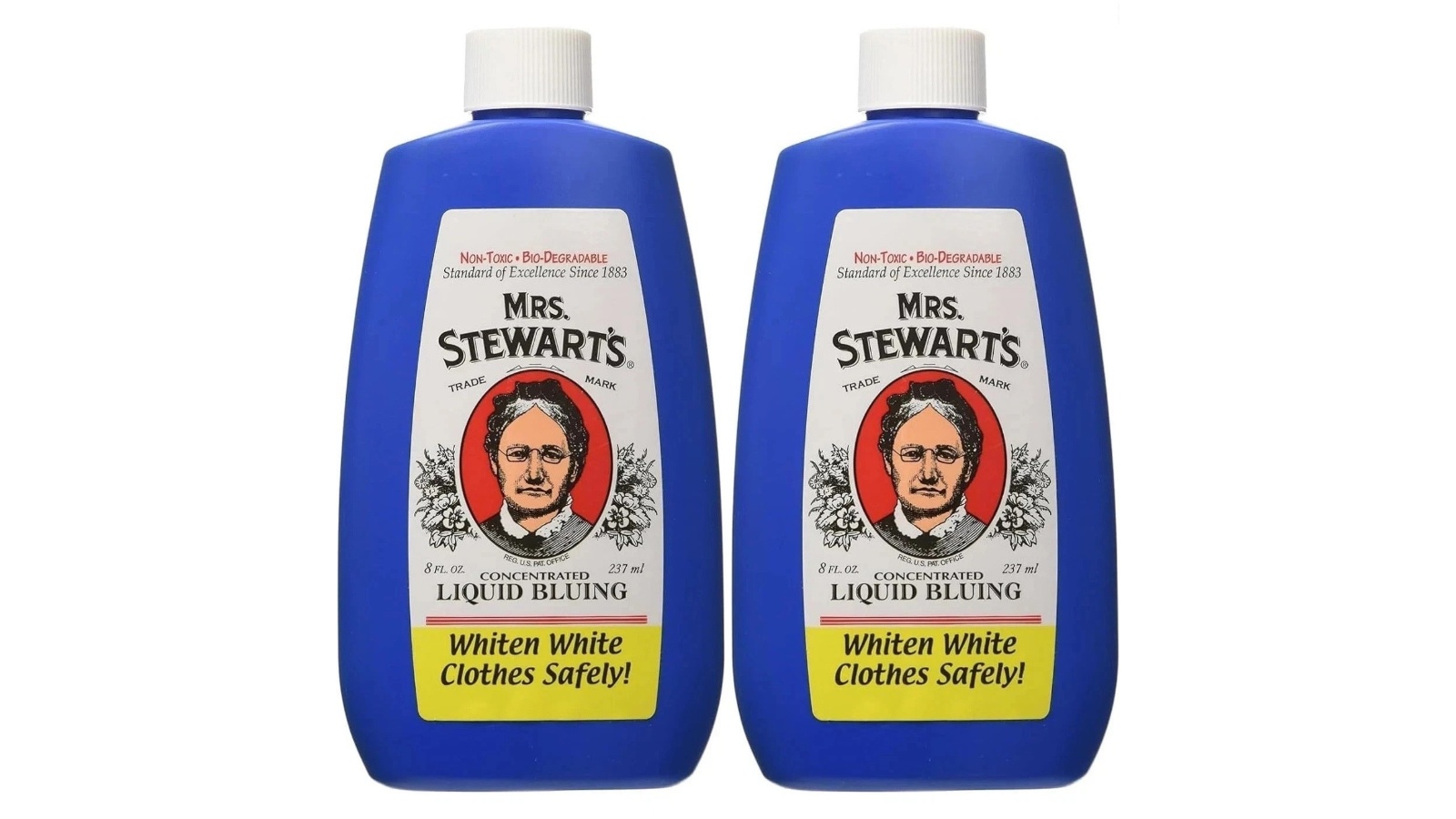
You don’t need to track down a Victorian blue bag. Concentrated liquid laundry bluing, such as Mrs. Stewart’s, uses the same basic principle, although the amount and dispensing method matter.
My advice is to start with a washable, plain white cotton item rather than an antique tablecloth or your best bedding. Follow the specific product label and fabric care instructions, and don’t assume one bluing formula can be substituted measure for measure for another.
- Wash the whites normally and treat any visible stains first.
- Dilute the bluing in plenty of cold water before it comes anywhere near the fabric. For Mrs. Stewart’s, the instructions specify a few drops to no more than 1/4 teaspoon for a wash load, first mixed into at least 1 quart of water.
- Mix the diluted solution into the wash water or final rinse as directed for your machine. The water should look pale sky blue, not bright blue.
- Let the wash or rinse finish, then dry the items as their care labels allow. Check the result in daylight before deciding whether to repeat the treatment later.
For a conventional top-loader, it’s often relatively straightforward to mix the diluted bluing into a full tub of water. High-efficiency and front-loading machines are trickier because they use much less water, and dispensers work differently. Check both your machine manual and the bluing manufacturer’s instructions before adding anything through a drawer or compartment.
Never pour concentrated bluing straight onto clothes. And don’t think doubling the dose will double the whiteness. Too much can leave an obvious blue tint or blue spots, defeating the entire purpose. The product maker also advises against using bluing in the same cycle as bleach or fabric softener.
When bluing is worth trying, and when it isn’t
I like the thinking behind this old trick. Rather than throwing away usable white linens because they don’t look quite as bright as they once did, you can sometimes improve their appearance with a minute amount of product. That’s a sensible bit of household thrift, provided the fabric is still in good condition.
But bluing has limits. It won’t lift rust marks, sweat stains, food spills, or ingrained grime. It won’t restore a badly damaged fabric, and it won’t turn naturally cream or ivory cloth into brilliant white. If the original color is warm-toned, adding blue may give you an odd result rather than the one you’re hoping for.
I’d also be cautious with fragile heirlooms, mixed-color items, and anything with special finishes. For valuable antique textiles, don’t experiment with modern laundry treatments just because a method was historically used on ordinary household linen.
For everyday washable whites with a mild yellow cast, though, laundry bluing is still a perfectly reasonable trick to have up your sleeve. Use less than you think, dilute it properly, and remember that you’re correcting the appearance of the white, not bleaching the fabric itself.

