
Affiliate disclosure: This post may contain affiliate links. Please see full disclosure.

Two ounces of crushed oak galls, one pint of water, one ounce of ferrous sulfate, and half an ounce of gum arabic makes a good-size bottle of real, permanent ink, and once your galls are dry, the active process takes about a day. This isn’t a kids’ science-fair experiment. It’s real ink. You can write with it, draw with it, and it will still be legible centuries from now.
Forget all the chemical-laden inks. You don’t need them. This is a fun project to tackle any time, and it’s not just an experiment. You’ll actually write and draw with the end result.
You can use oak gall ink, also called iron gall ink, with quill pens, glass dip pens, bamboo pens, and more. Create ink drawings, practice your calligraphy, or just write your grocery list using the same ink used for the Magna Carta, Chaucer’s Canterbury Tales, and the Declaration of Independence.
What Are Oak Galls?
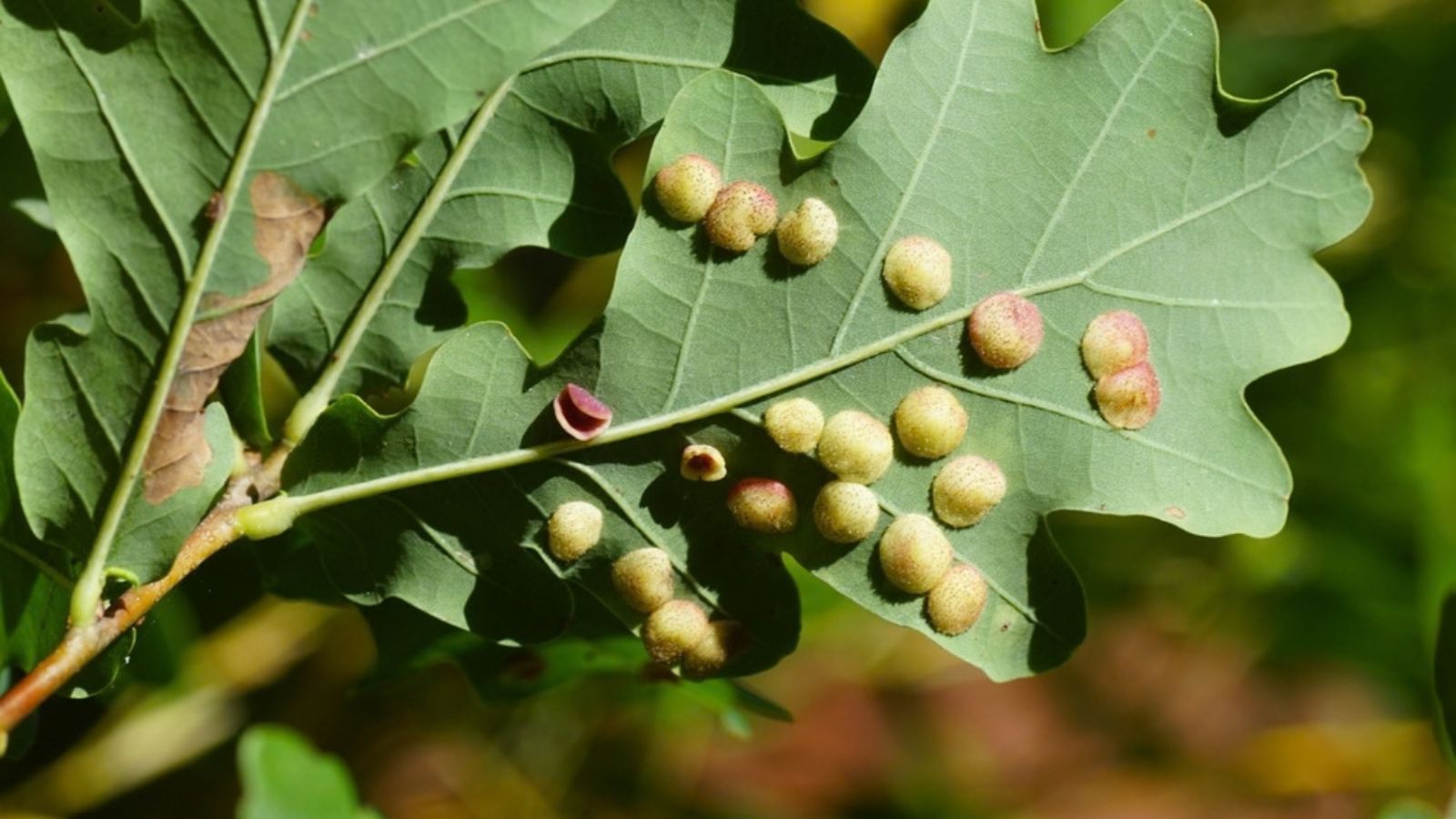
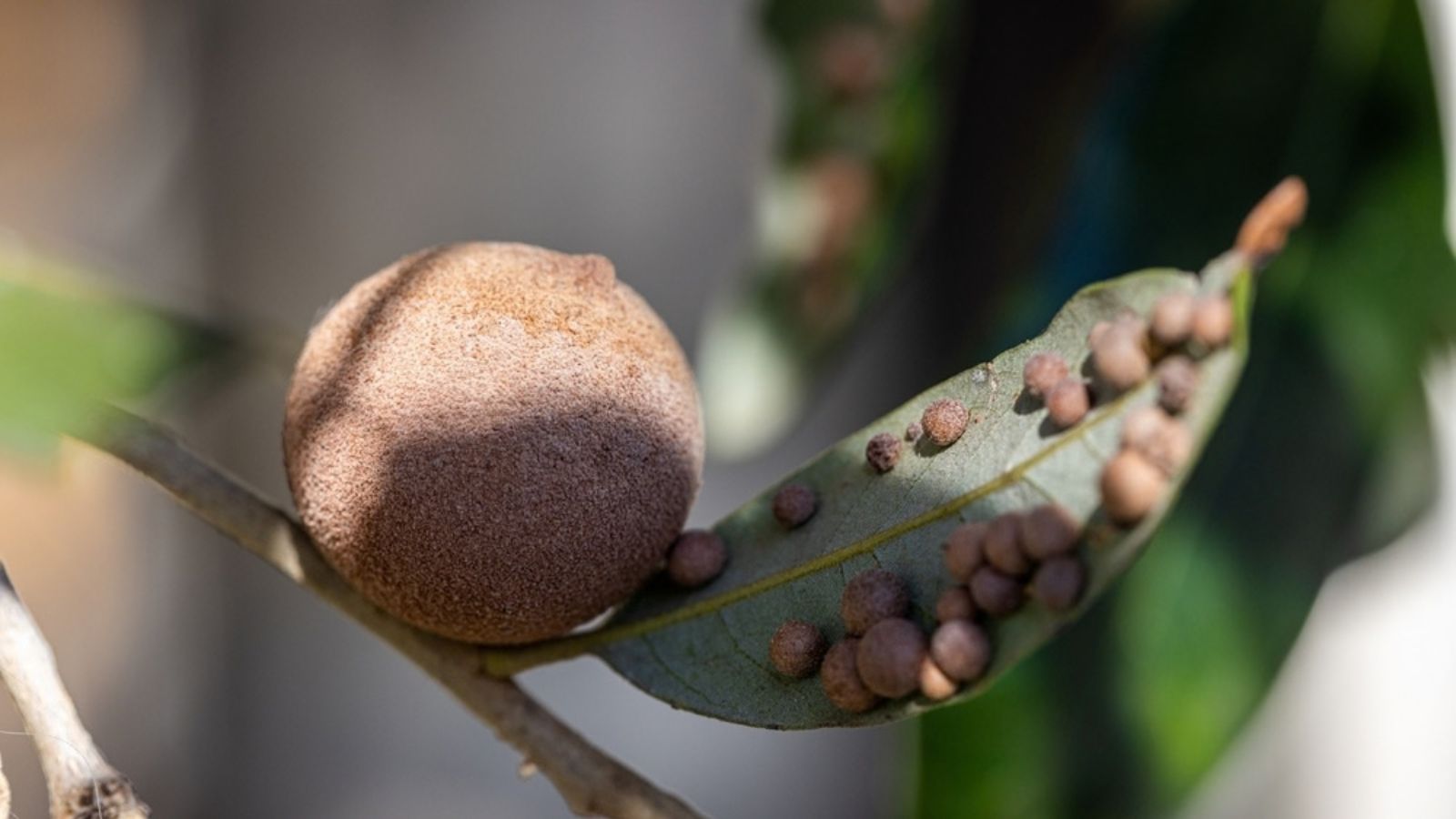
Oak galls, or oak apples, are the dried-out remains of the swelling a gall wasp causes when it lays an egg on the underside of an oak leaf. To protect itself, the tree produces tannic acid and gallic acid that surround and encapsulate the developing larva, creating a round, apple-like growth known as an oak gall. The gall itself doesn’t usually harm the tree, even though it looks alarming.
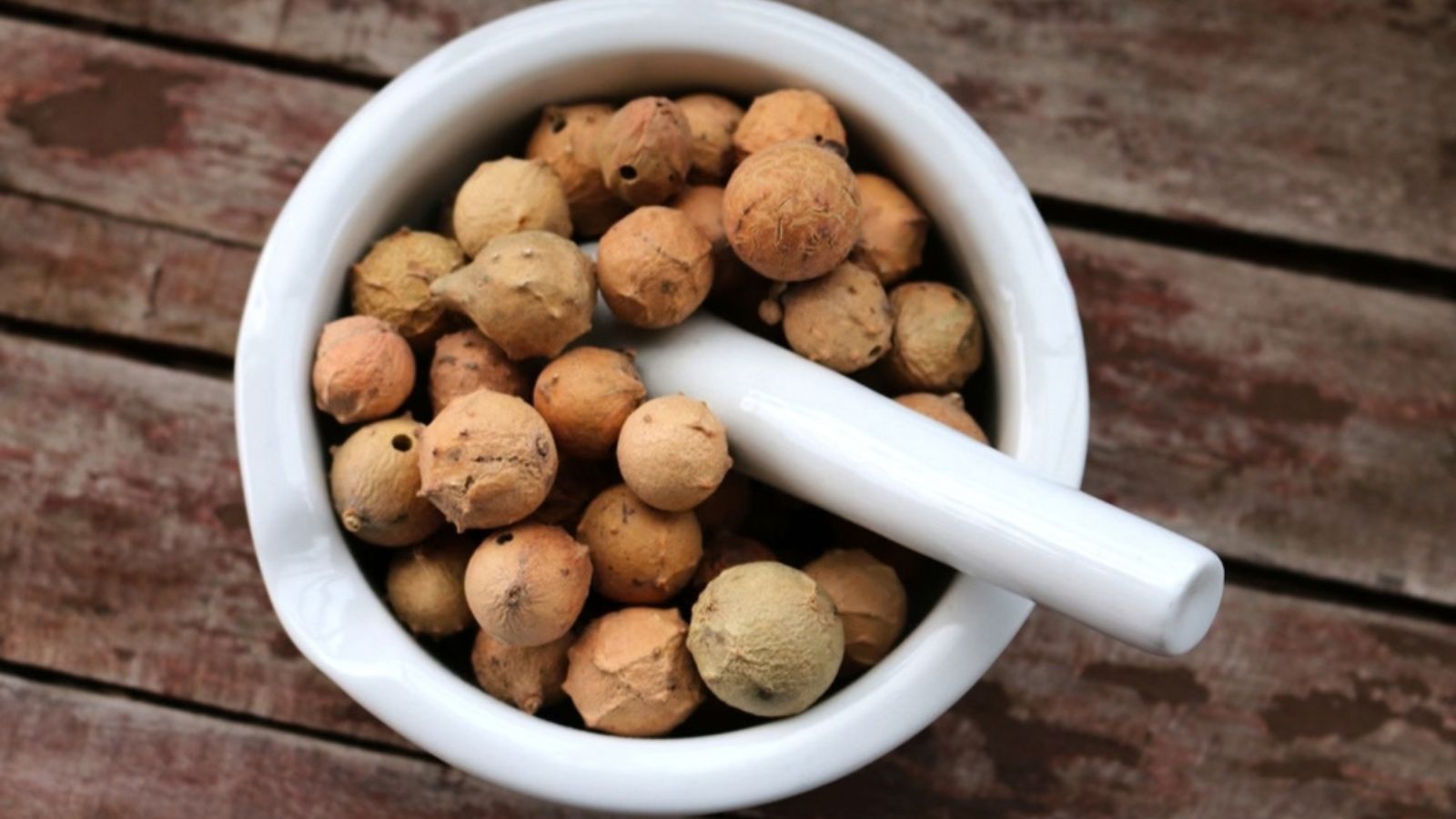
Once the wasp larva has fully developed, having fed on the inside of the gall, it eats a hole through the outer wall and escapes. That’s the point at which you want to harvest the galls. The exit hole is clearly visible on each one, so it’s easy to tell which galls are ready to use. Once dried, they’re ready for the recipe below.
What Can You Use Instead of Oak Galls?
Yes, you can substitute other tannin-rich galls or plant material if oak galls aren’t available where you live. There are roughly 1,300 species of gall wasps worldwide, and they parasitize plenty of trees besides oak, including citrus, hickory, maple, beech, and chestnut. Any of these galls will work in an ink recipe.
Acorns are also a good substitute. Like oak galls, they’re high in tannic acid, so they make a reasonable stand-in when galls aren’t available. You can also use lampblack or certain high-tannin berries. Really, anything with a meaningful concentration of tannins is worth experimenting with, though you’ll need to adjust quantities from historic recipes designed around gall tannin levels specifically, since other materials won’t necessarily match gall for gall.
History of Oak Gall Ink
Iron gall ink was developed by the 4th century CE, though the underlying chemistry was known long before that. The Roman writer Pliny the Elder recorded, in the 1st century CE, that iron salts would turn a tannin-soaked surface black. Nobody used that reaction to actually write with for several more centuries.
Once it caught on, though, iron gall ink stuck around. It’s been used to create everything from medieval manuscripts and monastic scrolls to the Declaration of Independence. It’s genuinely remarkable that these deformities on oak trees ended up central to some of the world’s most important documents.
The early makers and users of iron gall ink knew these simple ingredients combined to make lasting ink, but they didn’t understand the chemical reaction behind it. Making iron gall ink is easy. Making good, stable ink is not, or at least it wouldn’t have been without a lot of trial and error, since a poorly made batch can actually corrode its way through vellum, parchment, or paper. For that reason, the recipe below follows the same basic ratios found in ink-making recipes going back to the 1700s, when this particular combination of galls, iron, and gum arabic was well documented as reliable.
[EDITORIAL NOTE: your original draft attributed this recipe to “the 1660s.” I couldn’t verify a 1660s source using these exact quantities, but found this same 2 oz galls / 1 pint water / 1 oz ferrous sulfate / half oz gum arabic ratio documented elsewhere as an 18th-century recipe. I’ve used “the 1700s” above. If you can confirm the original 1660s source, let me know and I’ll switch it back.]
How to Make Oak Gall Ink
Making oak gall ink comes down to four steps. Harvest and dry your galls, crush and soak them to pull out the tannins, react that tannin extract with ferrous sulfate, then bind the whole thing with gum arabic. Before you start, know that this recipe behaves like liquid acrylic. It stains everything it touches, and you’ll struggle to wash it out. Use old utensils and bowls you don’t mind ruining, wear old clothes and disposable gloves, and lay down newspaper or rags to catch spills. I make mine outside in my workshop for exactly this reason.
Harvesting Oak Galls
Harvest oak galls in fall, once the wasp has emerged and left its exit hole. You’ll see at least one comparatively large hole in the gall, usually near the bottom. Cut the galls gently from the tree so you don’t damage the branch, or check the ground beneath the tree once fall is underway, since fallen galls work just as well.
Drought-stressed trees attract more gall wasps than healthy, well-watered ones, so in a dry year when galls are abundant, harvest enough to last you a few seasons. It only takes about a dozen galls to make a good-size bottle of ink. Take what you need and leave the rest. Galls that stay on the tree still feed the local wildlife, and plenty of birds and small mammals rely on the larvae inside them.
Drying Oak Galls
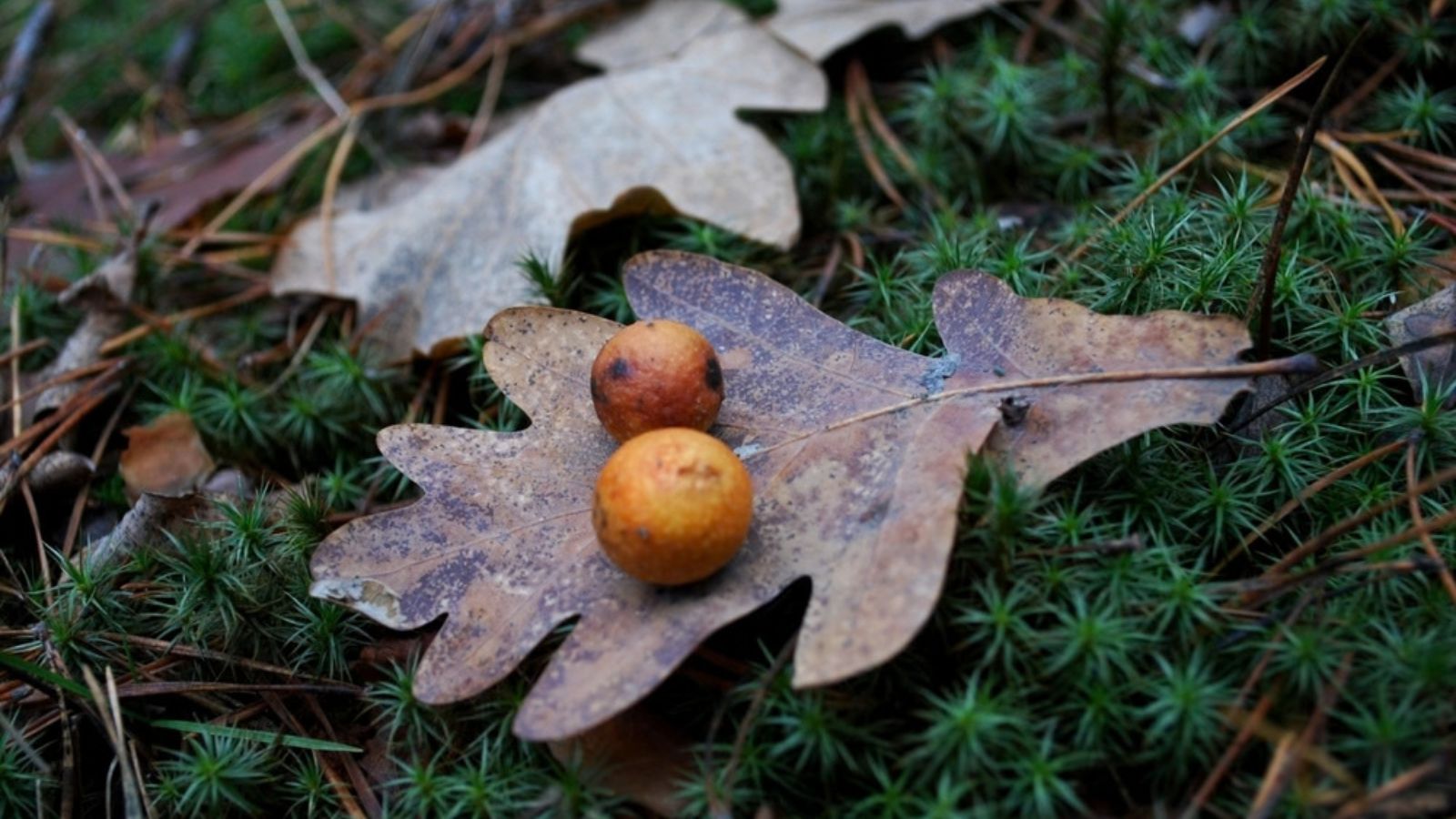
Once you’ve harvested the empty galls, dry them thoroughly before use. You can dry them in an oven on very low heat for a few hours, or leave them in a dry, sunny spot in the house for a few weeks. The easiest and most reliable method is a dehydrator. I set mine to about 100°F (38°C) and let it run for 12 to 24 hours, depending on how fresh the galls were when I harvested them.
You want the galls as dry as possible, especially if you plan to store them for later use. Any leftover moisture and they’ll grow mold and spoil.
Crushing Oak Apples
Once your galls are fully dry, crush them. Be warned, thoroughly dried oak galls are hard and tough, and crushing them by hand takes real effort. A heavy mortar and pestle is the easiest way to do it. For this recipe, you need 2 ounces of crushed oak galls.
Soaking Oak Galls
Once crushed, soak the galls before you start the rest of the recipe. For 2 ounces of crushed galls, add 1 pint of water and let them soak for 24 hours, then strain through cheesecloth. Use a cheesecloth you don’t mind staining permanently, since this step will ruin it for food use.
Adding Ferrous Sulfate to Oak Gall Ink
Ferrous sulfate, also called copperas or green vitriol, is iron that’s been processed with sulfuric acid, producing a green, crystallized compound. Add 1 ounce of ferrous sulfate to the strained water from your oak galls.
Handle dry ferrous sulfate with gloves. It’s a mild skin and respiratory irritant on its own, separate from the staining risk of the finished ink. Some historic recipes used scrap iron or iron nails instead of a measured amount of ferrous sulfate, but that makes it much harder to get a consistent result, since you can’t control how much iron you’re actually adding. I’ve also seen people soak or boil their galls in a rusty iron pot, or use iron nails or fine steel wool soaked in vinegar until it rusts, with no added ferrous sulfate at all. Any of these work in a pinch, but ferrous sulfate gives you a reliable result every time, which is why I use it.
As soon as the ferrous sulfate hits the oak gall solution, it reacts with the tannic and gallic acids in the galls and turns black almost immediately. The ink will also thicken slightly at this stage.
Adding Gum Arabic to Oak Gall Ink
Gum arabic is the dried sap of the acacia tree, commonly used as a binder in watercolor and gouache paints. In iron gall ink, it improves color, brilliance, and stability, and it thickens the ink enough to improve flow and coverage. Add half an ounce of gum arabic to the ink and stir vigorously until it’s fully dissolved.
Once it’s mixed in, test a drop with your pen before bottling the rest. If the ink feels thin or doesn’t hold to the nib, stir in a little more gum arabic. If you want a darker, more saturated line, a small additional amount of ferrous sulfate solution will deepen it, though more iron also means more corrosive potential, so don’t overdo it.
Using Oak Gall Ink
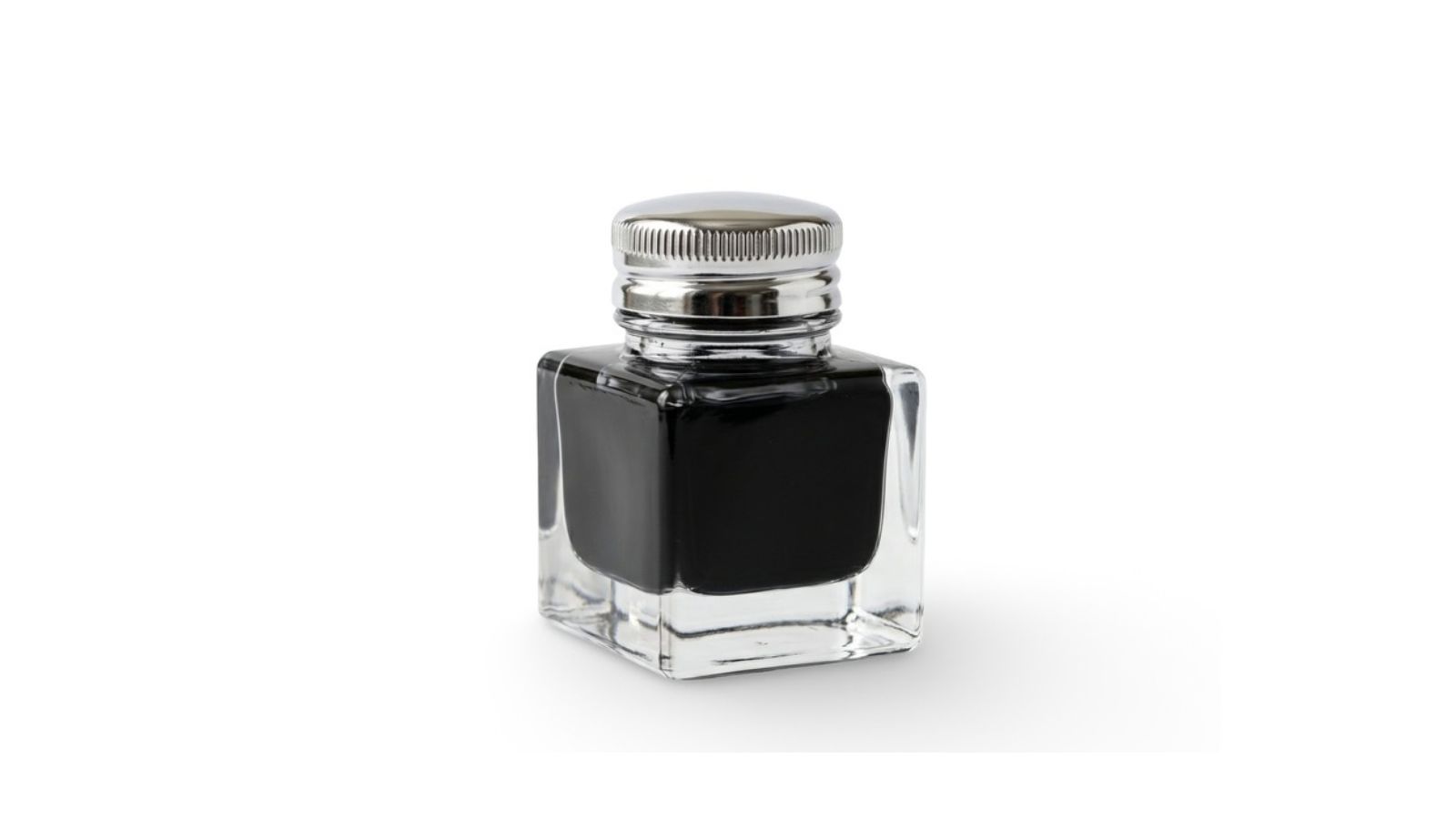
Because oak gall ink can be corrosive, I don’t put mine in a regular fountain or cartridge pen. I use it with glass dip pens, quill pens, or bamboo pens instead. I’ll have a full tutorial on making your own quill pen soon.
The gum arabic earns its place here. It increases surface tension and improves flow, so the ink goes further with each dip and the pen draws it smoothly across the paper.
One thing that surprised me the first few times I used this ink is that when you first write with it, it’s pale, almost translucent, not black at all. My first batch came out a bluish color, and my second batch was more of an earthy brown-gray. As the ink reacts with oxygen in the air, it darkens as it dries, eventually settling into black or near-black.
This particular ratio of ingredients makes an ink that flows well and holds its color, which makes it as suitable for everyday writing as it is for calligraphy or drawing.
How Do You Store Oak Gall Ink?
Store oak gall ink in a glass bottle with a reasonably wide mouth, so you can dip a pen directly or draw the ink into a refillable cartridge. For daily use, I decant mine into small bottles I keep on my desk. For longer storage, wide-mouth amber glass jars work best, since the amber glass blocks UV light that can degrade the ink’s composition over time. I keep my larger stock of ink in a dark, cool cupboard and refill my everyday bottle from there whenever it runs low.
Frequently Asked Questions
Can you make ink from acorns instead of oak galls?
Yes. Acorns contain high concentrations of tannic acid, just like oak galls, so they’re a solid substitute when galls aren’t available. You’ll get a similar result, though the exact tannin concentration, and therefore the strength of the ink, will vary depending on the acorns you use.
Does oak gall ink fade or become unstable over time?
Iron gall ink can fade with prolonged exposure to sunlight, but a well-made batch takes centuries to fade completely, even under regular UV exposure. When it does fade, it usually turns a pale brown with a faint halo around each letter, rather than disappearing outright. The bigger risk is a poorly made, overly acidic batch, which can eat through the paper it’s written on over time rather than simply fading. Getting your ratios right, as in the recipe below, keeps the ink stable and legible for a very long time.
Is oak gall ink safe to make and use?
Oak gall ink is safe to make and use if you handle the ingredients sensibly, but it isn’t something to eat or drink. Don’t get it in your mouth, and keep the finished ink, along with the dry ferrous sulfate you use to make it, sealed and out of reach of kids and pets. Iron compounds like ferrous sulfate can be toxic to dogs if enough is ingested, so treat this the same way you’d treat any other art or craft chemical in the house.
Oak Gall Ink Recipe

This traditional ink recipe makes enough ink to fill several small bottles, plus enough left over for practice. Prep time is about 15 minutes, plus a 24-hour soak and roughly 10 minutes of hands-on time once the galls are soaked.
Ingredients
- 1 pint water
- 2 oz dried oak galls
- 1 oz ferrous sulphate
- 1/2 oz Gum Arabic
Instructions
- Crush the dried oak galls with a mortar and pestle. The finer the grind, the better, since more surface area releases more tannic and gallic acid.
- Pour the water over the crushed galls and let them soak for 24 hours.
- Strain the mixture through cheesecloth and discard the crushed galls.
- Add the ferrous sulfate and stir. The mixture will turn black within seconds.
- Add the gum arabic and stir thoroughly until dissolved.
- Store in a glass bottle with a reasonably wide mouth, so you can dip a pen or draw the ink into a cartridge.
Notes
Warning: Ferrous sulphate can be a respiratory and skin irritant, so make sure you wear gloves and a mask while handling the raw materials.

