

Affiliate disclosure: This post may contain affiliate links. Please see full disclosure.
The most effective pesticide-free way to deal with Asian lady beetles is to seal the gaps they use to enter your home and vacuum up the ones that have already made it inside. Don’t squash them. These little beetles can release a smelly yellow fluid that leaves stains on walls, curtains, and upholstery, and spraying around the windows won’t solve the problem of beetles already hiding inside your walls.
If you’ve had a sunny window or the side of your house covered in what look like ladybugs every fall, you’re probably seeing multicolored Asian lady beetles. They are genuine ladybugs, and they’re useful aphid predators outdoors. Unfortunately, they’re much less welcome when dozens of them emerge around your living room windows in January. As an organic grower and permaculturist, I’m quite happy to leave helpful insects alone in the garden. My patience is a little thinner when they’re congregating on the curtains.
Check the marking behind the head, not just the color
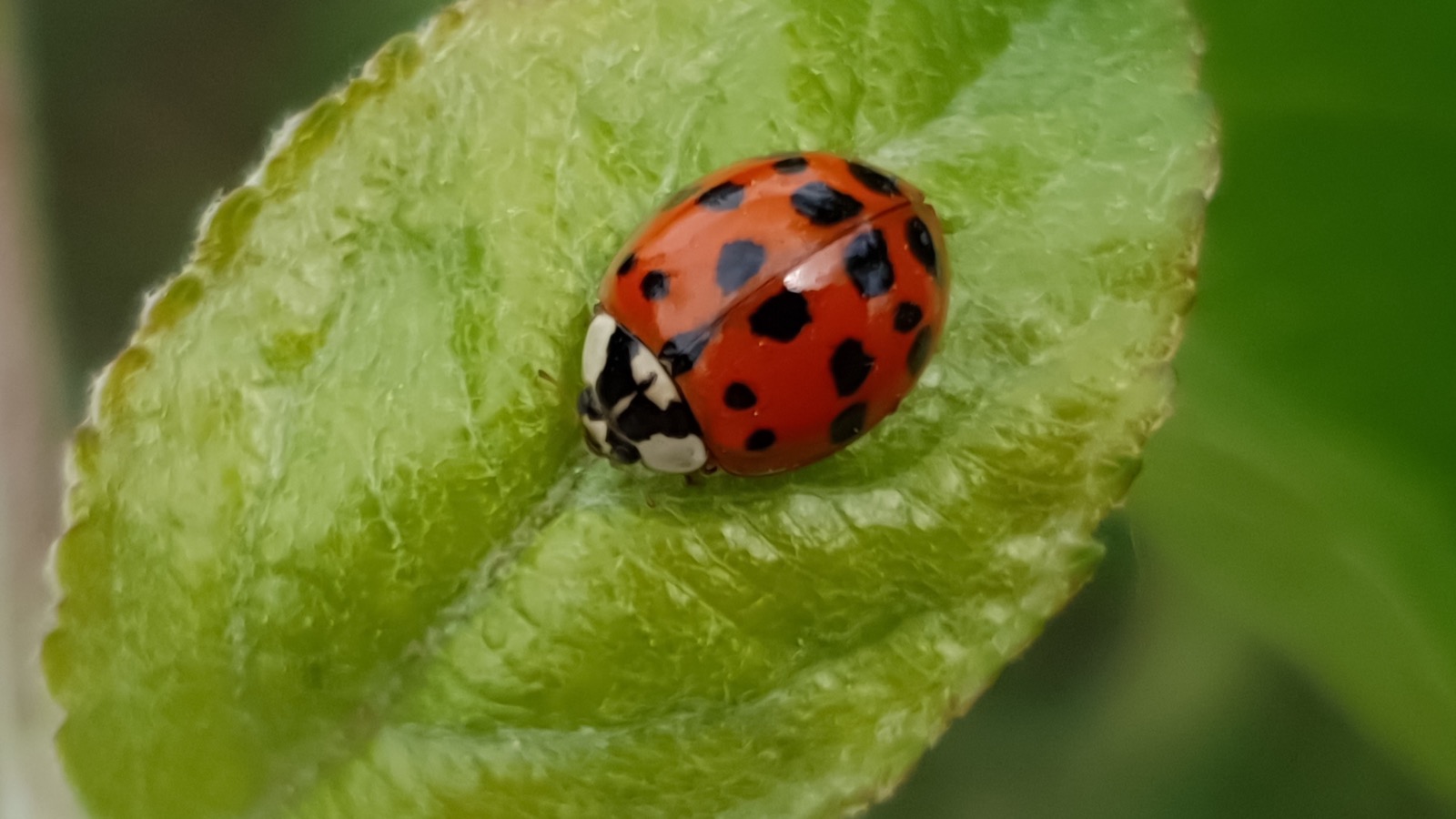
Asian lady beetles (Harmonia axyridis) may be pale yellow, orange, reddish, or even dark, with lots of black spots, a few spots, or none at all. So the familiar internet rule that orange means Asian and red means native simply doesn’t hold up. North America has many native lady beetle species, and their markings overlap.
Look instead at the pale plate immediately behind the head, called the pronotum. On many Asian lady beetles, the dark markings form an M when viewed one way or a W when viewed the other. It isn’t actually on the head, and the shape can be thick, broken, or hard to see on darker individuals. The M/W marking and highly variable wing colors are much more useful together than counting spots.
Adults are generally about 1/4 to 3/8 inch long and dome-shaped. If you’re uncertain, take a close photograph from above and compare it with a reliable identification image. A swarm of similar beetles gathering on a house in fall is another strong clue, but it isn’t a substitute for looking at the insect itself.
Know what the biting, odor, and yellow stains mean
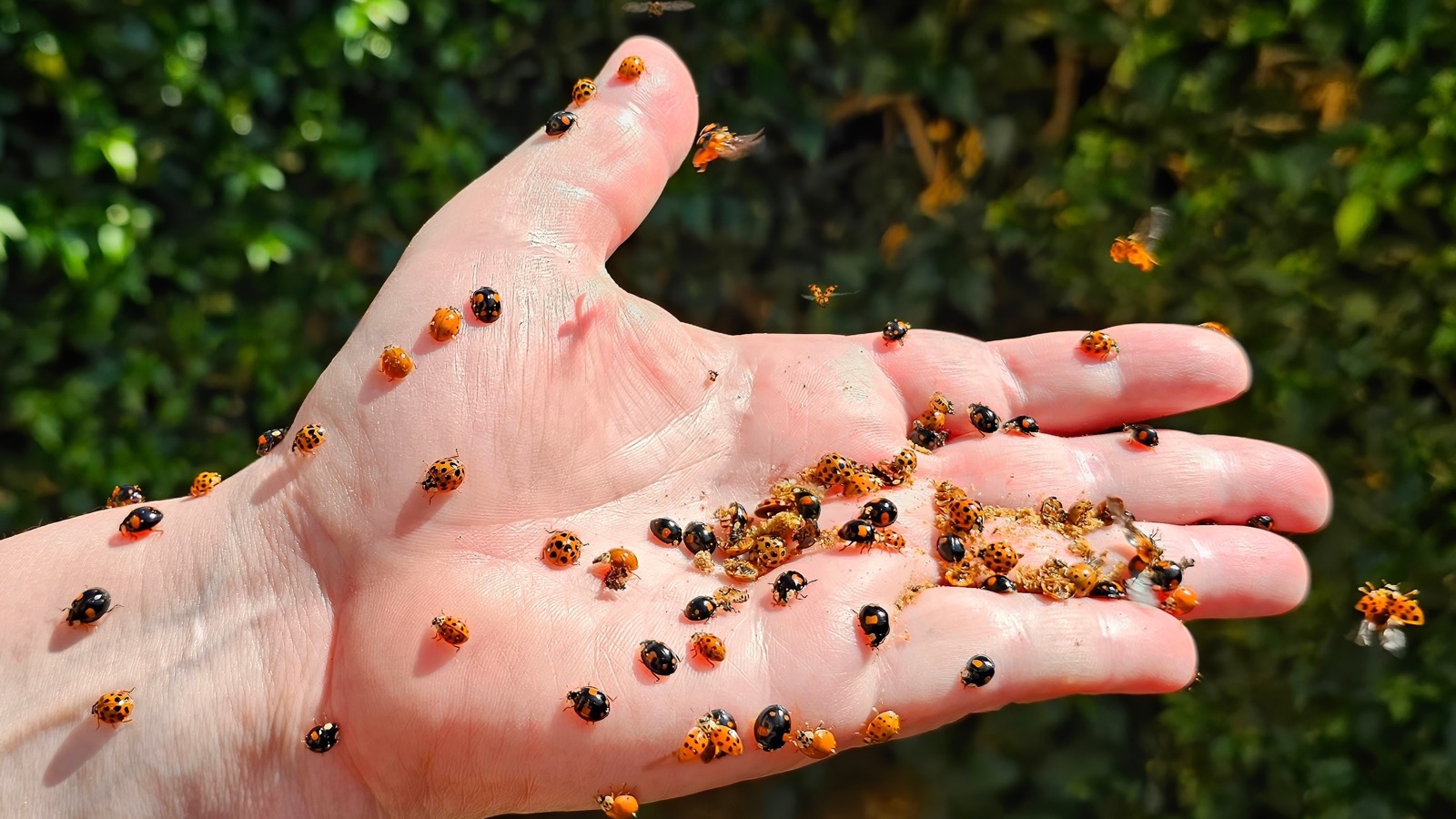
Asian lady beetles can nip at exposed skin. They don’t sting, and a nip is usually more irritating than serious, although sensitive people can react to exposure to large numbers of beetles. The odor and yellow-orange marks come from a defensive behavior called reflex bleeding: when frightened or handled roughly, the beetle releases fluid from its leg joints.
That fluid is exactly why I don’t recommend swatting them with a fly swatter, sweeping them hard across paintwork, or crushing them against glass. They can stain fabrics and cause nuisance or allergy problems indoors, but they don’t chew through your house or breed in the living room like cockroaches.
For a fresh mark, gently blot it rather than rubbing it deeper into the fabric. Check the manufacturer’s cleaning instructions and test any cleaning solution in an inconspicuous spot first. I wouldn’t put vinegar, essential oils, or strong homemade sprays straight onto painted walls or upholstery on the strength of a social-media tip. You could trade a few beetles for a more permanent patch of damage.
Understand why sunny walls attract swarms in fall
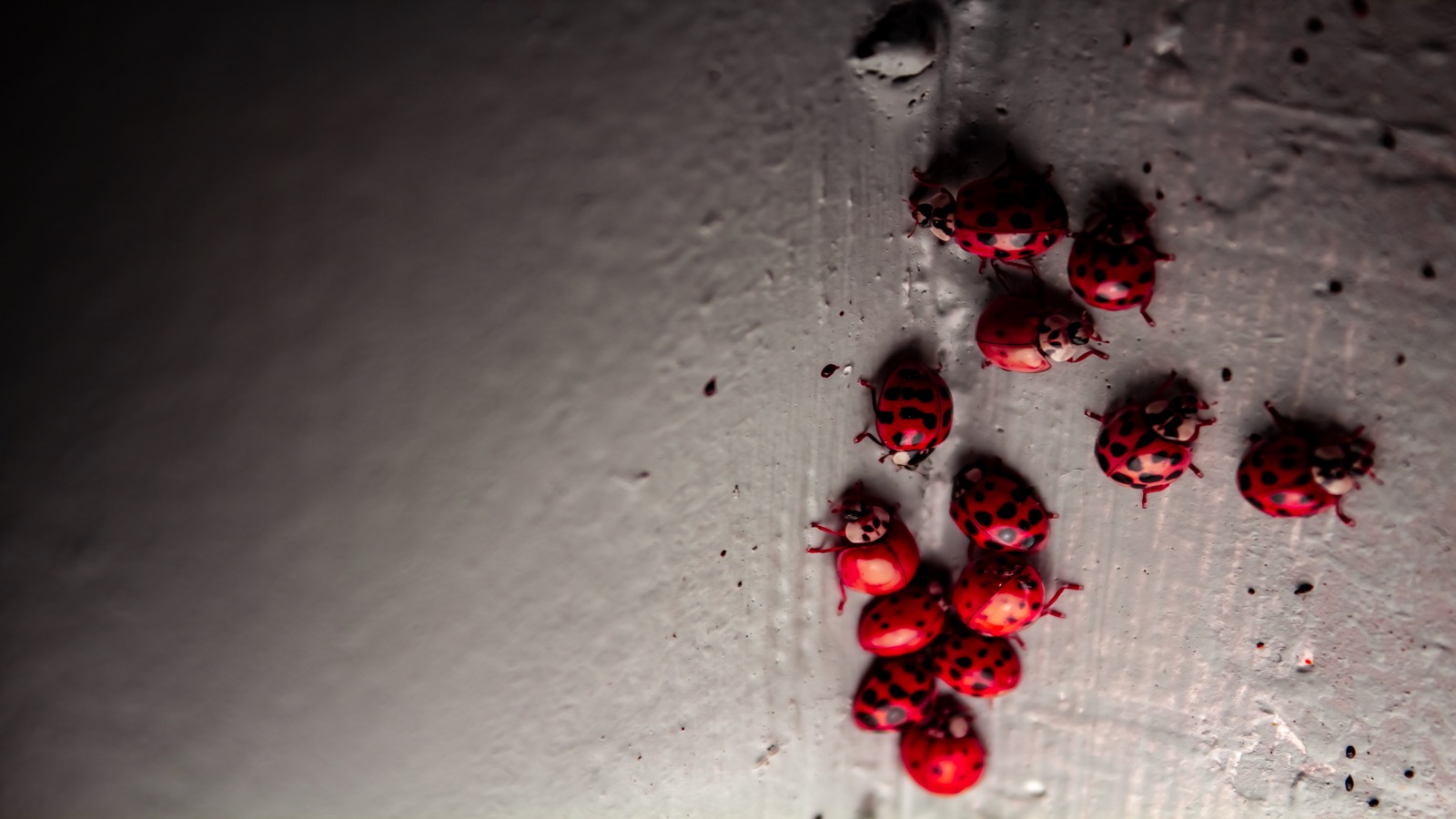
When the weather starts cooling, adult Asian lady beetles look for sheltered places to overwinter. Sun-warmed, light-colored walls and places with strong contrasts, such as dark shutters against pale siding, can attract them in large numbers. The south- and west-facing sides of buildings are often especially busy, and houses near trees or wooded areas may see more visitors.
They’re not moving in because your house is dirty, and they aren’t necessarily drawn by leftover food. They creep into tiny gaps around window frames, siding, soffits, vents, utility penetrations, and doors. Some settle inside wall voids and attics, where they can remain hidden until a warm winter day brings them toward the light again. Sun exposure, contrasting surfaces, and clustering behavior help explain the sudden fall arrivals.
The beetles you notice indoors in winter or early spring generally entered during the preceding fall. They aren’t multiplying behind the wallpaper. That’s an important distinction, because it means the sensible long-term response is to stop next fall’s arrivals rather than chase an imaginary indoor breeding population.
Vacuum indoor beetles without making a smelly mess
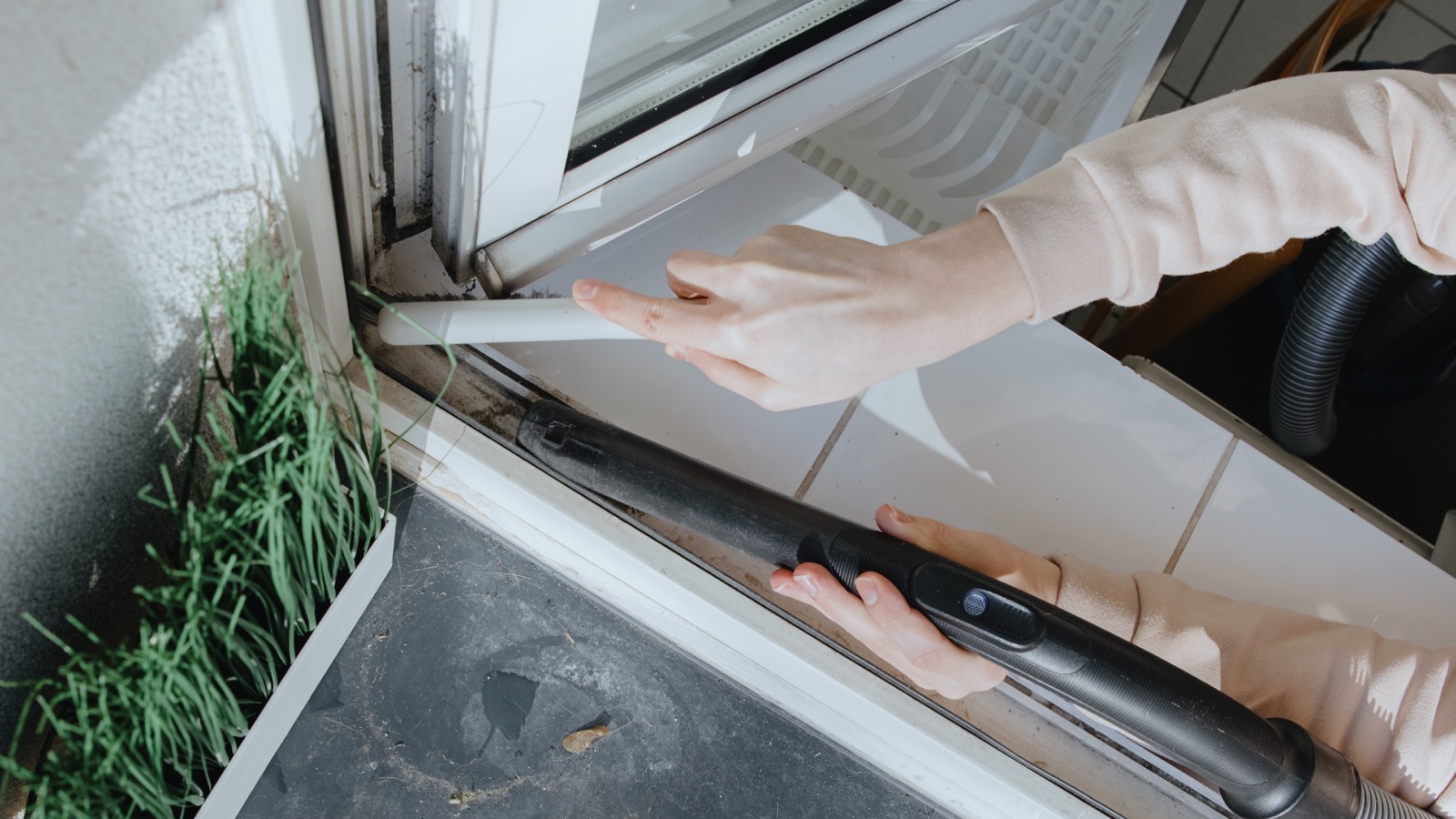
For groups of beetles on walls or window frames, a vacuum with a hose attachment is usually quicker and cleaner than a broom. The trick is to keep the beetles out of the machine’s bag or dust canister so they don’t leave a lingering odor or crawl back out.
Catch them in a nylon stocking
- Take a knee-high nylon stocking and push the toe end a short way into the vacuum’s extension hose, leaving the open cuff outside.
- Fold the cuff back over the hose opening and secure it firmly with a rubber band, making sure the stocking cannot be pulled completely into the machine.
- Switch on the vacuum at a suitable setting and gently collect beetles from accessible surfaces without scraping the nozzle across paint or fabric.
- Turn the vacuum off, remove the stocking immediately, close it securely, and dispose of the captured beetles. You can reuse the stocking after emptying it, if it is in good condition.
This stocking-in-the-hose method keeps much of the mess out of the vacuum. Check your vacuum’s instructions and don’t block its airflow. If you use a normal bag or canister instead, empty it promptly and outside.
If only one or two are on a window, a cup and a card may be easier. Collect them gently rather than grabbing them between your fingers. Releasing beetles outdoors during hard freezes may not be effective for insects that have been overwintering in a protected space; for anyone who wants to keep them alive, a cool, secure temporary holding arrangement and release when conditions are suitable is preferable to putting them onto snow.
If someone in the household has asthma or develops symptoms around beetles, don’t have that person do the vacuuming. The defensive odor can be released into the exhaust of some machines. Avoid handling beetles directly and get appropriate medical advice for significant reactions.
Use light traps selectively, not as a substitute for sealing
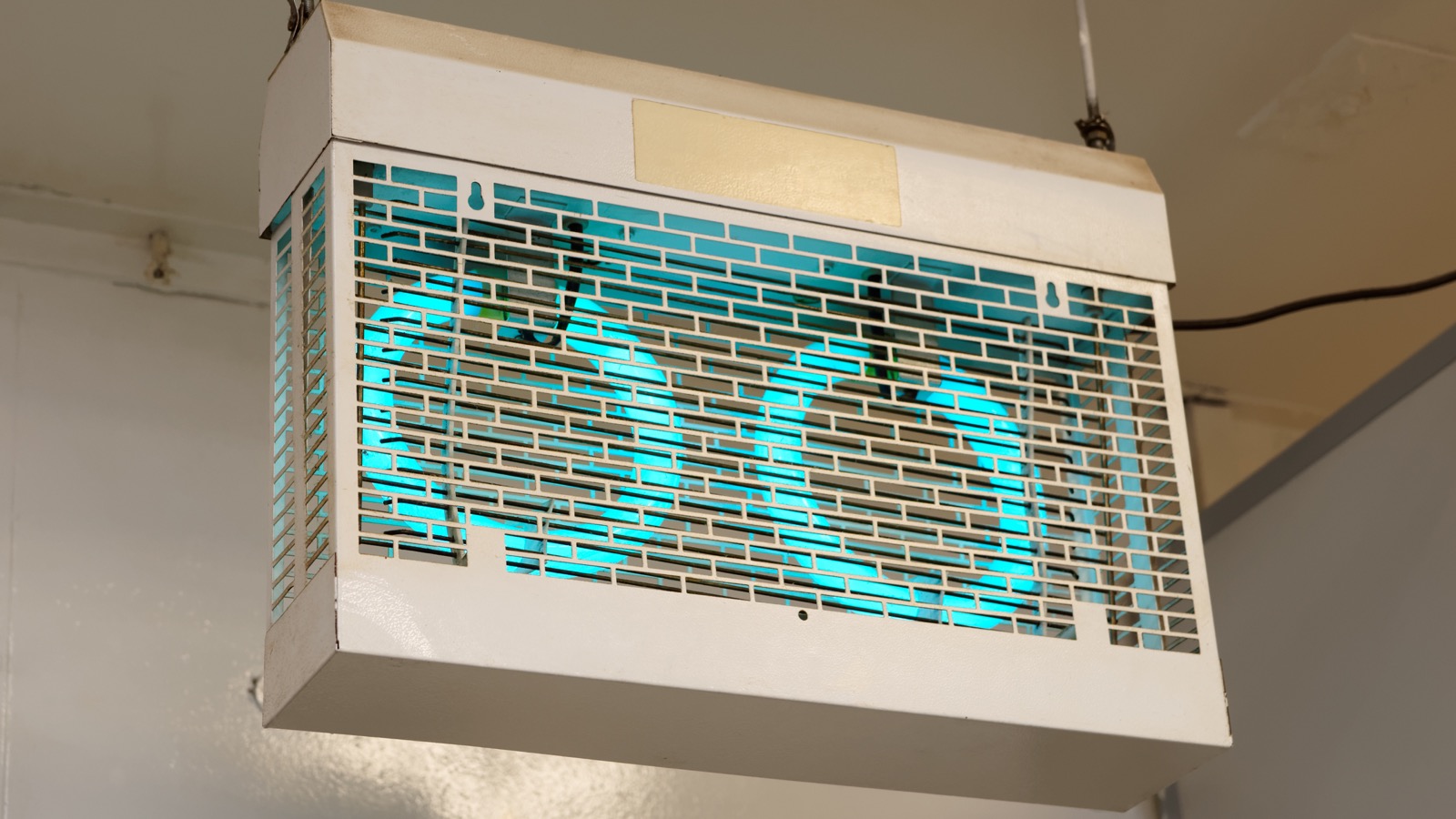
A light trap may catch Asian lady beetles in a dark attic, storage room, or another enclosed area where they are drawn toward a single light source. It is much less effective as a catch-all solution for beetles pouring through the gaps of an ordinary, brightly lit living room. Light traps are most useful in dark, confined spaces and may capture relatively few beetles in living areas.
If you try one, choose an enclosed indoor trap appropriate for the location, follow its electrical-safety instructions, and place it where children and pets cannot interfere with it. Keep it clear of stored fabric, dust, and combustible materials. I wouldn’t bother with an outdoor bug zapper for this job. It doesn’t stop beetles from finding gaps in the house and can kill other insects that you would rather leave alone.
A lamp over a homemade bowl of soapy water sometimes gets suggested as a bargain trap, but it introduces spill and electrical hazards, particularly around children or pets. I’d choose careful vacuuming and proper exclusion before experimenting with that.
Seal the entry points before the next fall swarm
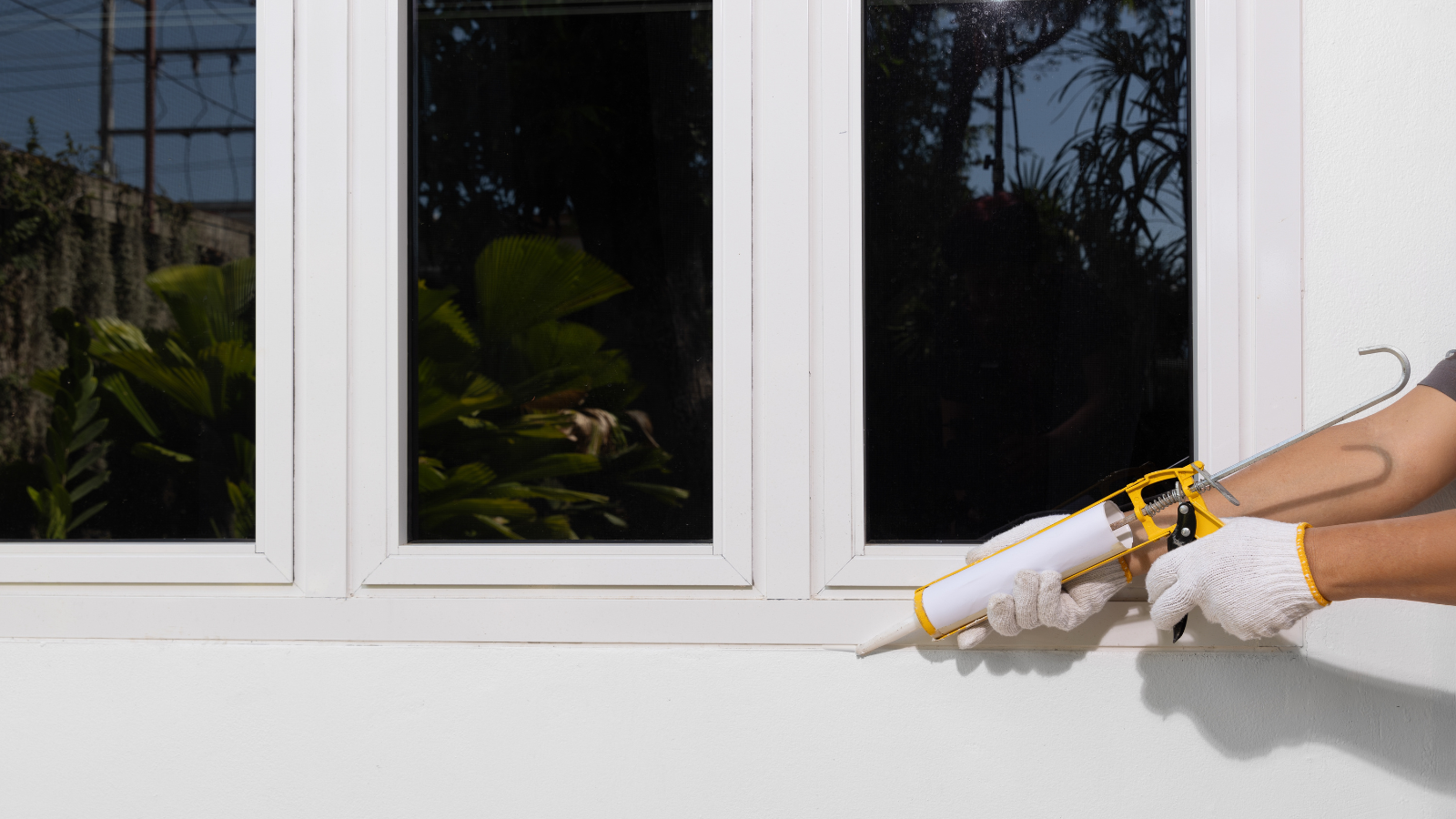
The lasting fix is outside. Once the worst of the current activity has passed, inspect the exterior in daylight, ideally during spring or summer when you have time to make sound repairs before the next fall flight. Work systematically around the walls that attracted the most beetles rather than randomly filling every visible line in the siding.
- Caulk suitable cracks around window and door frames, trim, siding joints, and places where pipes or cables enter the building.
- Replace damaged weatherstripping and fit door sweeps where daylight shows under an exterior door.
- Repair torn screens and secure gaps around screen frames.
- Screen attic and other ventilation openings with suitable insect-resistant mesh while preserving their designed airflow.
- Check soffits, fascia, and roof-edge junctions safely from the ground; use a qualified contractor for high or difficult repairs.
Beetles can exploit surprisingly small exterior gaps, including openings around one-eighth inch. Use materials suited to the surface, and don’t seal weep holes, combustion-air openings, or essential ventilation. If you’re not sure what an opening is for, identify it before blocking it.
Don’t confuse sealing outside entry points with squirting foam into an interior crack while beetles are streaming through. Interior sealing may reduce the number reaching your room, but it doesn’t prevent the insects from entering the building envelope in the first place. The exterior is where I’d put the bulk of the effort and money.
Skip the pesticide-free remedies that don’t solve the problem

Essential oil sprays, vinegar mixtures, scented sachets, and other homemade repellents are popular suggestions, but their ability to stop a seasonal invasion isn’t reliably established. Some can mark finishes or create avoidable exposure concerns for pets. If an idea depends on spraying every window every day, it isn’t addressing the actual entry route.
Likewise, a ladybug house in the garden won’t lure a mass of overwintering beetles back out of your walls. And indoor foggers are particularly poor value here: beetles shelter inside voids that sprays won’t reach, while more may emerge after treatment. Vacuuming and exclusion address the immediate nuisance more effectively than indoor pesticide treatments.
I also wouldn’t spray outdoor plants just to reduce the number of Asian lady beetles around the property. Even though this is a nonnative species and its indoor behavior is frustrating, both adults and larvae prey on aphids and other garden pests. Killing every beetle in the garden would work against the kind of pest management I favor when growing food organically.
Plan for next year rather than chasing every last beetle

If they’re already inside, collect the visible beetles and keep a note of the rooms, windows, and exterior walls where they appear. On a mild sunny day, check the outside of those same spots for trim gaps, torn screens, or failed sealant. Put the proper repair work on your spring or summer list, before fall swarming begins in your region.
You may still see an occasional Asian lady beetle after sealing, particularly if adults were already sheltering in the walls. That doesn’t automatically mean your repairs failed. A much better test is whether fewer beetles gather and get through during the following fall. Leave the aphid-hunters to do their work outdoors, and make the house a much less inviting winter shelter.

