
Affiliate disclosure: This post may contain affiliate links. Please see full disclosure.
Butternut squash is one of those crops I want to get every possible meal from. After months of growing and keeping an eye on the vines, the last thing you want is to lose your harvest to an overnight frost or find a rotten squash at the bottom of a storage box in December.
The important bit is picking mature fruit, handling it gently, and keeping it at the right temperature afterward. It isn’t difficult, but those three things make far more difference than fancy storage boxes or elaborate tricks.
How to tell when butternut squash is ready
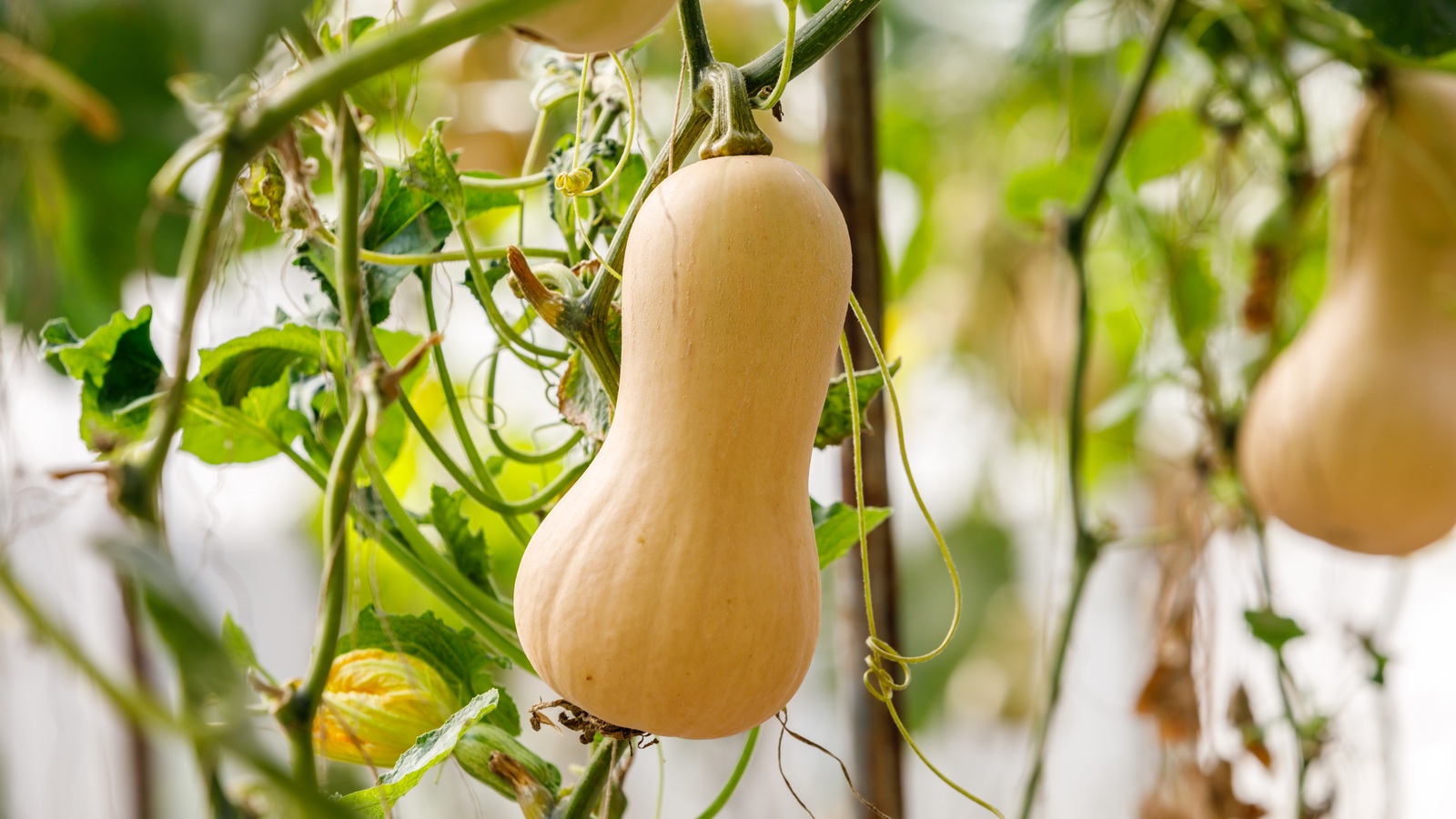
Forget size for a moment. A big squash isn’t necessarily ripe, and a smaller fruit might be perfectly mature for its variety. Most conventional butternuts turn a fairly even tan or beige when they’re ready, and the rind becomes so hard that you can’t easily mark it with a thumbnail. The surface usually loses some of its shine, too.
Look at the stalk where the fruit joins the vine. It should be starting to harden and turn woody. Yellowing leaves can be another clue, but don’t rely on them alone. Powdery mildew, drought, and chilly nights can all make a plant look as though it’s finished before the squash is properly mature.
A hard rind and mature color are the most useful signs. If you’re unsure about a particular variety, compare it with the seed packet or breeder’s description. Some compact butternuts don’t look quite like the familiar supermarket type.
And remember to look underneath. A squash can look beautiful from above while the side resting on damp soil has developed a soft patch.
Don’t gamble with the first frost
Butternuts are warm-season plants, and frost can damage both the vines and the fruit. If the crop is mature and the forecast is turning cold, harvest it. There’s very little to gain from leaving ready-to-eat squash outside for one more chilly night.
If the fruit is still immature and the vine is healthy, it makes sense to leave it growing while temperatures remain safely above freezing. You can use suitable frost cloth to get through a brief cold spell, but don’t rely on a lightweight cover to protect your entire crop from sustained freezing weather. I’d rather bring a slightly immature squash inside than lose it altogether.
One catch: a green, soft-rinded butternut won’t magically become a fully mature storage squash once it’s off the vine. You may still be able to cook it if it’s sound, but keep it separate and use it fairly soon. Don’t expect it to last all winter.
Cut the stems rather than pulling the fruit
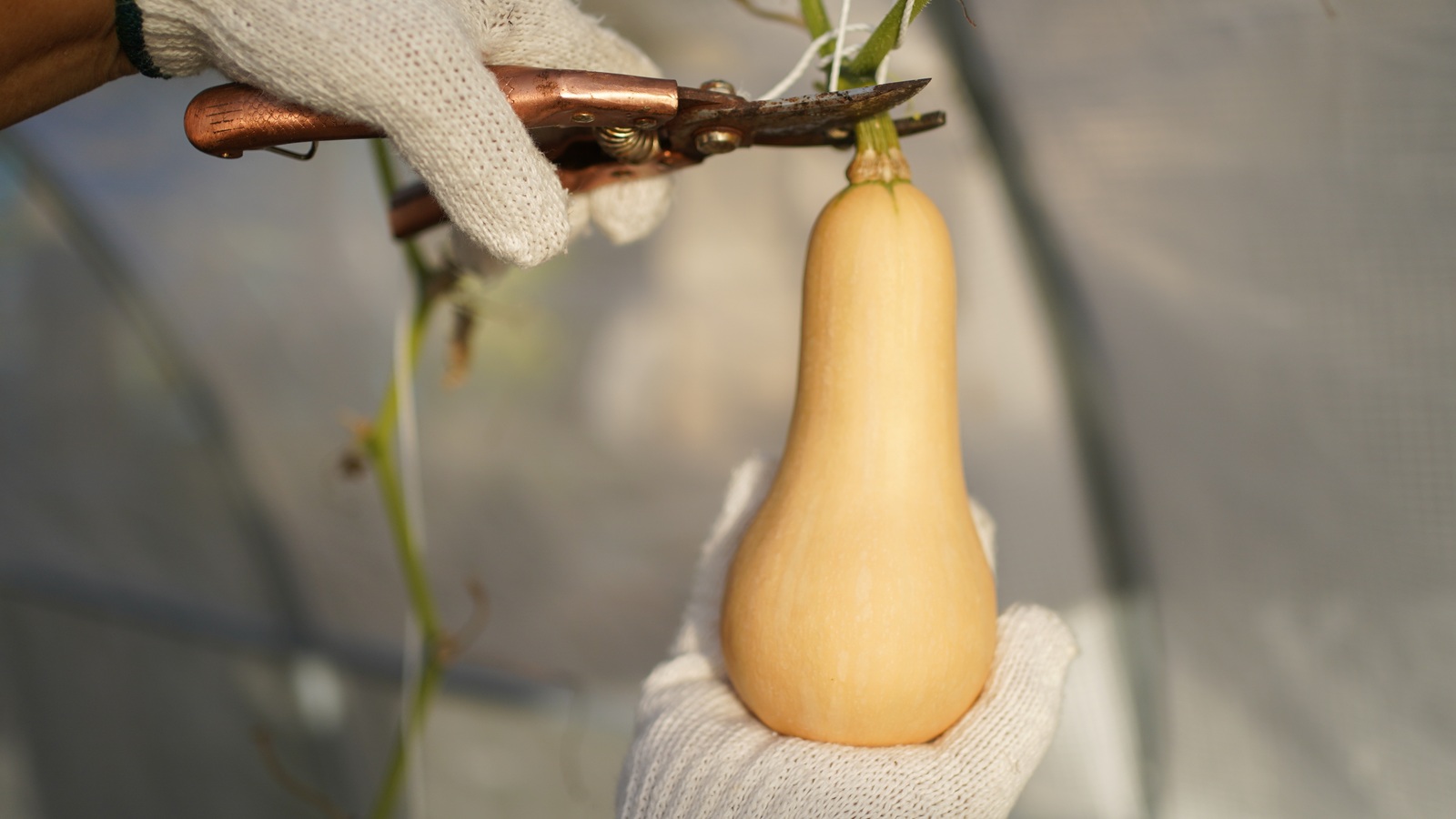
Use clean, sharp pruners and leave around 1 inch of stalk attached. Don’t twist the squash off the vine or carry it by the stalk. A torn stem leaves a wound where rot can begin, and even a mature butternut can bruise if you knock it against the edge of a basket.
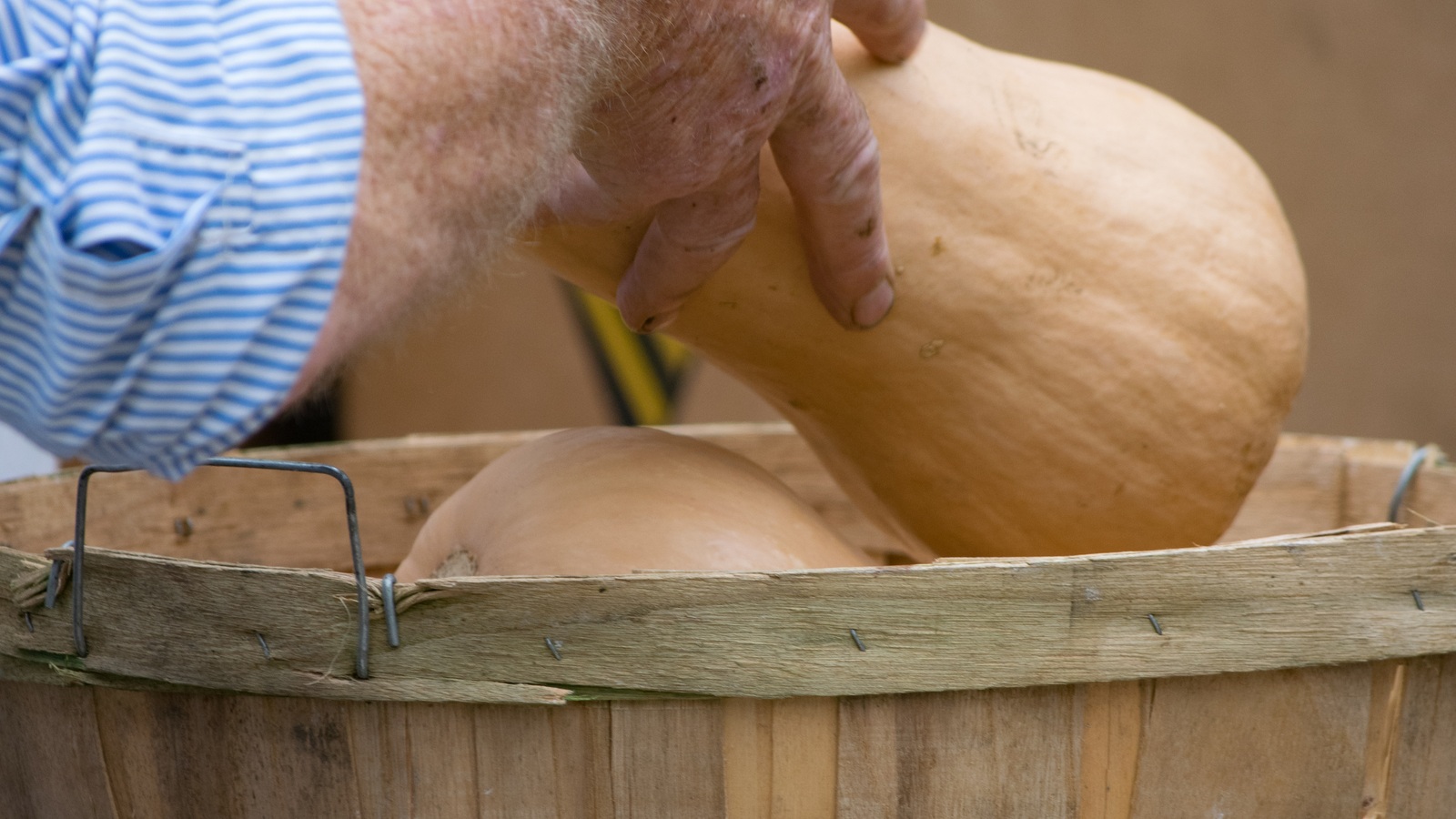
Lift each fruit with both hands and set it down gently. When possible, harvest on a dry day and brush off loose soil rather than giving the squash a thorough scrubbing. If it comes in wet, allow the surface to dry. The skin needs to stay intact if you’re hoping for a good storage life.
Sort the harvest before deciding what to store
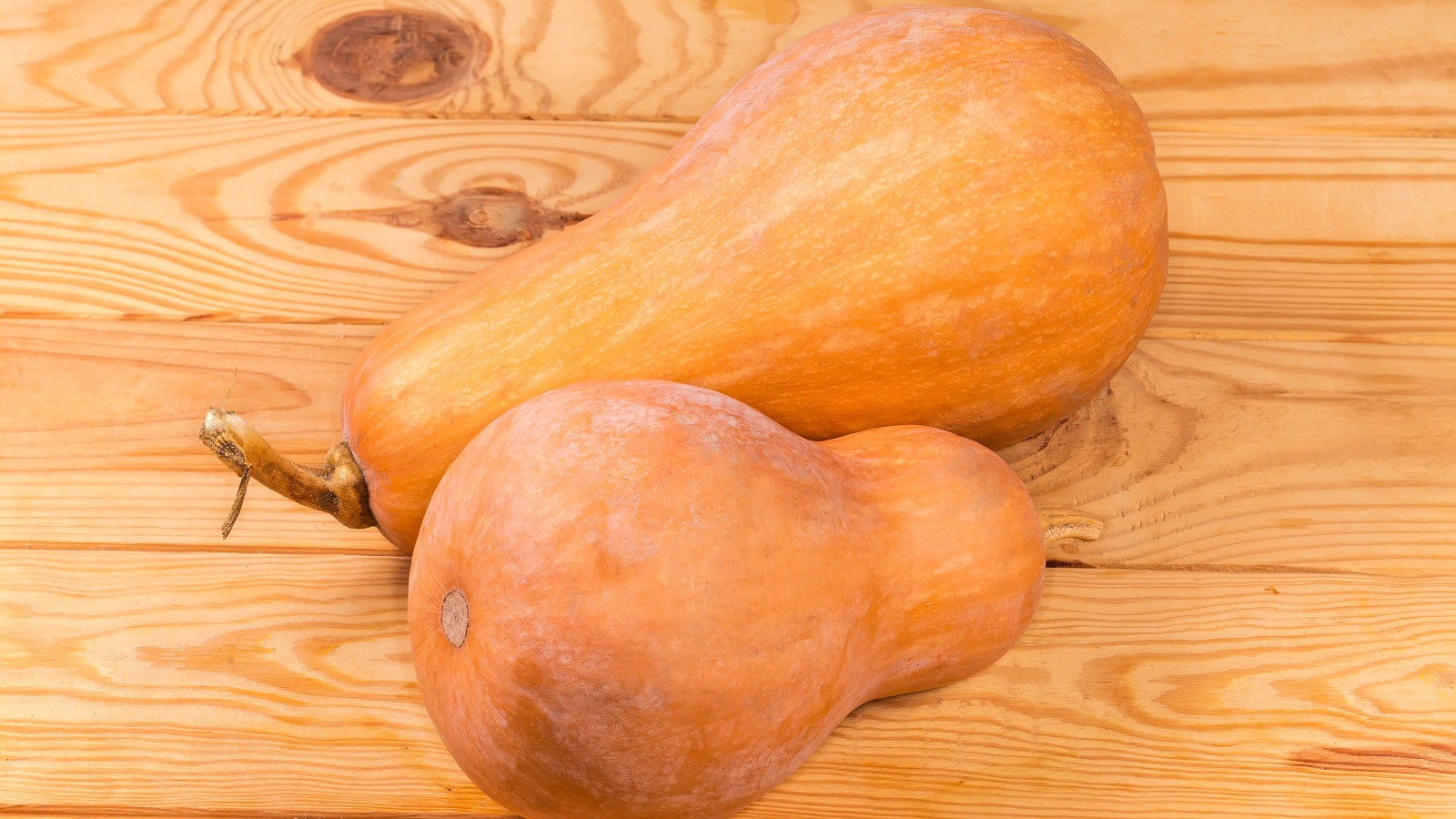
I find it more useful to make two piles straightaway. The first is the properly mature squash with sound skins and intact stems. Those are the ones I’d put aside for storage. The second is anything with a broken stem, a minor scrape, or questionable maturity. Plan to cook those sooner, while they’re still sound.
Anything soft, moldy, leaking, or obviously rotten should be discarded. Don’t let it sit beside healthy fruit in the hope that the damaged patch will dry up. Minor superficial scratches are one thing; decaying tissue is another.
Give mature butternuts a warm curing period
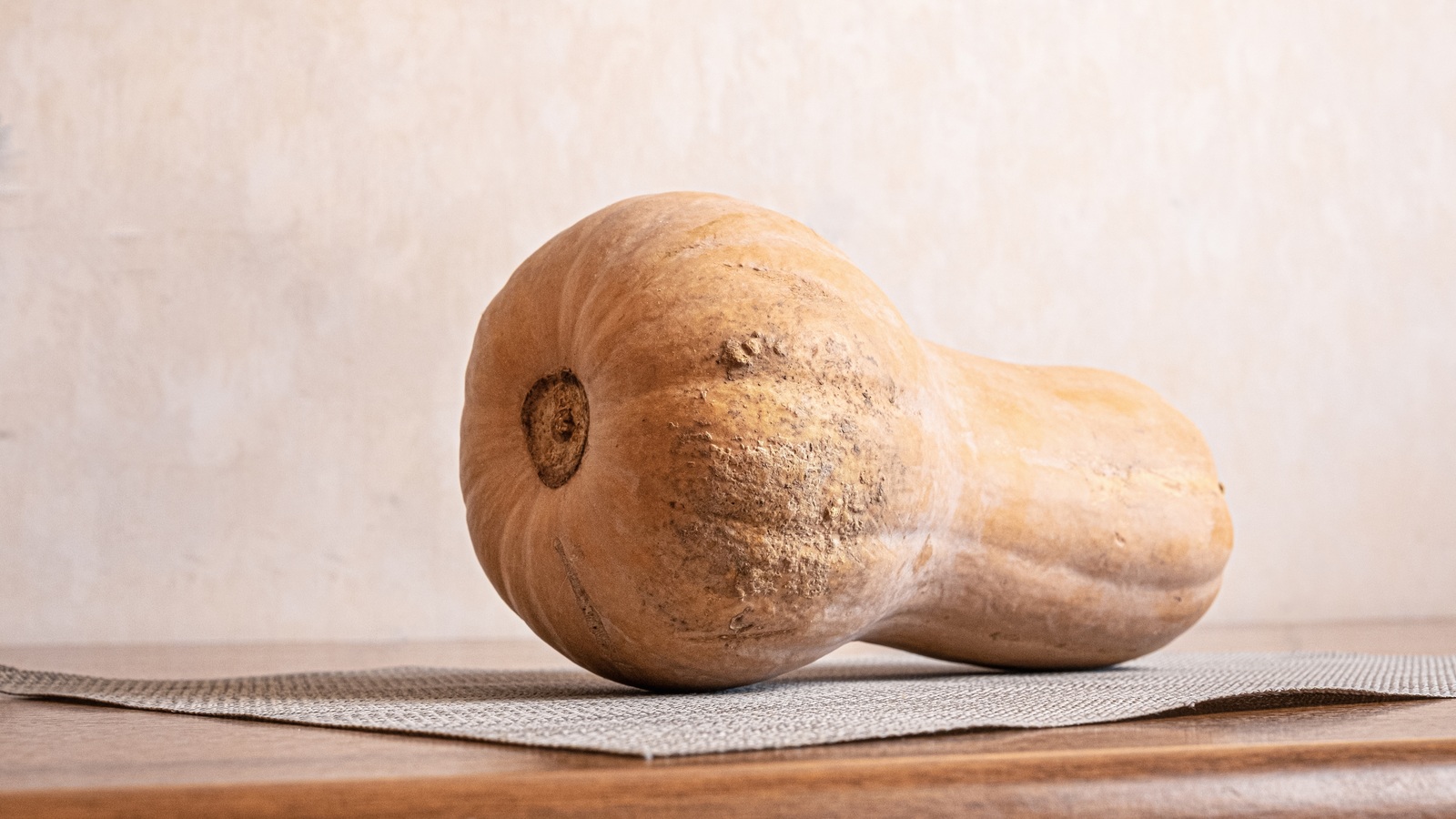
Curing allows the rind to harden further and can help small surface injuries dry and heal. For butternut squash, the usual recommended conditions are around 80 to 85°F (27 to 29°C) for 10 to 14 days, with fairly high relative humidity and plenty of ventilation.
Those are ideal conditions, not a demand that you turn your spare bedroom into a tropical greenhouse. Many home gardeners don’t have a place that stays that warm in autumn. A sheltered, warm, well-ventilated room is a reasonable practical compromise for sound fruit, and carefully handled butternuts can still keep without perfect curing conditions. They may simply have a shorter shelf life.
Set the squash out in a single layer with space between them. Keep them off cold, wet ground, avoid damp condensation, and check for soft spots while they’re curing. Don’t seal them inside plastic bags. And don’t apply this routine to every winter squash indiscriminately. Acorn squash is normally stored without warm curing because that treatment can shorten its keeping time.
Where to store butternut squash
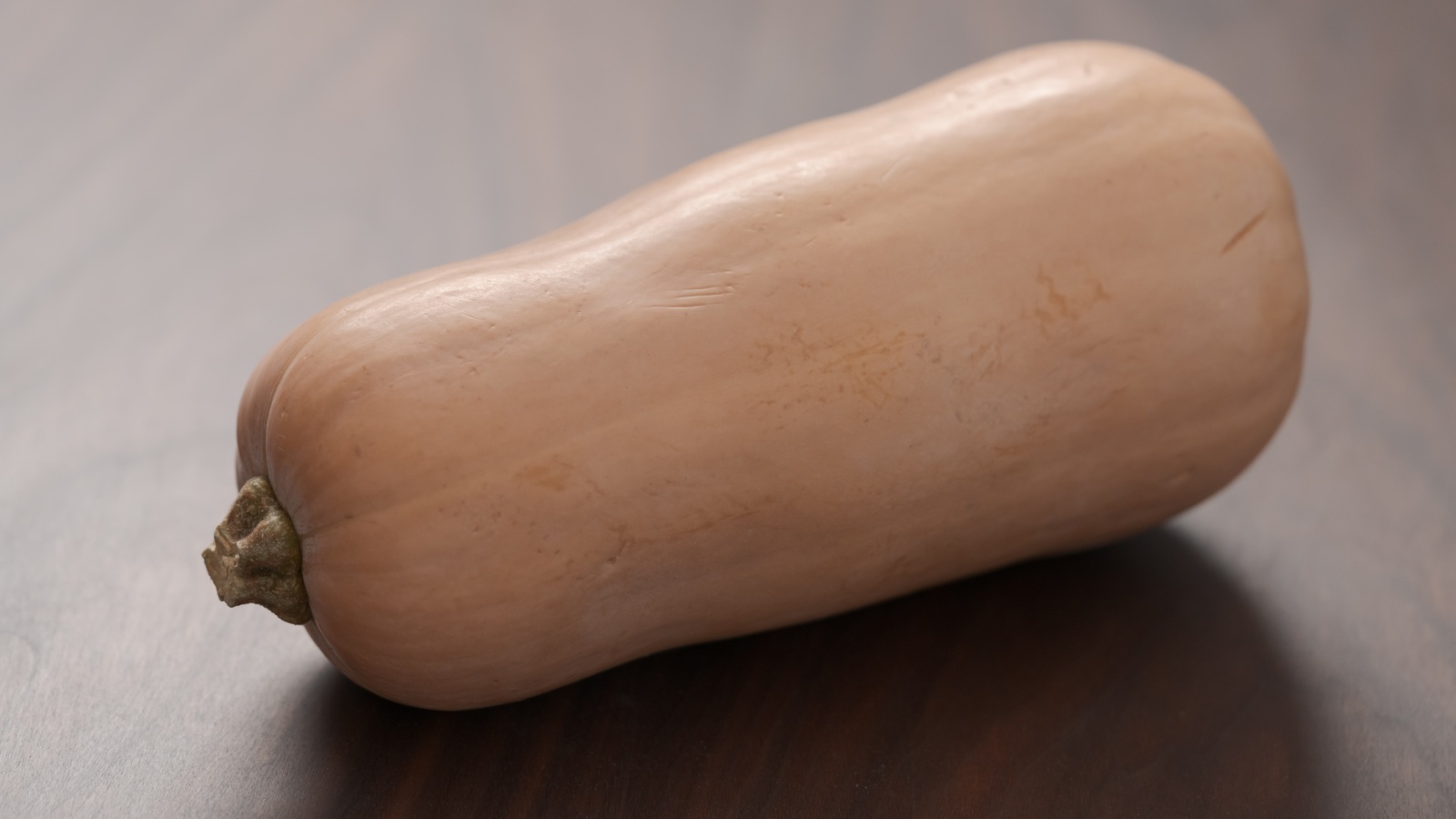
Once the fruit has cured, move it somewhere cooler. Aim for around 50 to 55°F (10 to 13°C), with reasonable airflow and no condensation. A cool pantry or spare room can work. An unheated garage might seem ideal until it drops close to freezing in the middle of the night.
Don’t refrigerate whole butternuts for long-term storage. They’re susceptible to chilling injury, and a cold fridge isn’t the same as a suitable cool storeroom. Keep the squash out of direct sunlight and away from ripening apples and pears, which release ethylene that can shorten storage life.
Lay the fruit in a single layer on a shelf or in a shallow crate so you can see each one. Leave a little space between them rather than piling them into a deep box. I like any arrangement that lets me inspect the whole harvest without having to empty a cupboard first.
How long will homegrown butternuts last?

In good conditions, many butternuts store for roughly two to three months, and some last longer. Storage life depends on the variety, maturity, handling, and conditions, so I’d never assume every fruit will keep until spring. A comfortable kitchen cupboard may be warmer than ideal, and that tends to shorten the time you have.
Look over your squash about once a week. Check the blossom end, stem, and underside for softening, dark patches, or mold. Move any sound fruit with a bruised area into the next few meals, and discard fruit that’s actually rotting. If one starts deteriorating, don’t leave the rest unchecked for another month.
The most useful storage system is the one that reminds you to eat what you’ve grown. Roast a few, make soup, add cubes to curry, or freeze cooked squash for another day. I want to enjoy my harvest, not win a competition for the longest-ignored butternut.
You might also like…
Pest Profiles: The Squash Bug, Anasa tristis
50 Halloween Recipes for Spooky Parties, Easy Dinners, and Creepy Treats

