

Affiliate disclosure: This post may contain affiliate links. Please see full disclosure.
Take a 4 to 6 inch semi-hardwood cutting from a healthy rosemary plant in late spring, strip the lower leaves, pop it into coconut coir or water, and you’ll have a rooted plant ready to pot up in four to six weeks. I’ve been doing it every year for as long as I’ve had a garden, and it’s one of those homestead skills that pays for itself over and over. A single established plant gives you unlimited free cuttings, which means unlimited free rosemary, forever. Never buy a rosemary plant again.
I’m an organic permaculture specialist, and out of every propagation project I hand to people who are just starting to multiply their own herbs, rosemary cuttings are the one with the best odds of success for the least fuss.
The quick version
- Best time to take cuttings: late spring to early summer (May to June in most US zones)
- What to cut: a 4 to 6 inch semi-hardwood stem with no flowers on it
- Success rate: expect 30 to 50% of cuttings to root, so take more than you think you need
- Rooting time: 4 to 8 weeks in soil, faster to show the first roots in water
- Ideal rooting conditions: 70 to 80°F (21 to 27°C), bright but indirect light
- Ready for the ground: after 1 to 2 weeks of hardening off, once nighttime temperatures stay above 50°F (10°C)
Why propagate rosemary from cuttings rather than from seed?
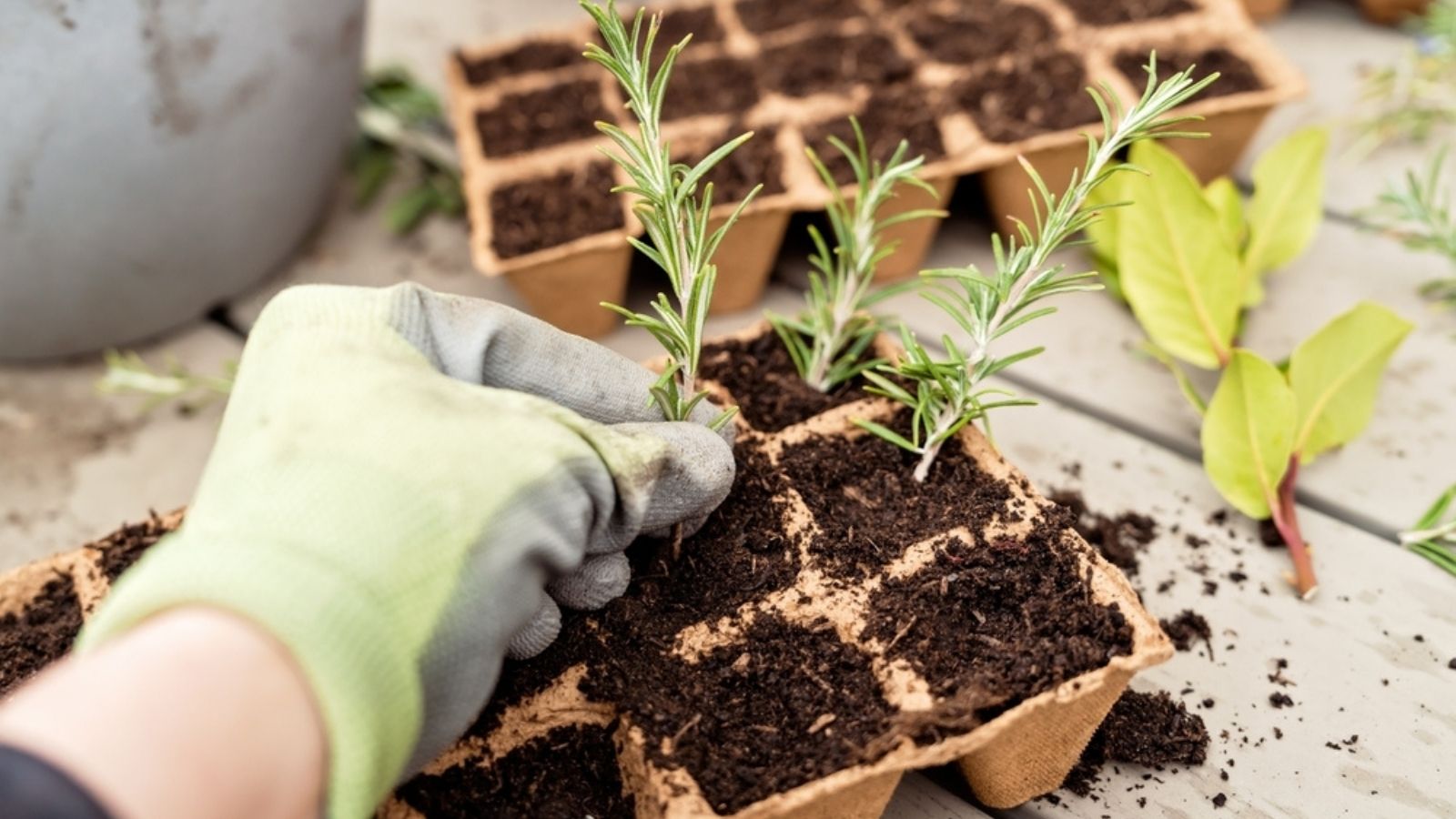
Propagating rosemary from cuttings is far more reliable than growing it from seed, and it gets you a usable plant months faster. Rosemary seed germination rates are notoriously poor, often as low as 30% even under good conditions, and the seeds are slow to sprout, sometimes taking three to four weeks just to show signs of life. Even when they do germinate, seedlings grown from seed can be variable in flavor, growth habit, and vigor.
Cuttings sidestep all of that. A cutting is a genetic clone of the parent plant, which means you know exactly what you’re getting. The same flavor, the same aroma, the same growth habit, the same cold tolerance. If you’ve found a variety that thrives in your garden and tastes exactly how you want it to, propagating from cuttings is how you replicate that reliably, year after year, for free.
There’s also the speed advantage. A rooted cutting can be potted up within six to eight weeks and will be a usable, harvestable plant within a few months. A seedling started from scratch takes considerably longer to reach the same point, assuming it germinates at all. For most home gardeners, cuttings are simply the smarter choice. I’ve never once regretted not starting rosemary from seed.
Does the rosemary variety affect how you take cuttings?
The propagation technique is the same regardless of variety, but knowing your variety matters when it comes to what you’re actually trying to achieve with your new plants. Rosemary comes in three main growth forms. Upright, mounding, and prostrate (creeping or trailing) each behave differently in the garden, and a cutting will reproduce the growth habit of the parent plant exactly.
Upright varieties like ‘Tuscan Blue’, ‘Arp’, and ‘Miss Jessop’s Upright’ grow as tall, architectural shrubs, sometimes reaching 4 to 6 feet in warm climates. These are the workhorses of the culinary garden and the best choice if you want structure, hedging, or heavy harvests. ‘Arp’ and ‘Madeline Hill’ are also among the most cold-hardy options, which matters a great deal if you garden in zones 6 or 7 and want to push rosemary through the winter. As a rule of thumb, rosemary stays evergreen and perennial in the ground as long as winter lows don’t drop much below 5°F (-15°C), and anything colder means even the hardiest varieties need a container you can move to shelter.
Prostrate and trailing varieties like ‘Prostratus’, ‘Huntington Carpet’, and ‘Irene’ spread low and wide rather than growing tall. They’re beautiful cascading over walls or spilling out of containers, and they root just as readily from cuttings as upright types. They’re generally less cold-hardy though, so factor that in if you’re in a cooler zone.
Upright varieties also tend to carry slightly more intense aromatic oil and flavor than prostrate types. If culinary use is your main goal, stick to an upright variety. If you want ground cover or ornamental trailing plants, go prostrate. Either way, the cutting technique is identical.
Can you propagate rosemary from supermarket sprigs?
Yes, you can root rosemary cuttings from grocery store sprigs, and I’ve done it successfully. It’s a great option if you don’t have an established plant to take from, and it’s about as self-sufficient as it gets. You’re turning a couple of dollars’ worth of cooking herbs into permanent free plants.
The main issue with supermarket rosemary is freshness. Sprigs that have been sitting in chilled storage or on a shelf for days are already stressed, and a stressed cutting is much harder to root than one snipped fresh from a living plant. When you’re buying rosemary specifically to propagate, buy the freshest pack you can find. Look for bright, firm, green stems rather than anything that looks dry, limp, or starting to yellow.
Once you get it home, process the cuttings immediately rather than leaving them in the fridge. The longer you wait, the lower your success rate. Choose the longest, most robust stems in the packet, strip the lower leaves, and get them into your rooting medium or water the same day.
You often don’t know exactly what variety you’re getting with supermarket rosemary, and the plants may have been grown in conditions very different from your own garden. That said, most culinary rosemary sold in shops is a reliable upright variety, and if it roots and grows well for you, you’ve effectively got free plants forever. Take more cuttings than you think you’ll need to account for the slightly lower success rate compared to fresh garden cuttings. Aim for six to eight cuttings to reliably get three or four decent plants.
When is the best time to take rosemary cuttings?
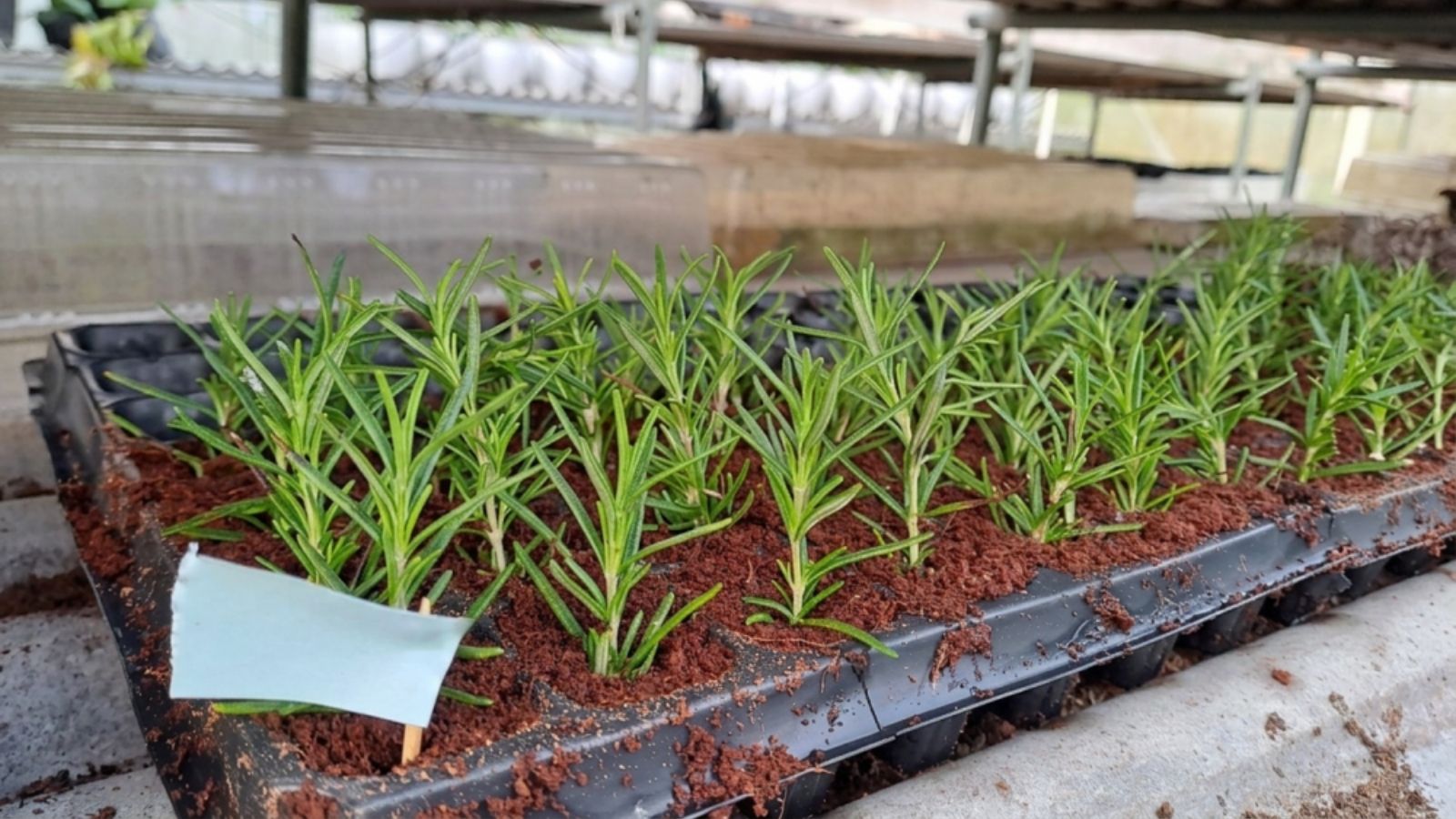
The best time to take rosemary cuttings is late spring to early summer, when the plant is in active growth and producing plenty of new stems in the ideal semi-firm state for rooting. In practical terms, that means any time from May through June in most US growing zones. The combination of warmth, long days, and actively growing stems at this time of year gives cuttings the best possible start.
That said, rosemary can be propagated at almost any point in the year if you adjust your approach and expectations accordingly.
How to choose the right cutting from the plant
The single most important factor in successful propagation is choosing the right type of stem, and this is where a lot of people go wrong. You’re looking for semi-hardwood. Semi-hardwood is stem growth that is firm and starting to toughen at the base but still pliable and actively green toward the tip. This middle ground between soft new growth and fully woody older stems is the sweet spot for rooting rosemary stem cuttings.
Soft, brand-new growth is too delicate. Those bright green tips that emerge in a flush in spring have a tendency to wilt and rot before getting a chance to form roots. Fully woody, brown, bark-covered stems at the base of the plant are at the other extreme. They can root, but it’s slow and unreliable. What you want is a stem where the bottom inch or so is just starting to look slightly woody and firm, but the upper portion is still flexible and green. When you bend it gently, it should flex without snapping.
The parent plant also matters. Only take cuttings from a healthy, vigorous plant with no signs of disease, spots, discoloration, or pest damage. A cutting from an unhealthy plant will very likely fail. It’s already stressed, and the additional stress of rooting will finish it off. Take your time when selecting, and if in doubt, choose another stem.
You cannot cut a thick woody branch from an established rosemary bush and expect it to root as a cutting. A mature, woody branch lacks the right tissue for rooting and will almost certainly fail. The right cutting is a young, semi-firm stem of 4 to 6 inches, not a chunky branch.
One more thing to check before you cut. Skip any stem that’s already flowering, since a flowering stem is putting its energy into blooms rather than the growth a cutting needs to root. And take more cuttings than you think you’ll need. Even in good conditions, you can expect somewhere around 30 to 50 percent of your cuttings to actually take root, so a batch of six to eight modest stems is a much safer bet than pinning everything on one or two ambitious ones.
What equipment do you need to propagate rosemary from cuttings?
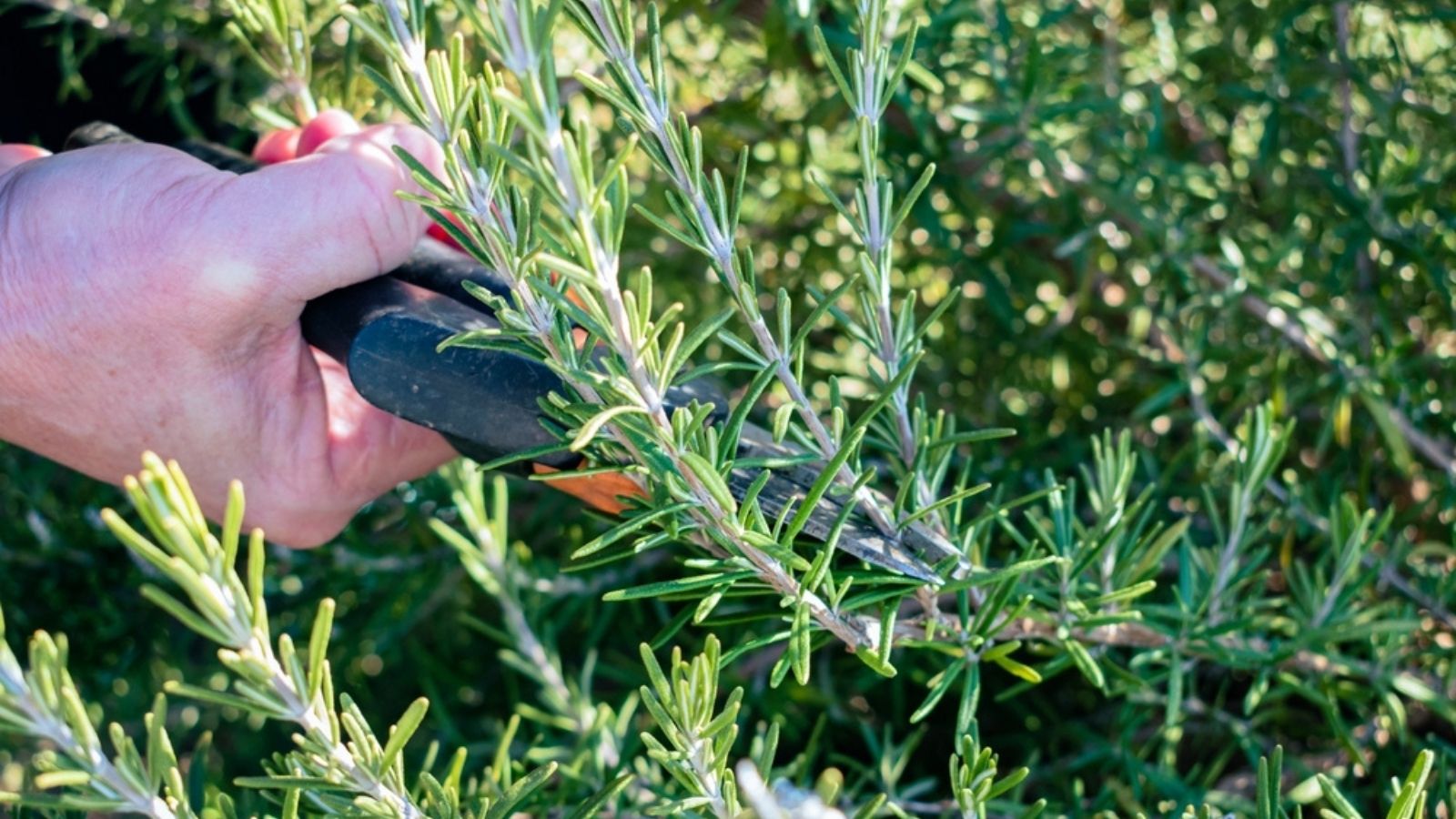
Propagating rosemary from cuttings takes sharp snips, a light free-draining rooting medium, small pots, rooting hormone, and a humidity cover. That’s genuinely it. Here’s what actually makes a difference in each, and what you can skip.
Sharp, clean scissors or pruning snips. Sharp blades make a clean cut, which heals faster and roots more reliably. Blunt tools crush the stem rather than cutting it cleanly. Wipe the blades with rubbing alcohol before you start to avoid introducing disease to your cuttings. I use a small pair of Felco snips for everything from cuttings to harvesting, and they’re worth every penny.
A light, free-draining rooting medium. This is the most important supply decision you’ll make. Standard potting mix is too heavy, holds too much moisture, and encourages stem rot. Coconut coir is my go-to. It’s light, airy, holds just enough moisture without waterlogging, and is cheap and easy to find. A perlite-heavy mix works equally well. You can also use a 50/50 blend of perlite and vermiculite. Whatever you use, it should be moist but not wet. If you squeeze a handful, no water should drip out.
Small pots or containers. Four-inch pots are ideal. Don’t go too large. A small pot keeps moisture levels manageable and prevents roots from sitting in wet mix far from the stem.
Rooting hormone. Technically optional, but I always use it. I make my own willow water which is a natural rooting hormone that significantly improves success rates and speeds up the process. You can also buy some white willow powder or a commercial rooting hormone. A small jar costs a few dollars and lasts for years. It’s one of those things where the cost is negligible and the difference is real.
RELATED: How to make willow water
A humidity cover. A clear plastic bag, a cut plastic bottle, or a proper propagation dome all work. Maintaining humidity around the cutting prevents it from drying out before it has a chance to root. Not essential, but it makes the process considerably more forgiving.
How do you take and prepare rosemary cuttings?
Preparing a rosemary cutting takes five quick steps. Cut at an angle, strip the lower leaves, dip the cut end in rooting hormone, make a hole in moistened medium, and insert and firm the cutting in place. Here’s each one explained in full below.
- Cut at a 45-degree angle. Using clean, sharp scissors, take a section that is 4 to 6 inches long, cutting just below a leaf node (the point where a pair of leaves emerges from the stem). The angled cut increases the surface area available for rooting.
- Strip the lower leaves. Remove all leaves from the lower half of the cutting. Leaves buried in your rooting medium will rot, and that rot will spread to the stem and kill your cutting. You want a clean, bare stem for the portion that goes below the surface. The upper half keeps its leaves to allow photosynthesis. Pull the leaves off by running your fingers firmly downward along the stem. They’ll come away easily. A tiny bit of stem tissue coming with them is fine and can actually encourage faster rooting.
- Apply rooting hormone. Pour a small amount into a separate container rather than dipping directly into the jar, which introduces moisture and potential pathogens. Dip the cut end into it, coating about the bottom half-inch, and tap off any excess.
- Make a hole before inserting. Use a pencil or chopstick to make a hole in your pre-moistened rooting medium. Don’t push the cutting in without making a hole first. You’ll knock the rooting hormone straight off the stem.
- Insert, firm, and check leaf position. Insert the cutting, firm the medium gently around the stem, and make sure none of the remaining leaves are touching the surface.
You can absolutely put rosemary cuttings straight into soil at this stage rather than rooting in water first. Going directly into a rooting medium is, in fact, my preferred method, which the next section explains.
Soil or water: which rooting method is actually better?
For rosemary, rooting directly in a well-draining soil medium consistently outperforms water rooting in terms of root quality, speed, and transplant success. That’s my honest experience after years of propagating both ways. Water rooting works and is satisfying to watch because you can see the roots developing, but the roots that form in water are structurally different from soil roots. They’re more fragile, and the plant sometimes struggles when you move it into potting mix. Soil roots form already adapted to their growing environment.
That said, water rooting is simple, requires no special medium, and is a good option if you want to see whether a cutting is viable before committing it to a pot. The soil method is the one spelled out step by step above. Here’s how the water method works if you’d rather watch roots develop first.
How do you root rosemary cuttings in water?
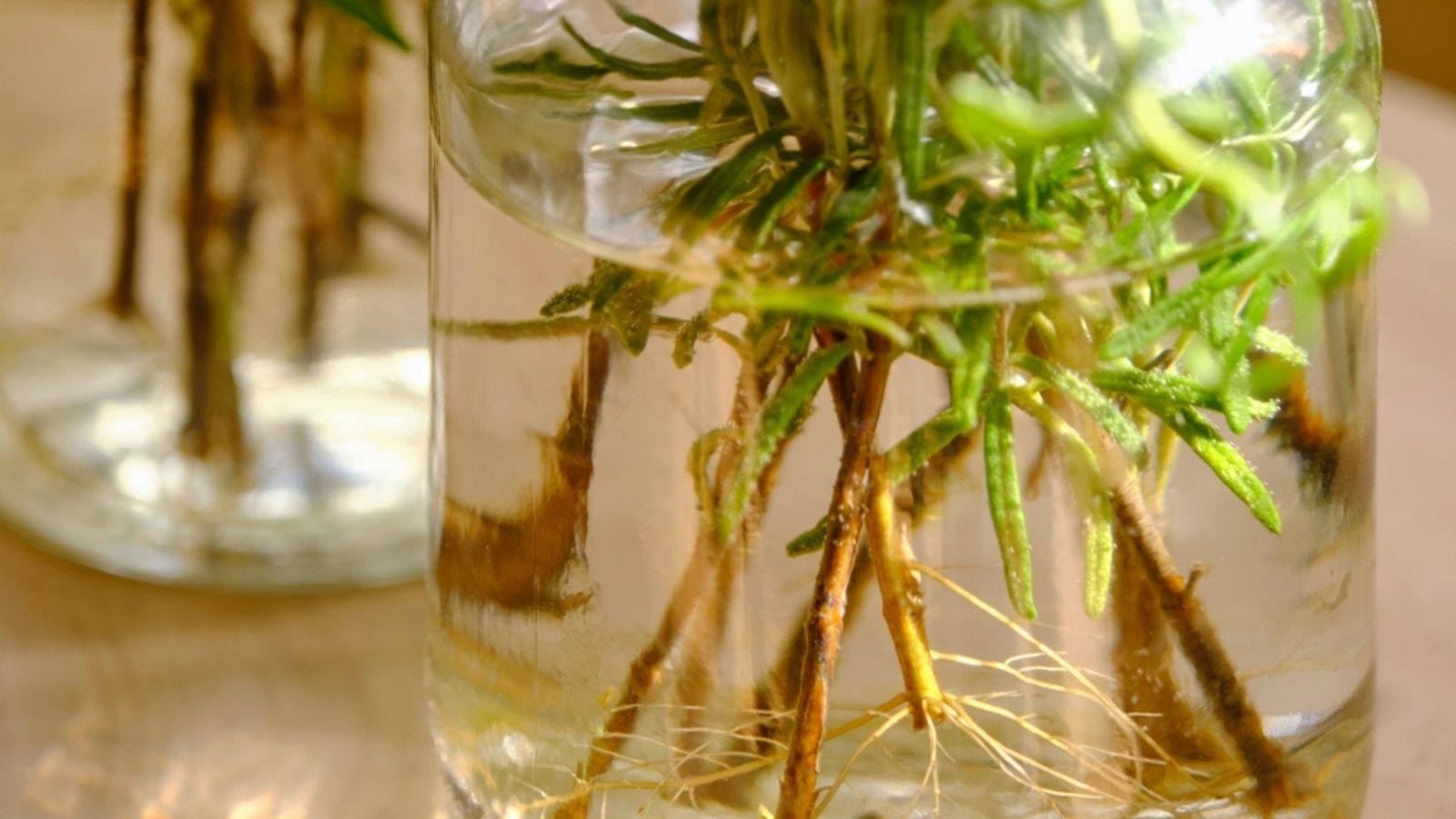
Fill a small glass or jar with 2 to 3 inches of room-temperature water and drop in your prepared cutting, submerging the bottom third to half of the bare stem. Set the glass on a bright windowsill out of direct sun, and change the water every two to three days to keep it from turning cloudy or growing algae. Root hairs usually show up within two to three weeks, and a rooted tangle worth transplanting takes four to six. Once you see a web of roots about an inch long, pot the cutting into barely moist, free-draining potting mix straight away. Water roots are more brittle than soil roots and don’t like sitting exposed to air, so handle the move quickly and gently, and expect a short adjustment period while the plant grows in a fresh set of soil-adapted roots.
How do you propagate rosemary by layering?
Layering is an alternative propagation method that works beautifully for rosemary, particularly for established plants growing in the ground. Layering is the process of encouraging a stem to form roots while it’s still attached to the parent plant, which means the developing plant has the full support of the parent’s root system throughout. Success rates are extremely high, and it requires almost no equipment.
It’s especially useful if you want to propagate a large, established garden plant without the effort of managing cuttings separately. You let the plant do most of the work.
- Select a long, flexible stem. Choose one that reaches or nearly reaches the ground when bent gently without straining.
- Strip and wound the stem. About 12 inches back from the tip, strip a 2-inch section of leaves. Using a sharp knife, make a shallow wound on the underside of the stem at this point, scraping away just enough of the outer tissue to expose the green cambium layer underneath. This wounding encourages rooting.
- Pin the wounded section into a trench. Dig a shallow trench about 2 inches deep directly below the wounded section. Bend the stem down into the trench, securing the wounded section in contact with the soil with a bent piece of wire or a small rock. Leave the tip of the stem pointing upward out of the trench.
- Cover and keep moist. Cover the buried section with soil, firm it down, water well, and keep the area consistently moist.
Roots should form within six to ten weeks. Once the tip of the layered stem is growing vigorously and new leaves are emerging, the layer has rooted. Cut the stem connecting it to the parent plant with sharp pruning shears, wait another week or two for the new plant to adjust, then dig it up and transplant to its permanent position.
How long does it take rosemary cuttings to root?
Rosemary cuttings typically root in four to eight weeks under good conditions, though this varies significantly depending on the method, season, temperature, and light levels. Water-rooted cuttings often show the first visible root hairs within two to three weeks. Soil-rooted cuttings take a little longer to show confirmation but tend to develop stronger, denser roots overall.
Cuttings taken in spring root fastest, often within four to five weeks. Fall and winter cuttings in lower light and temperatures can take ten to twelve weeks. If you’ve given your cuttings warmth and good light and still see no signs of rooting after eight weeks, check the troubleshooting section below.
The tug test is the most reliable way to check for roots in soil-propagated cuttings. Give the stem a very gentle, firm tug. If it resists and holds in place, roots have formed. If it slides out easily or feels loose, it needs more time. Do this infrequently, every few weeks rather than every few days. For water-rooted cuttings, watch the base of the stem for visible white root growth.
New leaf growth emerging from the top of a soil-rooted cutting is another reliable sign that roots have established. The cutting can only put on new top growth once it has the root system to support it.
How do you care for rosemary cuttings while they root?
While they’re rooting, rosemary cuttings need warmth, bright indirect light, and consistently moist, not wet, conditions above everything else.
Temperature is the most underestimated factor. Rosemary cuttings root best at 70 to 80°F (21 to 27°C). Below 65°F (18°C), rooting slows dramatically. If your house is cool, a heat mat set to 70°F under the pots makes a real difference, especially for fall and winter propagation.
Light should be bright but indirect. Direct sun on a covered cutting will turn the inside of your humidity dome into an oven and cook the cutting. A north-facing windowsill is too dim. East or west-facing is usually about right. If natural light is limited, a basic grow light on a 14-hour timer will do the job.
Humidity matters, but so does airflow. Your humidity cover keeps the cutting from desiccating while it has no roots to take up water, but if you seal it completely with no ventilation you risk mold and rot. Prop a bag cover slightly open, or if you’re using a proper propagation dome, use the vents. If you see condensation dripping heavily inside the cover, it’s too humid. Open the vents a little more.
Avoid the temptation to constantly check, water, and fuss. Rosemary cuttings are more likely to fail from overattention than from neglect. Check the moisture level of the medium every few days. Mist if it’s drying out. Then leave them alone.
How do you pot up rosemary cuttings once they’ve rooted?
Move rooted cuttings into 4-inch or small 6-inch pots of light, free-draining potting mix as soon as they’ve built a solid root system and are pushing out new leaf growth. Don’t rush this step. A cutting with strong, established roots transplants much more successfully than one with only a few fragile root hairs. A cactus and succulent mix works very well as the potting medium, or add a generous amount of perlite or horticultural grit to standard multipurpose potting mix to improve drainage. Don’t use rich, moisture-retentive potting mix. Rosemary doesn’t want it and the roots will struggle.
At this stage, move the pots into a brighter position. Direct sun is fine now that the cutting is rooted and no longer under a humidity cover. Begin watering normally, but let the mix dry out between waterings. This is the moment when most people overwater and undo all their hard work. Rosemary roots need oxygen. Constantly wet potting mix suffocates them.
How do you harden off rosemary cuttings before transplanting outside?
Hardening off is the process of gradually acclimating indoor-grown plants to outdoor conditions, including wind, direct sun, and temperature fluctuations, over one to two weeks. Skipping it often leads to transplant shock, scorched leaves, and setback growth even on otherwise healthy plants.
Start by placing the pots outside in a sheltered, partially shaded spot for a couple of hours on a mild day, then bring them back in. Over the following week, increase outdoor exposure daily, gradually moving them into more direct sun and leaving them out for longer periods. By the end of two weeks, they should be able to stay out overnight, assuming temperatures are staying above 50°F (10°C).
Don’t transplant outside until after the last frost date for your zone. Rosemary is tough once established, but young rooted cuttings are more vulnerable than mature plants and a late frost can set them back badly or kill them outright.
Why are my rosemary cuttings failing?
Rosemary cuttings are forgiving, but they do fail sometimes. Here are the most common reasons and exactly how to fix them.
My rosemary cuttings are rotting at the base
Stem rot at the base is almost always caused by excess moisture. Either the rooting medium is too wet, the pot has no drainage holes, or the cutting has been kept too humid without enough airflow. Standard potting mix is also a frequent culprit because it holds far more moisture than rosemary roots can tolerate.
Fix it by improving drainage first. Switch to coconut coir or a perlite-heavy mix if you haven’t already. Make sure your pot has drainage holes that aren’t blocked. Reduce watering to a light mist every few days rather than a proper watering. Improve airflow around your humidity cover by opening vents or propping the bag slightly. If the rot has progressed past the bottom inch of the stem, the cutting is unlikely to recover. Take a fresh one and start again.
The leaves are turning brown or dropping off
Losing a few lower leaves is completely normal during propagation. The cutting is conserving resources while it focuses energy on root production, and shedding a few leaves is part of that process. Don’t panic unless you’re losing leaves from the upper portion of the stem rapidly, with the remaining leaves looking dry and shriveled rather than just yellowing.
Rapid, widespread browning and leaf drop usually indicates the cutting is drying out. Either the medium isn’t moist enough, the humidity cover came off too soon, or the cutting is getting too much direct heat. Move it to a slightly cooler position, check moisture levels, and replace the humidity cover.
If the leaves are yellowing rather than browning and the medium is consistently moist, the problem is almost certainly insufficient light. Move the cutting somewhere brighter.
Nothing is happening and there are no roots after weeks
If you reach the eight-week mark with a soil-rooted cutting and the tug test still shows no resistance, a few things could be going wrong. The most common causes are too cold (below 65°F / 18°C), too dark, or the wrong type of stem used in the first place. A fully woody stem lacks the tissue needed to form roots and will just sit there indefinitely.
Check your temperature and light first. If both are adequate and you’re fairly confident the stem was semi-hard rather than fully woody, it may simply be a slow batch. Give it another two weeks. If there’s still nothing, remove the cutting and check the base of the stem. If it’s firm and green, there’s still hope. If it’s brown, mushy, or dry and shriveled, the cutting has failed. Start again with fresh material in spring if possible.
My cuttings have white mold on the soil surface
White fluffy mold on the surface of the rooting medium is usually saprophytic fungus. Saprophytic fungus feeds on organic matter in the mix rather than on living plant tissue, so in most cases it won’t harm a healthy stem. It is, however, a reliable sign that conditions are too humid with insufficient airflow.
Improve ventilation immediately by opening your humidity cover more. You can scrape the mold off the surface of the medium if it bothers you. If the mold is on the stem itself rather than just the soil, that’s more serious. Remove the covering entirely, improve airflow, and check whether the affected stem tissue is still firm and green. If it’s soft or discolored at the base, the cutting is probably already lost.
FAQs
Can you cut a branch of rosemary and replant it?
This depends entirely on what you mean by a branch. A young, semi-firm stem of 4 to 6 inches prepared correctly as a cutting, with stripped lower leaves and optional rooting hormone, placed in a light rooting medium, will root reliably. A thick, mature, woody branch taken from the base of the plant will almost certainly fail, because woody stems lack the right tissue for rooting and have no active growth points to draw from. What you’re propagating from is a cutting, not a branch, and the distinction matters.
Is rosemary better in pots or in the ground?
Both work, but they suit different situations. In the ground in zones 8 and above, rosemary is a perennial that will grow into a substantial shrub and largely look after itself, giving you years of free harvests from one plant. In zones 6 and 7, the ground is risky. It can survive mild winters with some protection, but a harsh winter will often kill it. In these zones, a large pot you can move to a sheltered spot or bring indoors is a more reliable long-term strategy. Pots also give you complete control over drainage, which is particularly useful on heavy clay soils.
Can I take rosemary cuttings in fall?
September is workable, and I’ve had perfectly good results taking cuttings in early fall. The plant is still putting out growth after summer, the stems are nicely semi-hardened from the growing season, and if you bring the cuttings inside to root, they’ll establish well before winter. Get them started by mid-September at the latest in most zones for the best results.
October is more marginal, particularly in zones 6 and below. Growth has slowed significantly by this point, and the stems you’re choosing from are likely more mature and harder, which makes rooting slower and less reliable. If you do take cuttings in October, bring them inside, provide supplemental warmth (70°F / 21°C minimum), and be prepared to wait ten weeks or more for roots. It’s doable, but spring cuttings will outperform them every time.
Can I take rosemary cuttings in winter?
You can take rosemary cuttings in winter indoors, and for gardeners in zones where rosemary is an annual this can be a smart strategy. Taking cuttings from your potted rosemary in January or February means you’ll have rooted plants ready to go outside come spring, which effectively extends the growing season without spending a penny on new plants.
Winter rooting does take longer. Expect eight to twelve weeks rather than four to six, and you’ll need to provide good light, ideally with a grow light if natural light is limited, and keep temperatures consistently above 65°F (18°C). Success rates are lower than spring cuttings, so take more than you think you need.
You might also like….
Foods to Regrow From Scraps: Reduce Food Waste and Enjoy Free Food!
17 Best Oregano Companion Plants
Companion Planting Peppers: Complete Guide to the Best and Worst Companion Plants for Peppers