
Affiliate disclosure: This post may contain affiliate links. Please see full disclosure.
Used coffee grounds are that free additive, and the reason they work comes down to nitrogen. Add enough to a pile and you can hold it between 135°F and 155°F (57-68°C) for two weeks straight, hot enough to finish well ahead of a cool, slow-moving heap and cook off most of the weed seeds and pathogens along the way. I keep a lidded bucket by my coffee maker for exactly this reason, and it’s the cheapest speed boost my compost has ever gotten.
Why Coffee Grounds Speed Up Decomposition
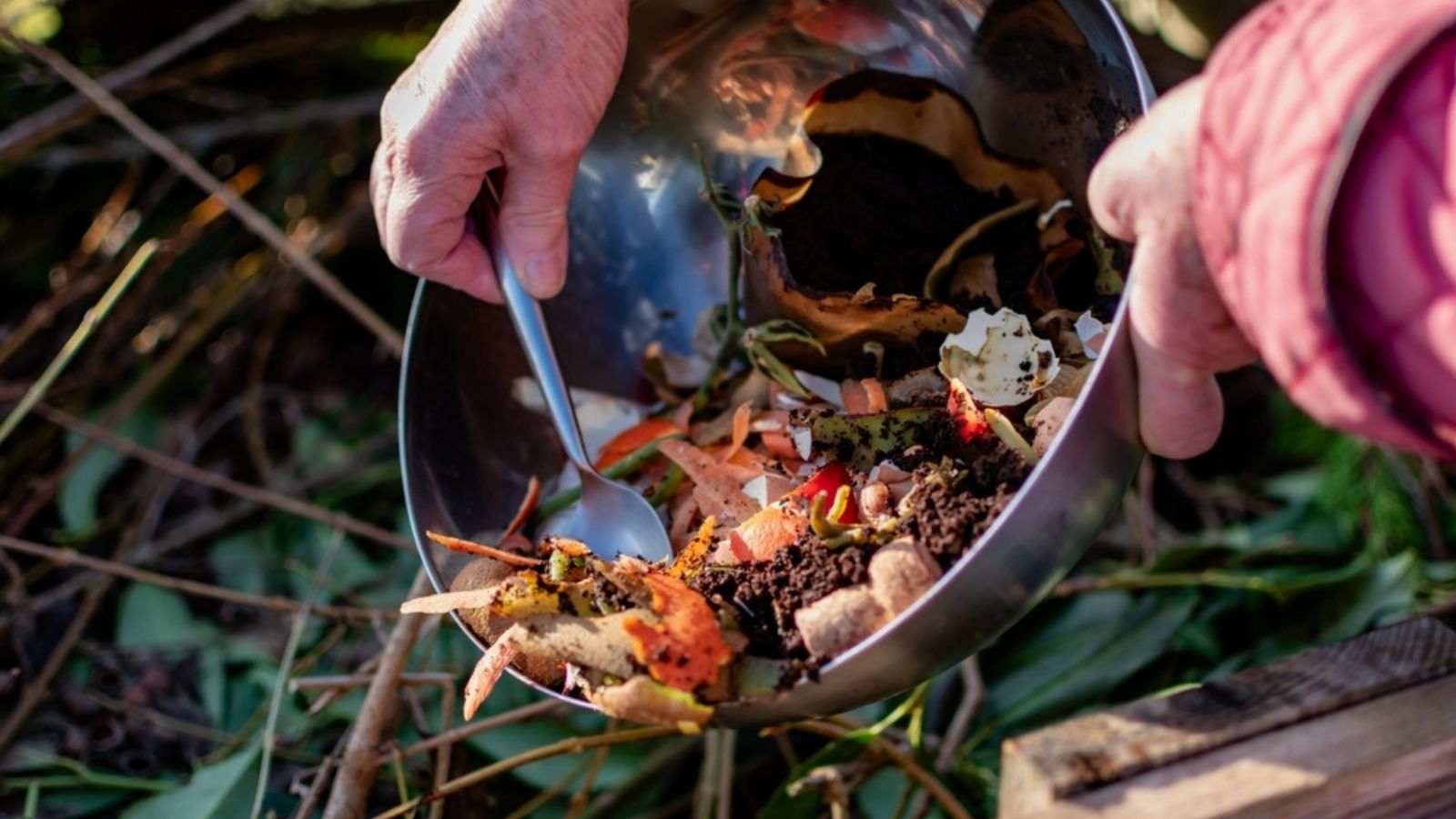
Coffee grounds are a nitrogen rich green material in composting terms, with a carbon to nitrogen ratio of around 20 to 1, putting them in the same nitrogen league as fresh grass clippings. That nitrogen is food for the bacteria doing the actual work in your pile, and a bigger, hungrier bacterial population generates more heat.
Heat is what actually drives decomposition, not just the presence of grounds themselves. Compost piles running around a quarter coffee grounds by volume have held steady between 135°F and 155°F (57-68°C) for at least two weeks, long enough to knock out a significant share of the pathogens and weed seeds that would otherwise survive a cooler pile. I had a bin sit lukewarm and sluggish all last winter until I started feeding it my morning grounds, and the difference in how fast it cooked down afterward wasn’t subtle.
How Much to Add and How to Mix It In
Ten to twenty percent of your total pile volume is the sweet spot for coffee grounds, and going much past that starts working against you rather than for you. Pair whatever you add with a larger volume of carbon rich material, like dry leaves or shredded cardboard, to keep the balance in check.
There’s an even simpler rule for the mix itself. Aim for one to four times as much brown material as coffee grounds by volume, and mix it in as you go rather than piling it on. Grounds are fine and dense, and a thick wet layer dumped straight from the filter mats together, blocks airflow, and starts smelling like ammonia within days, a sure sign you’ve overdone the nitrogen and need more carbon fast.
I keep a scoop of shredded cardboard next to my compost bin and toss in a handful every time I empty the coffee grounds, so the two go in together instead of the grounds sitting in a slimy heap on top.
What Belongs in the Compost and What Doesn’t

Paper coffee filters compost right alongside the grounds. No need to pull them out first, they break down in the pile just like any other paper. Coffee pods are a different story. The plastic and metal parts of a pod don’t belong in your bin at all, so empty the grounds out and bin the shell separately.
Skip instant coffee too. It’s been processed with additives that aren’t suited to the microorganisms doing the composting work, so it won’t feed your pile the way grounds from a drip machine or French press will. Stick to plain brewed grounds and paper filters, and you’re getting the full nitrogen benefit without giving your pile anything to fight against.
FAQs
Are used coffee grounds acidic?
No, used coffee grounds are close to pH neutral, typically between 6.5 and 6.8, once they’ve been through the brewing process. Most of the acid in coffee is water soluble and leaches out into your cup during brewing, so the leftover grounds are far milder than people assume. This is one of the most persistent myths in composting, and it’s why you don’t need to worry about grounds swinging your whole pile acidic.
Can I put coffee grounds in a worm bin?
Yes, red wigglers and other composting worms process coffee grounds readily, and plenty of vermicomposters use them as a regular part of the mix. Add them in moderation alongside your usual bedding and food scraps rather than as the bulk of what goes in, since a bin that’s too heavy on any single ingredient, coffee included, can throw off the balance your worms need.
Will coffee grounds attract pests to my compost?
No, coffee grounds don’t draw in the flies, rodents, or scavengers that meat and dairy scraps do. They’re plant material, and once mixed into the pile they blend in with everything else rather than sitting on top as an obvious food source.
Can I put coffee grounds straight on my garden soil instead of composting them first?
You can, but composting them first gives better results. Research has found that uncomposted grounds worked into soil at high volumes can stunt germination and slow seedling growth. Composting neutralizes that effect, so let your grounds finish in the pile before they go anywhere near seedlings.
Where can I get more coffee grounds if I don’t drink much coffee myself?
Most local coffee shops are happy to hand over their used grounds for free if you ask, since it saves them a trip to the bin. Bring your own container and ask during a quieter part of the day, and many places will set a bag aside for you on a regular schedule once they know you’re coming back.
You might also like…
10 Ingenious Ways to Use Old Coffee Grounds
20 Best Coffee and Tea Station Ideas You’ll Love
30 Best Cheap & Easy DIY Compost Bins