
Affiliate disclosure: This post may contain affiliate links. Please see full disclosure.
A coffee station doesn’t need a dedicated room, an expensive espresso machine, or a row of perfectly matching jars. It needs a sensible place for the things you reach for when you’re still half asleep. If the mugs live on one side of the kitchen and the tea bags on the other, even a tiny bit of organization can make mornings less of a scavenger hunt.
There’s plenty of room to have fun with it, too. An old dresser can become a handsome coffee bar, a narrow nook can hold everything for a proper brew, and a few well-placed hooks can free up a surprising amount of cupboard space. Tea drinkers needn’t settle for a forgotten box of bags beside the coffee machine, either.
These 20 coffee and tea station ideas range from clever little countertop organizers to proper DIY furniture builds. Some are made for entertaining; others are all about keeping a busy kitchen under control. Borrow the details that work for your home, and leave the rest.
1. The Ferrari of Tea and Coffee Stations
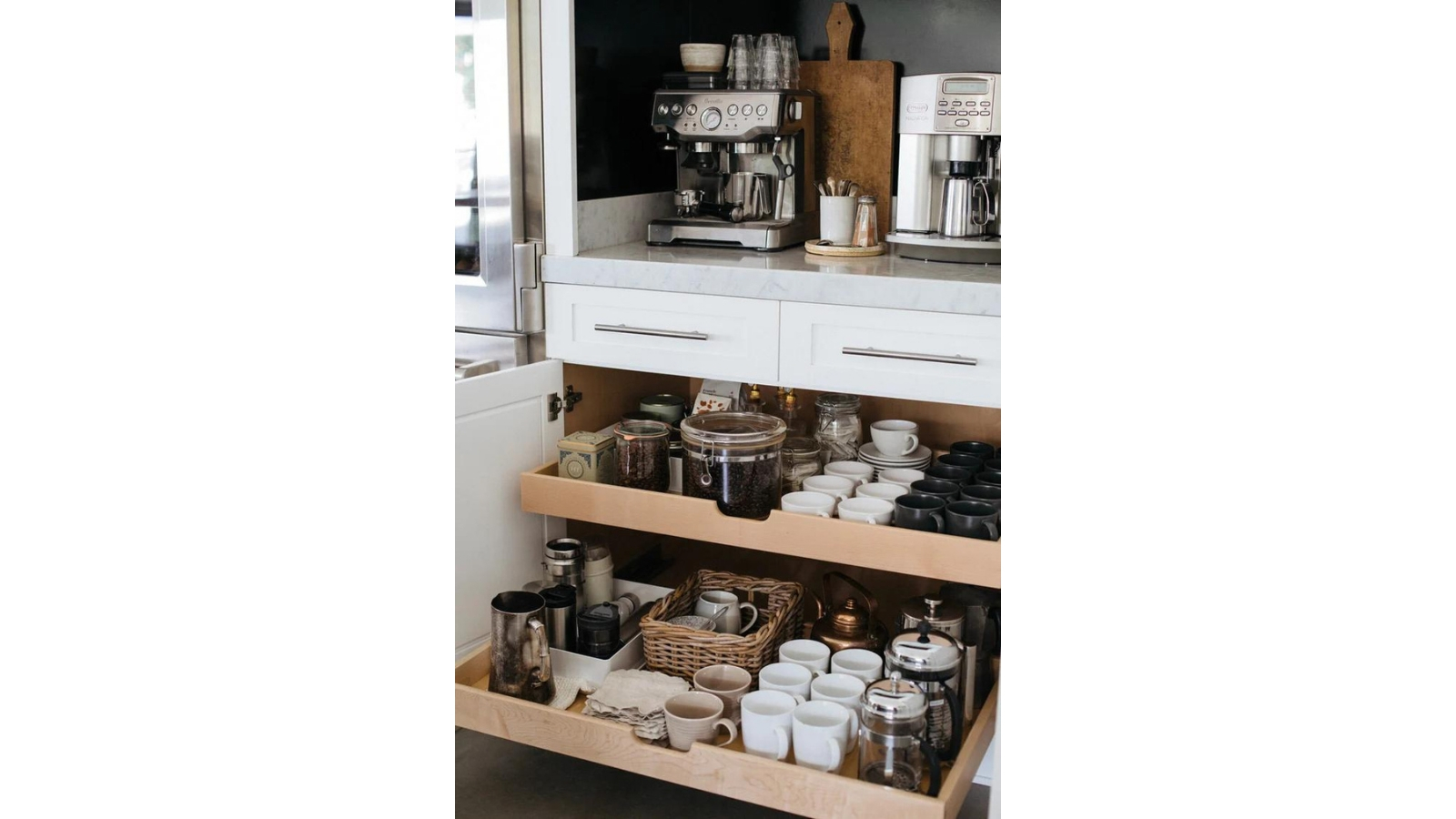
Heather Bullard’s station is beautifully arranged, but the detail I’d steal is inside the cabinetry. Deep pull-out drawers bring the tea, coffee and other supplies right to you, instead of leaving packets to disappear at the back of a cupboard. One drawer even has an organizer for tea bags. The open shelves still get to show off the lovely ceramics and containers, while the less photogenic everyday bits stay close at hand. It’s a good reminder that the smartest part of a coffee station is often the part you can’t see.
2. A Tea and Coffee Nook

Melaine Thompson turned an old baking nook into a proper coffee corner, making use of a space that was already there. The shelves hold cups and supplies, while the tiled backsplash gives splashes somewhere easy to wipe clean. I particularly like how the light colors and natural wood keep the little recess from feeling crowded. If you have an awkward alcove or a stretch of counter that never quite earns its keep, this is a much better use for it than collecting unopened mail.
3. DIY Cabinet With Closed Storage

This one is for anyone who’s itching to build some actual furniture. Zoe Hunt’s freestanding coffee cabinet has a wood top for the machine, a full-extension drawer, and two shaker-style doors with adjustable storage behind them. You can hide the bags, pods and extra cups without hiding the coffee maker itself. The original project includes a free build walkthrough, with printable plans available separately. You’ll need woodworking tools and a little patience, but the result is a useful piece of furniture rather than another tray taking up countertop space.
4. Tea Storage Box With a Mug Holder

Tea bags have a talent for escaping their boxes and spreading through a cupboard. Shara’s scrap-wood organizer gives them three divided compartments, with a pegged dowel above for hanging three mugs. It has the neatness of a little tea-shop display without demanding a whole cabinet of its own. The project also explains how to alter the measurements, which is handy if your favorite mugs are unusually chunky or you prefer taller tea packets. This would be lovely on a pantry shelf or at the end of the kitchen counter.
5. Something for Label Lovers
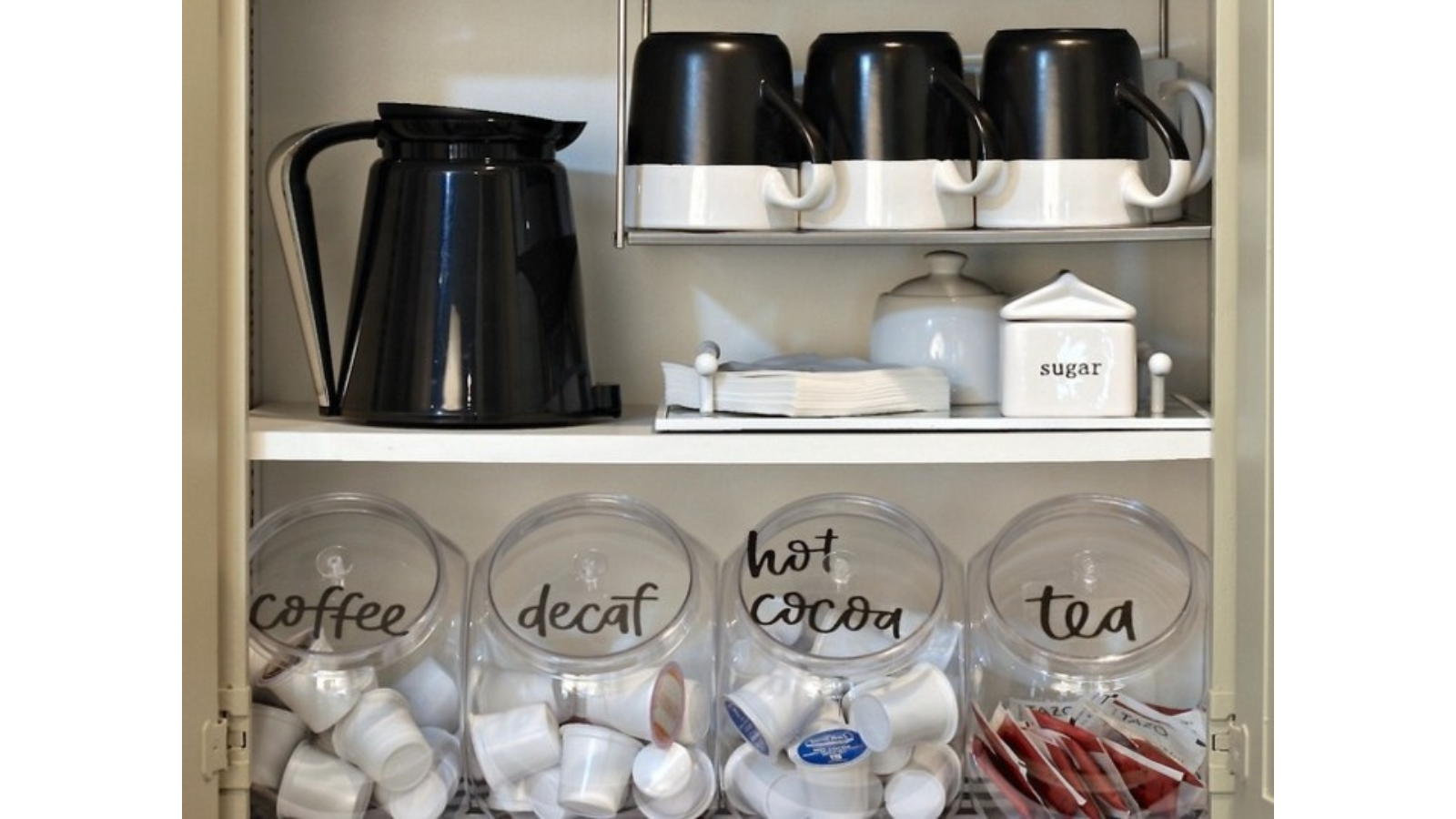
Cyndy Aldred has taken an ordinary upper kitchen cupboard and given it a proper job. Labeled canisters and pod bins make the supplies easy to spot, while a removable tray keeps the serving pieces together. It’s a particularly sensible idea if you’re short on counter space and don’t want the entire tea and coffee collection on display. The lettering is part of the appeal, with label artwork by Jo of Zuer Designs. The original post includes the printables, so there’s no need to reinvent the labels yourself.
6. A Tea and Coffee Station for DIY Enthusiasts
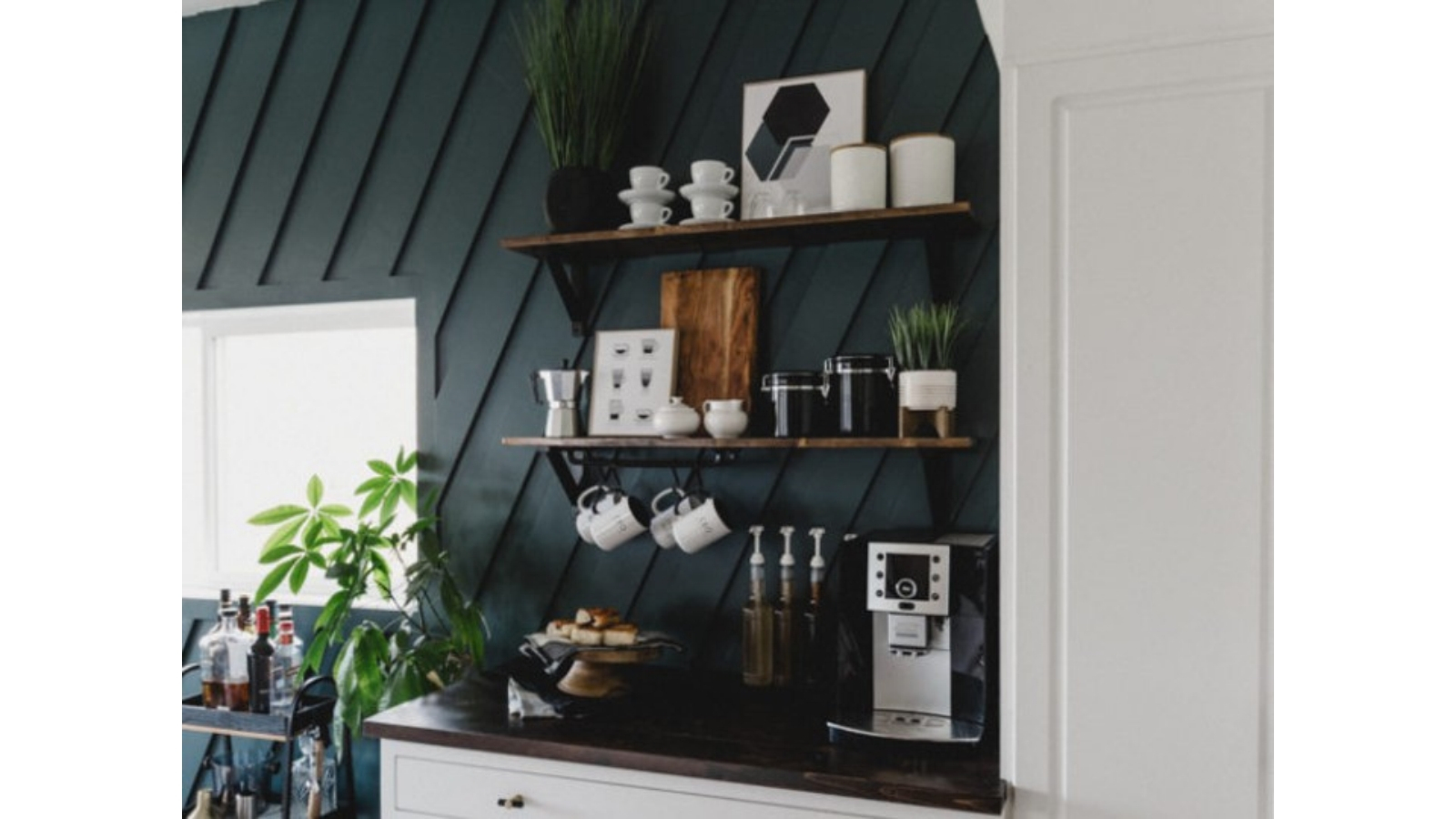
A dark feature wall, simple pine shelves and an existing base cabinet give Lindi and Russ’s station a bold, workshop-inspired look. The clever touch is underneath: appliance pulls with S-hooks create a hanging spot for mugs, leaving the shelves for jars and other supplies. It looks far more deliberate than lining up every cup along the counter. There’s a video of the project, too, if you want to see how the pieces come together. Choose secure fixings for your wall and mugs rather than treating the hooks as decoration alone.
7. An Industrial Look

Black pipe and warm wood are a natural pairing for an industrial-style coffee bar, and Dustin Marr’s build has enough substance to function as real kitchen furniture. There are open shelves for the microwave and coffee gear, with baskets to keep smaller things from making the whole station look chaotic. It’s freestanding, rather than a few decorative shelves screwed to the wall. The tutorial shows how the structure is made, so this is one for the DIY toolbox. Measure your appliances first; they should fit the shelves you actually build.
8. Change With the Seasons

A coffee station can change with the seasons without changing the furniture underneath it. Amy Buchanan uses a generous tray, pastel mugs, flowers and pedestal serving pieces to give her buffet a cheerful spring makeover. The cake stands are a particularly nice trick, lifting smaller items into view without installing another shelf. You could take the same approach with fall colors or winter greenery. Just keep enough clear space for the kettle or coffee maker; a pretty display becomes less charming when you have to dismantle it to make a drink.
9. A Simple White Cabinet

The white cabinet at Salt Sister Moms is the sort of unfussy piece that works in all kinds of kitchens. A wood top accommodates two coffee makers, the doors hide the everyday clutter, and a geometric shelf above makes room for a few display pieces. It’s easy to see how a secondhand cabinet could do the same job after a clean-up and a fresh coat of paint. A closed cupboard is especially useful if you buy tea or coffee in bulk and don’t want all the spare packets sitting out.
10. An Industrial Coffee Cart
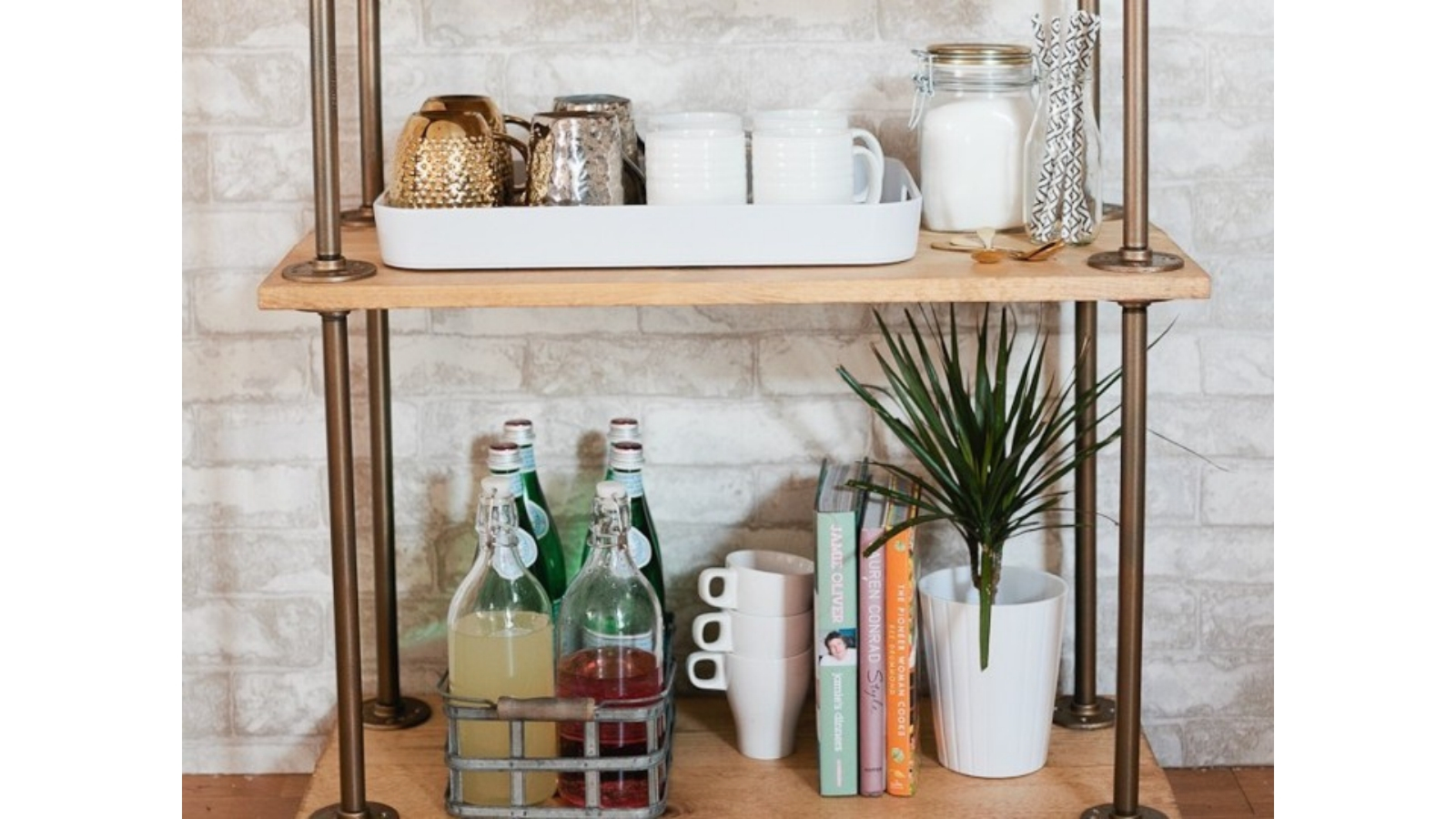
Tabitha Blue’s three-tier cart has wood shelves, pipe-style uprights, a handle and casters, giving you a proper little mobile drinks station. The lower levels can carry cups, bottles and extras while the working surface stays relatively clear. Because it rolls, you can bring it closer to guests when you’re entertaining, then move it back when the kitchen needs the floor space. The build uses plastic pipe for some of its supports, so don’t mistake it for an all-iron cart. And remember that anything needing electricity still needs a safe outlet nearby.
11. A Self-Serve Station for Houseguests
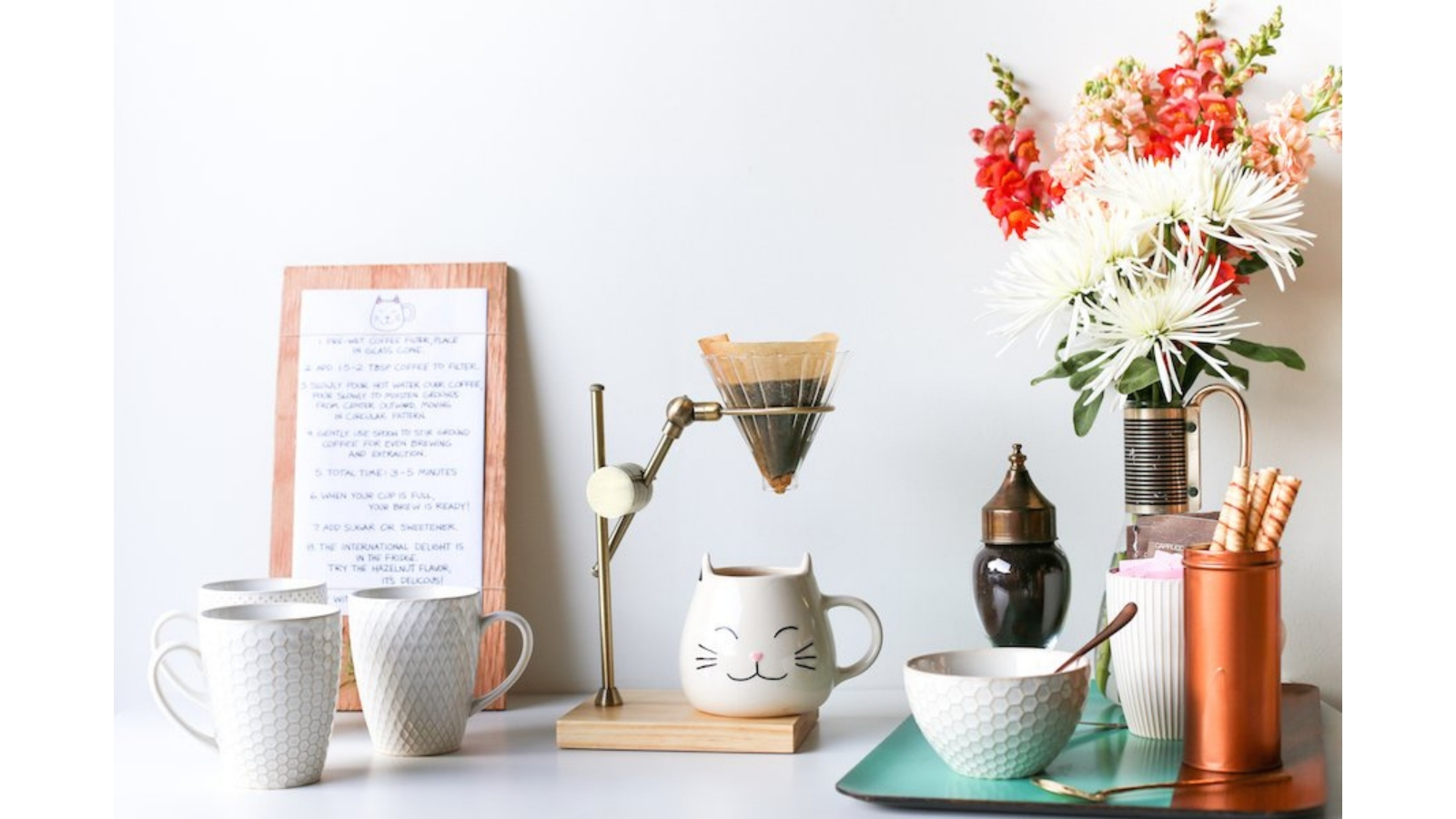
When guests stay over, being able to make their own coffee can be a small luxury for everyone involved. Andrea at Salty Canary sets out the mugs and supplies, then adds written instructions for the machine so nobody has to guess which button does what. There’s even a note telling visitors where to find the creamer in the fridge. That’s the useful bit here, rather than a complicated cabinet makeover. You could do the same with a simple tray and a short note, especially if your coffee maker has more buttons than a spaceship.
12. Repurpose a Bookshelf
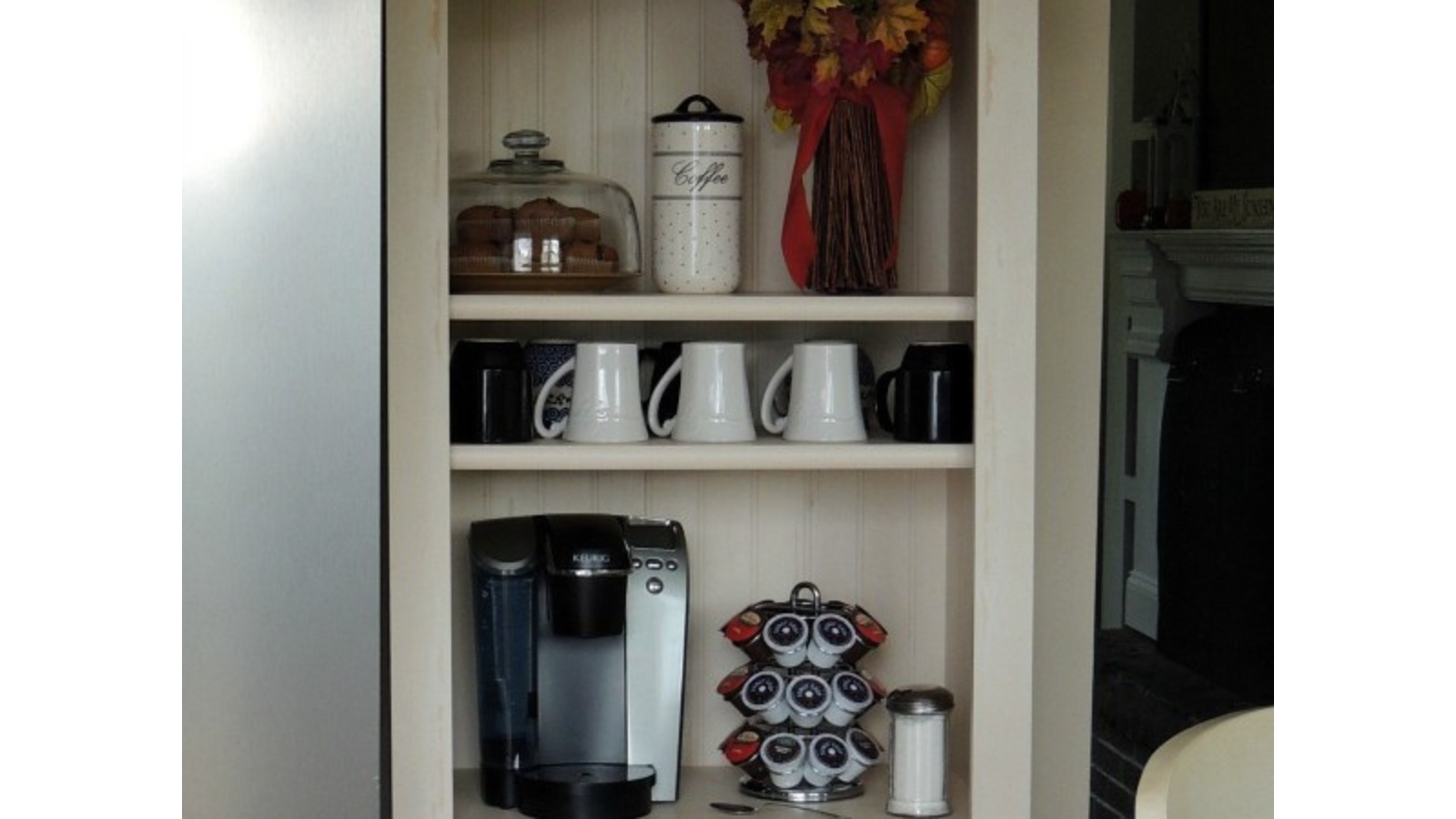
Shannon’s bookshelf makes a surprisingly convincing coffee station. The adjustable shelves accommodate a Keurig, a drawer takes care of tea and hot chocolate, and the lower cupboard holds appliances that don’t need to sit out all the time. It’s a good solution when an unused bookcase has more potential than an expensive new coffee-bar cabinet. This is furniture repurposing rather than a build tutorial, so check that your own machine has the clearance and ventilation its manual calls for before putting it into a shelf opening.
13. A Vintage Worktable Coffee Station
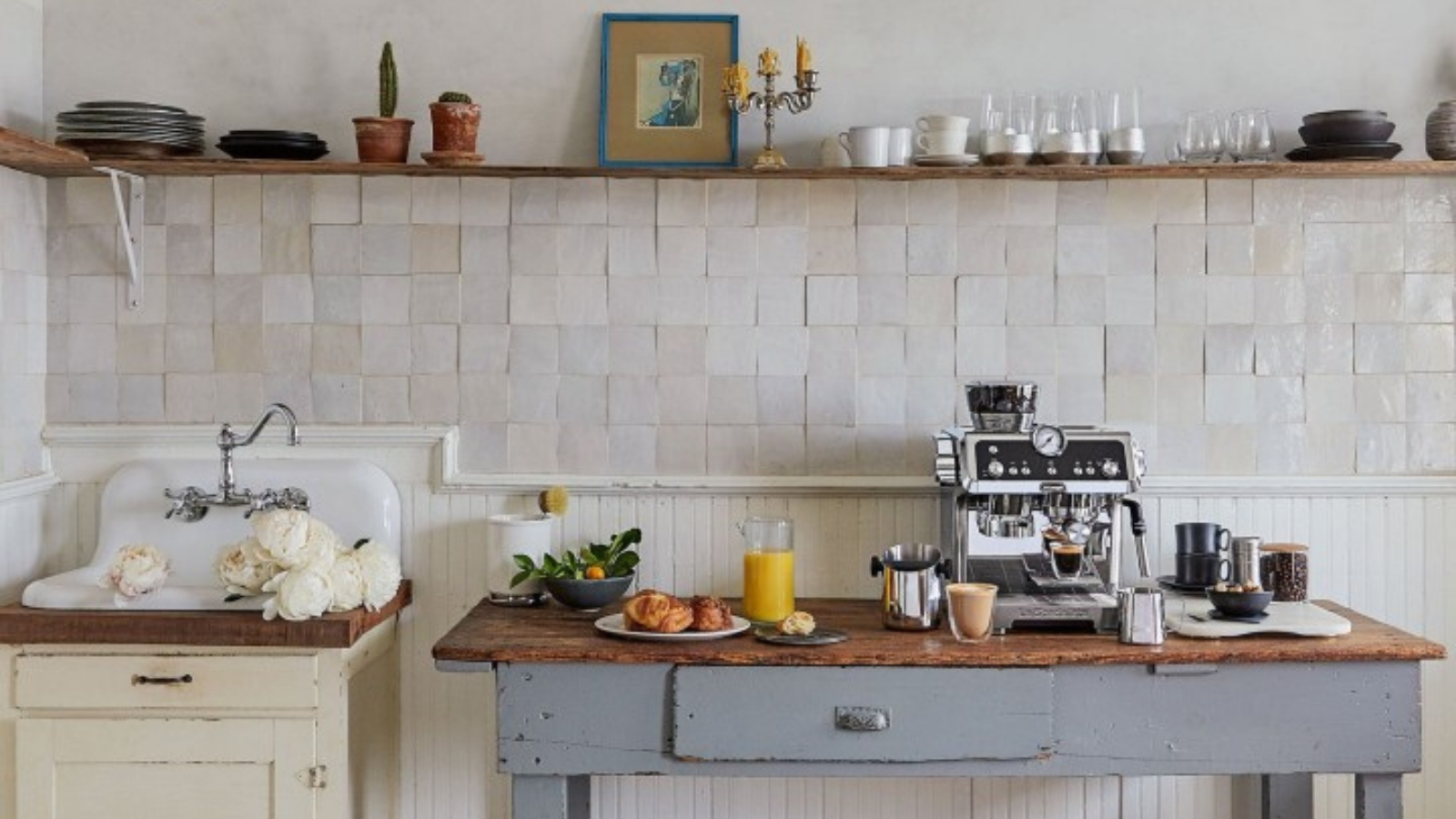
There’s a beautifully relaxed feel to the coffee nook designed by Anthony D’Argenzio of Zio and Sons. The espresso equipment sits on an open vintage-style worktable, with a drawer for small bits and a long shelf above for the things worth displaying. Against the tiled wall, the warm wood feels much more inviting than a run of matching cabinets. It does demand a little discipline, though, because the open space makes clutter rather obvious. Take inspiration from the furniture and layout; this is a room-design feature, not a build plan.
14. Scrap-Wood Tea Station Tray
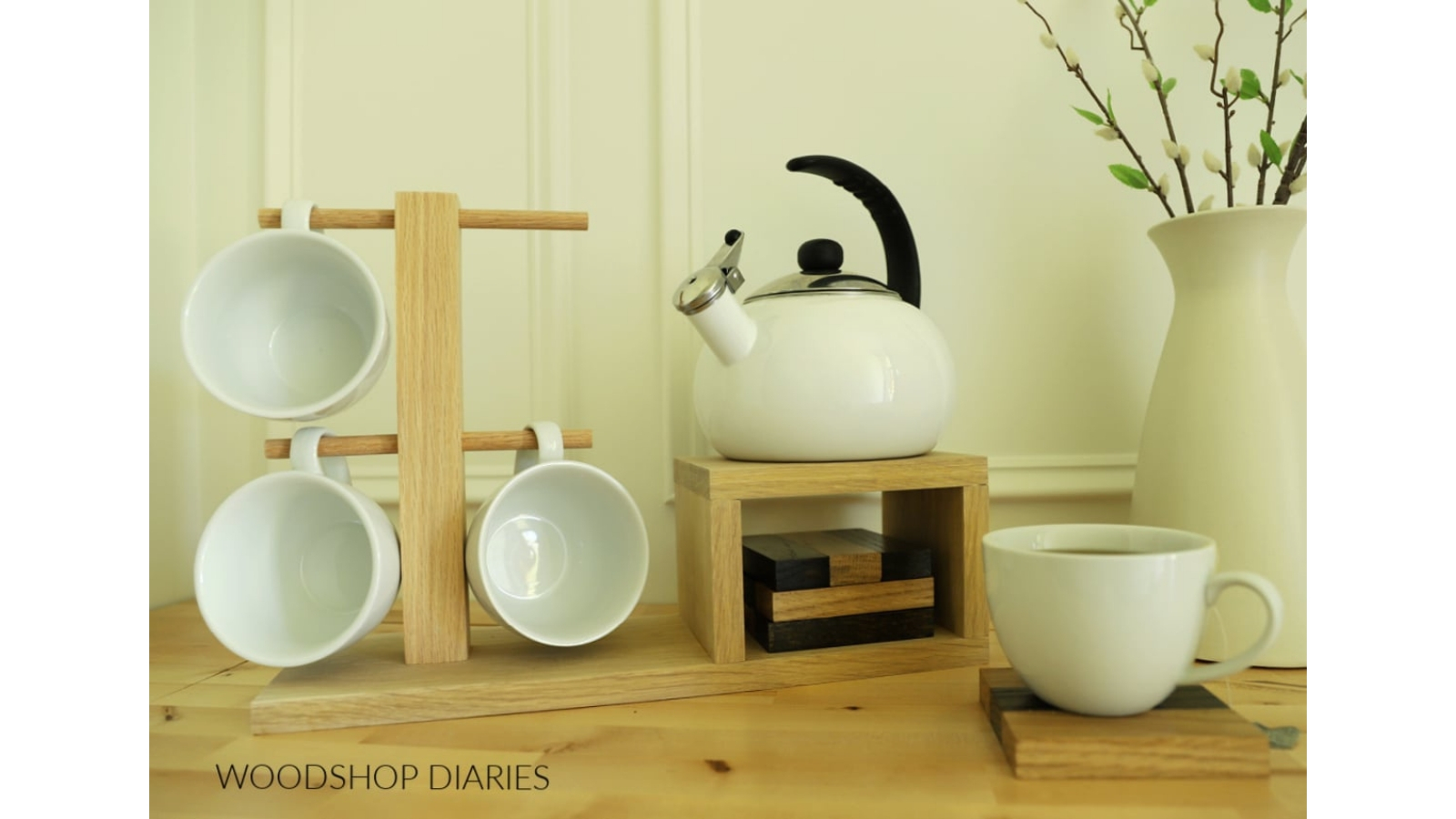
Shara’s tea station tray squeezes several useful ideas into one small woodworking project. There’s a post for mugs, a raised platform for the kettle and a handy space underneath for coasters. It’s especially appealing if your tea-making supplies tend to drift across the counter during the day. The instructions show how to build the tray from scrap wood and adjust the mug spacing. Put a suitable trivet or heatproof barrier beneath a hot kettle, as the maker advises; the wooden surface alone isn’t a place to set something scorching.
15. A Wall-Mounted Mug Rack in Navy and Copper

If your mug collection is starting to annex the worktop, Jen Woodhouse’s wall-mounted rack offers a very handsome solution. Navy wood and copper-colored rods make a striking combination, and the mugs hang directly above the coffee setup instead of competing for shelf space. The original creator’s page shows the finished station and points to the full HGTV how-to. It’s a more involved DIY idea than adding a few screw-in hooks, but the vertical storage is useful even in a fairly compact kitchen.
16. A Budget Coffee Bar
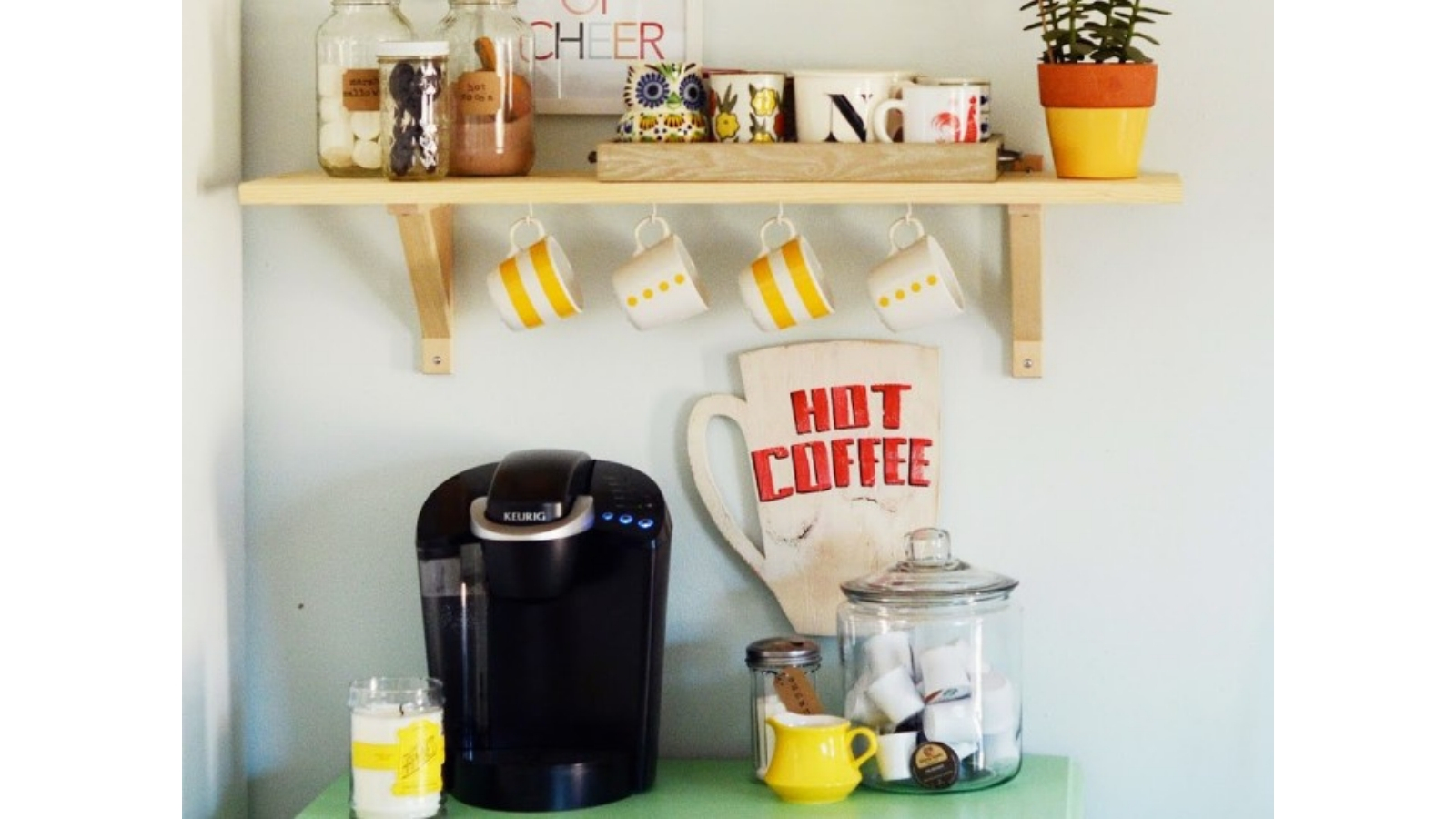
Natalie Freeman’s coffee bar started with a thrifted dresser, a lick of paint and some new knobs. Simple pine shelves above it hold mugs and jars, while the dresser itself offers the kind of storage you rarely get from a little decorative trolley. The colorful accessories keep the whole thing cheerful rather than showroom-perfect. This is an encouraging project if you enjoy giving old furniture another life. Secondhand prices vary wildly, of course, but you can borrow the idea without chasing the exact bargain Natalie found years ago.
17. Add Some Lights
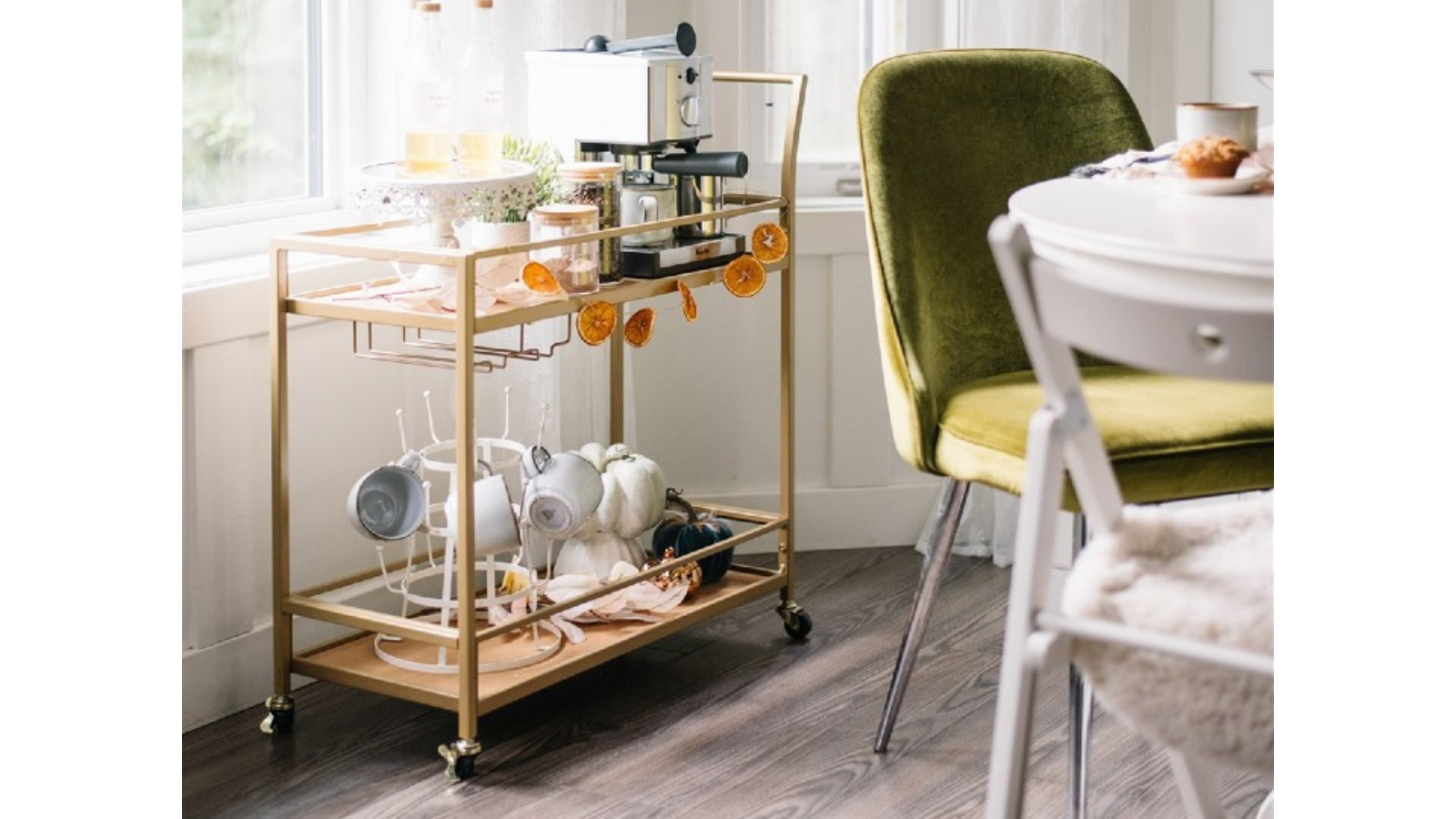
Christina Dennis makes a gold bar cart feel wonderfully autumnal with warm string lights, dried orange slices, faux pumpkins and a small cake stand that doubles as another level for supplies. The cart itself is purchased; the fun is in arranging it. It’s a useful example of how a coffee corner can have some personality without requiring tools or permanent changes. Keep the lights and decorations clear of water, heat and the working area, particularly if the cart holds an electric coffee maker.
18. A Drinks Station
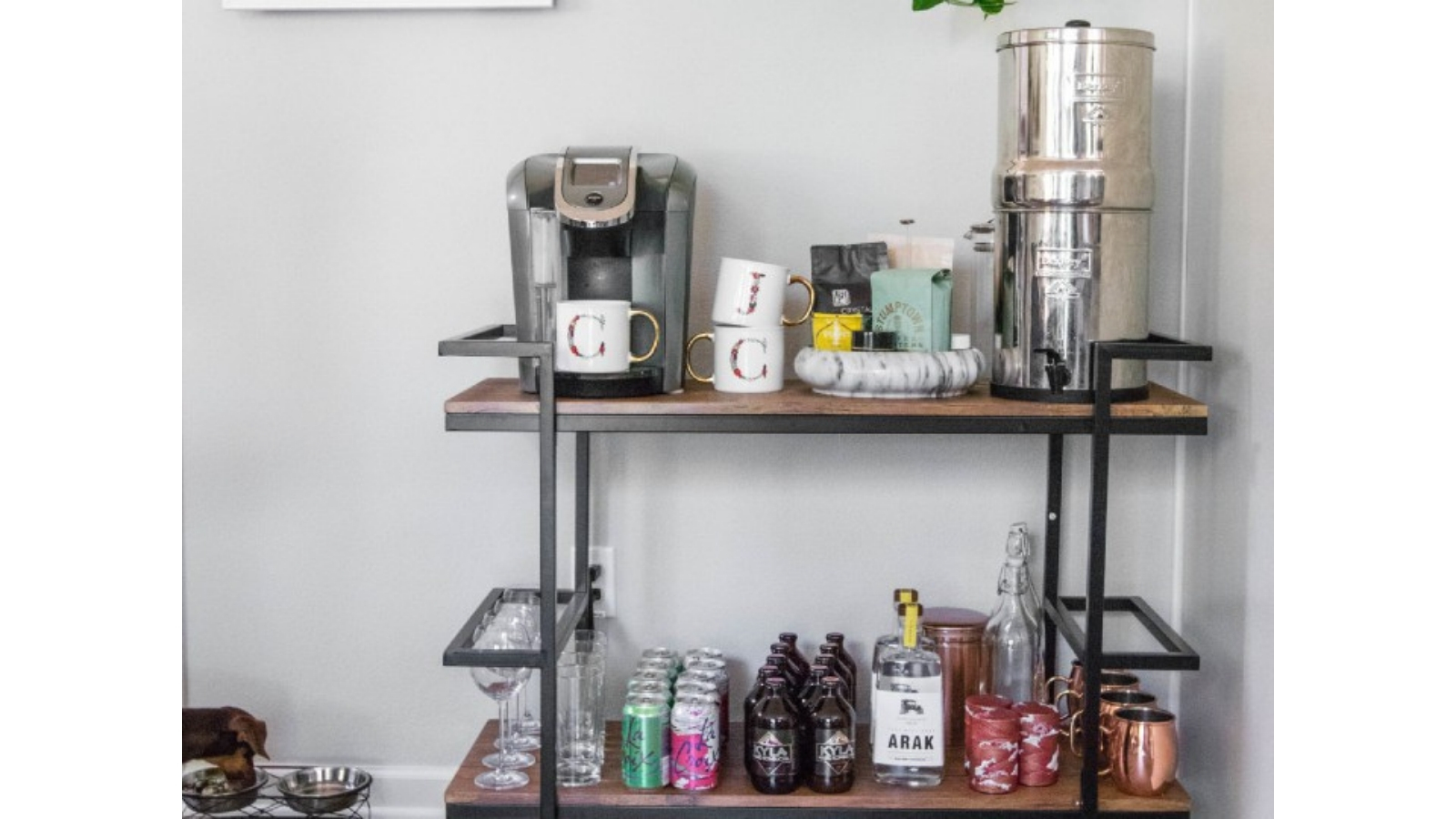
Caitlin Shoemaker’s drinks cart isn’t exclusively about coffee, which is exactly why it works for guests with different tastes. The top accommodates coffee supplies and mugs, while the lower shelf holds glasses and other beverages. The large metal vessel is a Berkey water filter, not a hot-water urn, so it doesn’t replace a kettle for tea. What makes the setup appealing is the way it keeps several drink options together, with everything visible and easy to reach. It’s home inspiration rather than a DIY cart-building tutorial.
19. Clever Storage Space
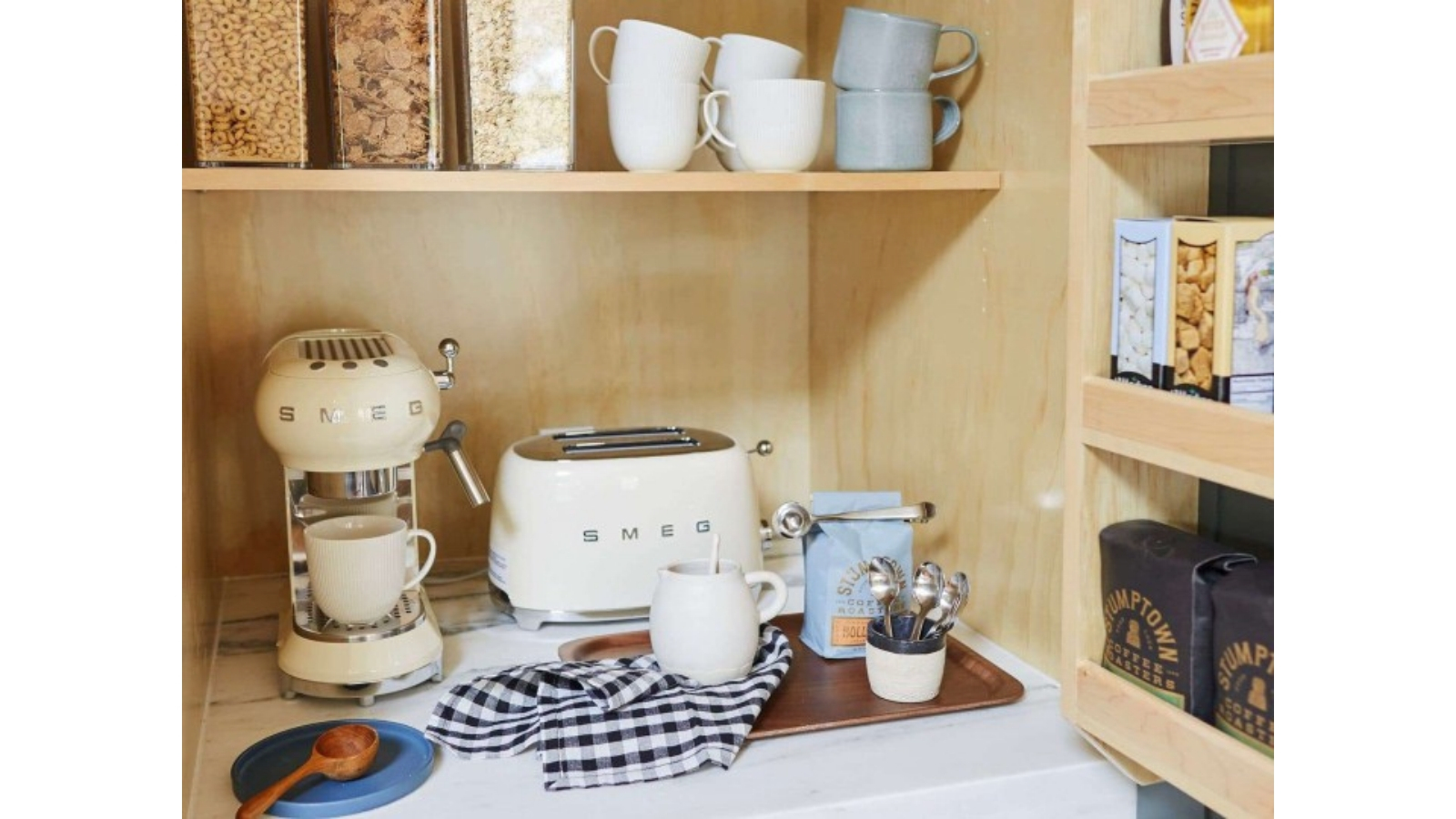
The concealed breakfast pantry from Style by Emily Henderson makes brilliant use of a cupboard door. Slim racks on the inside hold the little packets, bottles and jars that usually disappear behind larger things, while the main shelves and drawers handle coffee equipment and breakfast supplies. Shut the doors and the whole area vanishes from view. If you’re borrowing the idea, check that racks, handles and jars won’t collide with the shelves when the door closes. A cupboard that won’t shut defeats half the point.
20. Show Off Your Cups

Bree Hester’s station puts the mugs front and center. Colorful cups hang from a rack, plainer ones are corralled in a wire basket, and family photographs give the white bookcase a lived-in feel. It’s the sort of setup that invites visitors to help themselves without rummaging through the kitchen cupboards. If you collect odd, cheerful mugs, there’s no reason to hide them all behind a door. The trick is to keep the display functional so there’s still room to make a drink and set a cup down.
Tips for Making the Perfect DIY Tea and Coffee Station
The prettiest station in the world is no use if you’re still hunting for a spoon every morning. Before you start buying hooks or hauling a dresser home, think through these practical details.
The main housing
Start with what you already have. A clear stretch of counter might need nothing more than a tray and a couple of canisters. A bookshelf or dresser gives you storage without custom cabinetry, while a rolling cart is useful when the station needs to move. For a true built-in, plan the electrical access and appliance space before you start cutting or installing shelves. The best base is the one that fits your kitchen and the amount of equipment you actually use.
Style
Decide what you want visible. A favorite mug collection deserves a shelf or rail, but bags of coffee, spare filters and half-used packets aren’t necessarily a design feature. Wood and black metal suit a more industrial setup; painted furniture and baskets feel softer; glass jars and tidy labels make a small cabinet easier to navigate. You can swap a few seasonal decorations without turning the whole station into a craft project every three months.
Storage
Keep daily essentials closest to the machine or kettle, then put the backups behind doors or in drawers. Tea bags do well in shallow dividers; coffee pods, filters and stirrers are easier to manage when each has a dedicated spot. Hooks can clear mugs from the counter, provided the rack is securely mounted. Don’t overlook the space inside cupboard doors for light, shallow storage, but check that the door still closes with everything in place.
Position
A nearby wall outlet matters as much as the furniture. Plug appliances directly into a suitable outlet and follow their manuals rather than treating an extension cord as a permanent kitchen solution. Check that you can fill the water reservoir, lift the lid and clean the machine without wrestling it out of a narrow cubby. Steam and heat need room to escape, and a station near a sink makes filling and rinsing much less of a chore.
Size
Measure the appliances, the mugs and the space you need to prepare a drink, not just the empty piece of furniture. Some machines need room above or behind them for lids, tanks and ventilation. If you’re adding a breakfast area, allow extra counter space for plates, cereal and food rather than stacking everything around the brewer. In a tiny kitchen, one good shelf and a narrow tray can be more practical than a sprawling coffee bar.
Wall-mounted vs. Freestanding Tea Stations
Wall shelves and mug rails free up floor space, but they need suitable fixings and a place where cups won’t be knocked. A dresser or cabinet can take heavier supplies and hide the visual clutter. Carts work well for entertaining, although you’ll still need to think about plugs, water and what happens when a full cup meets a rolling wheel. Choose the format that makes sense for how often the setup will actually move.
Hygiene
Give used tea bags, grounds and pods somewhere sensible to go, preferably a small bin or container close to the station. Keep a place for damp spoons, and choose surfaces you can wipe rather than delicate finishes that stain at the first coffee spill. Trays catch drips, but lift them occasionally to clean underneath. Empty water reservoirs and clean equipment according to the manufacturer’s guidance; a pretty coffee station shouldn’t become a sticky science experiment.

