
Affiliate disclosure: This post may contain affiliate links. Please see full disclosure. AI-assisted.
Fire-King Alice is one of those vintage jadeite patterns I’d always stop to examine at a thrift store. Its soft green glass is lovely enough, but the delicate flowers molded into the surface make it something special. Even better, this pretty little dinnerware range has an unlikely history: American families once received some of it free with their breakfast oatmeal.
Anchor Hocking made Alice from 1945 to 1949, and it was among the earliest Fire-King Jade-ite dinnerware designs. It wasn’t a grand, expensive table service. It was practical glass for everyday meals, dressed up with a floral border that still looks surprisingly elegant today.
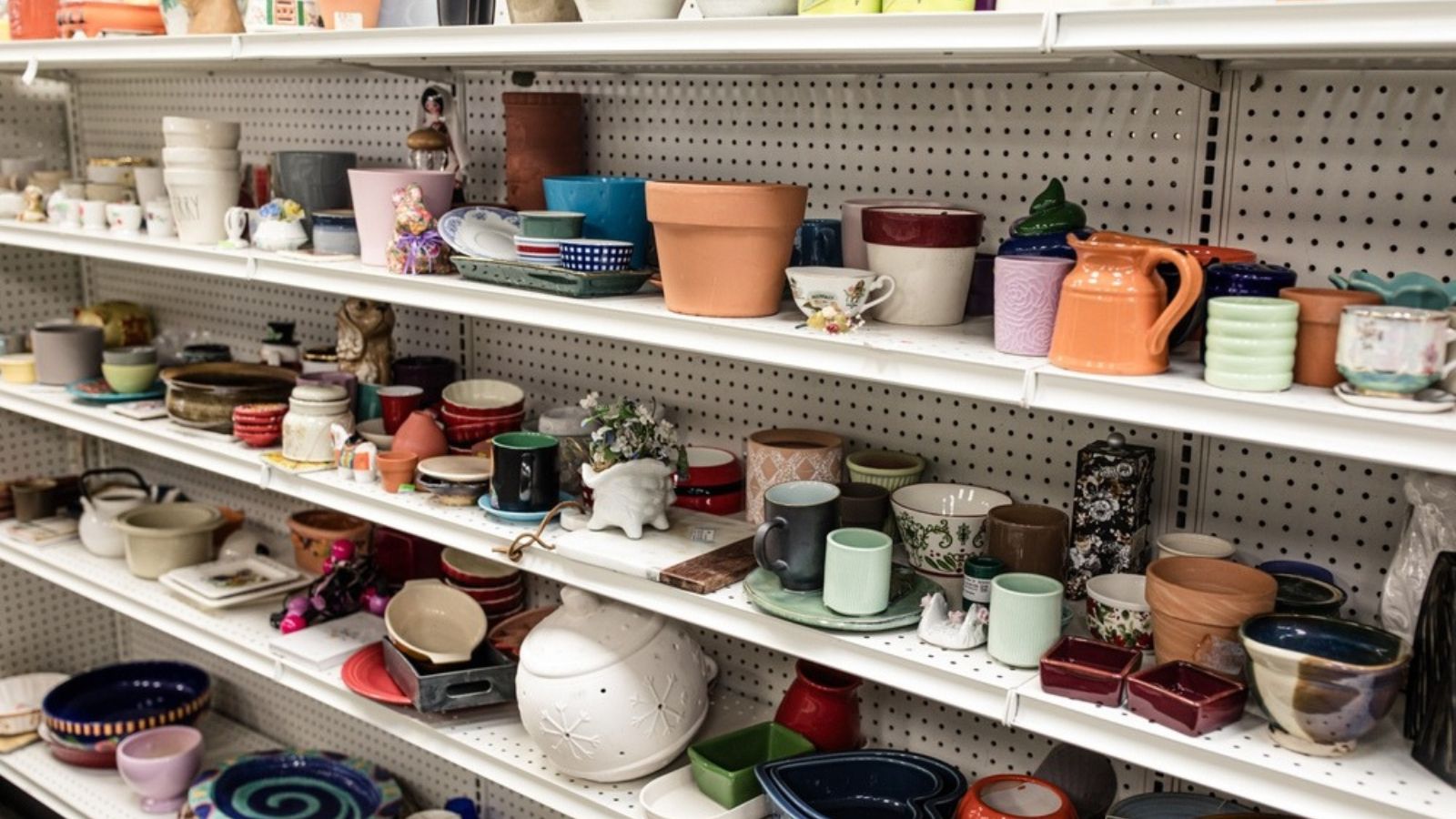
The pretty Fire-King dishes hidden in oatmeal promotions
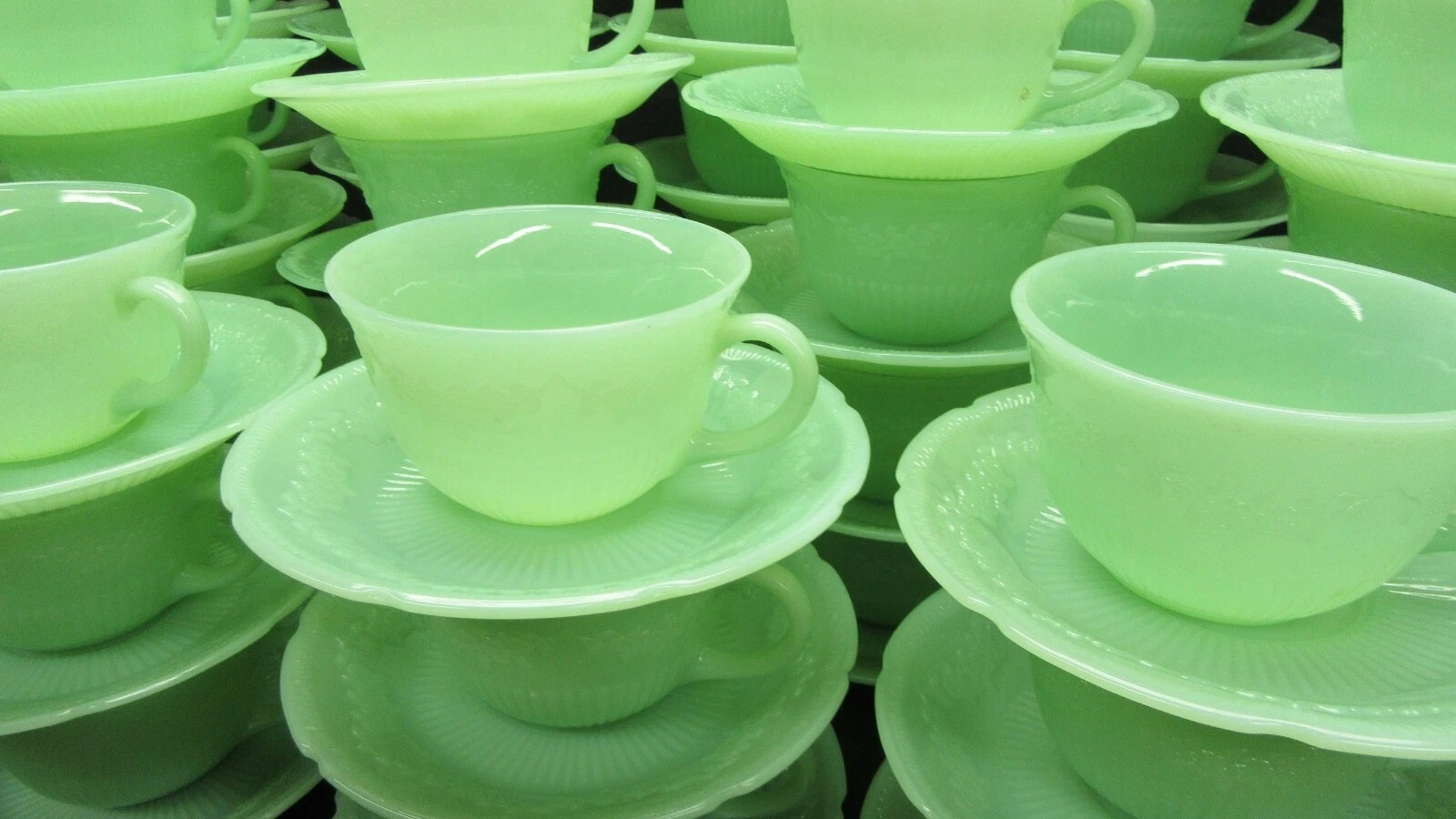
In 1945, Alice jadeite cups and saucers were offered as premiums with Quaker Oats and Crystal Wedding Oats. Imagine bringing home groceries and getting an actual piece of matching dinnerware along with the cereal. Rather better than a plastic toy rattling around at the bottom of a box.
The promotion gave households a chance to build up a collection a piece at a time. But there was a catch. If you wanted matching dinner plates, you had to buy those separately. That explains an interesting collecting quirk: Alice cups and saucers turn up more often than the plates.
The range itself was unusually small. Only three forms are documented: a cup, a saucer, and a 9½-inch dinner plate. You won’t find a legitimate Alice teapot, mixing bowl, or casserole to complete the set, no matter how convincing an online description sounds. The limited range is part of its charm. A matching cup and saucer is already a lovely little piece of American kitchen history.
The flowers are what give Alice away
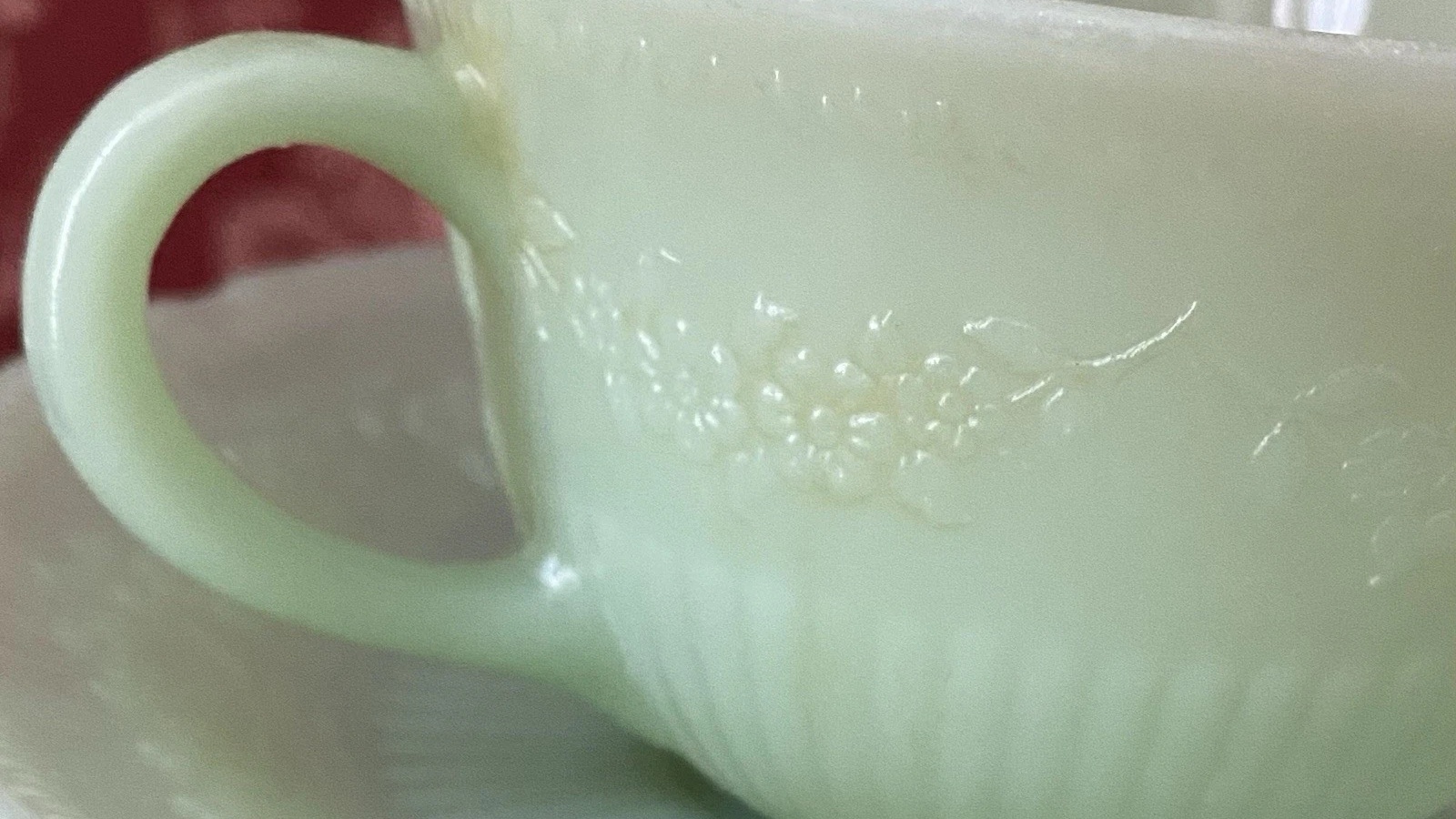
Don’t identify Alice by color alone. Plenty of vintage kitchen glass came in that familiar opaque, milky green, including other Fire-King designs. The distinguishing feature is the raised floral motif, made as part of the glass itself rather than printed or painted on afterward.
Look closely at an Alice saucer or dinner plate. Small flowers repeat around the outer border, framed by a gently notched edge. Farther in, there’s a ring of fine radiating ridges. The decoration gives the plate a slightly old-fashioned china look, even though it’s sturdy, everyday glassware.
The cup has flowers molded around its sides, with those radiating ridges nearer the base. Turn it slowly in the light and you’ll see the pattern much better than you would in a dim thrift-store aisle. I recommend running your eyes along the full border, rather than judging a piece from one little section.
The ribbed detailing can cause confusion with Fire-King Jane Ray. But Jane Ray’s main feature is its simple radiating or ribbed pattern, without Alice’s flowers. Restaurant Ware is another familiar jadeite line, generally thicker, heavier, and much plainer. If the floral border isn’t there, you’re looking at something else, however appealing the green glass might be.
Check underneath, but don’t depend on a mark
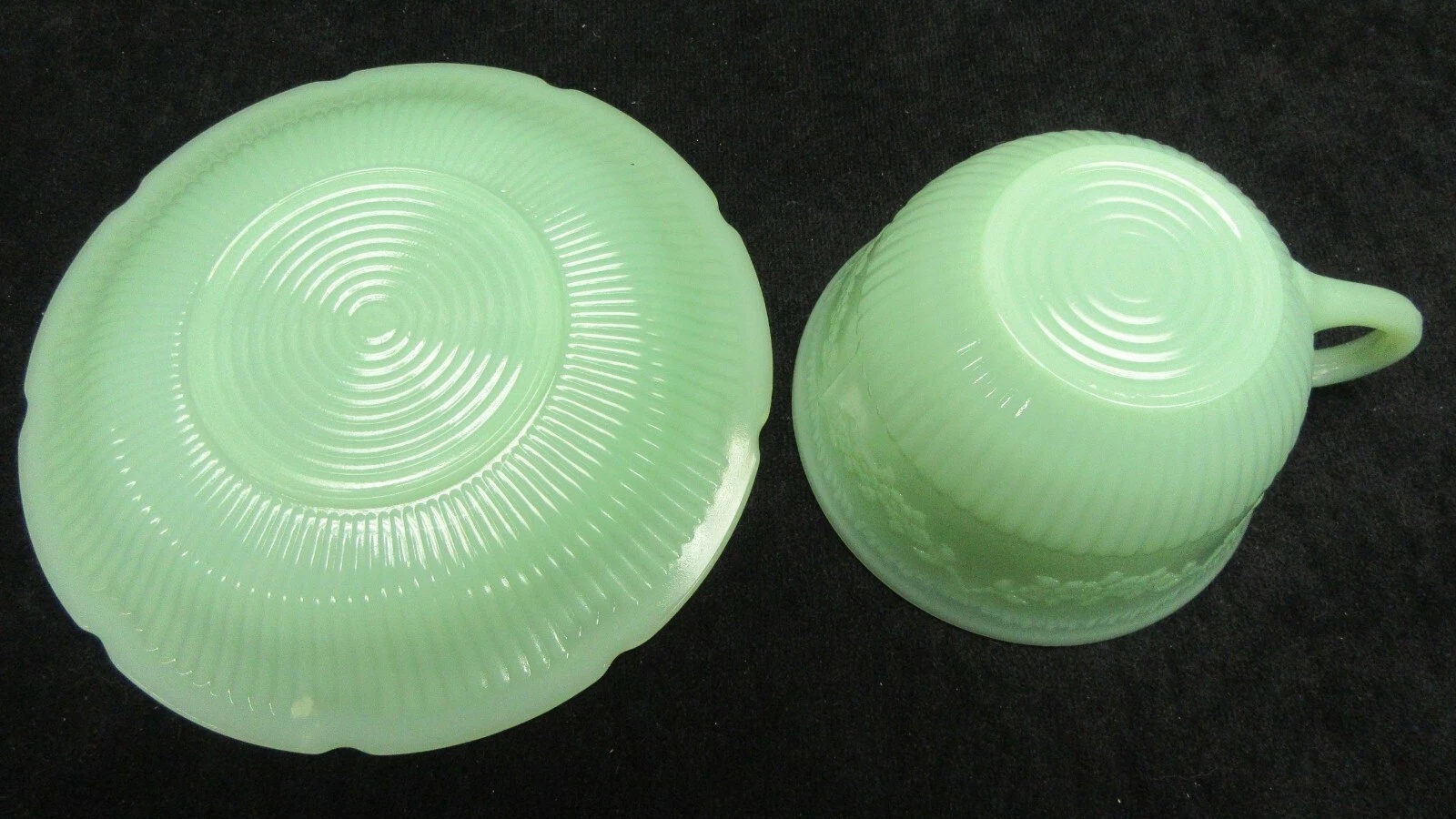
I always turn vintage dishes over before making up my mind. The base can tell you plenty, although Alice is a good example of why a missing maker’s mark isn’t automatically bad news.
Some Alice pieces have a molded Fire-King mark, including versions with OVEN and GLASS around the Fire-King lettering. Others carry the Anchor Hocking anchor-and-H emblem. And genuine Alice cups and saucers also exist with no underside lettering at all.
That means pattern details matter more than any single stamp. Compare the floral molding, shape, and glass color together. A vague listing that says ‘jadeite Fire-King style’ isn’t sufficient identification, and an unfamiliar base mark deserves another look rather than an instant yes or no.
Alice also appeared in opaque white Vitrock, sometimes with red or blue trim. Those pieces share the molded design, but they aren’t jadeite. If you’re collecting the green version specifically, don’t let a matching pattern distract you from checking the actual glass color.
What to check before bringing a piece home
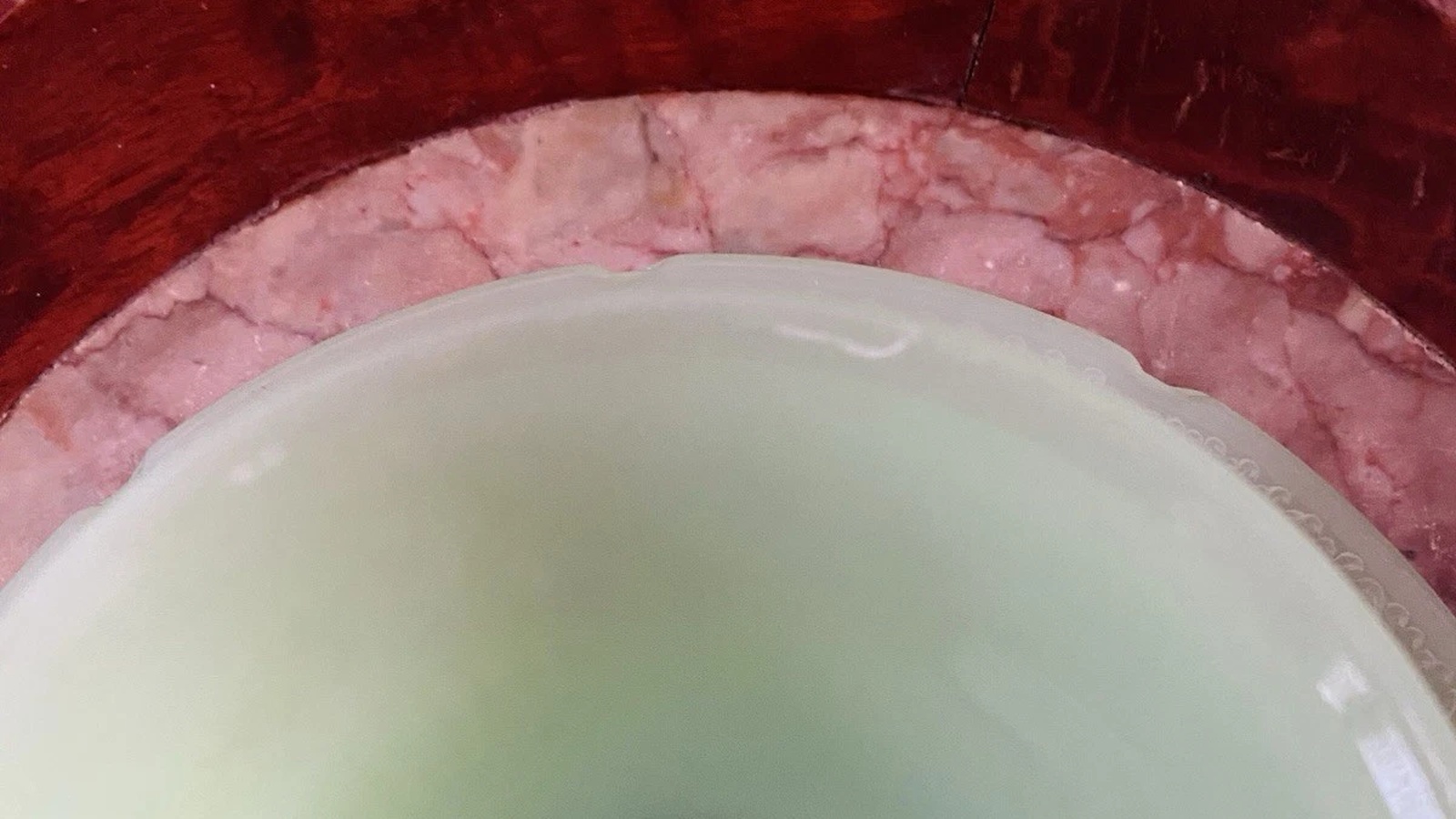
Condition is where I get a little fussy. These dishes were made for daily use and are now more than 75 years old. Some signs of age are perfectly understandable, but there’s a difference between gentle wear and damage that will bother you every time you pick up the piece.
On cups, check the drinking rim first, then the handle where it joins the body. Run a fingertip carefully around the rim for tiny chips, and hold the cup up to a bright light to look for fine cracks. Pay special attention to the handle attachment points, where a hairline can be easy to miss.
On saucers and plates, inspect the notched outer edge and the underside foot ring. Then angle the surface toward the light to reveal utensil scratches, dull patches, and heavier wear. Dinner plates, especially, often show the effects of years of meals. A few surface marks wouldn’t put me off an otherwise charming piece, but cracks and substantial chips are another matter.
Don’t confuse every little line in the glass with a crack, either. Vintage pressed glass can have mold lines, bubbles, and manufacturing irregularities. A crack generally interrupts the glass and may catch the light differently. If you’re uncertain, don’t pay a premium for it.
Enjoy the history without expecting perfection
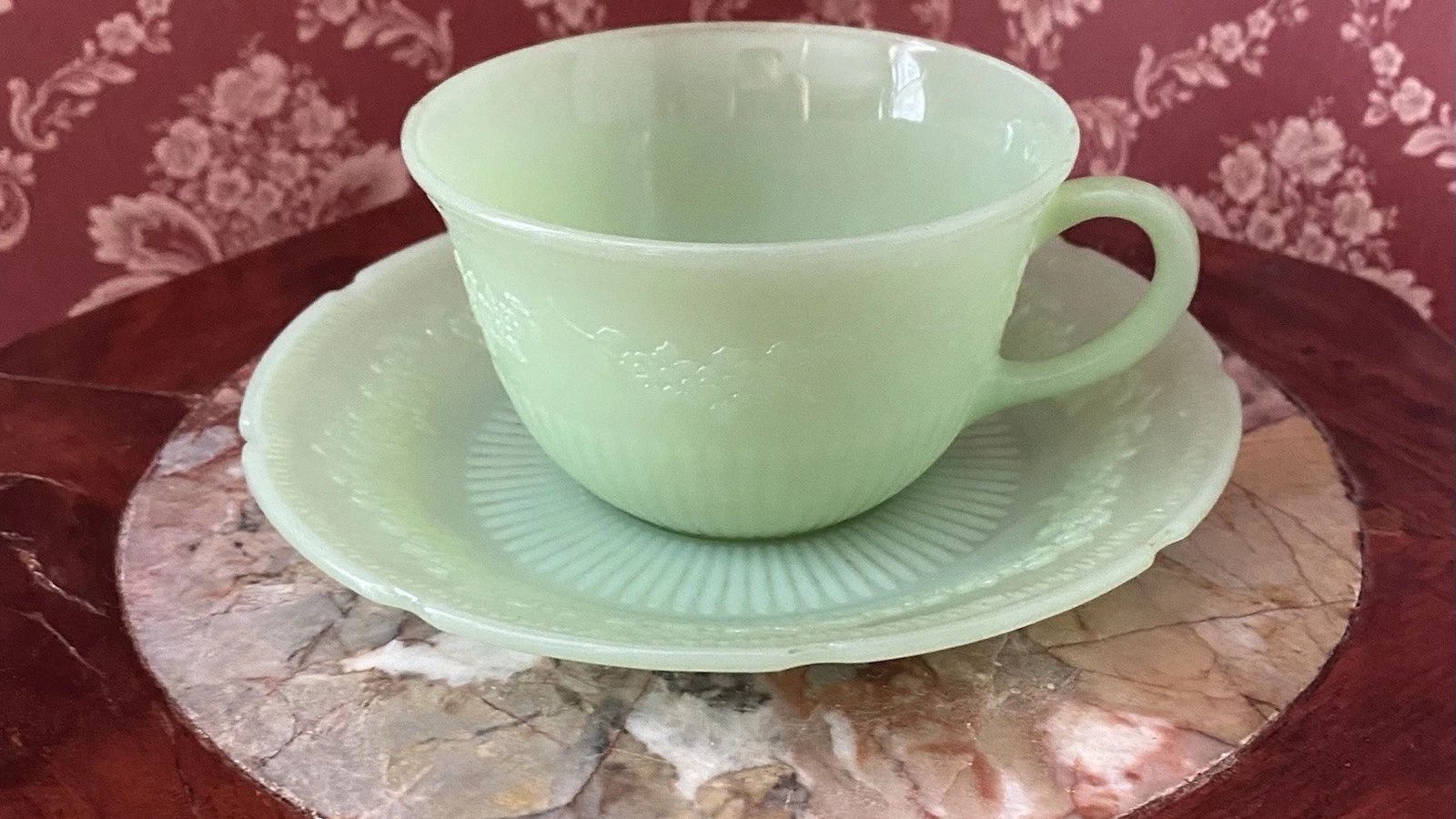
One of the nicest things about Alice is that you don’t need a complete place setting to appreciate it. A single cup on an open kitchen shelf, or a cup and saucer alongside other vintage dishes, has plenty of character. I actually prefer a collection built from pieces I genuinely like over one assembled just to tick every box.
Wash vintage pieces gently by hand with warm water, mild dish soap, and a soft cloth. Skip abrasive scrubbers, and avoid sudden temperature changes. I wouldn’t put a treasured Alice piece through a modern dishwasher or treat old glass as though its original ovenware marketing guarantees it will tolerate today’s appliances.
And if you do spot that embossed floral border peeking out between ordinary green plates at the thrift store, it’s worth a proper look. Not because you need to turn it into a profit, but because something that once came home with a bag of oats can still be a beautiful thing to collect.
You might also like…
The Pink Pyrex Pattern Collectors Dream of Finding at a Thrift Store
The CorningWare Pattern Collectors Dream Of Finding At A Thrift Store
15 Tips for Finding Vintage Christmas Decor at Yard Sales and Thrift Stores

