

Affiliate disclosure: This post may contain affiliate links. Please see full disclosure.

Disclosure: This post contains affiliate links. Click here to read my affiliate policy.
If your blueberry leaves are curling, it could be something as simple as overwatering or a more complex issue like nutrient deficiencies or a disease like phytophoria root rot. Blueberry bushes are easy to grow, but sensitive, so there are many potential causes of blueberry leaf curl and discoloration. Let’s take a look at some of the most common causes and their solutions.
Too Much/Too Little Water
One of the main reasons for blueberry leaves curling is improper watering. If there’s not enough water, then the blueberry plant won’t receive the necessary nutrients, leading to the leaves drying up and curling. On the other hand, if you’re overwatering, then the roots may start to rot, leading to leaf death. In both cases, it’s important to make sure you’re providing your plants with just enough water – not too much and not too little. I told you they were pretty sensitive!
How to Water Blueberry Shrubs Correctly
To determine if your blueberry bushes need water, check the soil. Ensure that the soil remains consistently moist but not waterlogged. Blueberry bushes require around 1-2 inches of water per week, either from rainfall or irrigation. Use a moisture meter or your finger to check the soil’s moisture level before watering. To help you get watering your blueberries down to a fine art, get yourself a good value moisture gauge.
Mulching around the base of the blueberry bush helps to retain moisture, limiting runoff and evaporation. It also lets water percolate through to the soil slower, helping to reduce waterlogging. You can also use soaker hoses which deliver slow and steady streams of water directly at the root zone for an even distribution.
Nutrient Deficiencies in Blueberries
Nutrient deficiencies can also lead to leaf curling in your blueberries – usually caused by a lack of nitrogen, phosphorus, magnesium, or sulfur. Iron deficiency is also particularly common and can cause yellowing between veins on older blueberry leaves as well as leaf curling. To avoid this issue, feed your soil. Apply lots of organic matter in the form of well-rotted manure or homemade compost. Use an organic seaweed fertilizer, bone meal, blood meal, or similar to provide specific nutrients throughout the growing season. Building soil health results in stronger, healthier plants less prone to diseases and pests.
If you’re not sure what to look for or how to balance your soil, start with a basic but reliable DIY soil test that checks pH, nitrogen, phosphorus, and potassium. If you want to check more than the basics and get a full soil nutrient profile, go for this great value mail-in professional soil test kit that checks for 13 plant-available nutrients to really let you hone in on the problem.
Iron Deficiencies in Blueberries
Iron deficiency in blueberries can be caused by several factors including alkaline soils (pH above 7), high levels of phosphorus or calcium in the soil, or cold temperatures which prevent iron from being absorbed by roots. To fix iron deficiency you should first test your soil pH and adjust accordingly with sulfur or lime if necessary. To fix the lack of iron naturally, use blood meal or powdered iron chelates.
Other Common Nutrient Deficiencies That Cause Blueberry Leaf Curl
Magnesium often gets depleted if you’re not feeding your soil or rotating your crops. It’s another nutrient that causes chlorosis, or yellowing between the leaves, as well as leaf curl. To fix it, simply add dolomitic lime or Epsom salts. For a 40 ppm DIY magnesium solution, add 1.5g (1/3 of a teaspoon) of Epsom salts per gallon of water. It doesn’t seem like much, but this DIY Cal-Mag soil amendment goes a long way.
Zinc deficiency can also cause leaf curling in blueberries. Symptoms include small blueberry leaves and short stem internodes as well as yellowing between the veins of young leaves. To fix this deficiency naturally, you should add lots of well-rotted manure, rich, dark compost, or zinc sulfate or zinc chelate to your soil.
Boron deficiency can also lead to leaf curling in blueberries. Symptoms include darker green and deformed young blueberry leaves with limited expansion and twisted margins. Adding a top dressing of good-quality compost a couple of times a year or using a natural boron supplement should fix the problem.
Incorrect Soil pH
Blueberry bushes prefer acidic soils with a pH between 4-5 so if yours is higher than this it could be causing leaf curling due to nutrient deficiencies mentioned above. To lower soil pH you should add sulfur or lime to raise it. Follow the package instructions, but make sure not to add too much at once, as this could damage your plants. The DIY soil test kit I recommended above also includes pH tests.
Too Little/Too Much Sunshine
Blueberries require full sun to partial shade for optimal growth. Too little sunshine can cause weak growth and curled leaves, while excessive sun can lead to scorching.
Ensure your blueberries receive 6-8 hours of sunlight daily and provide shade during the hottest part of the day if necessary. Blueberry plants need plenty of sunshine (at least 6 hours per day) but if they get too much, it can cause their leaves to curl up as a way of protecting themselves from sunburns. On the other hand, if they don’t get enough sunshine, their leaves may also start curling due to lack of energy production from photosynthesis.
Phomopsis Twig Blight
Phomopsis twig blight is a fungal disease, causing black, curling leaves, twig dieback, and reduced fruit yield. This fungal pathogen can overwinter on infected twigs and spread during the growing season, making it essential to identify the disease early and take appropriate measures to control it.
Phomopsis twig blight is caused by the fungus Phomopsis vaccinii, which infects blueberry plants through wounds, such as those caused by pruning or insect damage. The disease is more prevalent in wet, humid conditions and can spread quickly in crowded or poorly maintained blueberries.
Symptoms of Phomopsis twig blight include:
- Black, curling leaves: The fungus causes blueberry leaves to turn black, curl, and eventually fall off the plant.
- Twig dieback: Infected twigs exhibit dieback, starting from the tip and progressing downward.
- Cankers: Dark, sunken cankers may form on the branches, leading to branch girdling and eventual death.
- Reduced fruit yield: Severely infected plants may produce fewer or smaller fruits, impacting overall yield.
Managing Phomopsis Twig Blight
To prevent and control Phomopsis twig blight, follow these best practices:
- Prune infected twigs: Regularly inspect your blueberry plants for signs of infection. Prune any infected twigs, cutting several inches below the visible symptoms. Dispose of the pruned material away from your garden to prevent the disease from spreading.
- Maintain proper plant spacing and pruning: Ensure that each blueberry plant has adequate spacing to promote good air circulation, which helps reduce the humidity that favors fungal growth. Prune your plants regularly to remove any dead or damaged wood and maintain an open canopy structure.
- Apply natural fungicides: Use homemade fungicides, such as a mix of baking soda, dish soap and water, apple cider vinegar diluted with DIY willow water (or plain water in a pinch), or steeped horseradish water.
- Monitor and control insect pests: Insects can create wounds on blueberry bushes, providing entry points for the fungus. Monitor your plants for insect pests and use appropriate control measures, such as introducing beneficial insects, using insecticidal soaps, and companion planting.
- Practice good sanitation: Keep the area around your plants clean and free of debris. Remove fallen blueberry leaves, fruit, and dead branches to reduce the chance of fungal spores overwintering in your garden.
- Use resistant varieties: Some blueberry cultivars may be more resistant to Phomopsis twig blight than others. When planting new blueberries, consider choosing resistant varieties to reduce the risk of infection.
Phytophthora Root Rot
Phytophthora root rot is a severe disease affecting blueberry plants, caused by water mold pathogens from the genus Phytophthora. These pathogens attack the roots, resulting in leaf curl, wilting, and eventually plant death. Proper planting techniques, soil management, and preventative measures are essential to protect your blueberry bushes from Phytophthora root rot.
Symptoms include:
- Leaf curl: Blueberry leaves may curl, become distorted, or exhibit yellowing.
- Wilting: Affected plants may wilt, even when adequately watered.
- Root decay: Infected roots become discolored, soft, and eventually rot.
- Stunted growth: The plant may experience reduced growth and smaller fruit production.
- Plant death: In severe cases, the entire plant may die as a result of the infection.
Protecting Blueberries From Phytophthora Root Root
To prevent and manage Phytophthora root rot in blueberry plants, follow these best practices, alongside using natural fungicides, practicing good garden hygiene, and choosing disease-resistant cultivars:
- Plant blueberries in well-draining soil: Select a site with well-draining soil, or amend the soil with organic matter to improve drainage. Sandy loam or loamy soils are ideal for blueberries.
- Use raised beds: Planting blueberries in raised beds can promote better drainage and help prevent standing water around the roots.
- Water wisely: Irrigate blueberries carefully to maintain consistent moisture without overwatering. Allow the blueberry plant’s soil to dry slightly between watering to prevent waterlogging.
- Plant at the correct depth: Plant blueberries so that the crown is slightly above the soil surface to reduce the risk of root rot.
Blueberry Leaf Scorch
According to the University of New South Wales, bacterial leaf spot lives and multiplies in the sap of blueberries. It’s a destructive disease that affects blueberry bushes, caused by the bacterium Xylella fastidiosa. This pathogen infects the plant’s vascular system, leading to leaf curling, browning, and reduced plant vigor.
The bacterium can be spread through insects such as sharpshooter leafhoppers and other xylem-feeding beasties, contaminated tools, and infected plant matter.
Symptoms of bacterial leaf scorch include:
- Leaf curling: Infected leaves may curl and become distorted in shape.
- Browning: Leaf margins may turn brown, eventually progressing towards the center of the leaf.
- Reduced plant vigor: The overall health and growth of the plant may decline.
- Stunted growth: Infected plants may exhibit reduced growth and smaller fruit production.
- Branch dieback: In severe cases, branches may die back from the tips towards the plant’s base.
Preventing Blueberry Leaf Scorch
Follow these tips to prevent bluberry leaf scorch:
- Prune and destroy affected plant parts: Regularly inspect your blueberry plants for signs of infection. Prune any infected branches, cutting several inches below the visible symptoms. Dispose of the pruned material away from your garden to prevent the disease from spreading.
- Monitor and control insect vectors: Regularly inspect your plants for sharpshooter leafhoppers and other xylem-feeding insects. Implement appropriate control measures, such as introducing beneficial insects, using insecticidal soaps, or applying chemical insecticides if necessary.
- Use healthy plant material: Ensure that any new blueberry plants or cuttings are sourced from a reputable supplier and are certified disease-free.
- Practice good plant care practices: Maintain proper plant spacing and pruning to promote good air circulation and reduce humidity levels, which can help deter insect.
- Apply appropriate bactericides: You can make your own bacteriacides for plants by combining 2.5 tbsp vegetable oil, 1 tsp liquid soap, and 1 tbsp baking soda with one gallon of water and spraying over plant leaves. This also acts as an antifungal. You can also use 1/2 cup of apple cider vinegar in a gallon of water. A 50/50 mix of alocohol and water should also work.
Mummy Berry Disease
Mummy berry disease is a significant fungal infection, caused by the fungus Monilinia vaccinii-corymbosi. This pathogen leads to blueberry leaves curling and turning brown, as well as severe fruit infection that can significantly reduce fruit yield.
Blueberry plants affected by mummy berry disease display several symptoms, including:
- Leaf curling: Infected leaves may curl, become distorted in shape, and exhibit a reddish-brown color.
- Blighting: Young shoots may wilt and die, exhibiting a characteristic shepherd’s crook shape.
- Fruit infection: Infected fruit initially appears healthy but later shrivels, hardens, and turns a mummified grayish color.
- Reduced fruit yield: The disease can cause significant fruit loss, impacting overall crop yield.
Mummy berry disease is caused by the fungus Monilinia vaccinii-corymbosi, which overwinters in the mummified fruit on the ground. In spring, the fungus produces spores that are dispersed by wind and rain, infecting new plant tissue. Factors that increase the risk of mummy berry disease include:
- Wet and cool weather conditions: The fungus thrives in wet, cool conditions, making spring the most favorable time for infection.
- Presence of mummified fruit: The fungus overwinters in mummified fruit, which can serve as a source of inoculum for new infections.
- Poor sanitation: Inadequate removal of infected plant material and debris can contribute to the spread of the disease.
Protecting Blueberries from Mummy Berry Disease
For mummy berry disease, control and prevention are very similar to other blueberry plant diseases. Keeping the ground free of leaf little and old fruit, allowing adequate sirflow, removing diseased leaves or branches, and choosing disease-resistant varieties are all important in the health of your blueberries. Similarly, homemade fungicides and applying mulch are both useful in the fight against blueberry diseases and reduced yield.
Blueberry Stem Blight
Stem blight is caused by the fungus Botryosphaeria dothidea and can decimate a bluberry crop. This pathogen leads to blueberry leaves curling, turning brown, and eventually dying, along with severe stem dieback that can significantly impact the overall health and productivity of the plant. Recognizing the symptoms, understanding the causes, and implementing effective management strategies are essential to protect your blueberry plants and maintain a healthy, productive crop.
Symptoms include:
- Leaf curling: Infected leaves may curl, become distorted in shape, and exhibit browning.
- Stem dieback: Affected stems exhibit dieback, often beginning with the tip and progressing towards the base of the stem.
- Cankers: Sunken, darkened areas may appear on the infected stems, often accompanied by cracking or peeling bark.
- Plant decline: The overall health and growth of the plant may decline, potentially leading to plant death in severe cases.
Treating Stem Blight
To treat and prevent bluberry stem blight, you’ll need to use your homemade fungicide as well as ruthlessly prune infected plants. And, of course, you need to practice good garden hygiene, allow plentiful airflow, and other general health measures. Because stem blight enters through wounded tissue, the most important method of prevention is to take extra care and avoid unnecessary wounds to your blueberries. This includes not over-pruning, and not during damp weather. If you do prune or accidentally cause wounds to your bluberry bushes, cover them with a protective, healing wound barrier to limit the risk of infection.
Blueberry Aphids
Blueberry growers dread aphids infestations, and sadly they’re an all-too-common pest that can cause deformation, wilting and defoliation of new growth of blueberry bushes. Heavy infestations can reduce fruiting buds, resulting in reduced yields and poor quality fruit. To scout for aphids, each blueberry bush for the presence of the small, pear-shaped insects on the undersides of leaves at the base of the young plants themselves.
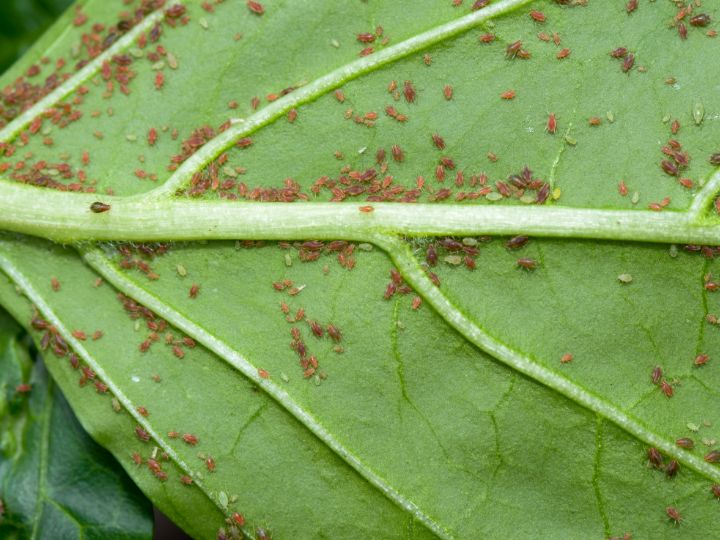
Organic aphid control methods include releasing beneficial insects such as ladybugs or lacewings to feed on aphids. Companion planting and using natural insecticide sprays are useful tools in the battle against aphids, as is washing them off with the hose. Note that if you have ants farming aphids, you’ll need to use a hybrid approach, as you’ll need to naturally control the ants, too.
Powdery Mildew
Powdery mildew is a common fungal disease that affects blueberry bushes. Symptoms include light gray or white powdery spots on the foliage, branches and berries. Infected blueberry leaves are turning brown or yellow, become deformed and drop off prematurely. When left untreated, powdery mildew can spread quickly throughout an entire blueberry crop, causing stunted growth and decreased yields.
The Clemenson Cooperative Extension has a great fact sheet on powdery mildew. It’s also really important to remember that powdery mildew can spread to many other plants, including peppers and tomatoes. I, for instance, lost an entire crop of tomatoes in the space of 3 days, a couple of years back, when they got ravaged by powdery mildew out of nowhere. So disappointing!
How to Prevent or Control Powdery Mildew
To prevent infection, avoid overcrowding the plants and prune away diseased or dead branches and foliage. Planting resistant varieties and avoiding overhead irrigation are other practices that can help reduce the chances of powdery mildew developing in blueberries. You can also apply a homemade fungicide as a preventative measure. But once it takes hold, there’s really not much you can do.
Stem Canker
Stem canker is a fungal disease that affects blueberry plants, causing the bark to become cracked, sunken and girdled. You’ll likely laso see curled leaves and sunken, dark lesions. It can be difficult to identify since it looks similar to frost damage. Infected areas may also ooze gum, which is a sign of infection with Diplodia fungus.
Control measures for stem canker involve improving air circulation through pruning and avoiding over-fertilizing or over-watering. You can also use a homemade fungicide in an effort to halt the disease. Planting resistant varieties and using certified disease-free nursery stock are other important steps for preventing the spread of this disease.
Frost Damage
Frost damage can be a major issue for blueberry plants, especially during early spring when temperatures are still low. Cold temperatures below the critical level of 21°F can cause damage to the flowers and fruit of blueberry bushes. The area of the fruit exposed to cold is particularly vulnerable, as it can result in reduced quality. In addition, if flowers are partly open on early-flowering cultivars, a spring frost can injure the open blossoms and reduce yields.

How to Protect Blueberries from Frost
Fortunately, there are steps that can be taken to protect blueberry plants from frost damage. These include understanding critical temperatures for blueberry plants, using row covers or plastic tunnels over the plants, irrigating before a freeze event and pruning away damaged branches after a freeze. Additionally, mulching around the base of the blueberry bush may help protect it from extreme temperatures. Our post on protecting plants from frost covers many ways you can reduce the risk of frost damage on any plant.
Preventing Frost Damage in Blueberry Bushes
Understand the critical temperature for blueberry bushes and when to use row covers as protection. Blueberry bushes can be damaged by temperatures below 28°F (-2.2°C). Installing Row covers or plastic tunnels over your blueberry bushes helps trap heat around them, keeping the temperature inside the tunnel higher than outside. Make sure to use a lightweight fabric or plastic that will allow sunlight and moisture to penetrate while trapping in warm air.
Irrigate before a freeze event to add warmth and humidity to the air around the plants. This will also help protect against extreme temperatures as water absorbs more heat than air, and ice crystals are less likely to form on wet blueberry leaves compared with dry blueberry leaves curl well. When irrigating, make sure not to over-water as it can lead to root rot or other fungal diseases which could also weaken your plants against cold weather.
Pruning damaged branches more mature plants after a freeze event will help conserve energy for more healthy plants growth and production later in the season. After pruning, apply mulch around the base of your blueberry plant – mulch helps retain both moisture in the soil and warmth from the sun during colder months, helping reduce frost damage throughout winter.