
Affiliate disclosure: This post may contain affiliate links. Please see full disclosure.
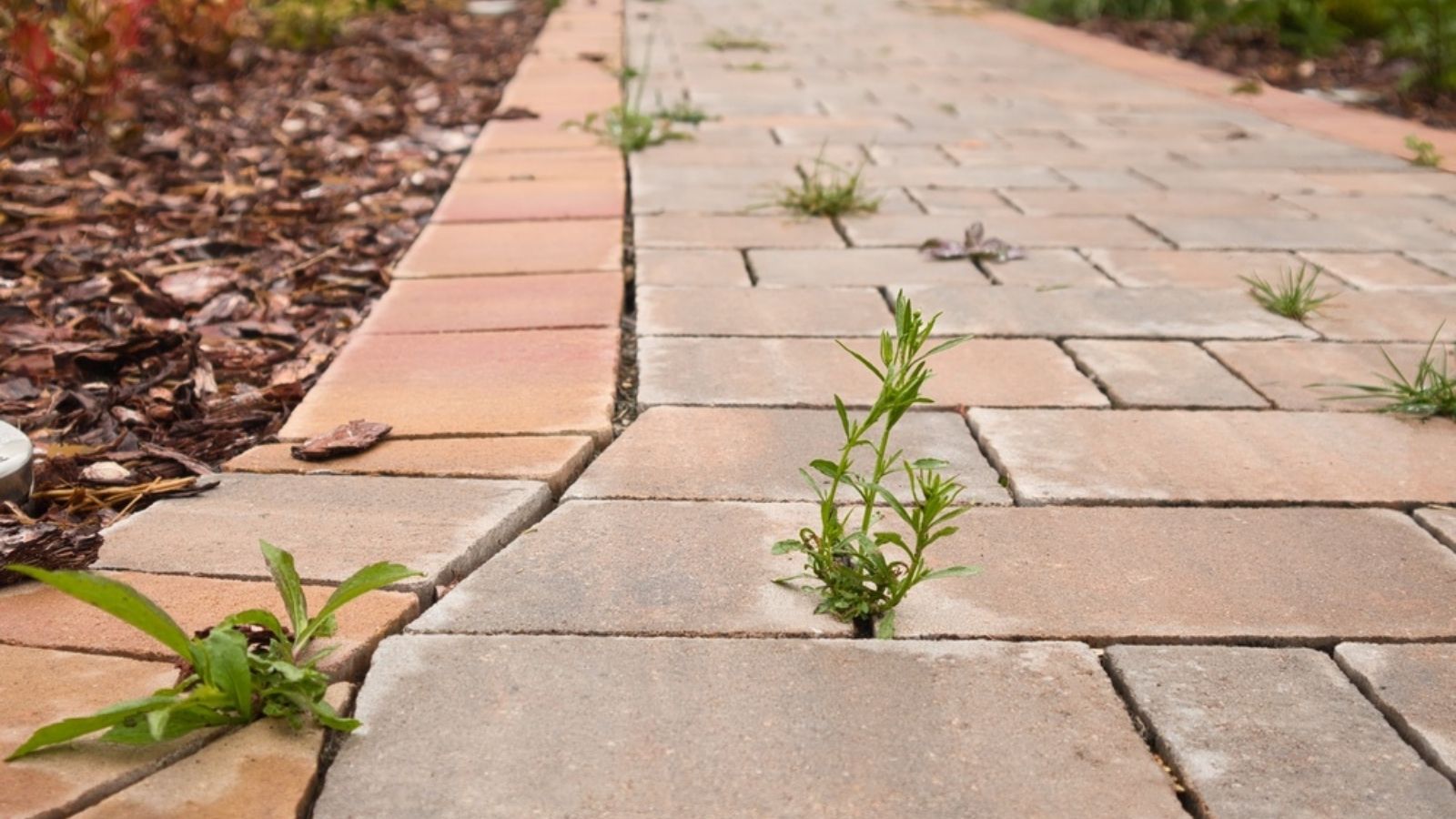
There are plenty of places where a hoe is one of the most useful tools in my shed. The narrow gap between two paving stones is not one of them. You end up scraping at the surface, bashing the corners of the pavers, and usually snapping the top off the weed while leaving its roots quite happily tucked underneath.
For those fiddly spots, I much prefer a hori-hori knife. This Japanese garden tool was traditionally used for digging and lifting plants, and its narrow, pointed blade makes it particularly handy for getting down beside weeds growing in paths, gravel, and awkward gaps. It isn’t really just a knife, either. It’s part knife, part trowel, and part root saw, which is why mine gets used for considerably more than weeding.
A hori-hori can get underneath the weed
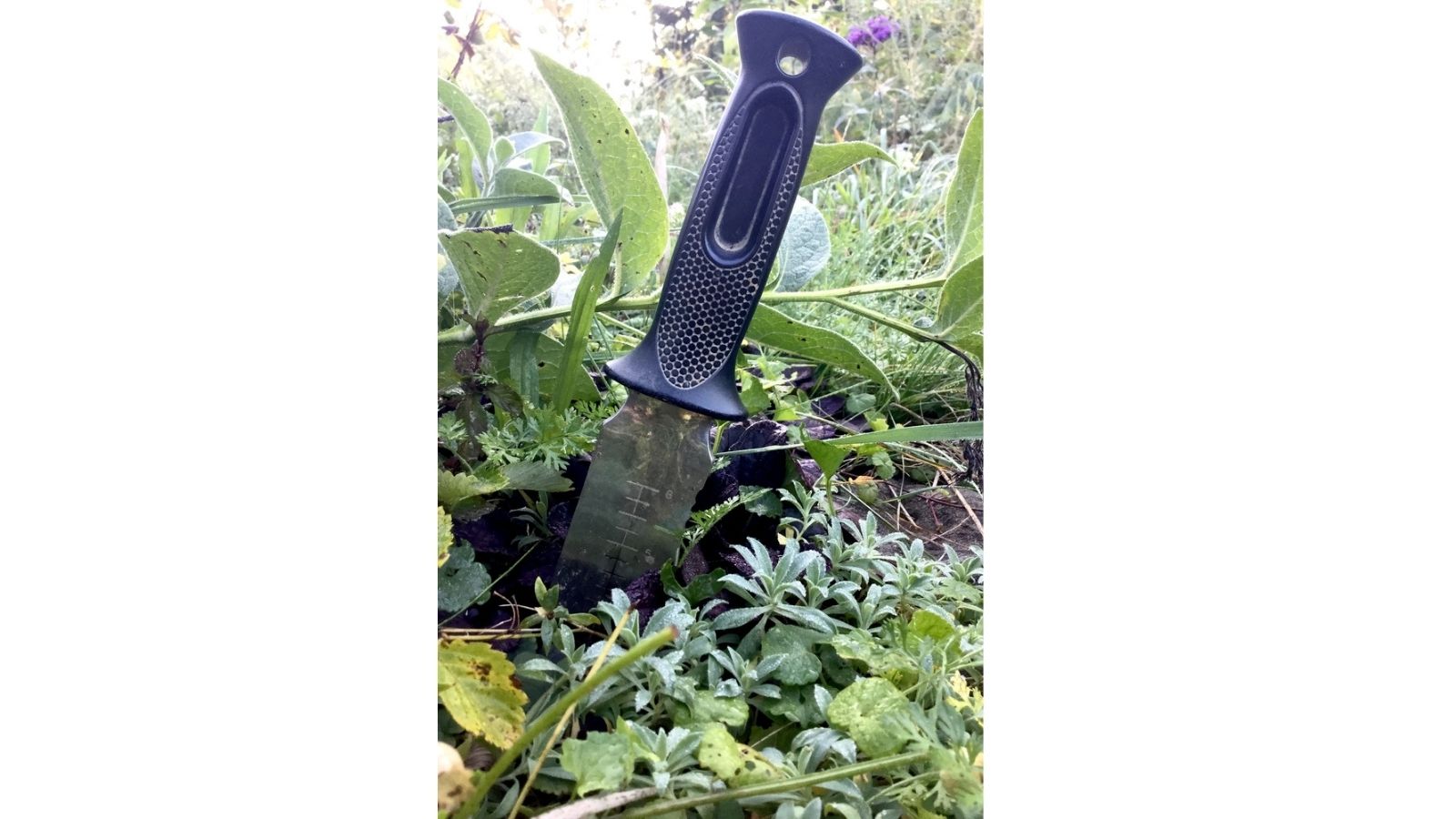
A traditional hori-hori has a strong, slightly concave metal blade with a pointed tip. Most modern versions have one smooth cutting edge and one serrated edge. The shape lets you push the blade vertically into soil and then use it to loosen, cut, or lift roots rather than simply removing the visible leaves. It’s a multipurpose Japanese tool used for digging, cutting, planting, and weeding, and the narrow blade is particularly useful where a normal trowel or hoe is just too bulky.
Between pavers, I slide the point down alongside the weed rather than attacking it directly from above. Wiggle the blade gently to loosen the soil or grit around the roots, cut any stubborn roots if necessary, then pull the whole plant out. With something tap-rooted, like a young dandelion, getting down beside the root gives you a much better chance of removing it rather than repeatedly snapping the crown off.
Don’t use the blade as a crowbar against the edge of your paving, though. You want to lever against the soil, not chip a paver or bend the knife.
And there is a limit. Tests of hori-hori knives have found that they can struggle with very narrow cracks between bricks and pavers. If the joint is only a hairline, a slim paving knife or crack weeder is the better tool. But for wider joints, gravel paths, and weeds tucked against edging, the hori-hori comes into its own.
It really is a Japanese tool, not just clever branding
There’s a lot of gardening equipment sold as “Japanese-style,” so I don’t blame anyone for being skeptical. The hori-hori, however, genuinely originated in Japan. It was traditionally used by farmers and foragers for digging up wild mountain vegetables and other plants without destroying what they were trying to harvest. Modern hori-horis are still recognized as a traditional Japanese digging and weeding tool.
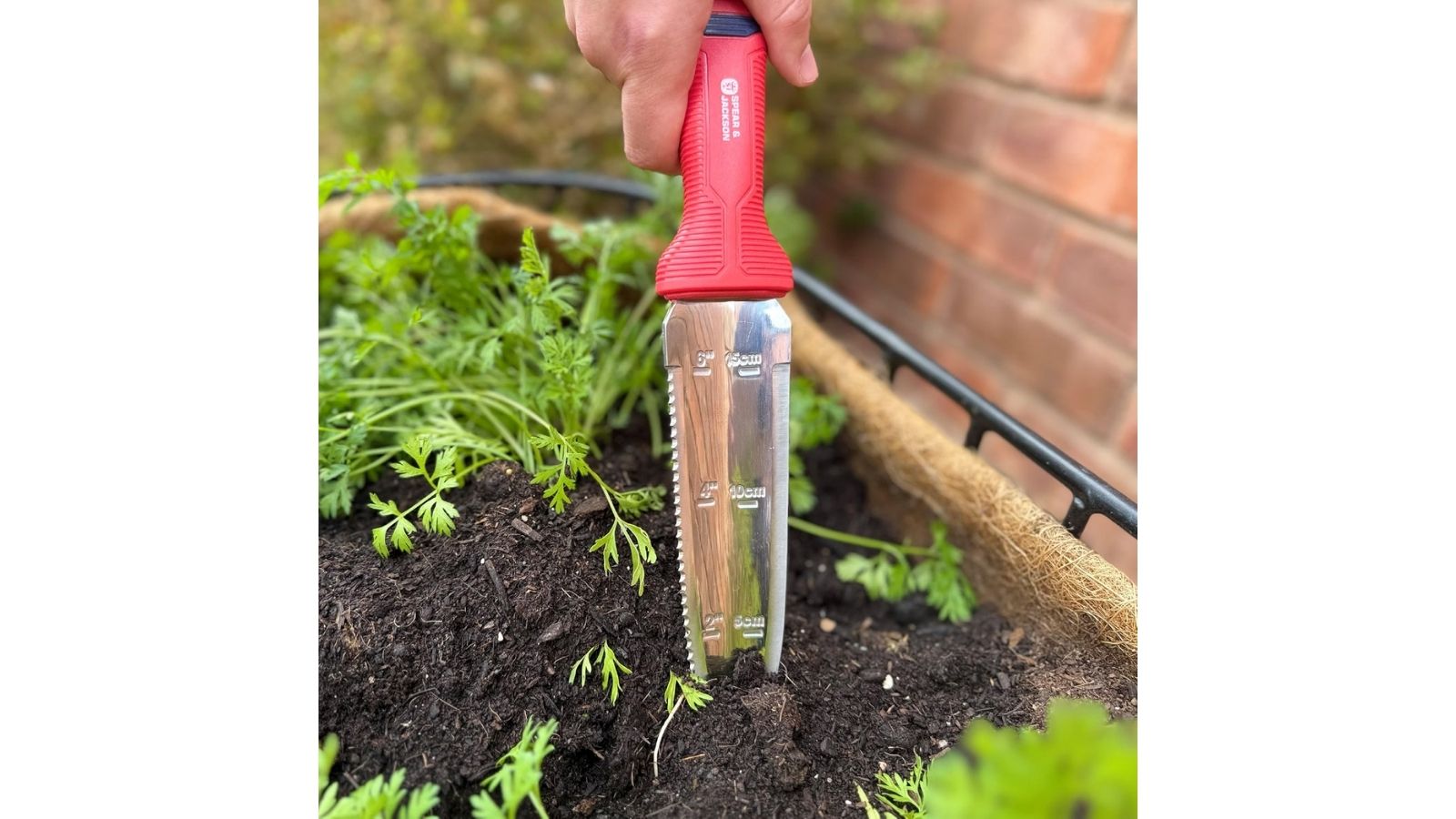
That history also explains its slightly odd-looking design. The concave blade can scoop soil a little like a very narrow trowel, while the point penetrates compacted ground and the edges cut roots. Many versions even have depth markings along the blade for planting bulbs and small plants.
As a master gardener and permaculture practitioner, I particularly like tools that do several jobs well enough that I don’t need to keep walking back to the shed. The hori-hori fits that description beautifully.
I can weed with it, plant bulbs, open narrow planting holes, divide perennials, cut through fibrous roots, and loosen plants for transplanting. Gardeners have been using them for digging, weeding, planting, and prising roots from paths and rock gardens for good reason.
Use the blade carefully and remove the whole root
The biggest advantage over hacking at paving weeds with a hoe is precision. You’re working on one plant at a time, which isn’t particularly glamorous, but you’re far more likely to actually remove it.
Push the point into the joint beside the weed, keeping your other hand well clear of the blade. Work around the root if there’s space, loosening compacted material as you go. Then lift or pull the weed. For fibrous weeds, the serrated side can help cut through the root mass below the surface.
A hori-hori is a real cutting tool, so I treat it like one. Don’t leave it loose in a bucket where you’ll later reach in blindly, and use the sheath if yours came with one. I also wouldn’t use a sharp metal blade aggressively around irrigation lines, landscape lighting cables, or anything else that may be hidden just below the surface.
Once you’ve cleared the weeds, sweep the paving regularly. Removing accumulated soil, leaf litter, and seedlings before they establish can help reduce the amount of material available for new weeds to root into, which is one of the simpler ways to prevent weeds from continually colonizing paver joints.
I wouldn’t buy a hori-hori solely to deal with three weeds in a patio. But if you garden regularly, it’s one of those tools that earns its place surprisingly quickly. I reach for mine when a hoe is too large, a trowel is too blunt, and I need to actually get underneath the problem rather than shave it off at ground level.
You might also like…
How to Care For Your Garden Tools
Must-Have Tools That Will Make or Break Your Homestead Dreams