

Affiliate disclosure: This post may contain affiliate links. Please see full disclosure.
The plastic witch blow mold that’s been leaning in the garage since the kids were small isn’t just taking up space. Vintage Halloween decor has turned into one of the most active corners of holiday collecting, and most of what drives it isn’t some museum-grade rarity. It’s the ordinary stuff: the wax candle shaped like a cat that melted a little in storage, the paper lantern nobody threw out, the blow mold a neighbor was about to leave at the curb.
Three things decide whether a piece is worth real money: who made it, how it was made, and what shape it survived in. That last one does most of the work. A piece stored flat in a dry closet for seventy years is worth multiples of the same design left to fade on a porch for decades.
Here are 13 pieces worth pulling out of storage before they go to the donation pile or back in the attic.
Gurley Novelty Company Halloween wax candle
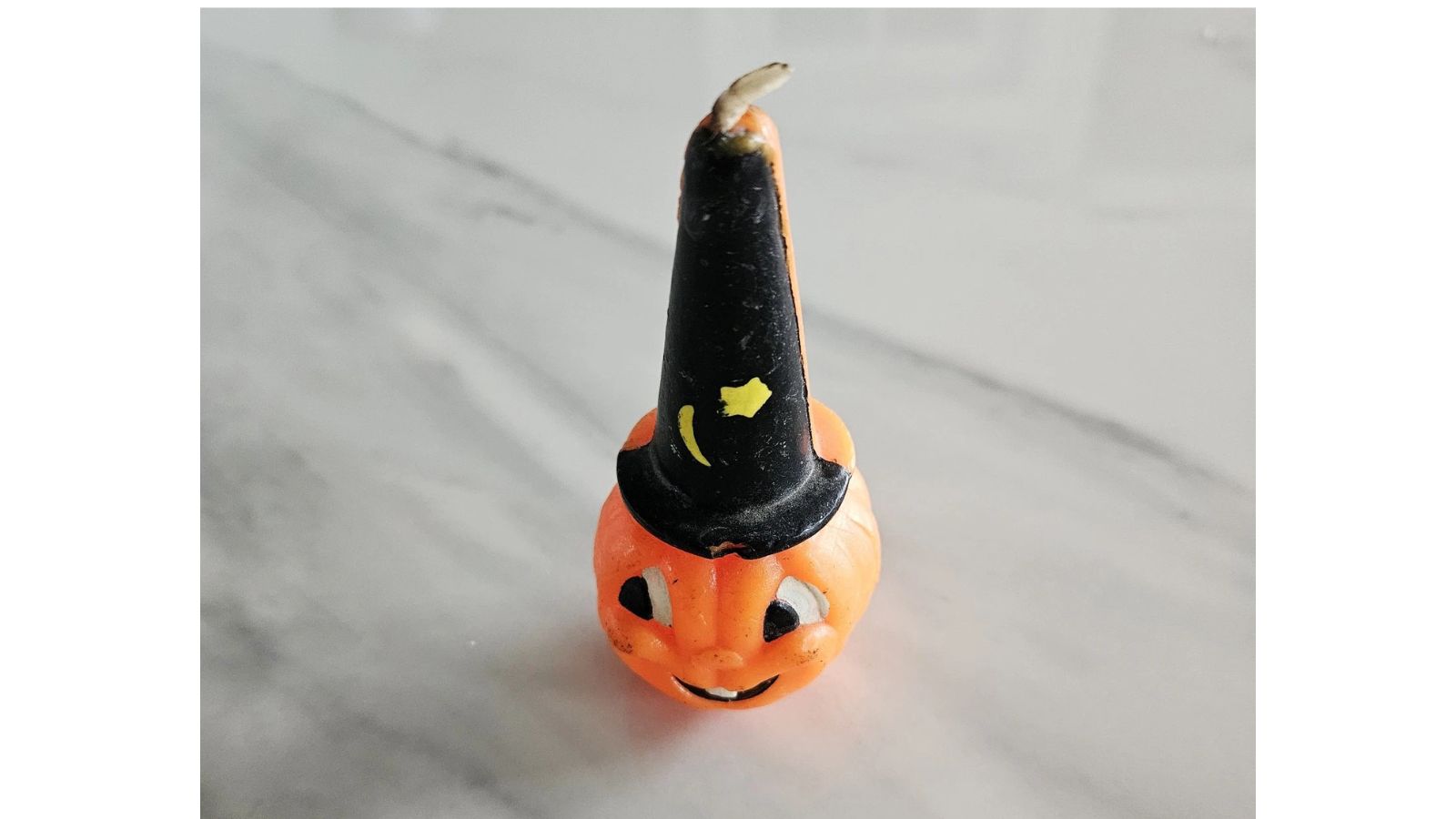
Gurley candles turn up in nearly every box of inherited Halloween decorations, and most people assume the little wax witches and black cats are worthless because they’re everywhere. They’re not quite worthless, they’re just common, which keeps prices modest and the category genuinely findable.
An ordinary figural candle in good shape, unmelted and with its color intact, typically brings $5 to $25, while a popular design like the black cat sitting against a crescent moon usually lands closer to $18 to $20 on its own. A full, unopened box of a dozen candles in original packaging is worth seeking out specifically, since a complete new-old-stock case has brought $150.
Check the base for the word “Gurley” before assuming you have the real thing. Gurley also sold a related, less detailed line stamped “Tavern,” and the company itself stopped production in 1994, so later “new old stock” claims deserve scrutiny. Vermont Country Store now owns Gurley’s original molds and sells new candles cast from them, and a separate revival of the Gurley name brought out fresh molds in 2006, so a candle that looks suspiciously crisp and unburned might be decades younger than it appears. Heat is the real enemy here. A candle that’s been through one hot attic summer can fuse into a shapeless blob with everything else in the box, and once that happens, there’s nothing left to sell.
Beistle honeycomb tissue Halloween decoration
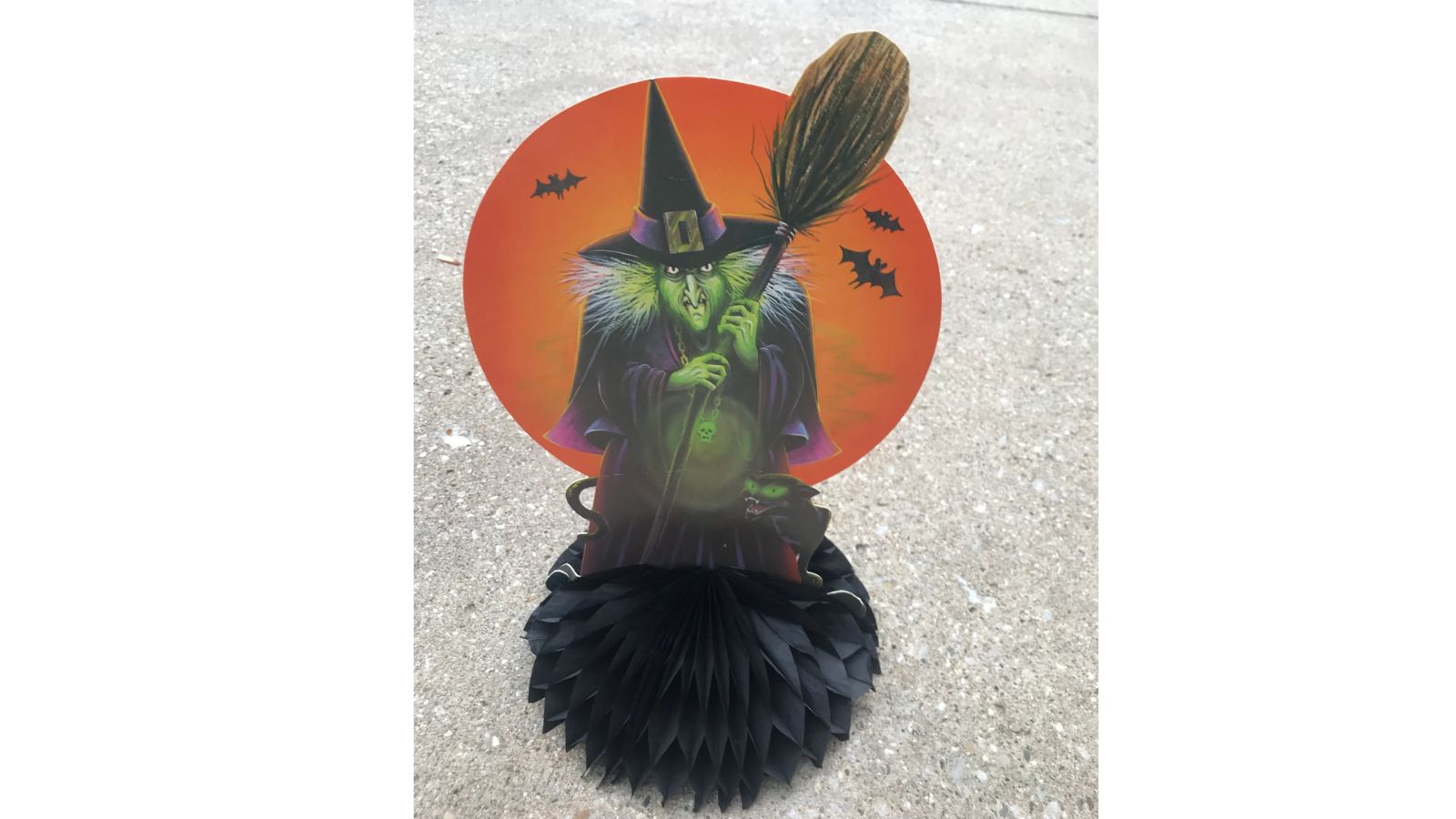
Flat paper die-cuts get most of the attention in vintage Halloween circles, but the three-dimensional honeycomb tissue pieces, the kind that pop open into a bell, a fan, or a bouncing-armed “dancer,” are a different animal entirely. Beistle made these from the 1920s onward, and the gap between an ordinary one and a rare one is enormous.
A honeycomb scarecrow or similar mid-century figure from the 1950s and early 1960s typically brings around $20, and that’s a realistic price for most of what turns up at estate sales. Earlier pieces from the 1920s and 1930s climb from there. A damaged 1923 honeycomb fairy hat still brought $394 despite the condition issues, and a near-mint 1930 “Tango Cat” honeycomb piece, complete with its original glassine envelope, reached $1,303.99.
Honeycomb paper is fragile by design. It’s meant to collapse flat for storage and pop open for use, and decades of that cycle leaves most surviving pieces crushed, torn at the folds, or missing their original glassine sleeve. A piece that still opens smoothly and holds its shape is doing better than most of its generation. Beistle has reissued some of its honeycomb designs over the decades, and the company now prints both an original and updated copyright date on current reissues, the clearest giveaway once you know to look for it. Older unmarked pieces take more careful comparison of paper stock and color against a known original.
Dennison’s Bogie Book Halloween party guide
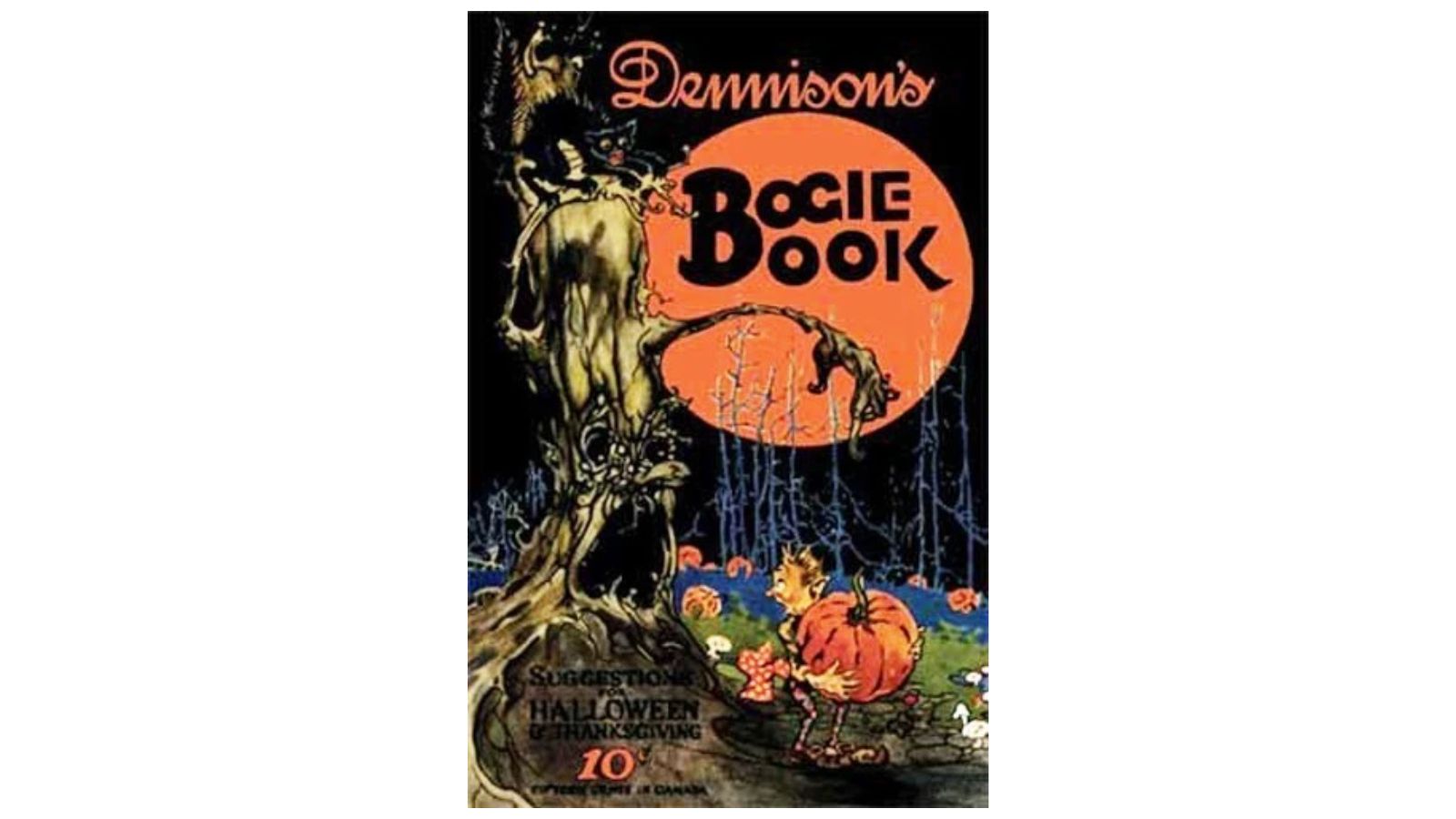
Before Beistle and Dennison were household names in paper decorations, Dennison published an annual booklet called the Bogie Book, part catalog and part party-planning guide, showing housewives how to turn crepe paper and a little imagination into a full Halloween party. These sold for a nickel or a dime a copy, meant to be used for one season and thrown out, which is exactly why intact copies are scarce now.
The run started in 1909 and continued most years through 1934, with a gap during the First World War. Condition and edition drive the price more than almost anything else in vintage Halloween paper. The first, 1909 edition is the rarest of the bunch, with only a handful of known surviving copies, and it’s valued at $2,000 to $2,200. Later editions from the 1920s and early 1930s turn up more often and sell for far less, though a clean copy with its covers intact is still a genuine find.
Hardcover copies are scarcer than the softcover versions and bring more when you find one. Most surviving Bogie Books show real wear from handling, since nobody treated a party-planning pamphlet as an heirloom at the time, so a copy with bright, uncreased pages and no missing leaves is worth more than its edition year alone would suggest. Collectors also look for the original mailing envelope, which rarely survived alongside the booklet itself.
Union Products Halloween haunted house blow mold
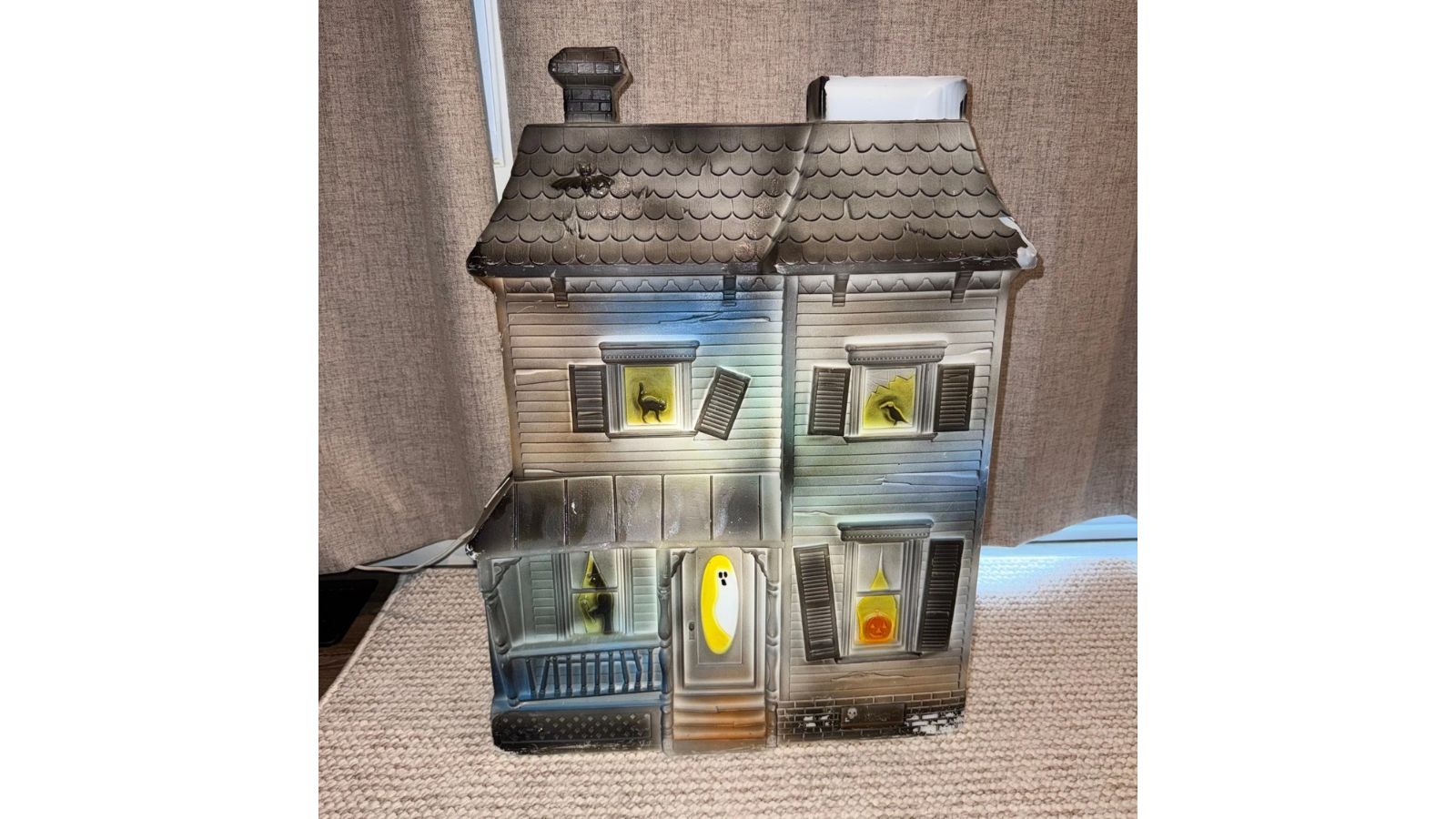
Most vintage Halloween blow molds are a single figure, a pumpkin, a witch, a ghost. The haunted house design is different, a whole illuminated structure meant to anchor a porch display rather than just decorate one corner of it, which is part of why it’s harder to find today than the simpler figures.
A clean example with its original base and no cracks across the roofline or windows has brought as much as $527, well above what a standard pumpkin or witch blow mold typically commands. Size works against survival here. A big, hollow plastic structure like this one is more prone to stress cracks from being hauled in and out of storage every year, and more likely to have been left out in weather that a smaller figure would have been brought inside for.
Check the seams and the thin plastic windows first, since those are where cracking usually starts, and look underneath for a maker’s mark. Faded, chalky orange or yellow plastic is normal and doesn’t disqualify a piece, but any crack that runs through the structural seams rather than just the surface drops the value sharply. A working light kit with its original cord is a meaningful bonus, since replacement cords and sockets are common enough that an all-original example stands out.
Tico Toys green-faced witch blow mold

Tico Toys made one of the more distinctive blow mold witches on the vintage Halloween market, a tall figure with a bright green face, pointed hat, and a cluster of pumpkins worked into the base. It’s a different look from the more commonly seen orange-and-black witch designs other makers produced, and that distinct green coloring is exactly what collectors look for.
Clean, complete examples with intact paint and no fading to the signature green face typically bring $100 to $300, landing in the same general range as other mid-century figural blow molds from this era. Where an individual piece falls in that range comes down almost entirely to how well the paint has held up and whether the base and pumpkin details are intact.
Sun exposure is the main threat to this one specifically, since that green face paint fades and chalks faster than the orange tones used on pumpkin blow molds, and a witch that’s gone pale or patchy loses a lot of its visual appeal even if the plastic itself is structurally sound. Check the base closely too, since the pumpkin cluster is molded as part of the figure rather than a separate piece, and any cracking there is harder to repair invisibly than a crack on a plain pumpkin. A maker’s mark on the underside is what actually confirms a Tico Toys attribution, since several smaller manufacturers made similar green-faced witch designs around the same time.
Empire Plastics monster blow mold
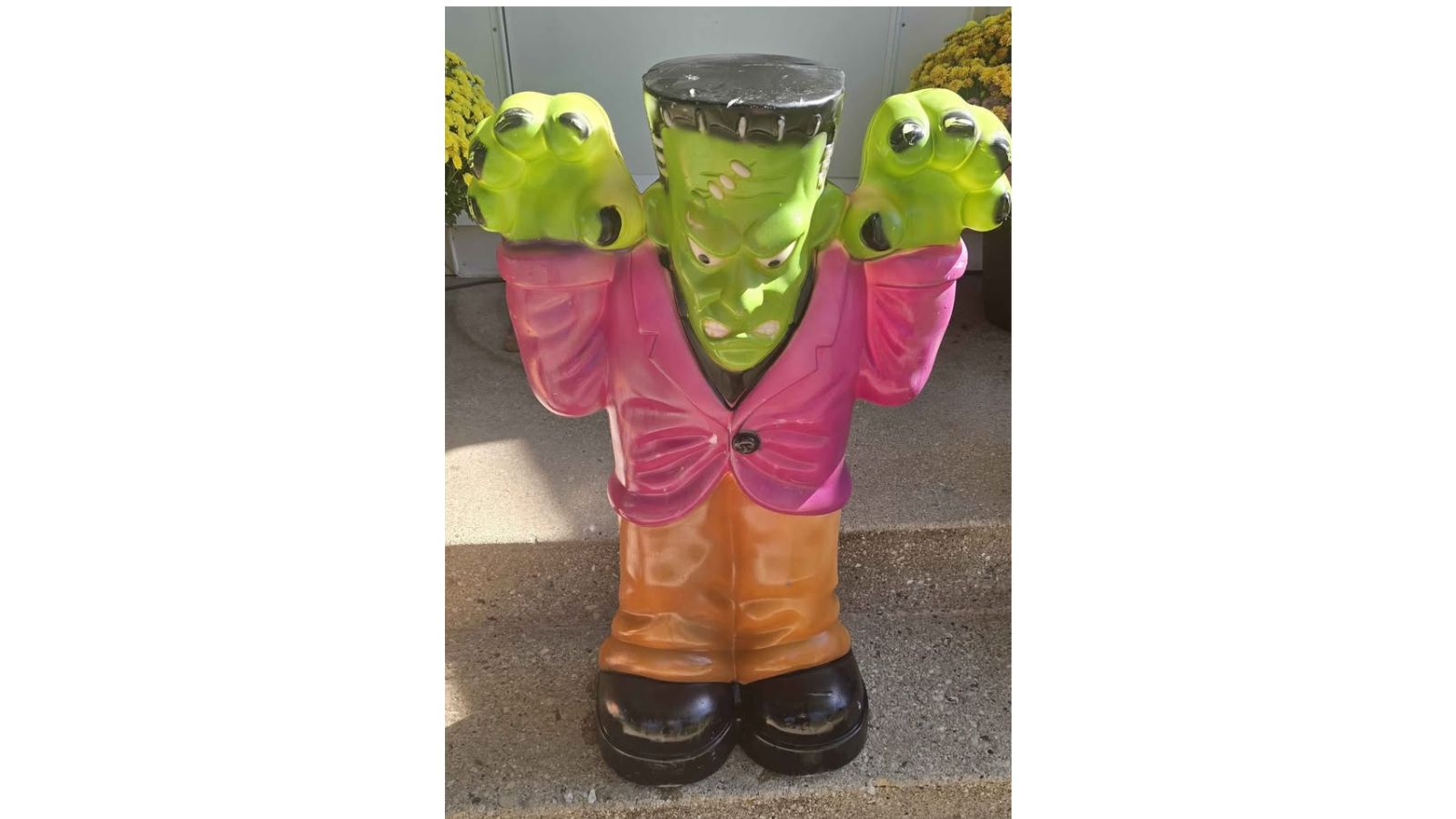
By the 1960s and ’70s, Empire Plastics had expanded well past pumpkins and witches into monster-movie territory, casting Dracula, Frankenstein’s monster, and a combined ghost-and-skull design as yard blow molds. These lean into classic horror imagery rather than the folksier witch-and-black-cat tradition, and they appeal to a slightly different, often younger, crowd of collectors chasing monster nostalgia alongside Halloween decor.
Across the group, clean examples with strong original paint typically run from just under $100 to the mid-$200s, with Frankenstein’s monster generally pulling the strongest interest of the three thanks to his instantly recognizable silhouette. Dracula and the ghost-and-skull design tend to land toward the lower and middle parts of that range, though a particularly clean example of either can still surprise.
As with most blow molds, cracking and fading are the two things that make or break a sale. Molded plastic figures this large flex in the heat and go brittle in the cold, so a piece that’s spent decades cycling through seasonal storage often shows stress cracks along the arms, the base, or wherever the plastic is thinnest. Faded black and gray paint on Dracula’s cape or Frankenstein’s suit is extremely common and doesn’t kill the value on its own, but a crack through a load-bearing section, the ankles especially, usually means the piece won’t stand upright for another display season without extra support.
Bayshore Industries Halloween haunted house blow mold
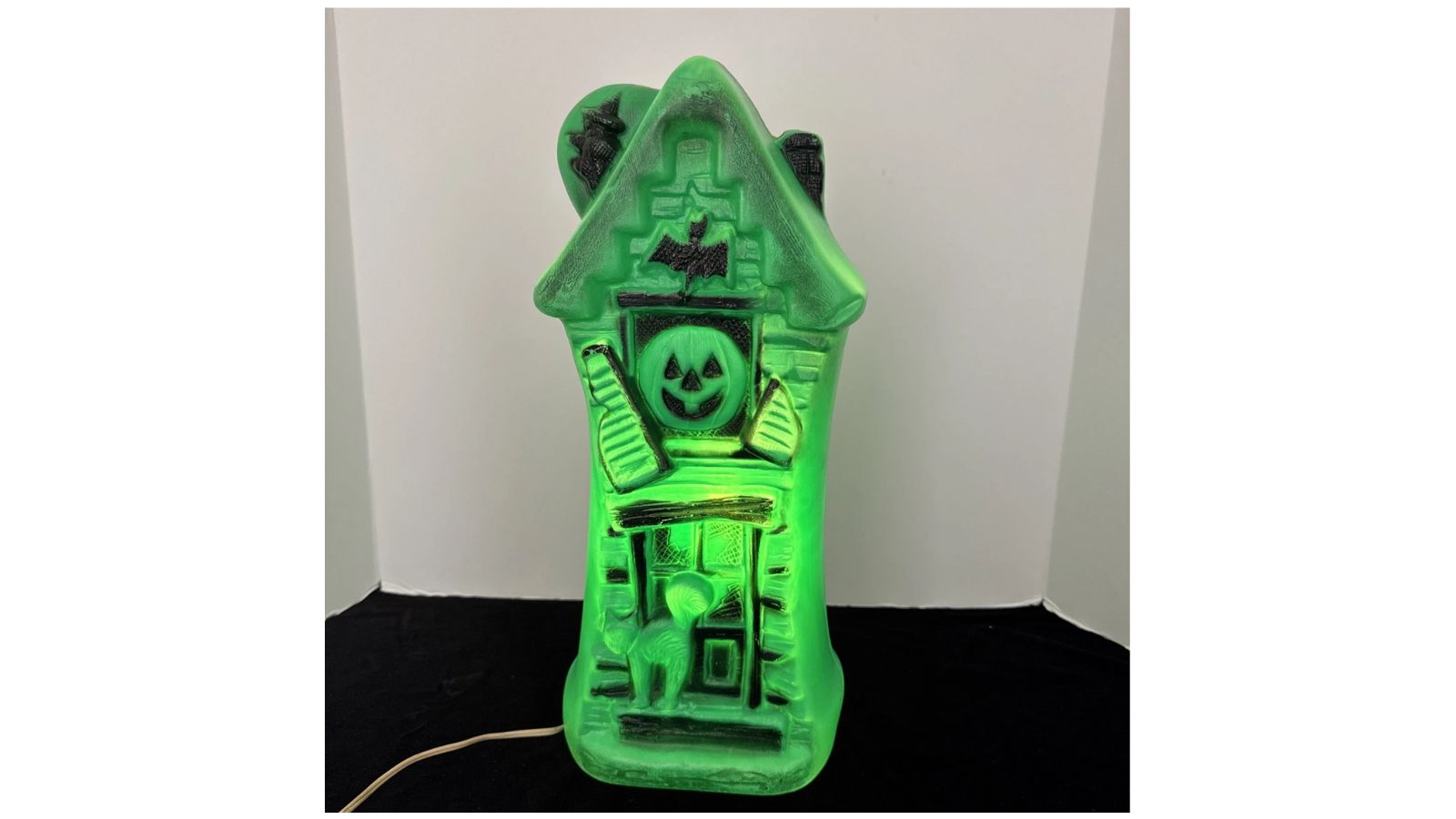
Bayshore Industries is a smaller name in the blow mold world compared to Empire or Union Products, but its haunted house design has developed a following of its own among collectors who specifically chase the lesser-known manufacturers. Like other illuminated house-shaped blow molds, it was built to be a porch centerpiece rather than a single accent figure.
Clean, complete examples have continued to bring upward of $300 in recent years, a price that’s held up even as interest in some other blow mold categories has cooled. Scarcity plays a real role here. Bayshore didn’t produce anywhere close to the volume that Empire or Union Products did, so fewer of these survive in collectible condition, and fewer still turn up for sale in a given year.
Because this is a large, hollow piece, structural condition matters more than cosmetic fading. Look closely at the roofline and any narrow architectural details, chimneys or turret shapes especially, since those thin sections are the first to crack under the stress of seasonal storage and handling. A maker’s mark underneath confirms the Bayshore attribution, worth checking carefully given how often unmarked haunted house blow molds from smaller, undocumented manufacturers get lumped in with better-known names. An intact light cord and socket add a modest premium, though most buyers are mainly after a piece that will still stand up straight on a porch.
Rosbro witch-on-a-motorcycle hard plastic candy container

Most vintage Halloween candy containers show a witch standing still, holding a broom or a pumpkin. Rosbro’s witch-on-a-motorcycle design breaks that pattern completely, a green-faced witch straddling a hard plastic motorcycle, which makes it one of the more playful and visually distinctive pieces the company ever produced.
Despite how unusual it looks, this isn’t a rare piece. Rosbro made it in large numbers, and its price has actually been remarkably stable for decades, settling around $300 since the early 1990s after climbing from roughly half that when collectors first started chasing it in the late 1980s. That kind of long-term price stability is unusual in vintage collecting and makes this a relatively predictable piece to buy or sell.
The most common color combination is green and orange, so don’t assume you’ve found something special just because the colors look vivid, that’s the standard factory finish. What actually matters is completeness and structural condition. The witch’s hat point, the handlebars, and the small front wheel are the parts most likely to have snapped off over sixty-plus years of handling, and a motorcycle missing any of these loses real value even if the witch figure riding it is otherwise intact. Hairline cracks along the wheel axles are common on hard plastic this old and worth checking closely before you commit to a price.
Beistle embossed foil Halloween die-cut
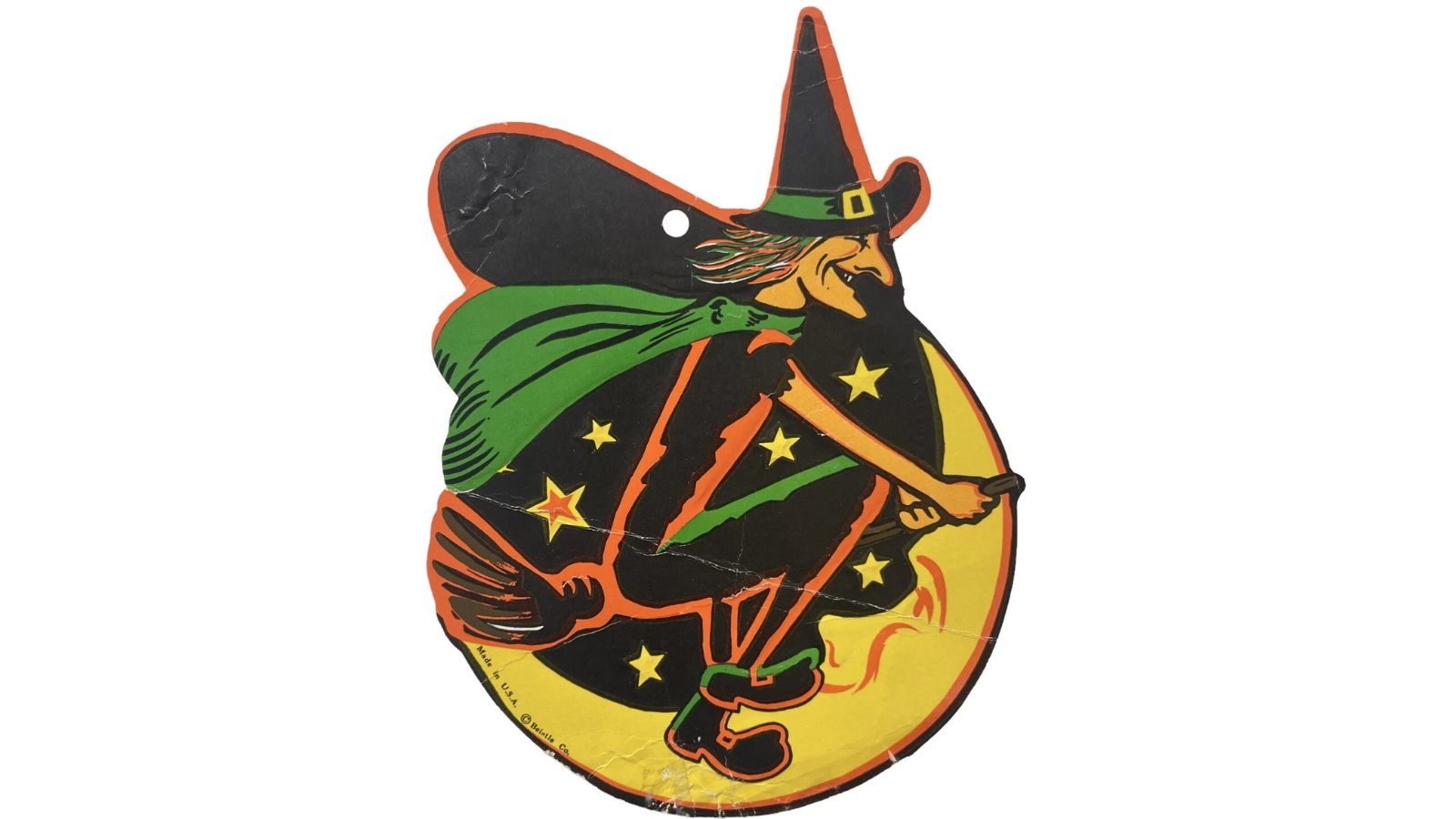
Beistle’s standard paper die-cuts get most of the collector attention, but the company also produced a foil version of some designs, giving the witches, cats, and pumpkins a metallic shine that plain paper can’t match. These show up less often than the regular paper line, and the foil surface tends to survive differently than paper, sometimes better, sometimes worse, depending on how it was stored.
Foil die-cuts from the 1930s typically bring around $125 in good condition, while the more common 1950s foil issues usually land closer to $75 to $85. That gap reflects both scarcity and the simple fact that Beistle made far more of the later pieces, so they turn up at estate sales and shows considerably more often than the earlier run.
Foil deteriorates in its own particular way. Instead of fading like plain paper, it tends to tarnish, dull, or develop small areas where the metallic coating has flaked away from the paper backing underneath, exposing a dull gray patch. That kind of damage is harder to hide than ordinary paper fading, so look closely under good light rather than relying on a photo. Beistle’s general identification marks apply here too: genuine vintage pieces are typically marked “Made in the USA,” “E.H. Luhrs,” or simply “Beistle,” though plenty of originals from this period were left unmarked entirely.
Whitney Made Halloween postcard

BaronOfAntiques via Etsy
Long before die-cuts and blow molds took over, Halloween decorating often meant propping postcards on the mantel or mailing them to friends. George Whitney built a business around seasonal greeting cards, and his embossed Halloween postcards, bright with witches, black cats, and grinning pumpkins, are some of the most approachable pieces of paper ephemera in the whole category.
A well-preserved group of ten cards has brought as much as $175, and individual cards in strong condition are genuinely affordable on their own, which makes this one of the easier vintage Halloween categories to actually start collecting rather than just admire from a distance. These show up constantly in old photo albums and boxes of family ephemera, often mixed in with birthday and Christmas cards from the same decades.
The fastest way to confirm you have a real Whitney card is to flip it over. Genuine examples carry the words “Whitney Made” printed beneath “Post Card” on the back, a mark that’s hard to fake convincingly and easy to check in seconds. Foxing, the small brown spots that develop on old paper over time, is common and doesn’t hurt the value much, but a torn corner, heavy creasing, or writing that obscures the image does. Embossing that’s still crisp and raised, rather than flattened from decades under other paper, is what separates a top-condition card from an ordinary one.
Kirchof tin litho Halloween noisemaker
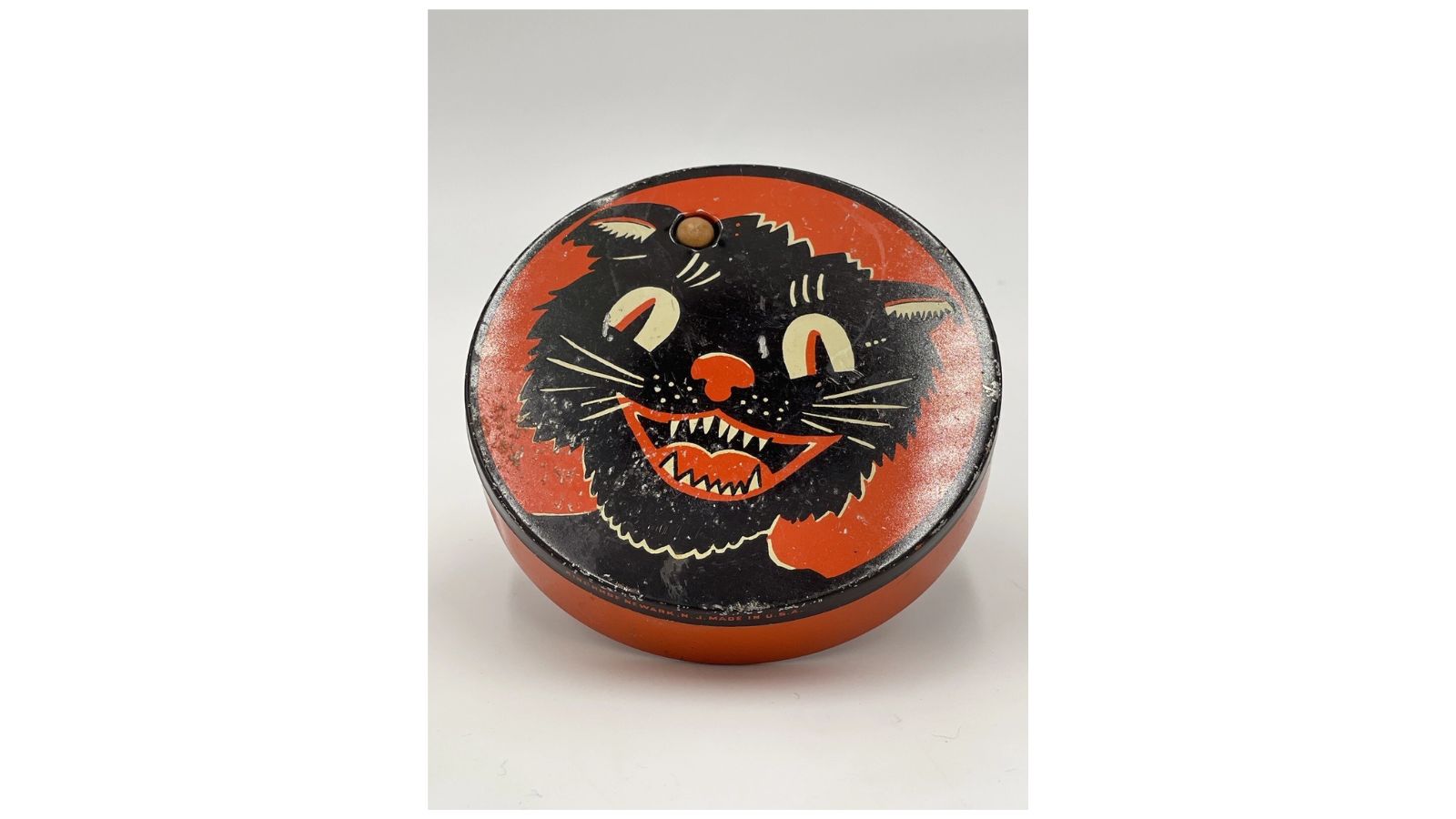
Kirchof made the tin clickers, ratchets, and horns that filled trick-or-treat bags and party favor bowls for decades, decorated in the same witches, cats, and jack-o’-lanterns that show up across the rest of this list. These are small, loud, and were never meant to last, which makes surviving examples a genuine find rather than an obvious one.
An ordinary small tin noisemaker in decent shape typically goes for around $30, but the range climbs quickly for scarcer forms. A round rattler-and-clanger combination made for only one Halloween season in the early 1930s, a design most collectors have never personally handled, has reached $325, and a painted-name example in genuinely strong condition has brought over $500.
The construction details are what separate the decades. Genuine Kirchof noisemakers are tin with a wooden mouthpiece or handle, often loose or missing entirely on survivors without hurting the value much, since that part was always the weak point. A header card printed with a zip code means the piece dates to after 1963, worth knowing before anyone tries to sell a “1930s original” that’s actually a later run. German-made reissues imported for the collector market in the 1990s can look convincing at a glance, so compare the printed graphics carefully against a known original before paying rare-noisemaker money for something only a few decades old.
US Metal Toy Co. tin litho jack-o’-lantern pail

Before plastic trick-or-treat buckets took over, tin lithographed pails printed with grinning pumpkin faces, bats, and owls did the job, made by companies like US Metal Toy through the 1950s. They’re sturdier than paper and held up better over the decades than you’d expect, which makes them one of the more genuinely findable pieces in this whole list.
US Metal Toy made these in three sizes, and even the smallest, a compact pail about four inches tall, has brought as much as $231 with some noticeable sun fading and none of the horn-nose detail found on the larger sizes. That’s a meaningful price for the smallest, plainest version in the line, and collectors who study the category closely say these pails are generally undervalued relative to how scarce clean examples actually are.
Check the handle first. It’s usually wire, and it’s the part most likely to be missing, bent, or replaced after decades of actual trick-or-treat duty. Rust spotting and light scuffing on the tin are expected and don’t kill the value on their own, but dents deep enough to crack the painted lithography do, since that kind of damage is harder to disguise in photos and immediately obvious in hand. Bright, unfaded orange with crisp black detailing commands the strongest prices, while a pail that’s gone dull and brownish from sun exposure sells for a fraction of a sharp one.
Dolly Toy Co. skull lantern
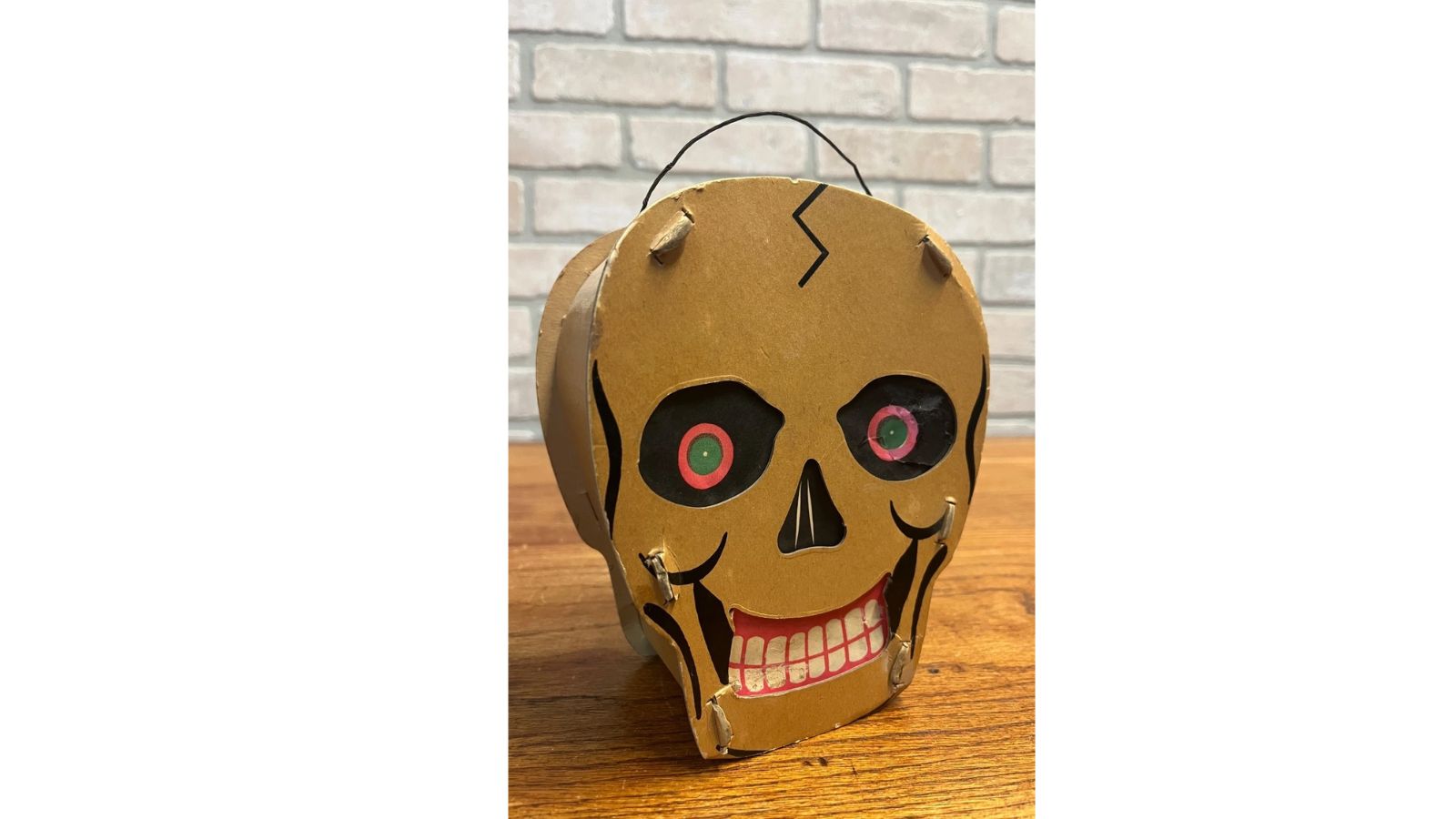
Dolly Toy Company started out making kites before moving into holiday decor, and its papier-mache skull lanterns are among the more unsettling pieces to come out of the pre-war Halloween market. These were built to hold an actual candle, with a grinning, hollow-eyed face meant to throw flickering shadows, which is exactly why so few survive without fire damage or heavy wax staining.
This is squarely a grail-tier find rather than something to expect at a typical estate sale. A skull lantern with genuine candle wax residue inside it, evidence that it was actually used rather than kept pristine on a shelf, has brought over $1,000. That detail matters because it runs counter to the usual collecting logic. Wear that would hurt most paper or plastic pieces doesn’t necessarily hurt this one, since it confirms the lantern did what it was built to do.
Because the paper construction is fragile, structural integrity matters more here than pristine paint. Check for splits along the seams, missing teeth in the grin, and whether the wire bail handle is original rather than a later replacement. Dolly Toy Company no longer exists, which makes definitive authentication harder than it is for brands still around to confirm their own history, so familiarity with the softer, more mottled coloring of genuinely aged pieces is the best defense against a newer reproduction passed off as a prewar original.
You might also like…
The Pink Pyrex Pattern Collectors Dream of Finding at a Thrift Store
The CorningWare Pattern Collectors Dream Of Finding At A Thrift Store
Why Are Thrift Shoppers Taking UV Flashlights Into the Glassware Aisle?

