
Affiliate disclosure: This post may contain affiliate links. Please see full disclosure.
The quickest way to lose next summer’s dahlias is to pack healthy tubers away in fall and forget about them until spring. A damp box can turn them to mush, an overly dry one can leave them shriveled, and a garage that’s either too warm or freezing cold can finish off the rest.
Dahlia tubers aren’t ordinary dry bulbs. They’re fleshy roots holding the reserves that will feed new growth, and they need a careful balance of moisture and temperature while dormant. After decades of organic growing, I’d rather spend a few minutes checking a simple storage box each month than replace plants I could have saved.
Lift them at the right time

In regions with cold winters, wait until the first killing frost has blackened the foliage, if conditions allow. That gives the tubers time to mature at the end of the season. But don’t leave them until the soil freezes solid. If hard freezing weather is imminent, protect them by lifting earlier. Late-season maturity and careful digging both affect how well the tubers keep.
Label each plant while you still know which variety it is. Cut the stems back to a short stub, loosen the soil well away from the plant, and lift the whole clump from beneath with a garden fork. Don’t haul it up by the stems or pull individual tubers apart. Their narrow necks break easily, and next year’s shoots grow from eyes on the crown, not from any old detached tuber.
Dry the outside, not the life out of them
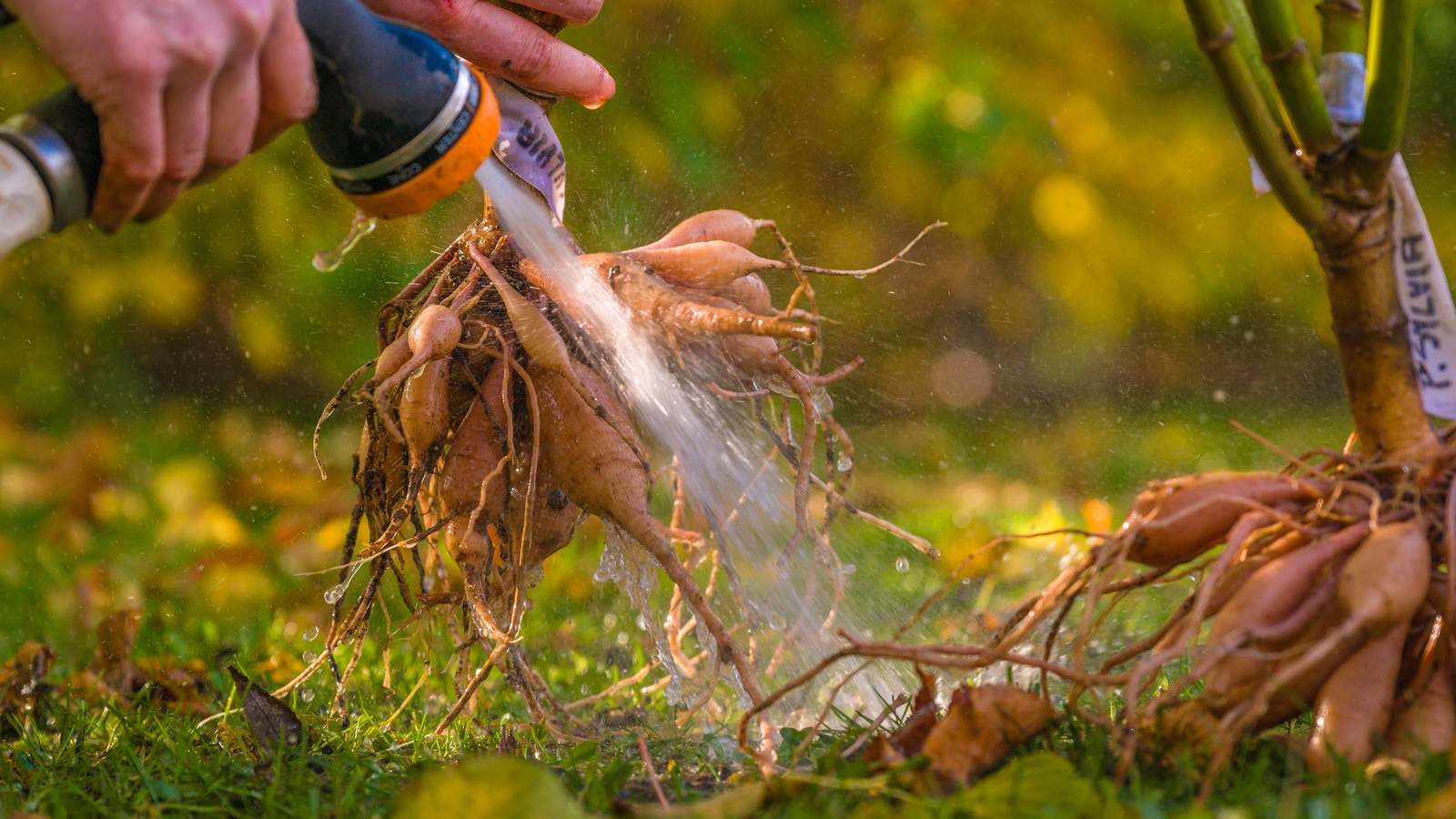
Brush away loose soil. If it’s packed into the clump, rinse gently so you can see the tubers and spot any damage. Then leave them in a sheltered, well-ventilated place out of direct sunlight until the surface is dry. A few days around 60–70°F (16–21°C) is a useful curing guide for washed tubers, although drying time depends on how damp they were to begin with.
Turn the clumps upside down to drain water from hollow stem stubs. Remove badly damaged or rotten material, and don’t pack away clumps that are still dripping wet. But don’t leave them exposed for weeks in a hot, dry room either. You want dry skins and reasonably firm tubers, not something resembling a bag of raisins.
Pack them so they don’t rot or shrivel

I like a straightforward setup: a shallow box or crate with loose packing that cushions the clumps and helps control moisture without leaving them sitting in water. Coarse vermiculite, clean wood shavings, and similar airy materials are all options. Reused newspaper can work in a storage space that isn’t excessively dry. There’s no need to buy peat moss when other materials can do the job.
Space the clumps so they aren’t pressed tightly together, and cover them lightly with the packing material. If your method calls for dampened packing, it should be barely moist, never soggy. Damp material that clumps into a wet mass is asking for trouble. Equally, a completely exposed box in a heated, dry room can draw moisture out of the tubers all winter.
Check the temperature where the box actually sits
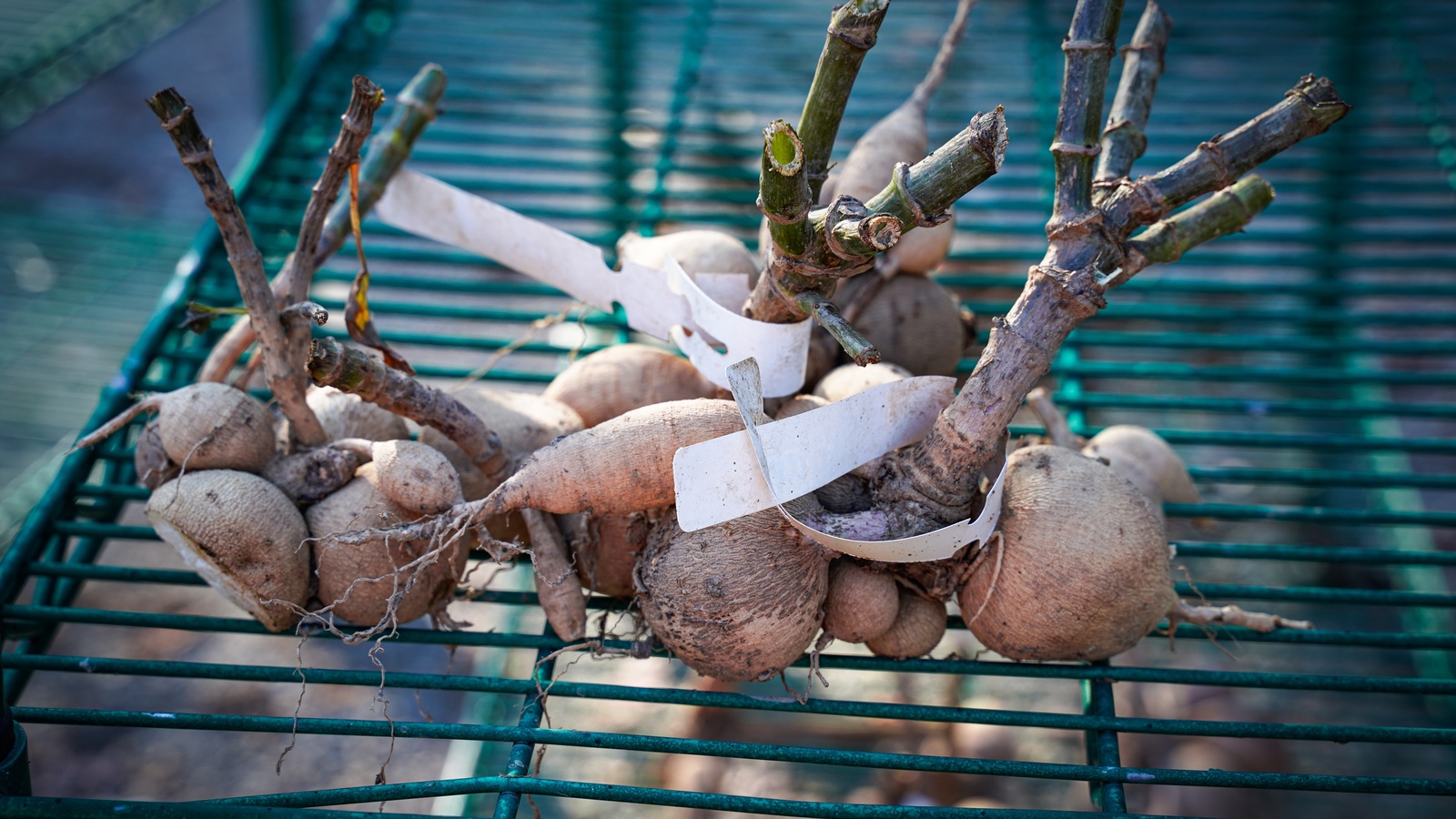
Aim for roughly 40–50°F (4–10°C), somewhere dark and safely above freezing. A cool basement, insulated garage, or frost-free cellar might work. An ordinary shed might not. Check with a thermometer at box level, especially during a cold snap, rather than assuming the room is protected because it feels chilly when you walk in.
If the space is too warm, tubers can lose moisture or begin sprouting long before planting time. If they freeze, the fleshy tissue can be damaged beyond recovery. And a damp, poorly ventilated corner may encourage decay even when the temperature seems about right.
Open the box every few weeks
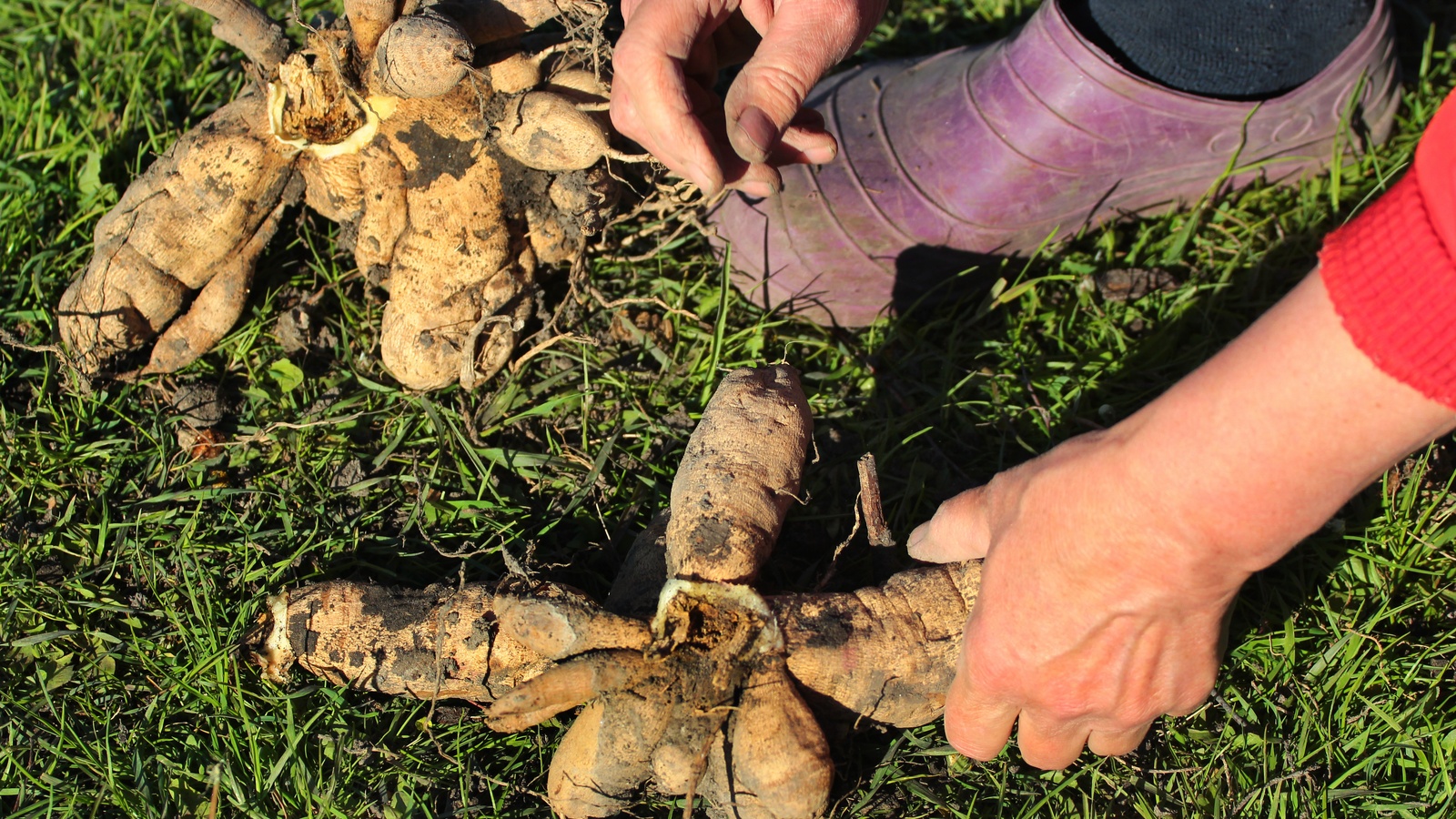
Don’t tuck the box behind a pile of garden tools and remember it in April. Check about every three to four weeks, and more often if your storage space changes with the weather. Lift a few clumps and feel them. Healthy stored tubers should remain reasonably firm.
Soft, wet, dark patches or an unpleasant smell point to rot. Remove affected tubers promptly, check neighboring clumps, and replace overly wet packing with drier material. Don’t rely on a sprinkle of cinnamon or a blanket fungicide treatment to compensate for bad storage conditions.
Wrinkling and significant weight loss suggest the opposite problem: the tubers are drying out. Try lightly moistening the surrounding medium or moving the box to a slightly more humid, still cool location. Make a small adjustment and check again rather than soaking the tubers themselves. Periodic checks for mushiness and shriveling are part of successful winter storage, not an optional extra.
In mild climates, you may not need to lift them
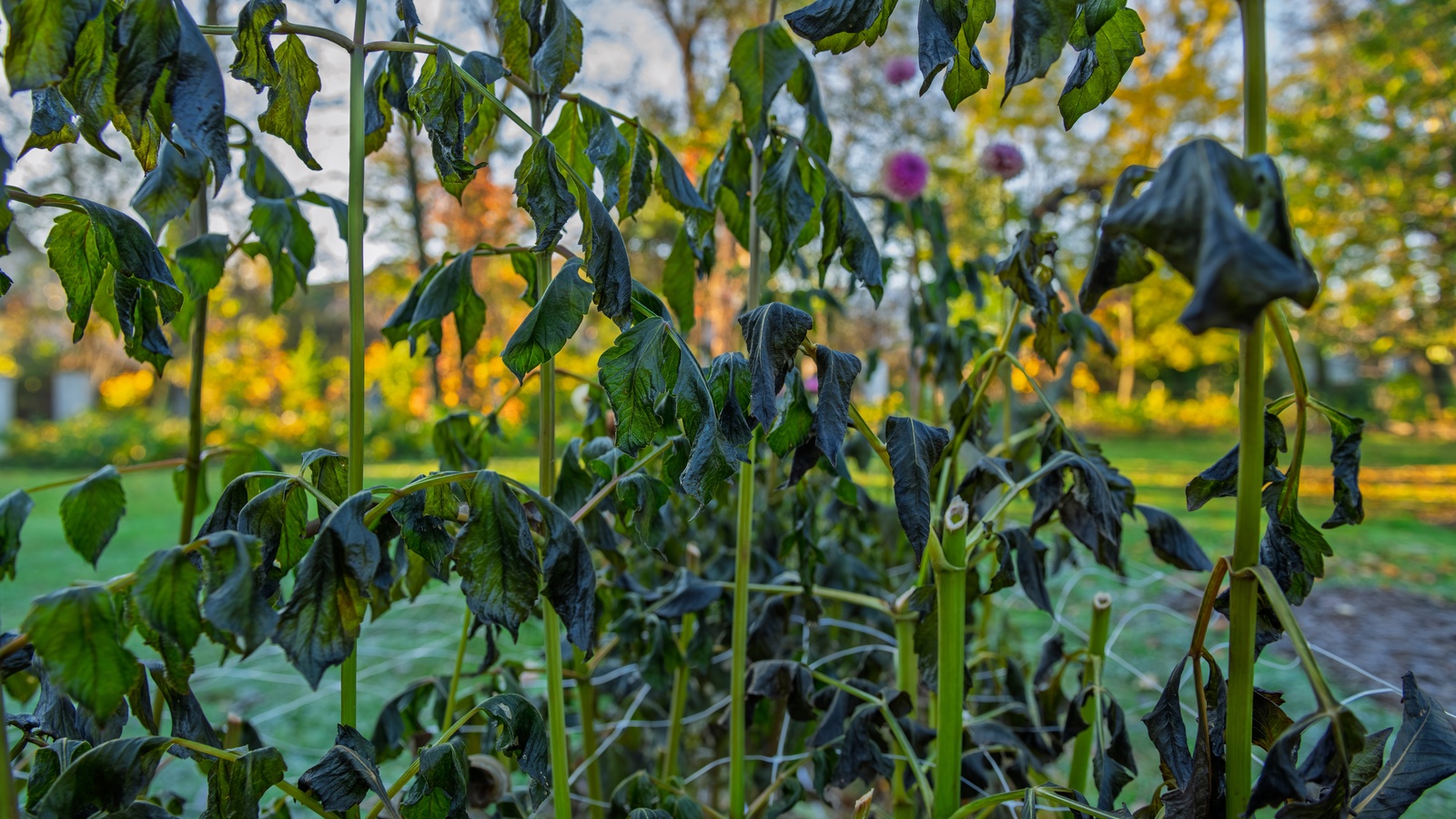
If winter soil rarely freezes and your dahlias grow in a sheltered, free-draining bed, leaving them in the ground can work. Cut down the dying stems and protect the crowns with roughly 6 inches (15 cm) of mulch. But a mild climate doesn’t make waterlogged soil harmless. Prolonged winter rain can rot tubers in the ground even without a hard freeze. Well-drained soil and a reliably mild winter make the difference.
For borderline conditions, my preference is to lift the rare or favorite varieties and experiment with leaving less precious clumps in place. Dahlias grown in containers need particular attention because their pots can freeze more readily than the soil in a garden bed.
The winter job isn’t finished once the tubers are boxed up. Keep them cool, keep them from freezing, watch the moisture, and take a look every few weeks. It’s a small bit of maintenance for the chance to enjoy those same dahlias again next summer.