

Affiliate disclosure: This post may contain affiliate links. Please see full disclosure.
Big family Christmases are loud, bright, busy… and full of grabby hands and dropped food.
For a lot of dogs, that’s not “festive.” That’s a lot.
The goal isn’t to force your dog to “be social.” It’s to set things up so your dog feels safe, has choices, and doesn’t get pushed past their limit.
I’m not a vet, so if your dog has serious anxiety, panic, or bite history, talk to your veterinarian or a qualified behavior pro for a plan that fits your dog. But I am someone who has been lucky enough to have dogs for 30 years. My dogs are well-balanced and well-socialized, but my home is their home, and these “guests” don’t really belong. And they might not be “dog people” (although that’s unlikely for me as if you don’t like my dogs, I probably don’t like you). Or maybe they just don’t “get” how to behave around dogs.
Or maybe the whole thing just becomes too noisy and too much for your dogs. That’s perfectly okay. I assume that my dogs will want some down time, and I make sure I set them up for success. My dogs know they can retreat to their own space at any time, that I’ll look out for them and advocate for them, and won’t let anything too stressful happen.
Just be a little considerate, realize your dog’s home is being invaded and that you can’t explain why. Make them feel safe. Recognize their stress signals. And don’t be afraid to tell guests to leave your dogs alone. You wouldn’t let someone man-handle your toddler, so don’t let them do it to your dogs.
1. Give your dog a real “off-limits” safe zone (not a sad corner)
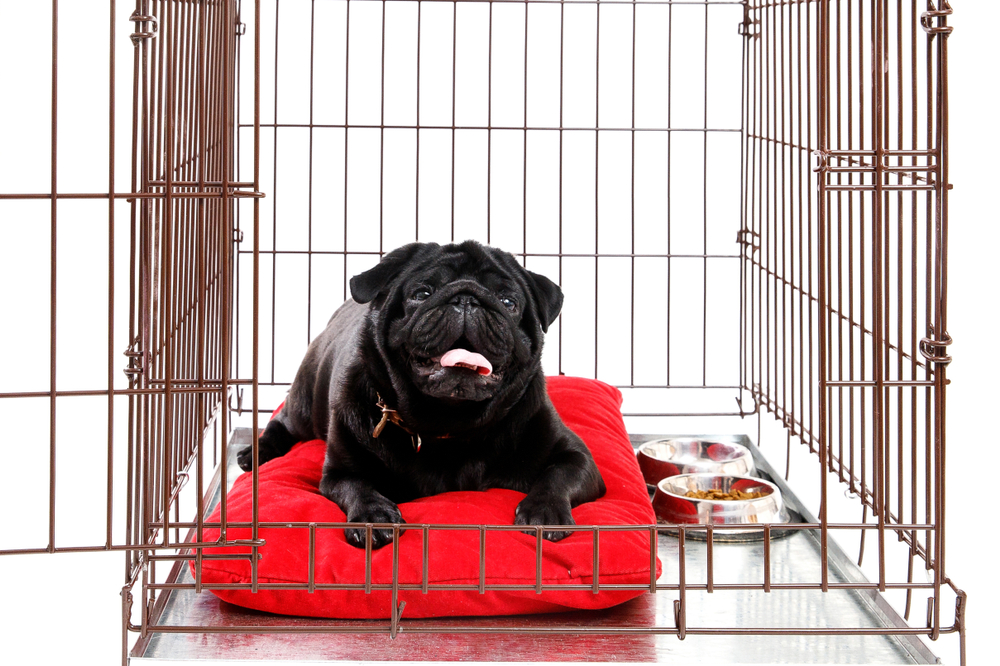
Pick one room that becomes your dog’s calm headquarters: bed, water, a chew, and a white-noise fan if you’ve got one. Put a baby gate up or shut the door so nobody “just pops in to say hi.” If your dog crates happily, great, covering part of the crate can help it feel more den-like (leave airflow).
This is the biggest stress-reducer when guests are coming and going. It’s also how you prevent “too much” turning into growling, snapping, or hiding under the table. If your dog is nervous with visitors, separating them is a solid safety move.
2. Tire them out early… but don’t hype them up
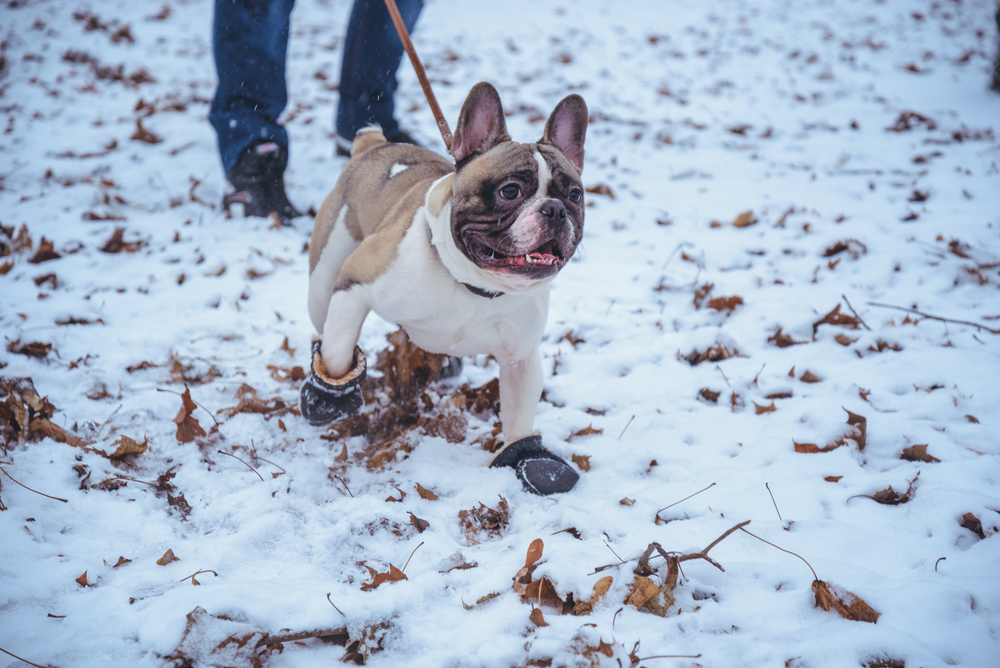
A long sniffy walk the morning of the gathering is gold. Not a frantic game of fetch that winds them up like a toddler with a slushie, more like steady movement plus lots of sniffing (sniffing is calming work for a dog’s brain).
If it’s too cold or gross outside, do an indoor “find it” game with kibble or treats. Scatter food in a towel, hide treats around one room, or toss a handful into a snuffle mat. Five to ten minutes of calm brain work can take the edge off way better than another lap of zoomies.
3. Keep the routine boring on purpose

Dogs love predictability. Holidays are the opposite of that.
Try to keep feeding times, potty breaks, and bedtime as close to normal as you can. Even if your house is chaos, that familiar rhythm is a security blanket. The less “everything changed at once,” the less likely your dog is to pace, pant, or get clingy and weird.
If you know dinner will run late, feed your dog at their usual time anyway. Your guests can survive without the dog being part of the pre-dinner drama.
4. Make a door plan like you actually like your dog

Big gatherings = doors opening constantly. That’s how dogs disappear.
Before anyone arrives, decide: leash, baby gate, closed door, or a buddy system. Put a note on the front door if you need to, something like: “Dog inside. Please don’t leave door open.” (Yes, it feels extra. Do it anyway.)
Also: make sure ID is up to date, collar tag and microchip info. Holiday chaos is not the moment you want to realize the phone number on the tag is from 2019.
5. Teach your guests how to greet your dog (or don’t let them)
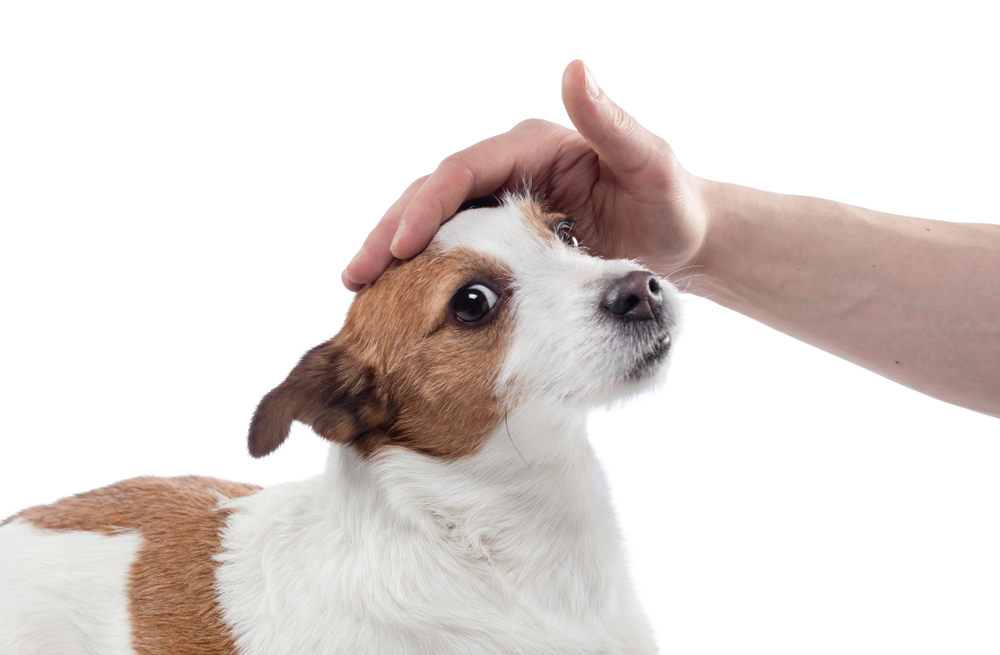
Most people greet dogs like this: loud voice, fast hands, direct stare, leaning over the head.
A lot of dogs hate that.
Set one simple rule: ignore the dog at first. Let your dog approach. Ask guests to turn sideways, keep hands low, and let the dog sniff before anyone touches. If your dog walks away, that’s the answer. (Stress signs like lip licking, yawning, and “whale eye” are real warning flags, don’t wait for a growl.)
If you have kids coming, I’m extra strict: no hugging, no face-to-face, no cornering. It’s not about “being mean.” It’s about preventing a bite and protecting your dog from being blamed for acting like a dog.
6. Watch for the quiet stress signals (they’re easy to miss)

Lots of dogs don’t start with growling. They start with polite hints.
Look for: lip licking, yawning when they’re not tired, panting when it’s not hot, stiff body, turning head away, hiding, refusing treats they normally love. Those are early “I’m not okay” signs.
When you see those, don’t keep pushing. Give your dog space, send them to their safe zone, or take them outside for a quiet potty break. The best time to fix stress is early, when it’s still subtle.
7. Give them a job during the party (calm jobs only)

A dog with nothing to do will often choose chaos.
Set your dog up with something soothing: a stuffed Kong, a lick mat, a safe chew, or a slow-feeder puzzle in their quiet room. Licking and chewing are naturally calming for many dogs, and it keeps them from “helping” your guests by surfing the snack table.
If your dog guards food or gets intense with chews, do this behind a closed door, no exceptions. The goal is calm, not “resource-guarding in front of Aunt Linda.”
8. Lock down the holiday food hazards (your guests will feed the dog)
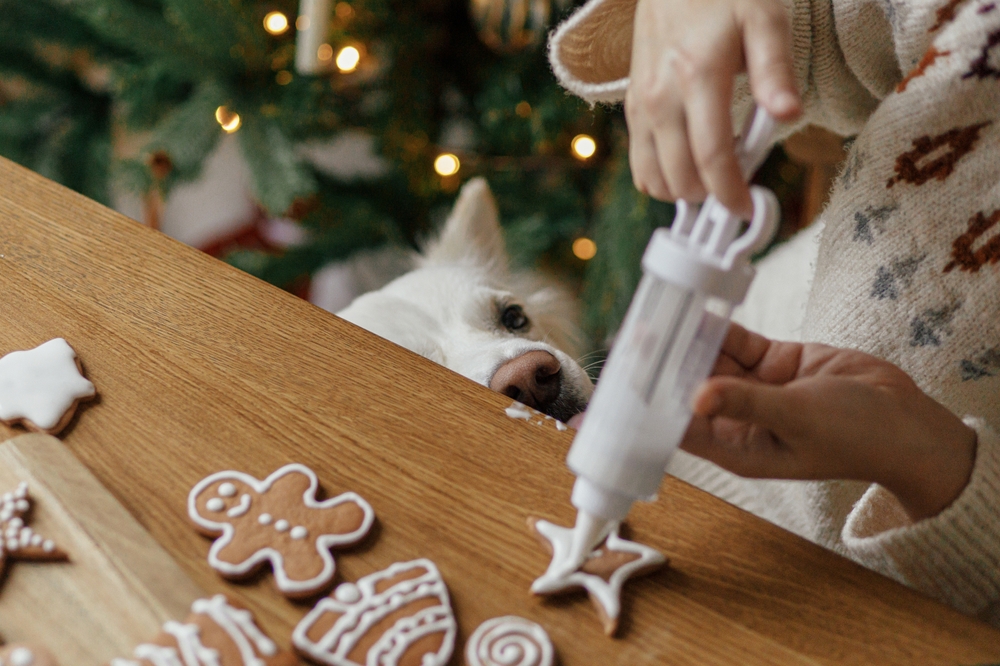
People love sneaking “just a little taste.” It’s sweet… until it’s an ER visit.
Make it crystal clear: nobody feeds the dog. Put a bowl of dog-safe treats you choose in one spot if you want guests to participate, and only allow it if your dog stays relaxed. Keep desserts and anything with xylitol locked up, xylitol can cause dangerous low blood sugar and other serious effects in dogs, and it’s in a lot of sugar-free candies and gum.
Also keep grapes/raisins, chocolate, alcohol, fatty scraps, and cooked bones out of reach. “Just one” dropped meat skewer bone is exactly how you ruin your night.
9. Make your decorations dog-proof (tinsel is not worth it)

Some dogs ignore decorations. Some dogs treat them like a personal challenge.
If you have a tree, anchor it so it can’t tip, and keep breakable ornaments higher up. Keep tinsel, ribbon, and ornament hooks away, stringy stuff can cause a dangerous intestinal blockage if swallowed. Tree water can also make dogs sick, so block access to the stand.
Candles and open flames? Put them where a happy tail can’t reach. One excited wag can flip a candle faster than you can say “merry Christmas.”
10. Manage noise and “surprises” like doorbells, yelling, and poppers
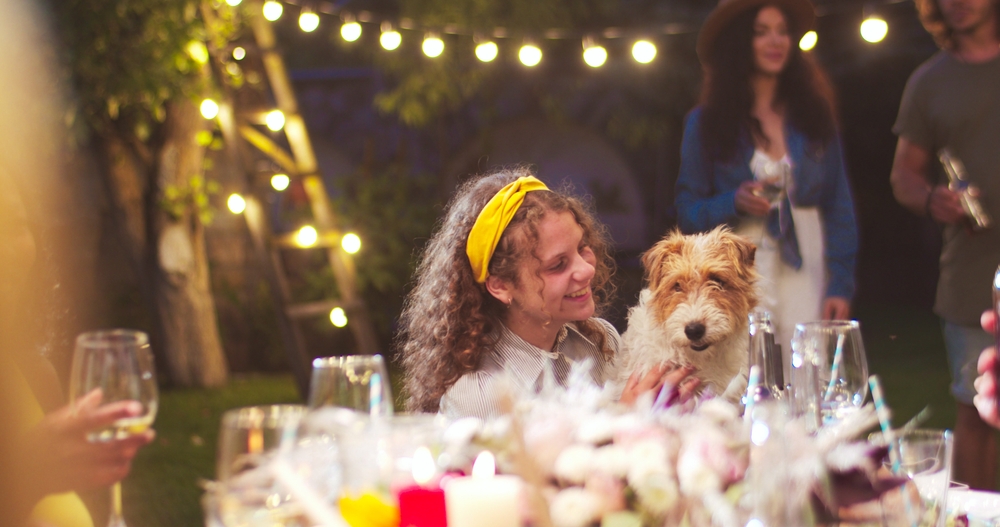
Doorbells and sudden squealing are a lot for many dogs. So are Christmas crackers, party poppers, and that one relative who laughs like a foghorn.
If your dog startles easily, don’t wait until they’re trembling. Put them in their safe zone before peak chaos: arrivals, gift opening, and the loud after-dinner stretch. White noise or a TV helps mask sudden spikes.
And if your dog is already noise-sensitive, talk to your vet before the holiday about options. (That might mean training work, management, or when needed medication. This isn’t a “tough it out” situation.)
11. Plan kid + dog time like it’s a supervised activity (because it is)

Kids and dogs can be adorable together… and also stressful for the dog in ways adults miss.
Don’t ask your dog to tolerate constant touching. Short, structured interactions are better: a child tosses treats away from their body, helps scatter kibble for a sniff game, or “reads a book” near the dog without touching. Then the dog gets a break.
If your dog tries to leave, let them leave. Trapping a stressed dog to be petted is how you get the “he’s never done that before” bite story.
12. Have an exit plan and use it the second your dog needs it

This tip is the difference between “nice holiday” and “I feel sick about what happened.”
Decide in advance what you’ll do if your dog is overwhelmed: safe room, crate, upstairs behind a gate, or even a calm car ride break if that’s soothing for your dog. You’re not being dramatic, you’re being responsible. Visitors can be upset pets, and it’s okay to separate your dog from the crowd.
If your dog has a history of panic, aggression, or severe fear, it’s also completely valid to skip the “party dog” expectation entirely: use the safe zone all day, or arrange pet sitting/boarding with someone you trust. Your dog doesn’t care about Christmas dinner. Your dog cares about feeling safe.
If you want, I can turn this into a printable “day-of checklist” (morning / guests arriving / dinner / gift chaos / bedtime) so it’s easy to follow when you’re busy.

