
Affiliate disclosure: This post may contain affiliate links. Please see full disclosure.
If your new poinsettia is losing leaves, lift the nursery pot out of its foil or decorative cover before you water it. A puddle underneath points to poor drainage. A very light pot with dry mix points to thirst. If the mix feels fine and leaves started falling soon after you brought the plant home, think about how cold it got on the trip and what’s changed around it since.
A few bare stems under the red canopy can look rather alarming, but a poinsettia can survive leaf loss if its stems are still healthy. You can often keep the color you’ve got through Christmas by fixing the conditions that caused the drop.
Check for water hiding inside the foil
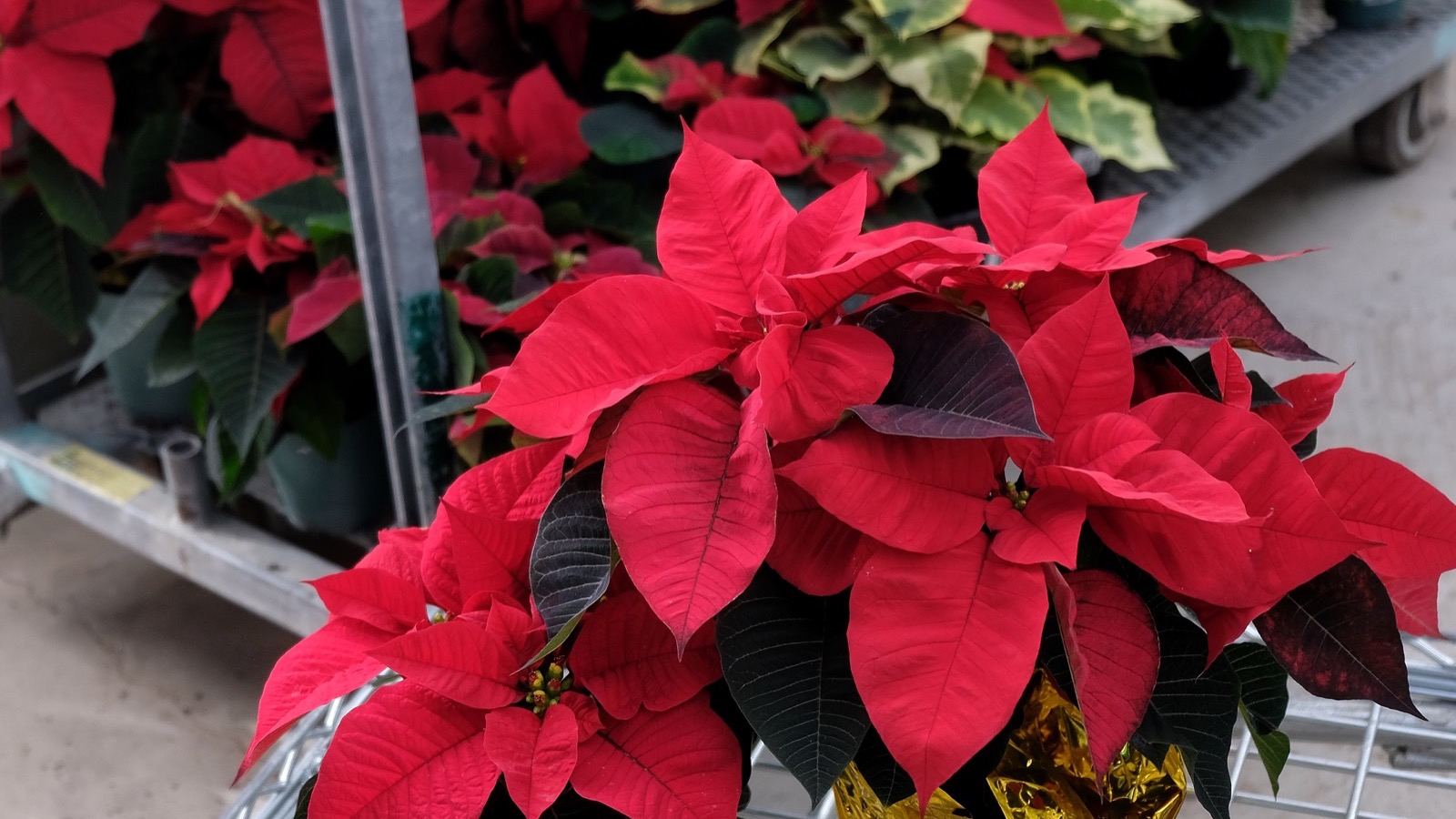
Yellow lower leaves and a heavy pot are the combination that makes me check drainage first. As a master gardener, I want to know what the roots are sitting in before I try to fix what’s happening above the soil. You can water a poinsettia perfectly well at the sink and still drown it by putting it straight back in a cover that catches every last drip.
Lift out the inner pot, pour away any standing water, and check that the drainage holes are open. If the mix is still damp, let it drain and wait for the surface to start drying before you water again. A plain saucer makes it easy to see and empty the runoff. If you like the foil, keep it for display and take the pot out of its cover each time you water. Let it finish draining before it goes back in.
If the plant keeps wilting while the mix stays wet, ease the root ball out far enough to look at the outer roots. Brown or black roots that feel soft or mushy point to rot. Roots in that condition can’t take up water properly, which explains why the plant can look thirsty in a soaking pot. A dark, soft stem base or widespread collapse makes recovery much less likely. If you see clear signs of rot, keep the plant apart from your other houseplants and empty its runoff separately.
Water a dry poinsettia thoroughly, then let it drain
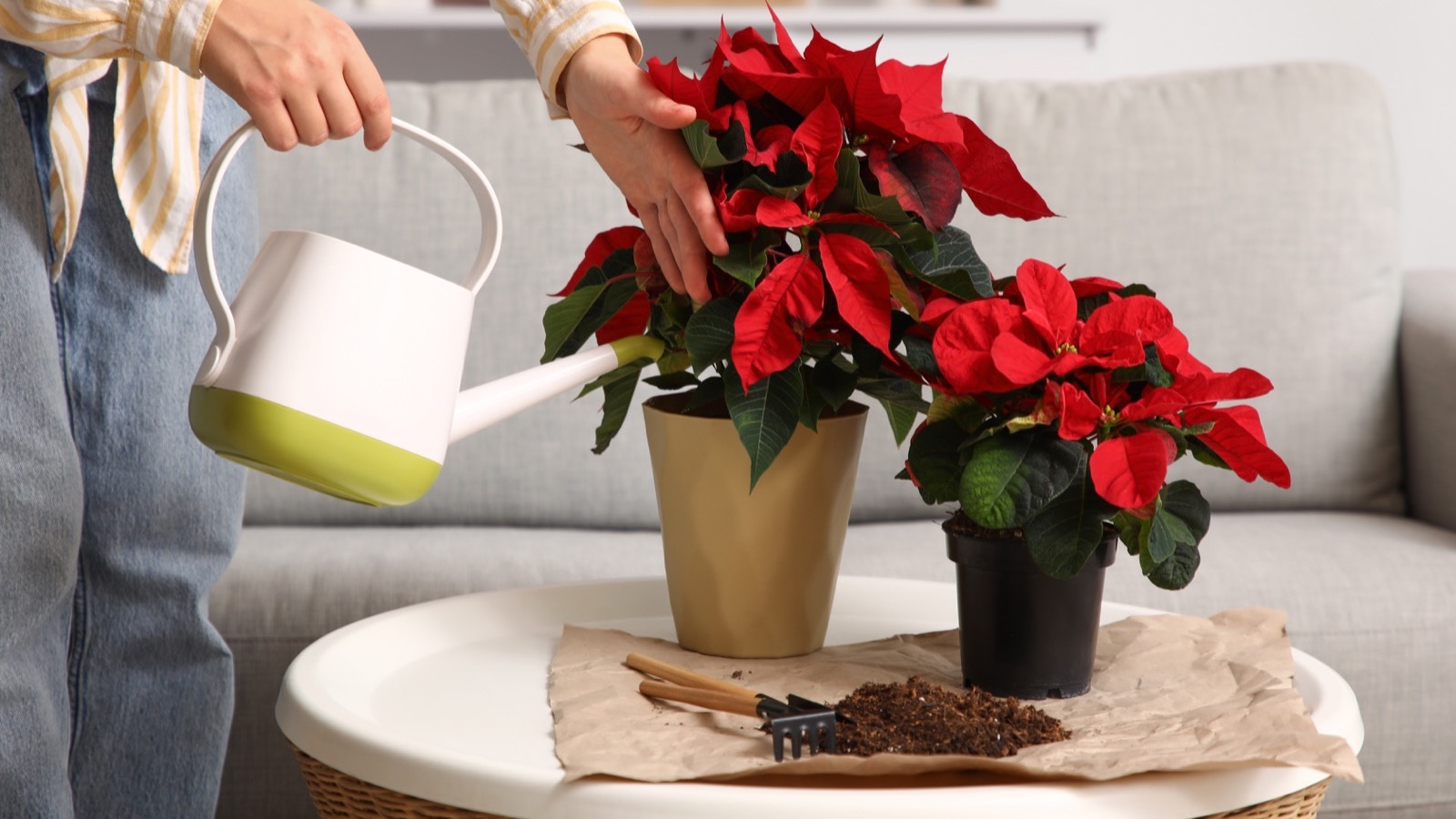
A light pot with dry mix and limp or curled leaves needs a drink. When the surface feels dry, water the mix slowly and evenly until water comes through the drainage holes. If the first pour races down the side and the mix still feels dry, give it another pass five to ten minutes later, then let the excess drain. A splash in the middle of a very dry pot can leave most of the root ball untouched.
Check the surface daily at first so you learn how fast your plant dries in its new spot. Water when the surface feels dry to the touch, before the whole root ball dries out and the leaves go limp. I’d check a small pot more often than a big one, especially if the room warms up in the afternoon. Let the mix tell you when it needs water. A watering schedule can easily turn a damp pot into a soggy one.
Think back to the ride home
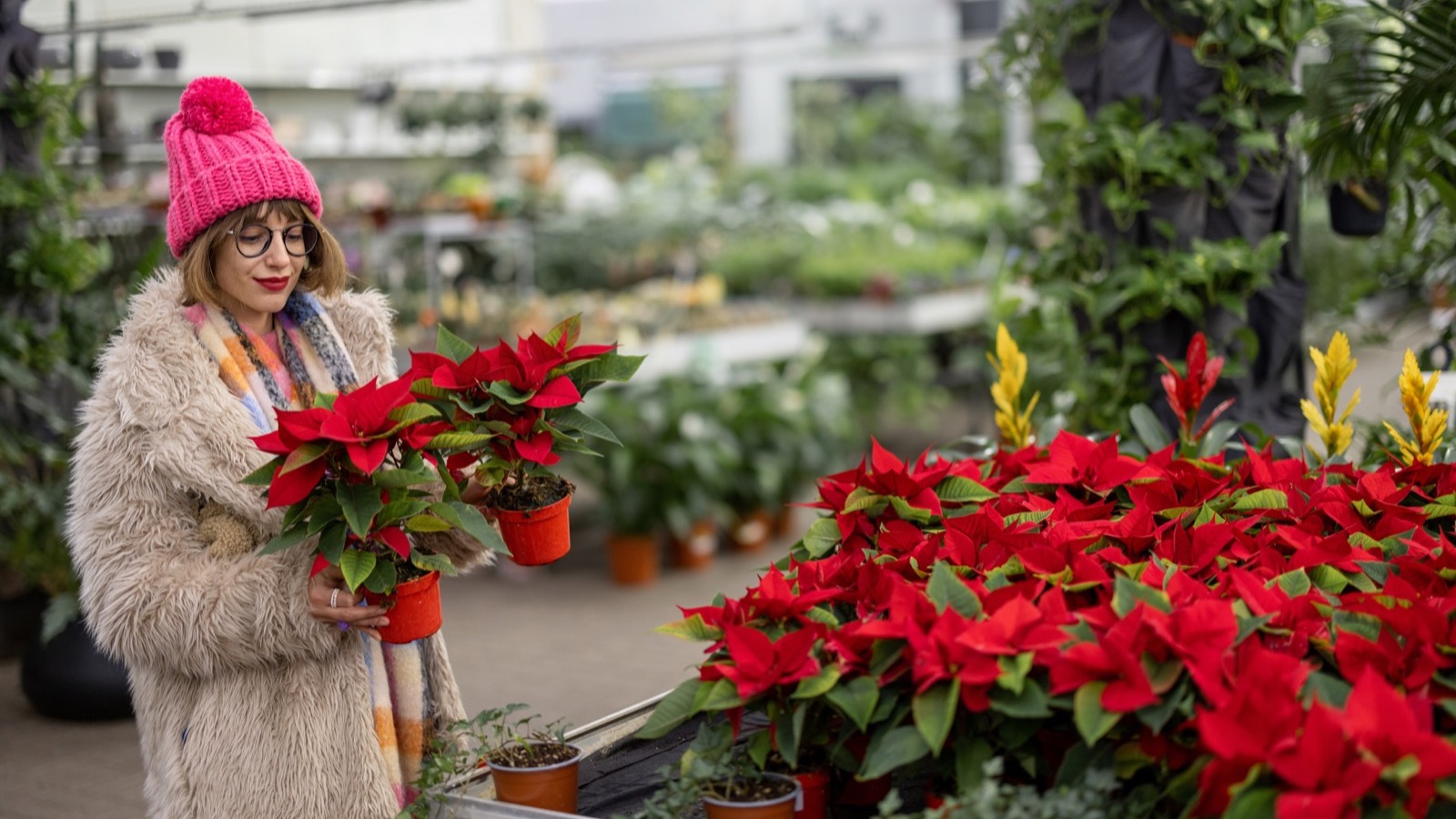
Cold damage can start before you’ve even unwrapped the plant. A poinsettia might have stood by the store’s automatic doors, ridden home in the trunk, or waited in the car while you finished shopping. Chilling can discolor the colored bracts and cause leaves to fall. A brief exposure to freezing air can leave the foliage blackened before it drops. Yellow leaves alone tell you much less, so use the timing and the condition of the mix to make sense of what you’re seeing.
If cold seems likely and the mix is fine, give the plant a bright, comfortably warm spot and see how the remaining leaves and stems fare. Parking it next to the heater adds another temperature swing. For the next trip, buy the plant last, ask for a sleeve or bring a bag that covers the foliage, and take it home in the warm passenger compartment. Cut the tall transport sleeve away when you get indoors so you can free the branches without bending them.
Choose a bright spot that stays comfortable after dark
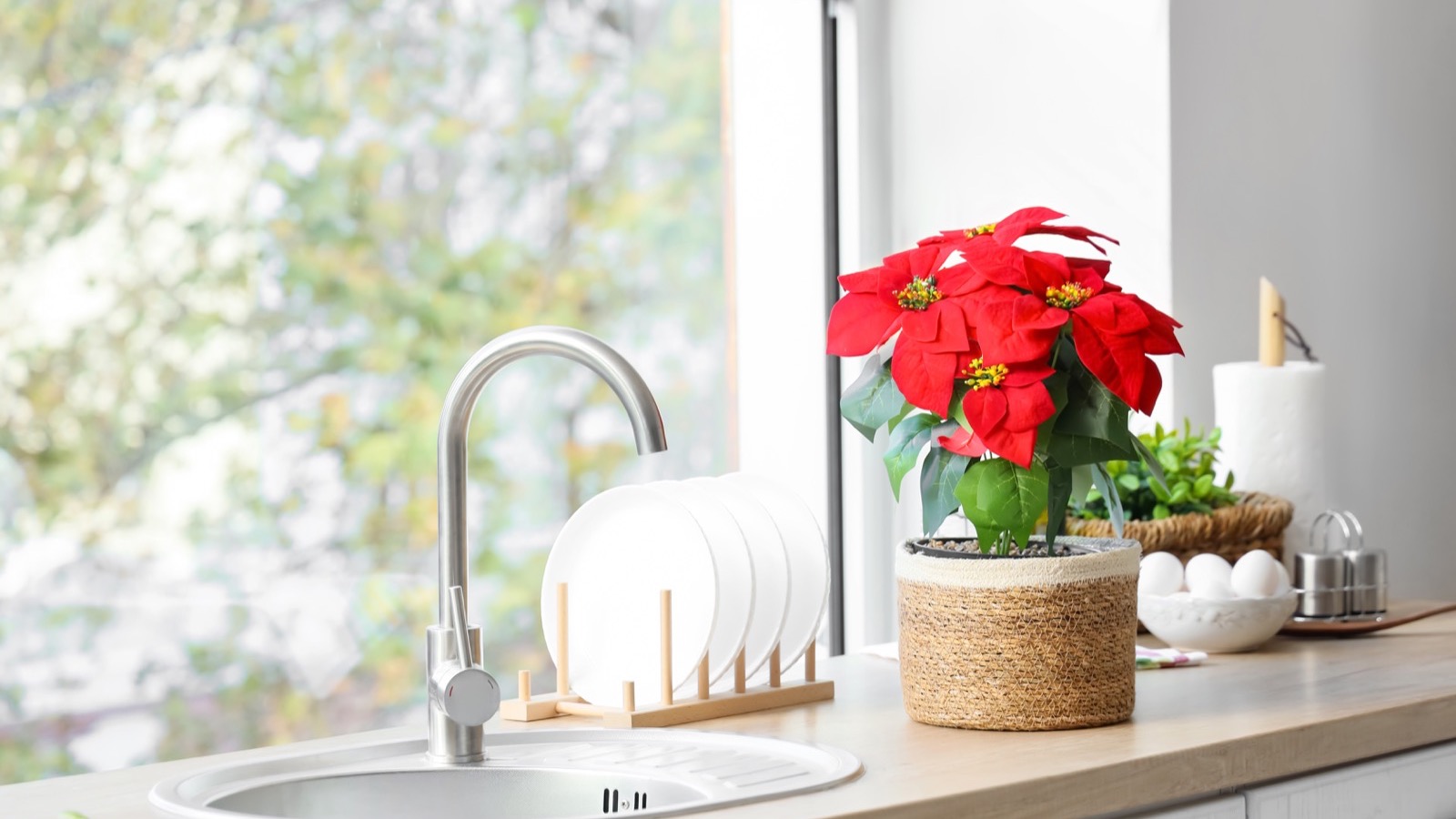
A poinsettia fresh from a greenhouse or store may go straight from a bright bench to a dim hall or a table that gets a gust of cold air every time someone comes in. The temperature that matters is the one beside the plant. A room can feel perfectly warm while the leaves touch cold glass or the air from a vent blows straight through them.
I’d start with a spot near a bright window, with enough room that none of the leaves touch the glass. Aim for a steady 60 to 70°F (16 to 21°C) and keep it out of the path of exterior doors, heating registers, and fireplaces. Check that same spot after dark, especially if you close curtains that leave the plant on the window side. If the dining table is dim, bring the poinsettia over for dinner and give it the bright spot for most of the day.
Keep the color you have through Christmas

The red, pink, or cream parts are colored leaves called bracts. The little yellow-green structures in the middle are the actual flowers. A plant can lose some green leaves and still put on a good show. If the remaining foliage looks firm and the leaf loss slows, keep up the same care. You can pick up the fallen leaves and tuck a little reusable greenery around the outside of the pot to fill a gap, as long as you can still lift the pot out to water.
Give the roots air, give the leaves daylight, and leave the fertilizer for after flowering, when you’re growing the plant on. If you’re choosing another poinsettia for a gift, look beneath the color first. I’d pick the one with firm green leaves right down the stems and take it straight home. A big red top can hide a bare plant underneath.
You might also like…
The Little Change That Could Get Your Christmas Cactus Blooming for the Holidays
Peace lily still drooping after watering? Check this before you water again
Tired of Poinsettias? Try These 12 Gorgeous Festive Holiday Plants Instead