

Affiliate disclosure: This post may contain affiliate links. Please see full disclosure.

Disclosure: This post contains affiliate links. Click here to read my affiliate policy.
Gingerbread dog treats might sound a little crazy, but they’re actually full of goodness and really easy to make. Hint: You can eat them, too! And they’re really delicious. Now, because we’re baking homemade dog biscuits, these aren’t going to be exactly like traditional Holiday gingerbread cookies.

I designed this recipe for flavor and healthfulness. Ginger and blueberries are both great for dogs – they’re nutritional powerhouses, packed full of anti-oxidants and essential vitamins and minerals, and they have other benefits, too. There’s no whole wheat flour here – only gluten-free, dog-healthy goodness. Every ingredient adds a healthful element to this recipe. Even the gluten-free flour choices.
Keep reading to learn more about what makes these gingerbread dog treats so healthful, and to get handy tips and variations for making this recipe to suit you and your dogs, or jump straight to the recipe.
- Why Should You Make Your Own Ginger Dog Treats?
- What Flour is Best for Gingerbread Dog Treats?
- What Equipment Do You Need For These Ginger Blueberry Dog Treats?
- Can I Use These Ginger Dog Treats for Motion Sickness?
- Info About These Gluten Free Dog Treat Ingredients
- Spice Safety for Dogs
- Recipe Variations for Ginger Blueberry Dog Treats
- How to Store These Fruity Dog Biscuits
Why Should You Make Your Own Ginger Dog Treats?
Firstly, you should make your own ginger blueberry dog treats (or fish dog biscuits, or pumpkin peanut butter balls) because it’s better for your dog. Making your own treats means you know exactly what’s in them. There’s no gross ingredients, excessive and rancid fats, sugars, artificial ingredients, chemicals, or nasty flavor enhancers or food dyes.
And, it’s better for your wallet. Dog treats, even crappy ones, are expensive. And better quality and premium treats (even though they still contain a butt-load of crap ingredients)? Ridiculously expensive! But making dog cookies costs peanuts. Whether your fur babies are a big old lab mix or a tiny little iggy, you’ll save money as well as help your pup stay healthy.
Here’s a real world example: I make a couple of different types of jerky for my dogs. One is a fairly hard stick that they crunch up. It costs me between $5 and $6 per pound. A “natural dog treat” company that makes a similar stick with similar ingredients charges $60 per pound! Now, if you wanna go and pay 10 times the amount it actually costs to make, go right ahead. But WOW!
Plus, of course, you can sneak supplements into treats that they don’t normally want to eat. For example, my dogs do not like eating their seaweed granules (for plaque fighting and micronutrients), but when I add them to their treats, they gobble them right up and don’t notice.
What Flour is Best for Gingerbread Dog Treats?
In this recipe, I use coconut flour and oat flour, as I find these give a nice, light gingerbread dog cookie that’s got a nice dry snap, without crumbling and being “floury” when it’s cooked. Plus, both of these options are beneficial to your dog in the right quantities.
While it’s not a good idea to just use any gluten free flour, you do have some options. You can also use chickpea (garbanzo bean), sorghum, pumpkin, and quinoa flours in dog treats.
I don’t recommend whole wheat flour or, in fact, any wheat flour, as many dogs are sensitive to gluten, even if you don’t realize it. It can cause skin irritation, exacerbate yeast issues, cause digestive distress and inflammatory problems, and more. Brown rice flour is another flour I see pushed on a lot of dog recipe sites, but, just like whole wheat flour, it isn’t an optimal nutritional foundation for your dogs, and should be avoided.
Those still pushing wheat, rice, soy, and corn flours in dog treat or dog food recipes are way, way behind the science and are promoting outdated information that’s detrimental to the health of your dogs.
What Equipment Do You Need For These Ginger Blueberry Dog Treats?
Not much! Aside from a mixing bowl and spoon, a blender or food processor, and some molds. If you’re in the market for a new food processor, I cannot recommend the MagiMix enough! I love, love, love it and I am sad I didn’t buy it years ago! Haha. Yes, it’s a bit more costly than the cheap processors, but what a difference. It’s incredible.
You’ve got a few options for dog treat baking trays. I’ve tried loads! I generally like to make these treats super small for training treats, so the pups can have loads of them for good behavior. To that end, I use these tiny half-round sheets or these pyramid pans. Both are good value and easy to use.

This mixture makes great pyramid pan dog treats because it spreads so easily and just pops right out of the pyramid pans after baking.
If I want to make larger cookies, which I often do for Holiday gifts for friends with doggos, I use these cute bone and paw print molds.
And, for easy spreading, whatever treats you’re making, I strongly recommend you get yourself a palette knife/straight spatula like this one. It makes spreading the mixture into the silicone molds soooo much easier.
Can I Use These Ginger Dog Treats for Motion Sickness?
You can. The fresh ginger in these treats may help some dogs with motion sickness. My whippet was violently sick in the car, even on tiny journeys for a whole year. Oh, it was awful, and nothing really helped – not even the outrageously expensive tablets from the vet. But we persevered, used a whole bunch of natural remedies, as well as these treats, and did loads of short daily journeys, and eventually, she got over it. So while I can’t promise these will help, they might do, in conjunction with other remedies.
Info About These Gluten Free Dog Treat Ingredients
As I told you, every single ingredient in this recipe for dogs has some healthful benefit. Here’s where you find out more about what you’ll be feeding your dogs.

Should I Use Fresh Ginger or Ground Ginger?
I use fresh ginger, and recommend you do the same. Fresh food typically has more nutrients than preserved, dried, or ground food. And often, store bought ground ginger has preservatives in it.
Why Add Psyllium Husk?
Psyllium husk is great for dogs and humans in small quantities. It’s a soluble dietary fiber, so, as many studies show, it’s great for helping with digestive issues, including diarrhea and constipation. It also helps bulk out and firm up the poop, so helps to clean the intestines as it travels through, and aids in the proper emptying of the anal glands. Psyllium husk also helps your dog’s body get rid of toxins and can relieve gas.
It also contains a high concentration of essential sulfur-rich amino acids and large amounts of antioxidants. And, according to a 2007 study, it helps to regulate blood sugar levels, aid in weight control, relieves IBD, IBD, ulcerative colitis, and hypercholesterolemia in both people and pets.
What Milk Should You Use?
I use coconut milk or goats milk, depending on what I have in stock when I make these treats. I would avoid cow’s milk, soy, and rice milks. But you could use oat or almond milk.
Whichever milk you use, make sure it has no additives. The coconut milk drink I use contains only coconut milk and water. Avoid those with added sugar and preservatives.
Coconut milk can potentially boost your dog’s immune system, freshen their breath, and improve skin and coat health.
Goat milk, particularly fresh, whole goat’s milk, is great for digestive health. It’s full of essential fatty acids and is a strong anti-inflammatory. Plus, it’s easily digestible and there’s far less likelihood of your dog being sensitive to it compared to cow’s milk. It can also help with diarrhea, recovery from conditions including vomiting, colitis, kidney disease, urinary tract problems, liver disease, and gastrointestinal illnesses.
And it’s an awesome natural antacid, because it’s high in potassium. So it helps your dog maintain the correct pH through the digestive system and helps to combat acid reflux and “hunger pukes”.
Why Is Ginger So Good for Dogs?
Ginger is a powerhouse! For you and your dogs. I have it in the kitchen at all times. I make ginger tincture, ginger tea, keep it in frozen, fresh, dried, and pickled, and cook with it a lot.
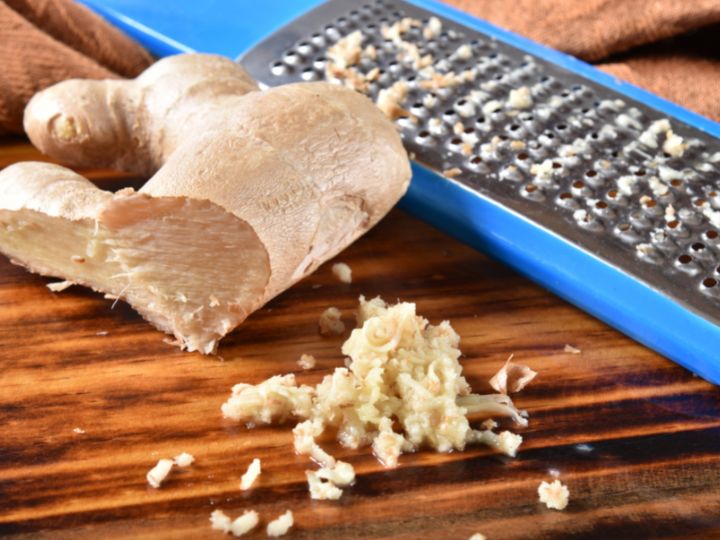
It’s a powerful digestive aid that stimulates movement through the gastrointestinal tract, helping the stomach and bowels to empty, making it useful for detoxing and in reducing the chances of developing bloat. It can also help to prevent and expel gas, relieving trapped gas discomfort.
Ginger reduces nausea in humans and dogs, so it’s also a great option for motion sickness and illnesses that cause nausea or vomiting.
The compounds in ginger – specifically the gingerols and shogaols, among others, give ginger its potent properties. It can help to lower blood pressure, improve cognition, fight cancer cells, and improve circulation. Some holistic vets also use it as a natural heartworm treatment and preventative. It’s even been shown to slow the growth of breast cancer in mice and to kill certain cancer cells in a test tube environment.
It’s powerful. It’s an anti-inflammatory that can help with all kinds of conditions and act as a natural pain reliever. And it can reduce the side effects of prescribed medication. And it’s a potent immune booster.
I could go on and on and on. But you get the gist – ginger is awesome, and you can see why I love it!
Why Are Blueberries So Good for Dogs?
Blueberries are amazing for dogs – and for us, too. These tiny, colorful berries are incredible. And, interestingly, did you know that, in Voyagers National Park, in late summer, blueberries make up two-thirds of the diet of adult wolves? Two thirds!

Blueberries contain more antioxidants than any other food, alongside a special antioxidant that isn’t found in many foods, making these berries extra valuable. Antioxidants fight free radicals, or cell oxidation and oxidative stress that comes from aging, drugs, and diet. If left unchecked, free radicals cause age-related diseases like diabetes, arthritis, and dementia. And can cause enough damage to DNA to cause cancer and other cell mutations. But blueberries can help fight this chain of events.
These little berries can inhibit tumor growth, regulate and lower blood sugar, and reduce inflammation. They’re rich in vitamins and trace minerals, and they’re amazingly good for the brain. Multiple studies have shown that blueberries can improve cognition and combat age-related degeneration and oxidative stress, because they contain an antioxidant that can cross the blood-brain barrier.
Again, I could go on and on and on – blueberries are awesome and their value has been extensively documented and studied. But I’ll just say this: Blueberries are powerful and extremely valuable to you and your dogs.
Why Is There Coconut in These Dog Biscuits?
Dogs love coconut, it adds nice texture, and like all the other ingredients, it’s of benefit. In this case, the shredded coconut (as long as it’s pure and doesn’t contain a bunch of other crap like sugar and preservatives) promotes skin and coat health. It’s also great for helping to reduce itchiness, yeast problems, and hot spots.
The coconut oil is great for the skin and it’s an anti-inflammatory, too. Coconut oil contains large quantities of medium chain fatty acids, which make it so good for your dog. It’s good for balancing the thyroid and helping with weight loss and the reduction of fat deposits.
Because it’s easily absorbable, your dog metabolizes the oil rapidly and gets an energy boost that can encourage more activity to help with more weight loss. Plus it increases stamina so your doggo can play, run, and walk for longer.
Coconut is another brain aid. It provides the brain with ketones for brain-specific energy, helping nerve and brain function and helping to stave off dementia.
Why Use Pumpkin?
It’s high in soluble fiber, so great for balancing the intestine and helping with constipation and diarrhea, as well as conditions like colitis and IBS. Pumpkin is a great, bioavailable source of vitamins A, E, and C as well as copper, potassium, manganese, and iron, making it an amazing food for brain, eye, and skin, and immune system health.
Pumpkin also contains antioxidants called carotenoids, which reduce the risk of developing cancer and degenerative diseases. It’s also good for bone and heart health, and has been shown to slow the damage associated with aging.
It’s good for the skin, too. And the high quantity of souble fiber helps to bulk out and firm up poop, efficiently emptying the bowel and the anal glands. And, if your dog suffers from constipation, the pumpkin fiber can work the other way, softening up the packed poop and helping it ease through and out.
And, for obese and always hungry dogs, pumpkin is a great dietary addition, because it helps them to feel fuller for longer.
Spice Safety for Dogs
Now, because these are gingerbread cookies, you may be tempted to add the usual Holiday spices, but don’t! Yes, you can add ceylon cinnamon, which is beneficial for dogs, and tasty, too. But please don’t add nutmeg! It’s very dangerous for dogs, and can have some serious side effects, even in tiny amounts. And you should avoid cassia cinnamon, too, which has much higher quantities of coumarin, which is toxic in large doses and can cause digestive pain and distress.
Recipe Variations for Ginger Blueberry Dog Treats
If you’ve read my other homemade dog food and treat recipes, you know I’m all for encouraging you to experiment and find what works for your dogs. So here’s a few ideas for these treats.
Can You Make These Gingerbread Dog Treats Vegan?
I’m not into “vegan” dog food or treats unless it’s a medical necessity. However, I also don’t shy away from plant-based treats like these. And, some dogs can’t tolerate eggs. So in this case, yes, you can make these into vegan dog treats by switching out the egg for chia eggs. 1 tbsp of chia seeds to 2 tbsps of water makes one chia egg. Let it sit for 5 minutes to gel, then use in place of an egg in a recipe.
Adding Supplements to These Healthy Dog Treats
My dogs, as I noted earlier, are fussy little monkeys. And there are just some things that they do not like to eat – like any powdered supplement, or their tooth cleaning seaweed granules. So I hide them in treats like these. You can do the same with basically any supplement that doesn’t contain live cultures (the baking and dehydrating would kill them and render them useless). Just don’t add too much because you don’t want your dog to taste the icky stuff over the ginger and blueberries.
How to Make These Ginger Dog Treats Meaty
If you feel like you just have to feed your dog something meaty, that’s okay! You can boost the healthful properties of these treats and make ’em “meaty” by adding bone broth in place of milk. Bone broth is easy to make – check out my slow cooker bone broth recipe or my Instant Pot bone broth recipe.
Make the broth and just switch out the milk for the broth. You can even toss in the shreds of meat from the broth right into the biscuit batter (just remember to remove all of the bone – even the tiny crumbly pieces).
How to Store These Fruity Dog Biscuits
I store these gingerbread dog treats in an airtight container in a cool spot in the pantry. Like most dog biscuits, these will stay fresher for longer if you keep them cool and dry. Moisture is not the friend of dog biscuits. Make sure you let them cool completely before you put them in the airtight container. They should last for at least 2 weeks.
And, if, like me, you like to make a big batch of batter all at once, it’s a great idea that saves you time and makes sure you don’t waste any ginger or blueberries. Once you’re done, just freeze the leftover batter. I freeze mine in multiple smaller bags so I can just grab a bag, defrost it, and fill a few trays with biscuits next time I’m running low.
Blueberry Ginger Dog Treat Recipe

These blueberry ginger dog treats are packed full of goodness, they're easy to make, they store well, and your dogs will love them. Plus, you can snack on them, too! And they're really yummy!
Ingredients
- 1 cup coconut flour
- 1/2 cup oat flour
- 1 cup pumpkin
- 1/2 cup desiccated/shredded coconut
- 2 tbsp psyllium husk powder
- 1/4 cup coconut oil
- Thumb-size piece of ginger root, grated (2 tbsps, grated)
- 1 cup coconut milk
- 1 cup blueberries
- 2 eggs
Instructions
- Melt the coconut oil and set it aside to cool a little (but don't leave it so long that it hardens again).
- Add all the dry ingredients to the bowl of your food processor and pulse to combine.
- Grate the ginger and add to the bowl of the food processor.
- Add the pumpkin, coconut milk, blueberries (fresh or frozen), eggs, and coconut oil.
- (Optional) add any supplements, herbs, or other extras at this point.
- Blitz in the food processor until fairly smooth. Usually less than a minute. You might need to pause and scrape down the sides a few times to get it well combined.
- If the mixture is too dry, add a little more milk. If it's too wet, add a little more coconut flour or psyllium husk.
- I don't usually bother to prep the molds with oil, as with good quality silicone, the finished treats tend to pop right out without sticking. But if you want, spray a little olive oil spray into each well.
- Use your straight spatula and spread into the molds.
- Pop them in the oven and cook on 350°F/180°C for 10-12 minutes, until golden and slightly firm to the touch.
- Let cool for a few minutes, then turn out of the molds.
- If using a dehydrator, place them on a mesh rack and into the dehydrator to dry out for 4 to 8 hours on a low setting.
- If you don't have a dehydrator, turn the oven on to its lowest temperature, place the unmolded treats on a baking sheet, and place them in the oven. Prop the oven door slightly open with something that's ovenproof, and leave the treats there overnight.
- Store in an airtight container and let your dog enjoy!
Recommended Products
As an Amazon Associate and member of other affiliate programs, I earn from qualifying purchases.


Hi there,
Thank you for this wonderful-looking recipe!! 🙂
Have you ever tried this in something like a Pyramid or Dot Pan?
I’m trying to find healthy recipes using only/mostly coconut flour and have not been successful so far — all attempts have ended up with dry, crumbly, hollow treats…
How thick do you make your mixture/batter for this one – I imagine with all that flour (esp. coconut) it would be quite thick? Most recipes I see with silicon moulds call for pancake batter consistency, but I don’t 100% know what that means, or whether it’s correct for firm, not-hollow treats!
Any advice you could give a fellow dog-lover and total non-baker would be HUGELY appreciated! 🙂 ♥
Hi Sarah,
Thank you for commenting! I make this batter pretty thick – almost like a soft dough. Or like buttercream frosting – I spread it with a spatula into the dot or pyramid pans. The stiffer it is, the harder it is to spread, but it’s worth the work, and you can always add more milk or an egg or two to loosen it up. Or more pumpkin. This recipe is nice and versatile. And you could even eliminate the oat flour entirely. The recipe will still work, but the dough/batter will be a little thinner. But the biscuits should still turn out just fine. Let me know how you get on and if you have any more questions! 🙂