
Affiliate disclosure: This post may contain affiliate links. Please see full disclosure.

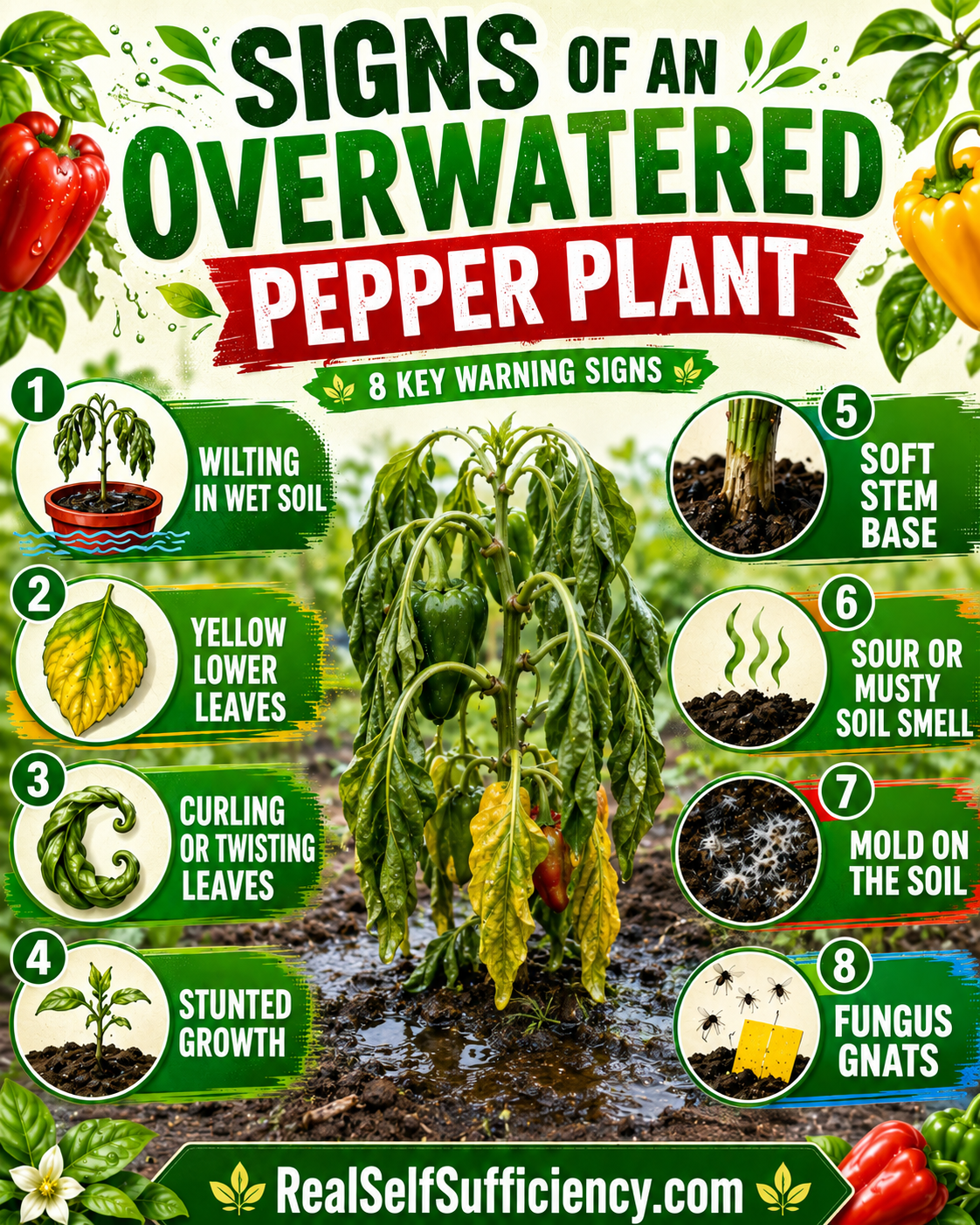
Stop watering, move the plant into shade, and don’t add another drop until the soil dries out two to three inches down. That’s the fix for an overwatered pepper plant, and every hour those roots sit in saturated soil is an hour they’re being starved of oxygen.
As an organic permaculture specialist, I see this mistake constantly with pepper plants specifically, more than with almost any other vegetable I grow. Peppers are far less forgiving of wet feet than tomatoes or squash, and the plants that end up overwatered are almost always the ones getting the most attention, not the ones being neglected.
Below, I’ll walk you through how to confirm it really is overwatering, the full recovery process, and how to stop it happening again. Move through the fix steps quickly once you’ve confirmed the diagnosis. The longer those roots sit soaked, the more permanent the damage becomes.
What Does an Overwatered Pepper Plant Look Like?
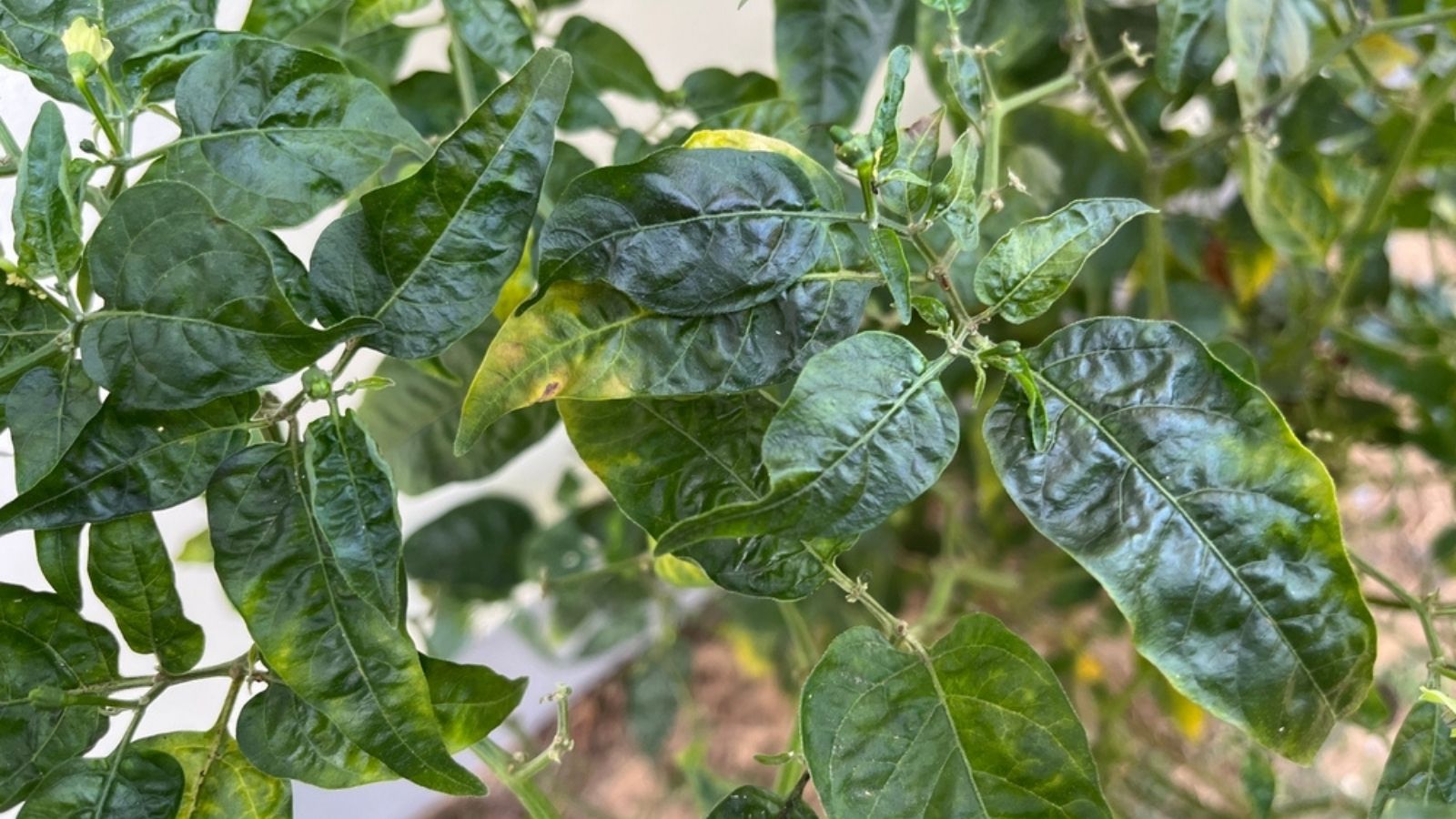
An overwatered pepper plant wilts even though the soil is damp, its leaves curl or turn yellow starting with the lower, older growth, and the base of the stem may feel soft or the soil may smell sour rather than earthy.
The wilting is what throws most gardeners off. A drooping pepper plant looks exactly like a thirsty one, so the instinct is almost always to water more. Check the soil before you do anything else. If it’s already wet and the plant is still drooping, you’re dealing with too much water, not too little.
Other signs worth watching for include leaves that curl or twist without an obvious pest problem, yellowing that starts on the bottom leaves and works upward, stunted growth even though the plant looked healthy weeks ago, and mold or a musty smell at the soil surface. If your peppers are in containers or growing indoors, small flying insects called fungus gnats hovering around the soil are another giveaway. They breed in consistently damp soil and mostly disappear once you let the surface dry out between waterings.
Stop Watering Your Pepper Plants Immediately
If you see these signs, stop watering immediately. Resist the urge to give just a little more water as the leaves wilt and yellow, since that instinct is exactly what got the plant into trouble in the first place. Focus on recovery, and don’t water again until the soil dries out.
For potted peppers, push a finger two to three inches into the soil. If it’s still damp at that depth, hold off. For in-ground plants, dig down about six inches to see how moist the soil really is, since surface dryness can be misleading when the ground underneath is still saturated.
Move Your Peppers to a Shady Spot
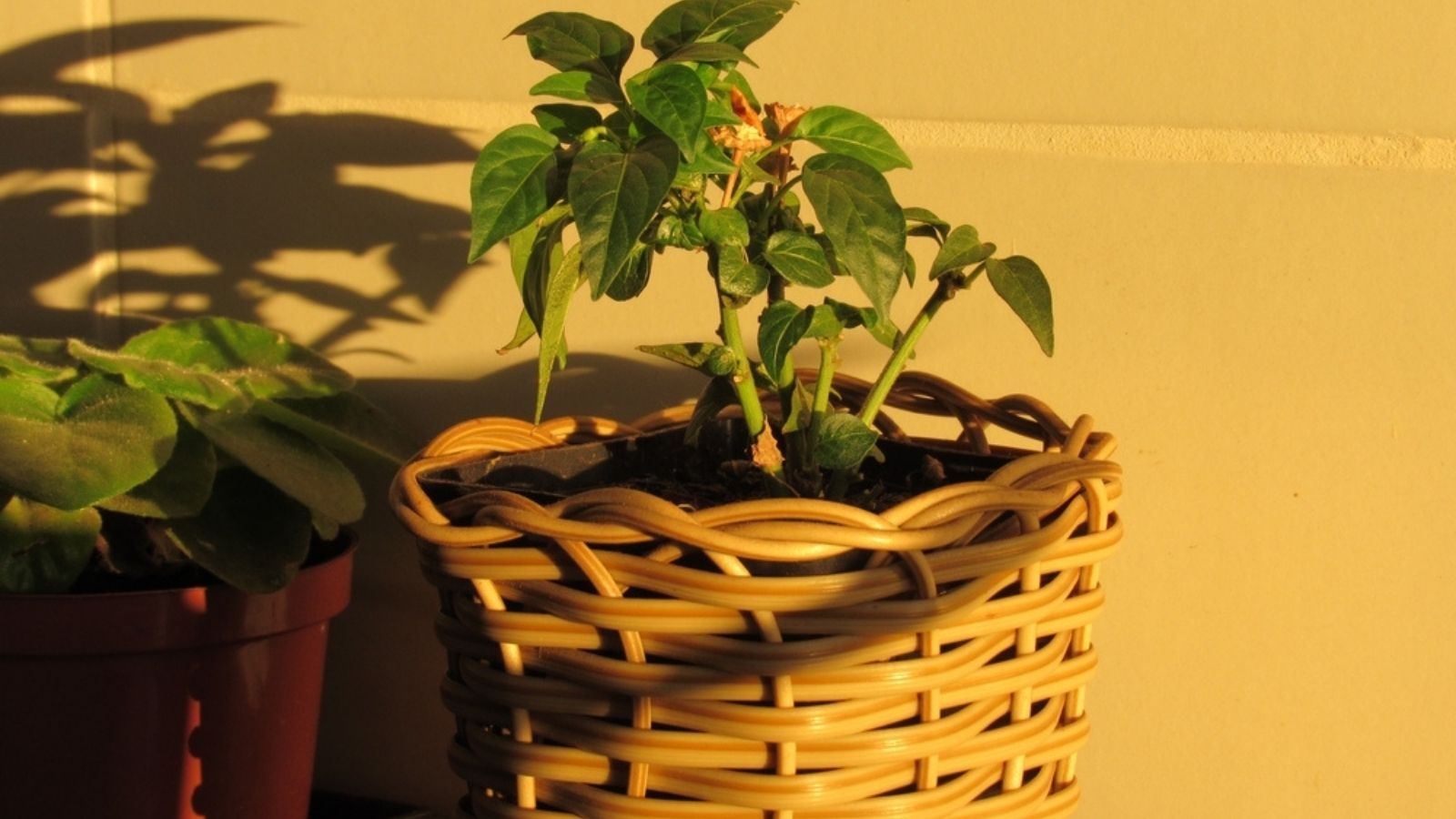
When your pepper plants are waterlogged, it may seem strange to move them to a shady spot. After all, won’t sunlight help dry up the water?
It’s actually the fact that the sun will dry out the plant quickly that’s the problem. Overwatering already stresses the plant, and forcing rapid evaporation in an effort to fix it only adds more stress on top. Instead, move your plants somewhere shaded. The water will still evaporate, just at a slower pace, so the plant isn’t shocked any further.
Potted plants are easy to move into shade. Outdoor pepper plants in the ground can’t be moved, so you’ll need to bring the shade to them instead, using stakes and a length of shade cloth over the affected plants.
RELATED READING: What Temperature Is Too Cold for Peppers?
Fix Insufficient Drainage
While overwatering is the primary problem, poor drainage is almost always a contributing factor, since good drainage would have let the excess water run off before the roots sat in it for long.
For potted peppers, clear any blocked drainage holes first, and add more holes if the pot doesn’t have enough. One piece of advice you’ll see everywhere, adding a layer of gravel or rocks in the bottom of the pot, actually works against you. A gravel layer doesn’t drain the soil above it faster. Instead the water collects, or perches, right above the gravel until that layer of soil is fully saturated, which pushes the wettest part of the pot closer to the roots rather than further away. Skip the gravel. If your potting mix drains slowly, work in perlite or coarse sand instead, which improves drainage throughout the whole pot rather than just at the bottom.
For in-ground peppers, improving drainage takes more work. The most reliable fix is replanting on a mound. Build up the soil where you’ll plant the pepper so surplus water drains further into the ground and away from the roots, rather than collecting where the stem meets the soil.
Remove Dying Leaves and Check for Root Rot
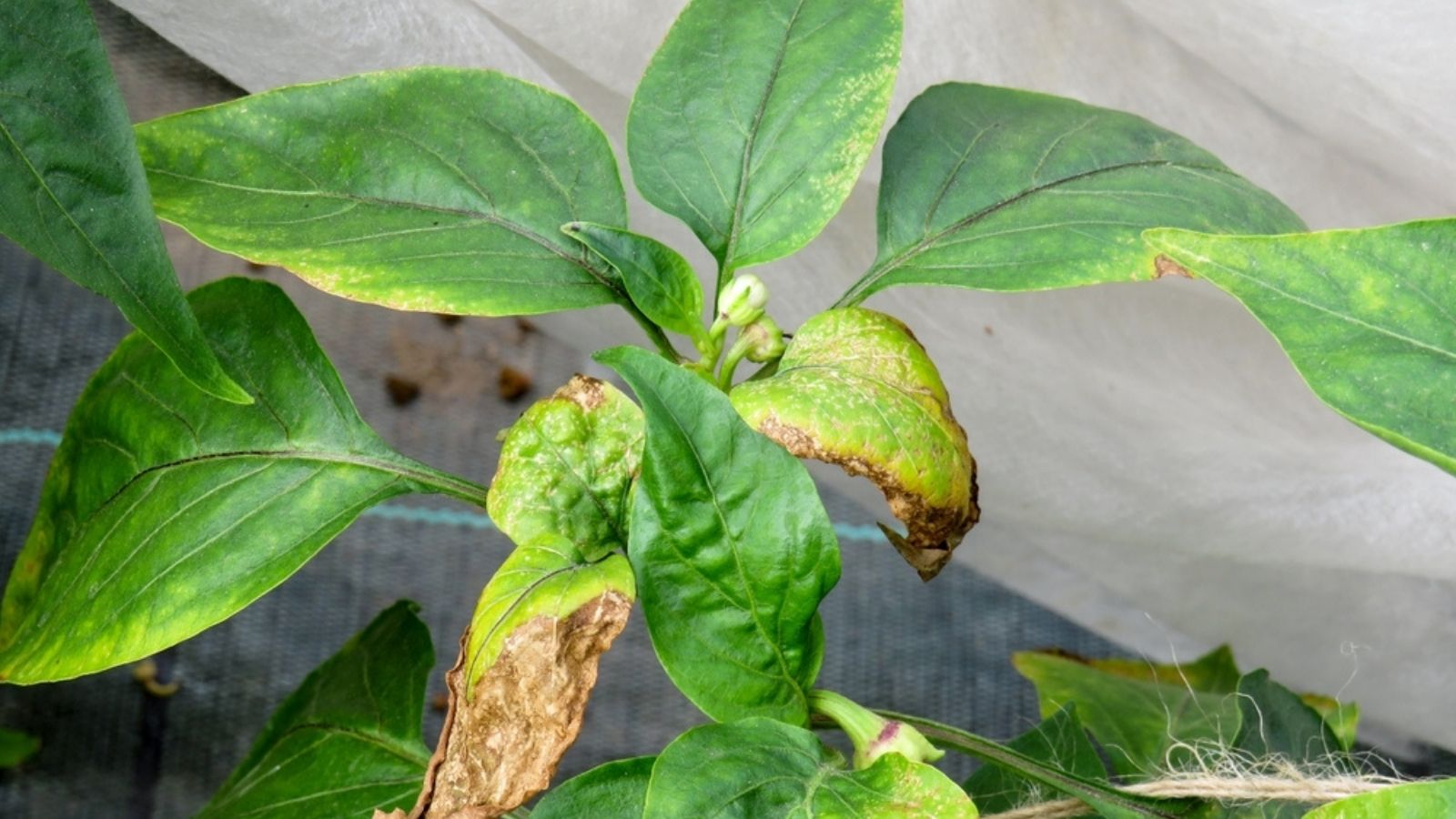
Depending on how long your peppers sat in wet soil, they may already show damage, and pruning the parts with no hope of recovering is necessary to get the plant back to full health.
In minor cases, the leaves are wilted and starting to turn yellow. If that’s all you’re seeing, there’s no need to prune anything yet.
In more serious cases, where the roots have been short of oxygen for a while, you’re looking at root rot. Root rot is the decay of a plant’s root system caused by waterlogged, oxygen-starved soil, and it’s the most serious consequence of overwatering. To check for it, gently ease the plant out of its pot, or dig carefully around the base of an in-ground plant, and look at the roots directly. Healthy roots are firm and white or tan. Rotted roots turn brown or black, feel soft and mushy, and often smell bad.
If you find rot, trim away the affected roots with clean, sharp scissors or pruners, cutting back to firm, healthy tissue. Rinse the remaining roots gently to remove waterlogged soil, then repot into fresh, well-draining potting mix rather than reusing the old, saturated soil. For in-ground plants, you can’t replace the surrounding soil as easily, so lean harder on the mounding and drainage fixes above to stop the problem recurring in the same spot.
At the same time, prune the dying leaves so the plant can put its energy into recovery instead of trying to support tissue that’s already lost. While the plant may look ragged for a while after pruning, with proper care you’ll see new leaves before long.
RELATED POST: Understanding the Pepper Plant Life Cycle
Slowly Bring Back the Direct Sunlight
Once your pepper has dried out, it’s time to reintroduce it to full sunlight, but do this slowly, since a sudden change back to full sun will stress the plant all over again.
Start with just a few hours of morning sun, then transition to full sun over the following several days. Move potted plants back into position gradually, or adjust the temporary shade you built for in-ground plants a little more each day.
Prevent It From Happening Again
The best way to avoid another round of overwatering is to check the soil before you water rather than watering on a fixed schedule. Peppers generally need about an inch of water a week, applied at the base of the plant rather than overhead, since wet foliage encourages disease on top of whatever the overwatering has already caused.
Sandy soil drains fast and dries out sooner, so it usually needs more frequent watering than heavy clay soil, which holds moisture much longer. Container-grown peppers dry out faster than in-ground plants too, since there’s less soil to hold reserve moisture, so don’t assume the same schedule works for both. When in doubt, check the soil with your finger before you reach for the watering can. It’s a thirty-second habit that will save you this entire recovery process next time.
FAQs
How long does it take a pepper plant to recover from overwatering?
It depends on how much damage was done before you caught it. A plant with wilted or yellowing leaves but no root rot often perks up within a week or two of drying out and correcting the drainage. A plant with significant root rot takes longer, since it has to regrow the roots it lost before it can support new leaf growth, and some badly affected plants don’t recover at all. Watch for new leaf growth as your sign that the plant is on the mend.
Can an overwatered pepper plant be saved?
Yes, in most cases, as long as you catch it before root rot sets in severely. Plants with wilted or yellowing leaves and firm, healthy roots underneath almost always bounce back once you correct the watering and drainage. Plants with extensive black or mushy roots have a much harder road, since a root system that’s mostly rotted away can’t support the plant no matter how well you manage everything above the soil.
Why is my pepper plant still wilting after I stopped watering?
Wilting that continues after you’ve cut back on water usually means the roots are already damaged and can’t take up water properly, even though there’s moisture available in the soil. This is the most confusing part of overwatering, since the fix, less water, doesn’t produce an immediate improvement the way it would with a genuinely thirsty plant. Check the roots directly rather than assuming the plant needs more water just because it still looks droopy.
Should I fertilize an overwatered pepper plant to help it recover?
No, hold off on fertilizing until the plant is clearly recovering, with new leaf growth showing. A stressed root system that’s already struggling to take up water and oxygen can be damaged further by fertilizer salts, and a plant focused on repairing its roots doesn’t need the extra demands that come with processing added nutrients.
Overwatering is one of the easiest pepper problems to fix and one of the easiest to prevent once you know what you’re looking for. Check the soil, not the calendar, and you’ll rarely find yourself back here.
You might also like
How to Prune Pepper Plants for Optimal Health and Bigger Harvests