
Affiliate disclosure: This post may contain affiliate links. Please see full disclosure.

Disclosure: This post contains affiliate links. Click here to read my affiliate policy.
Cucumber leaves turning yellow can be a result of nutrient deficiencies and soil imbalance, pests and diseases, improper watering, and generally poor conditions.
I love growing cucumber plants. They’re reasonably easy to grow, inside or out, and it’s just so satisfying to go and pick a cucumber fresh from the plant and take a big, juicy bite out of it.

But however much experience you have, there are times when you’ll encounter yellow cucumber leaves. Then it’s time to figure out why so you can try to fix the issue and get your cucumber plants back to full health for a big harvest. We’ll also take a look at how to limit the chance of developing issues in the first place.
- Understanding the Basics of Cucumber Plant Growth
- Signs of Healthy and Unhealthy Cucumber Leaves
- The Causes of Yellow Cucumber Leaves
- Nutrient Deficiencies
- Watering Issues
- Pests and Diseases
- Environmental Factors Affecting Cucumber Leaves
- Preventative Measures to Keep Cucumber Leaves Healthy
- Effective Solutions for Yellowing Cucumber Leaves
Understanding the Basics of Cucumber Plant Growth
Before we delve into the causes of yellowing leaves, let’s take a moment to understand the basic growth requirements for a healthy cucumber plant.
Cucumbers go through several stages of growth, from germination and seedling growth to flowering, fruiting, and finally, senescence (a fancy term for aging and eventual death).
A cucumber plant thrives in well-draining, fertile soil with a pH of 6.0 to 7. They also need plenty of sunlight, lots of nutrients (in balance), and consistent moisture. These are all essential components to keeping cucumber plant leaves green and fending off plant diseases and pest attacks, as weaker plants are more susceptible to other problems.
Signs of Healthy and Unhealthy Cucumber Leaves
Being able to recognize the signs of healthy and unhealthy cucumber leaves is key to addressing potential issues before they become more severe.
What healthy cucumber leaves look like
Healthy cucumber leaves are large, green, and vibrant. They should be firm, without any signs of wilting, yellowing, or spotting.
Symptoms of unhealthy cucumber leaves
On the other hand, unhealthy leaves may appear wilted, yellow, or have yellow spots. They may also show signs of damage from pests or diseases. Identifying these symptoms early is crucial to saving your cucumber plants.
The Causes of Yellow Cucumber Leaves
There are several reasons why your cucumber leaves may be turning yellow. And many of these may also cause your cucumbers not to flower, or to produce lots of flowers but not set fruit. Let’s explore some of the most common causes.

Nutrient Deficiencies
Inadequate nutrient levels can lead to yellow cucumber leaves. Here are some of the most common deficiencies:
Nitrogen Deficiency
Nitrogen is a critical nutrient for all plants, including cucumbers. It plays a vital role in the formation of chlorophyll, which is essential for photosynthesis and gives plants their green color. A nitrogen deficiency can have a significant impact on the overall health and productivity of your cucumber plants.
Symptoms of Nitrogen Deficiency in Cucumbers
- Yellowing leaves: The most noticeable symptom of nitrogen deficiency is the yellowing of older leaves, typically starting at the base of the plant and progressing upwards. This occurs because the plant is reallocating nitrogen from older leaves to support new growth.
- Stunted growth: Nitrogen deficiency can slow down the overall growth rate of cucumber plants, resulting in smaller, less productive plants.
- Poor fruit set: Insufficient nitrogen can lead to fewer flowers and lower fruit production.
- Weak, spindly stems: Nitrogen deficiency can cause cucumber plants to develop weak, thin stems that may struggle to support the weight of the fruit.
Potassium Deficiency
Potassium is a vital nutrient that plays several critical roles in the overall health and well-being of cucumber plants. It is essential for various plant processes, such as water regulation, enzyme activation, and stress tolerance.
Symptoms of Potassium Deficiency in Cucumbers
- Yellowing and browning of leaf edges: The most prominent sign of potassium deficiency in cucumber plants is the yellowing and browning of the leaf margins, often referred to as “scorching.” This can be accompanied by a general yellowing of the leaves and may eventually lead to leaf curling or wilting.
- Reduced fruit quality: Insufficient potassium can result in smaller, misshapen cucumbers with poor flavor.
- Weak stems and roots: A lack of potassium can cause weak, spindly stems and poorly developed root systems, making the plants more susceptible to environmental stressors.
- Increased susceptibility to pests and diseases: Potassium plays a role in strengthening plant cell walls, and a deficiency can make cucumber plants more vulnerable to attacks from pests and diseases.
Magnesium Deficiency
Magnesium is an essential nutrient for cucumber plants and plays a critical role in the photosynthesis process. It is a key component of chlorophyll, the green pigment responsible for capturing sunlight and converting it into energy for the plant.
Symptoms of Magnesium Deficiency in Cucumbers
- Interveinal chlorosis: The primary symptom of magnesium deficiency in cucumber plants is the development of yellow patches between the leaf veins, also known as interveinal chlorosis. This typically starts on the older, lower leaves and progresses upwards.
- Leaf curling and wilting: As the deficiency becomes more severe, the affected leaves may begin to curl and wilt.
- Reduced growth and yield: Magnesium deficiency can stunt plant growth and lead to a decreased cucumber yield.
- Poor fruit quality: Insufficient magnesium can result in smaller, less flavorful cucumbers.
Iron Deficiency
Iron is a vital micronutrient required by cucumber plants for various processes, including chlorophyll production, which is essential for photosynthesis.
Symptoms of Iron Deficiency in Cucumbers
- Chlorosis: The most evident symptom of iron deficiency in cucumber plants is chlorosis, characterized by leaves turning yellow while the veins remain green. This usually starts with the youngest leaves at the top of the plant and may progress to older leaves if the deficiency is not addressed.
- Stunted growth: Iron deficiency can inhibit plant growth, resulting in smaller, less productive cucumber plants.
- Leaf curling and dropping: In severe cases, affected leaves may curl and eventually drop off the plant.
- Reduced fruit yield and quality: Insufficient iron can lead to lower fruit production and smaller, less flavorful cucumbers.
Watering Issues
Both overwatering and underwatering can cause yellowing cucumber leaves.
Overwatering
Overwatering is a common problem that can lead to several issues in cucumber plants, including root rot, nutrient imbalances, and yellowing leaves. It is crucial to strike the right balance in providing your cucumber plants with the moisture they need without causing harm.
Symptoms of Overwatering Cucumbers
- Yellowing leaves: Excess water can lead to poor nutrient uptake, causing the leaves to turn yellow and wilt.
- Root rot: Overly wet conditions can encourage the growth of fungi and bacteria, leading to root rot and eventual plant death.
- Mold and mildew: Excess moisture can create a conducive environment for mold and mildew growth on leaves and stems.
- Reduced fruit quality: Overwatered cucumber plants may produce fewer, smaller, and less flavorful fruits.
Underwatering
Underwatering can be just as detrimental to cucumber plants as overwatering, causing leaves to turn yellow and eventually wilt due to inadequate hydration.
Symptoms of Underwatering Cucumbers
- Yellowing leaves: Insufficient water can cause cucumber leaves to turn yellow and wilt as the plant struggles to maintain hydration.
- Stunted growth: Underwatered cucumber plants may experience slow growth and reduced fruit production.
- Fruit drop: Severe underwatering can cause flowers and developing fruits to drop prematurely.
- Dry, cracked soil: Underwatered plants will often be surrounded by dry, hard soil that may crack or pull away from the plant base.
Pests and Diseases
Various pests and diseases can lead to yellowing cucumber leaves, affecting the overall health and productivity of your plants.
Cucumber Mosaic Virus
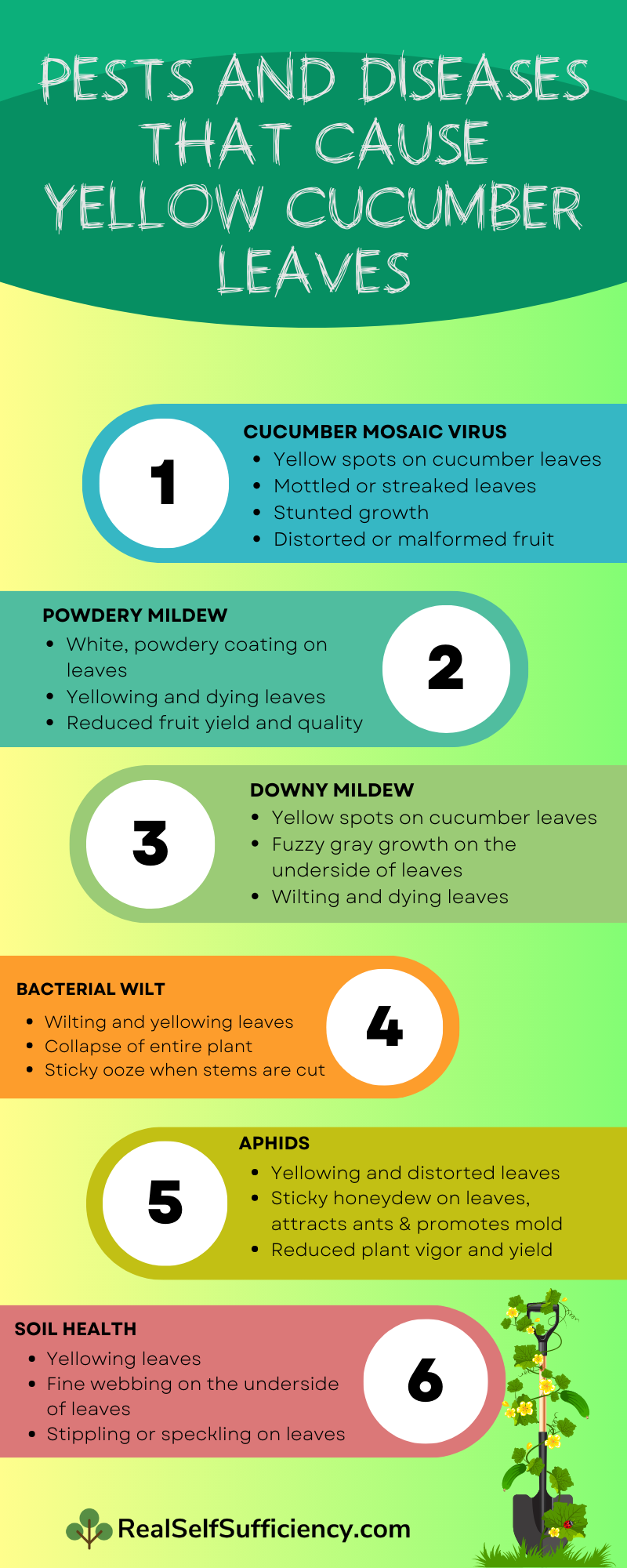
Cucumber Mosaic Virus (CMV) is a viral infection that affects cucumbers and other plants in the cucurbit family. The virus is typically spread by aphids and can cause a range of symptoms, including:
- Yellow spots on cucumber leaves
- Mottled or streaked leaves
- Stunted growth
- Distorted or malformed fruit
Powdery Mildew
Powdery mildew is a fungal disease that affects a wide range of plants, including cucumbers. Symptoms of powdery mildew include:
- White, powdery coating on leaves
- Yellowing and dying leaves
- Reduced fruit yield and quality
Downy mildew
Downy mildew is another fungal disease that affects cucumbers and other members of the cucurbit family. Symptoms of downy mildew include:
- Yellow spots on cucumber leaves
- Fuzzy gray growth on the underside of leaves
- Wilting and dying leaves

Bacterial Wilt
Bacterial wilt is a serious infection caused by the bacterium Erwinia tracheiphila, which affects cucumbers and other cucurbits. Symptoms of bacterial wilt include:
- Wilting and yellowing leaves
- Collapse of entire plant
- Sticky ooze when stems are cut
Aphids
Aphids are small insects that feed on plant sap, causing damage to cucumber leaves and other plant tissues. Symptoms of aphid infestation include:
- Yellowing and distorted leaves
- Sticky honeydew on leaves, which can attract ants and promote mold growth
- Reduced plant vigor and yield
Spider Mites
Spider mites are tiny pests that feed on plant sap, causing damage to cucumber leaves and other plant tissues. Symptoms of spider mite infestation include:
- Yellowing leaves
- Fine webbing on the underside of leaves
- Stippling or speckling on leaves
Environmental Factors Affecting Cucumber Leaves
The University of Maryland describes environmental stressors as one of the most significant reasons for cucumber leaves turning yellow. Environmental factors range from not enough sunlight to too much water.
Temperature Fluctuations
Cucumbers are sensitive to temperature changes, and extreme fluctuations can lead to yellowing leaves. Cold snaps, in particular, can be detrimental to cucumber plants.
Tips for managing temperature fluctuations:
- Harden off seedlings: Gradually expose your cucumber seedlings to outdoor conditions before transplanting them into the garden to help them acclimate to temperature changes.
- Use row covers or cold frames: Protect your cucumber plants from extreme temperature fluctuations by using row covers, cold frames, or other protective structures.
- Choose the right planting location: Plant cucumbers in a location that offers some protection from strong winds and extreme temperatures, such as near a fence or wall.
Sunlight Exposure
Inadequate sunlight can lead to yellowing leaves, while too much direct sun can cause sunscald, which appears as yellow or white patches.
Tips for managing sunlight exposure:
- Provide optimal sunlight: Ensure your cucumber plants receive at least 6 to 8 hours of direct sunlight per day for healthy growth and development.
- Use shade cloth: In areas with intense sunlight, consider using shade cloth to protect your cucumber plants from sunscald, which can cause yellow or white patches on leaves.

Soil Composition
Poor soil quality, especially soil with low organic matter, can result in nutrient deficiencies and yellow leaves in cucumber plants.
Tips for improving soil composition:
- Amend the soil: Improve soil quality by adding compost, aged manure, or other organic matter to boost nutrient levels and improve soil structure.
- Use mulch: Applying organic mulch around your cucumber plants can help improve soil quality, conserve moisture, and moderate soil temperature.
Soil pH Levels
Improper soil pH can affect nutrient uptake in cucumber plants, leading to yellowing leaves. Cucumbers prefer slightly acidic soil with a pH of 6.0 to 7.0.
Tips for maintaining optimal soil pH:
- Test your soil: Use a soil test kit or send a sample to a soil testing lab to determine the pH of your garden soil.
- Adjust soil pH: If your soil pH is outside the optimal range for cucumbers, amend the soil with lime to raise the pH or sulfur to lower it. Follow the recommendations provided by your soil test results.
- Monitor soil pH: Regularly test your soil to ensure it remains within the optimal pH range for cucumber plants.
Preventative Measures to Keep Cucumber Leaves Healthy
Taking steps to prevent yellowing leaves can save you time and heartache later.
Selecting Resistant Cucumber Varieties
One effective way to reduce the risk of yellowing leaves is to choose cucumber varieties that have resistance to common diseases and pests. By selecting these hardier varieties, you can minimize the chances of your plants becoming infected or infested, leading to healthier, more vigorous growth.
When purchasing seeds or seedlings, check the labels or descriptions for information on disease and pest resistance, and opt for those varieties that best suit your garden’s specific needs.
Crop Rotation Strategies
Implementing crop rotation strategies is essential for maintaining healthy soil and preventing the buildup of diseases and pests that can lead to yellowing leaves.
Each year, avoid planting cucumbers or other members of the cucurbit family (such as melons, squash, or pumpkins) in the same location where they were grown the previous year. Instead, rotate your crops by planting cucumbers in a different area of your garden, ideally following a different plant family, such as legumes or brassicas.
This practice helps break the disease and pest cycles and keeps the soil healthy.
Proper Watering Techniques
Proper watering is crucial for the health of your cucumber plants. Both overwatering and underwatering can lead to yellowing leaves, so it’s essential to monitor your plants closely and adjust your watering schedule accordingly.

Observe the soil moisture levels around your cucumber plants and adjust your watering routine to ensure they receive the right amount of moisture for optimal growth. Cucumber plants generally prefer evenly moist soil, but be cautious not to over-saturate the soil, as this can lead to root rot and other issues.
If you notice the soil is consistently dry, increase the frequency or duration of your watering to maintain adequate moisture. In contrast, if the soil is consistently wet, reduce the frequency of watering to avoid waterlogging and root rot.
Balanced Fertilization and Soil Health
Providing your cucumber plants with balanced fertilization ensures that they receive the proper nutrients required for healthy growth.
Incorporate organic matter or compost into the soil before planting, or use a balanced organic fertilizer to supply essential nutrients like nitrogen, phosphorus, and potassium. Take a look at these natural fertilizers you can make at home.
By offering the right balance of nutrients, you can promote vigorous growth and help prevent issues like yellowing leaves caused by nutrient deficiencies.
Be cautious not to over-fertilize, as excessive nutrient levels can harm your plants and cause additional problems.
Just get in the habit of building good soil health. Make your own compost and add it to your soil regularly. Compost in place if you can. Apply nutrient-rich top dressings, make your own balanced fertilizers, test your soil, rotate your crops, plant nitrogen fixers.
Remember, your soil is the foundation of all of your crops and plants, so its health is critical. Focus on making it amazingly healthy.
Effective Solutions for Yellowing Cucumber Leaves
If you’re already experiencing yellow cucumber leaves, here are some solutions to help:
Addressing Nutrient Deficiencies
Nutrient deficiencies can be a significant cause of yellowing leaves in cucumber plants. To determine if your plants are suffering from a deficiency, you should first test your soil. Soil testing kits are readily available and will help you identify any nutrient imbalances.
Once you have the results, you can amend the soil with the appropriate nutrients, such as adding nitrogen, potassium, or magnesium, to correct any deficiencies. Keep in mind that it’s essential to follow the recommendations provided by the soil test to avoid over-fertilizing, which can harm your plants.
Pest and Disease Management
Implement natural pest and disease control methods to combat pests and diseases affecting your cucumber plants.
Neem oil works great as long as you haven’t got cats. You can also use insecticidal soap, companion planting, and your own garlic spray.
You can find the recipe for a simple garlic spray in my post on getting rid of grasshoppers on tomato plants. It works for cucumbers, too, and for more than just grasshoppers.
One of the most effective natural pest management strategies for insects like aphids and spider mites is to use a strong spray of water to dislodge them. And, if you’ve got a bad aphid problem, controlling aphids naturally is much easier if you can also control ants, because there’s a high probability that if your aphid problem is bad, you’ll have ants farming aphids.
Watching for and getting rid of cucumber beetles is critical in controlling diseases, as these bugs are notorious bacteria carriers.
Water using drip irrigation, too, so water doesn’t splash up onto the leaves and stems to reduce the risk of infection. And keep the area around your cucumbers as weed-free as possible to help keep pest numbers down and to promote good air circulation to prevent diseases that like damp, humid conditions.
Companion Planting Cucumbers
Now, my regular readers know that I love companion planting. This age-old technique just works. I can’t get enough of it. Every spare spot in my growing space is filled with a useful companion for something else growing near by.
For cucumbers, companion planting can help stave off pests and diseases and improve soil health, all of which can help stop your cucumber leaves turning yellow.
Here are my top companion planting choices for cucumbers:
- Marigolds: Marigolds emit a strong scent that repels various pests, such as aphids and beetles. They also produce compounds that are toxic to nematodes, microscopic worms that can damage cucumber roots.
- Nasturtiums: These vibrant flowers are known to deter cucumber beetles and aphids. They also act as a trap crop for blackfly, drawing them away from the cucumber plants.
- Radishes: Radishes help deter cucumber beetles and can also improve soil structure. Plant them near cucumber plants as a sacrificial crop to keep pests away.
- Sunflowers: These tall, sturdy plants can provide shade and support for cucumber vines. Sunflowers also attract pollinators, such as bees, which are essential for cucumber fruit production.
- Peas and beans: Legumes, like peas and beans, add nitrogen to the soil, which is vital for healthy leaf growth in cucumbers. They can also provide some shade and support for cucumber vines.
- Calendula: This medicinal flower attracts beneficial insects, such as ladybugs and lacewings, which prey on pests like aphids and spider mites.
- Dill: Dill attracts beneficial insects, such as parasitic wasps, that help control pests like aphids and spider mites. However, keep in mind that mature dill plants can stunt cucumber growth, so it’s best to grow young dill plants alongside cucumbers.
- Borage: This edible flower is known to deter tomato hornworms and can also attract pollinators, improving cucumber fruit set.