

Affiliate disclosure: This post may contain affiliate links. Please see full disclosure.

Companion planting herbs and flowers among your vegetables is the cheapest and most effective organic pest control strategy available, and these 16 plants cover every major threat in the vegetable garden from aphids to hornworm, slugs to squash bugs, without a single synthetic input.
As an organic permaculture specialist who grows or forages most of my own food, companion planting is the technique I’d keep if I could only keep one. I love companion planting. It’s the basis of my organic growing and the health of my plants and soil. It costs almost nothing to implement, it builds biodiversity that keeps getting richer over time, and once you understand which plants do which jobs, you can design a garden that largely takes care of its own pest problems. Whether you have several acres, a square foot garden, or a vertical garden, this list is where I’d start.
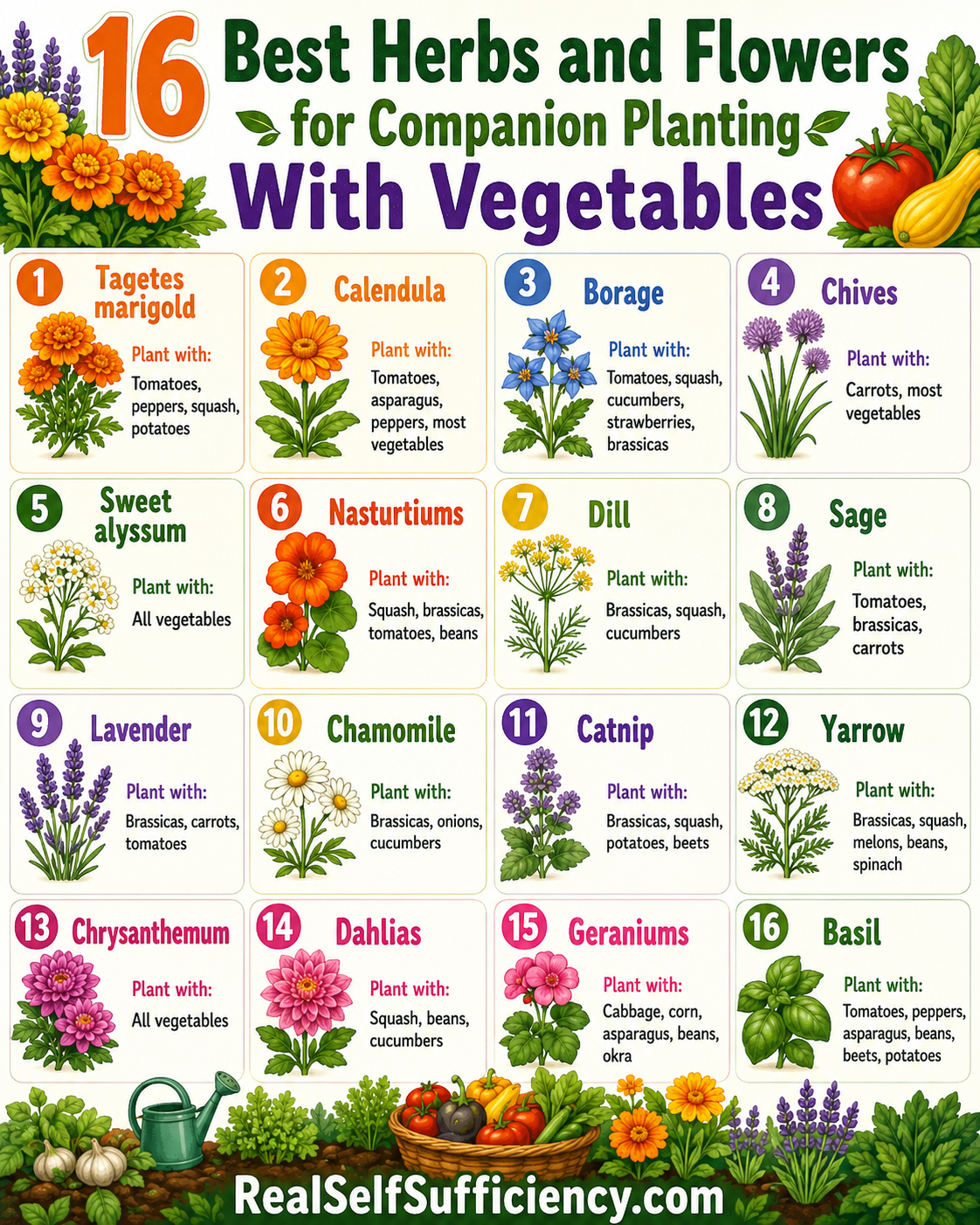
How companion planting herbs and flowers works
Companion planting is the practice of growing different plants together so they actively support one another, rather than simply occupying the same space. The benefits fall into four main categories, and the best companion plants deliver more than one simultaneously.
Pest deterrence is the most obvious. Aromatic herbs like sage, lavender, and catnip contain volatile compounds that confuse or repel insect pests by masking the scent of your vegetables, making them harder for pests to locate. Some plants work differently: nasturtiums and calendula act as trap crops, attracting pests onto themselves and drawing them away from your vegetables. Marigolds and dahlias take yet another approach, with roots that exude compounds directly into the soil to suppress nematodes.
Beneficial insect attraction is just as important as deterrence. Flowers like borage, yarrow, sweet alyssum, and chamomile draw in predatory insects: hoverflies, parasitic wasps, lacewings, and ladybugs that feed on the aphids, caterpillars, and beetles you don’t want. They also pull in pollinators, which directly improves fruit set on squash, cucumbers, beans, and tomatoes.
Soil improvement is the third mechanism. Plants like sweet alyssum can be dug in as green manure at season’s end to replenish nutrients. Chamomile is said to improve the uptake of calcium and potassium by neighboring plants, and yarrow’s deep root system actively improves the drainage and structure of heavy clay soil.
Weed suppression is the fourth benefit, and the most underrated. Low-growing plants like sweet alyssum spread quickly across bare soil, preventing weed establishment without any effort from you.
The most effective companion planted gardens use all four mechanisms at once. That’s the difference between dropping a few marigolds near your tomatoes and building a genuinely resilient, productive planting.
1. Companion Planting Tagetes Marigolds to Deter Nematodes and Trap Slugs
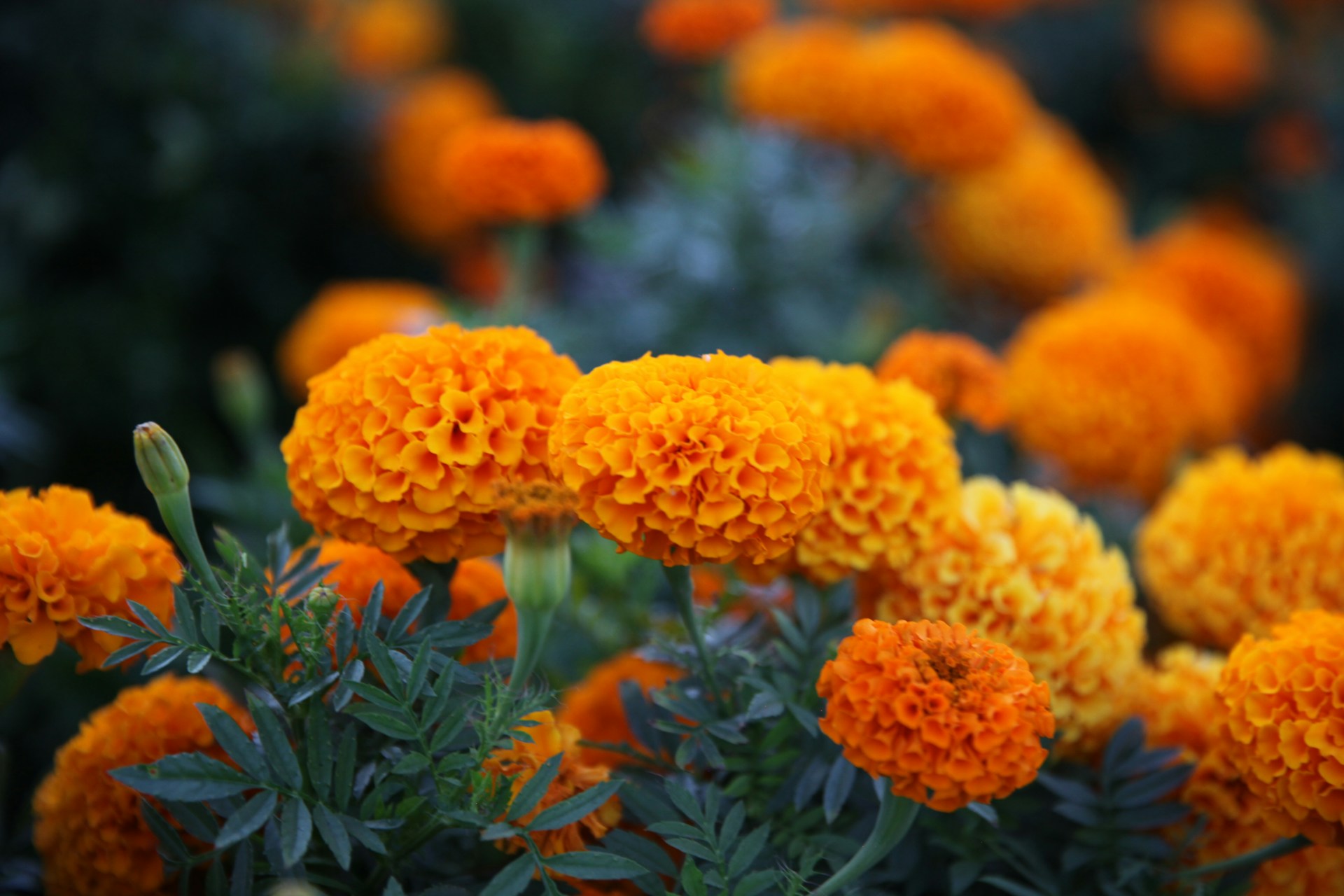
French and African marigolds (Tagetes patula and Tagetes erecta) are the single most useful flower you can add to a vegetable garden, primarily because their roots produce alpha-terthienyl, a compound that actively kills root-knot nematodes in the surrounding soil.
Beyond nematode suppression, Tagetes marigolds are brilliant for slug control. Slugs are drawn to them irresistibly, feasting on marigold leaves rather than your vegetable crops, which makes them a natural trap plant as well as a deterrent. They also repel whitefly, which is reason enough to plant them near tomatoes and peppers. I dot them throughout the entire vegetable garden in clusters rather than neat rows, and the coverage is noticeably better for it.
French marigolds (T. patula) are the strongest choice for nematode suppression and need to be grown as a solid planting in the affected area for at least one full season to make a measurable difference in nematode populations.
What Should You Never Plant With Tagetes Marigolds?
Keep Tagetes marigolds away from beans and brassicas. My family tradition is clear on this and it shows up consistently across companion planting resources, though I haven’t found a definitive biochemical reason. Until I do, I play it safe and keep them separate.
2. Companion Planting Calendula to Trap Aphids and Support Soil Health
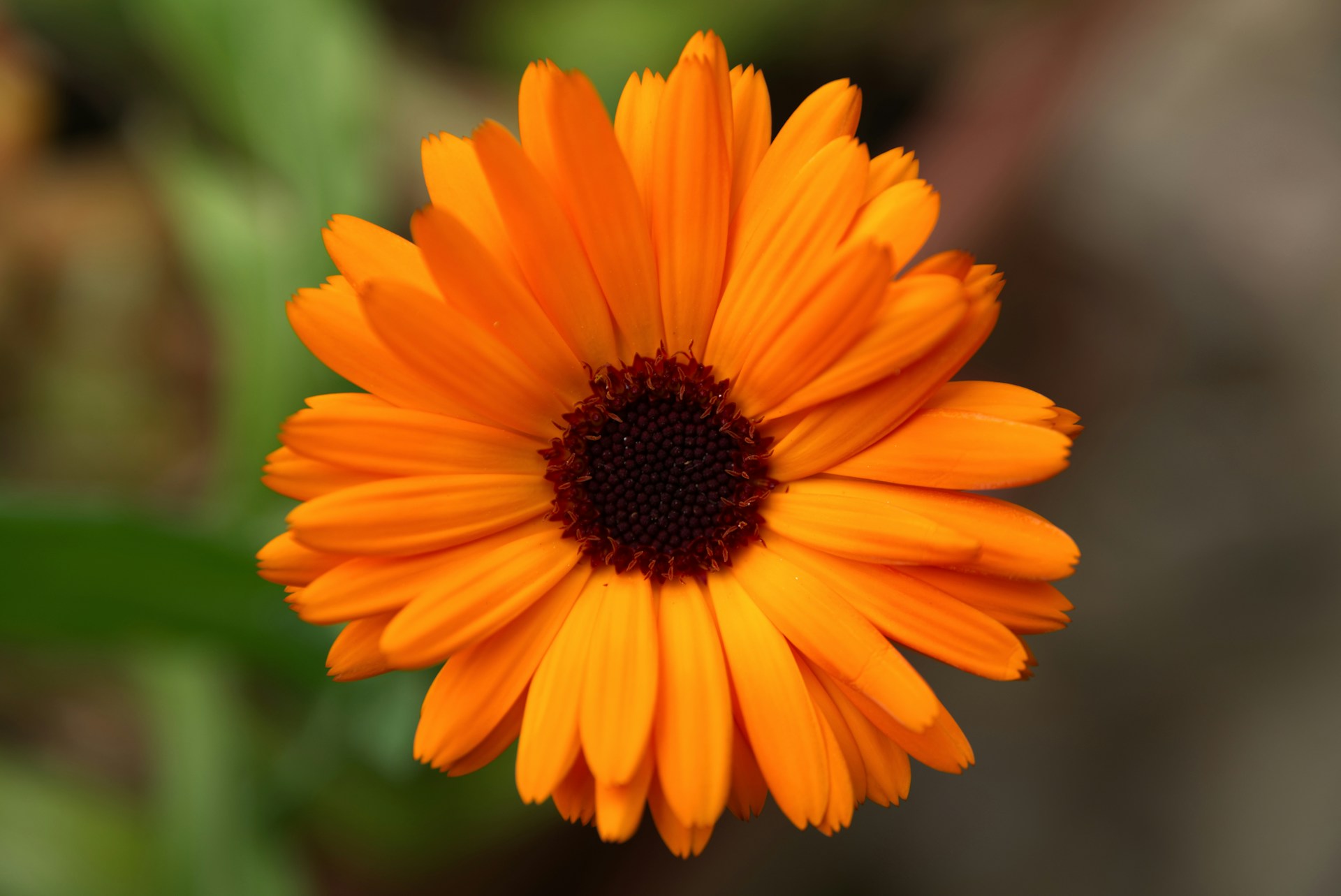
Calendula (Calendula officinalis) is the most effective aphid trap crop I grow, and it’s a completely different plant from the Tagetes marigolds above despite sharing a common name. Where Tagetes repels and kills pests, calendula works by attracting them: aphids and whitefly flock to calendula and cluster there instead of on your vegetables.
This trap cropping function makes calendula brilliant near tomatoes, asparagus, and peppers. Plant it in clusters throughout the vegetable garden rather than only at the border, so that pests encounter it before they reach your crops. Beyond pest management, calendula has antifungal properties that benefit neighboring plants and improves overall soil health as a green manure when dug in at season’s end.
Calendula is also edible and medicinal, which means it earns its place three times over in a homestead garden. I use Calendula flowers in skin preparations and herbal remedies, and I grow them from seed throughout the vegetable beds every year. They self-seed readily, so once established they come back without any effort on your part.
What Should You Avoid Companion Planting With Calendula?
Calendula is one of the most accommodating plants in the vegetable garden and has no significant negative effects on neighboring plants. Plant it freely and freely throughout your beds.
3. Companion Planting Borage to Attract Pollinators and Repel Hornworm
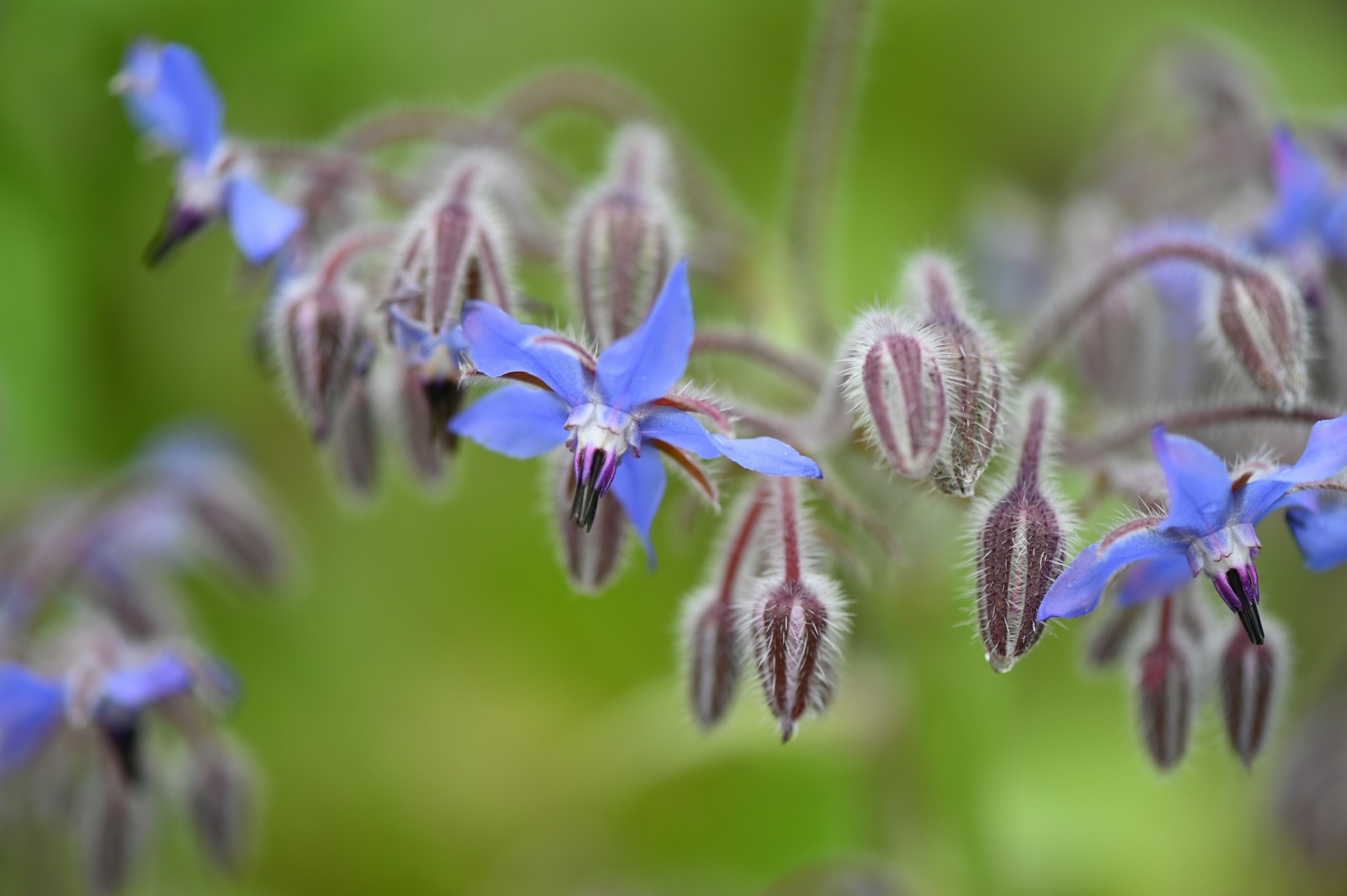
Borage (Borago officinalis) is one of the best all-round companion plants you can grow, and if you’re not already growing it, you should be. It draws pollinators in large numbers (bumblebees especially find it irresistible), repels tomato hornworm and cabbage worm, and is said to improve the growth and flavor of strawberries when planted nearby.
The small, blue, star-shaped flowers are edible, which matters to me because I want everything in my garden to earn its keep in more ways than one. I use them in salads and summer drinks throughout the season. The flowers bloom from early summer right through to first frost, giving pollinators a reliable food source for the whole growing season.
Plant borage near tomatoes, squash, cucumbers, strawberries, and brassicas. It’s particularly useful for squash and cucumbers, which need strong pollinator activity for good fruit set. Borage self-seeds prolifically, so plant it once and it finds its own way around the garden in subsequent years. I consider that a feature rather than a problem. It grows to about 18 to 24 inches tall and wide, so give it space to spread.
What Should You Avoid Companion Planting With Borage?
Borage gets along with almost everything in the vegetable garden. The one practical consideration is its size. At up to 24 inches across, it will shade smaller neighbors, so position it where its footprint is an asset rather than a problem.
4. Companion Plant Chives With Carrots
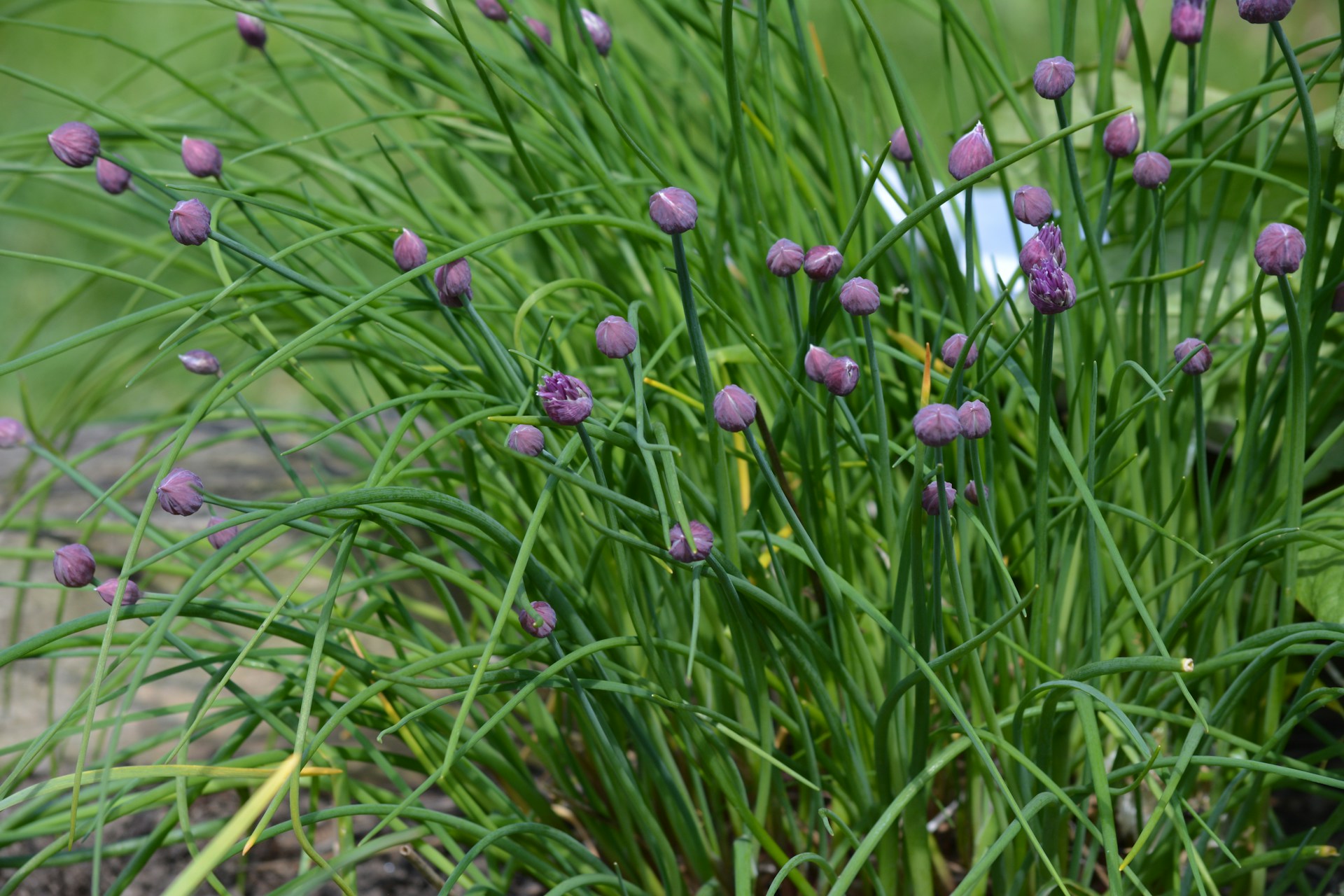
Chives are the best companion plant for carrots because they repel carrot fly, the most damaging pest for the carrot crop. Plant chives in rows alongside your carrot beds, or interplant them directly in the same bed for the strongest protection.
Chives also deter whitefly and aphids, which means they’re earning their keep beyond the carrot bed. They’re easy to grow from seed or division, taste great, and dry well for use throughout the winter. The mechanism is worth understanding: chives are members of the allium family, and alliums release sulfur compounds that confuse pests by masking the scent of neighboring plants. The same compounds that give chives their flavor are exactly what makes them work as a pest deterrent.
I grow chives throughout the vegetable garden rather than only near carrots, and they’re one of those plants where there’s genuinely no reason not to have them everywhere.
What Should You Never Plant With Chives?
Keep chives away from peas and beans. The antibacterial compounds that alliums release into the soil kill the beneficial bacteria that aid nitrogen-fixing on legume roots. Plant them too close and you’ll stunt growth and significantly reduce yield.
5. Companion Planting Sweet Alyssum to Smother Weeds and Attract Bees
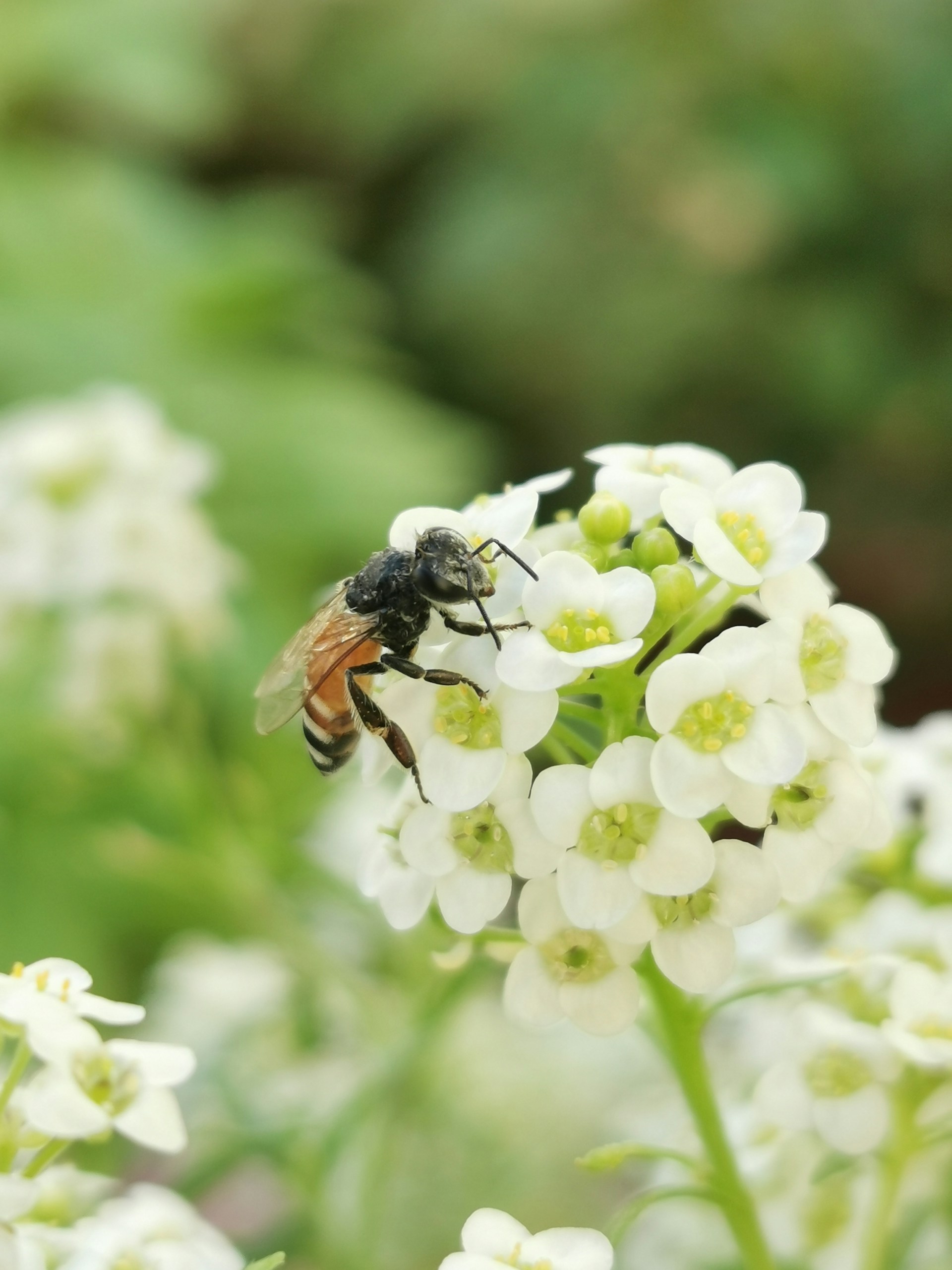
Sweet alyssum (Lobularia maritima) solves two garden problems simultaneously. It suppresses weeds by spreading into dense, low-growing mats across bare soil, and its fragrant flowers are magnets for bees and hoverflies whose larvae feed on aphids.
Plant sweet alyssum on bare earth between crop rows, at bed edges, or anywhere you don’t want to see weeds. It grows quickly to about 3 to 6 inches tall and spreads readily, filling gaps before weeds can establish. At the end of the season, dig the mats back into the soil as green manure to replenish nutrients. When in bloom, the flowers attract bees to help pollinate your vegetable crops.
The flowers come in white, pink, and purple and are fragrant enough to make the vegetable garden genuinely pleasant to spend time in. Sweet alyssum will also self-seed in most climates, becoming a very low-effort addition once it’s established.
What Should You Avoid Companion Planting With Sweet Alyssum?
Nothing. Sweet alyssum is genuinely compatible with every herb and vegetable in the garden. Plant it wherever you want weed suppression, pollinator attraction, or both.
6. Companion Plant Nasturtiums With Squash and More
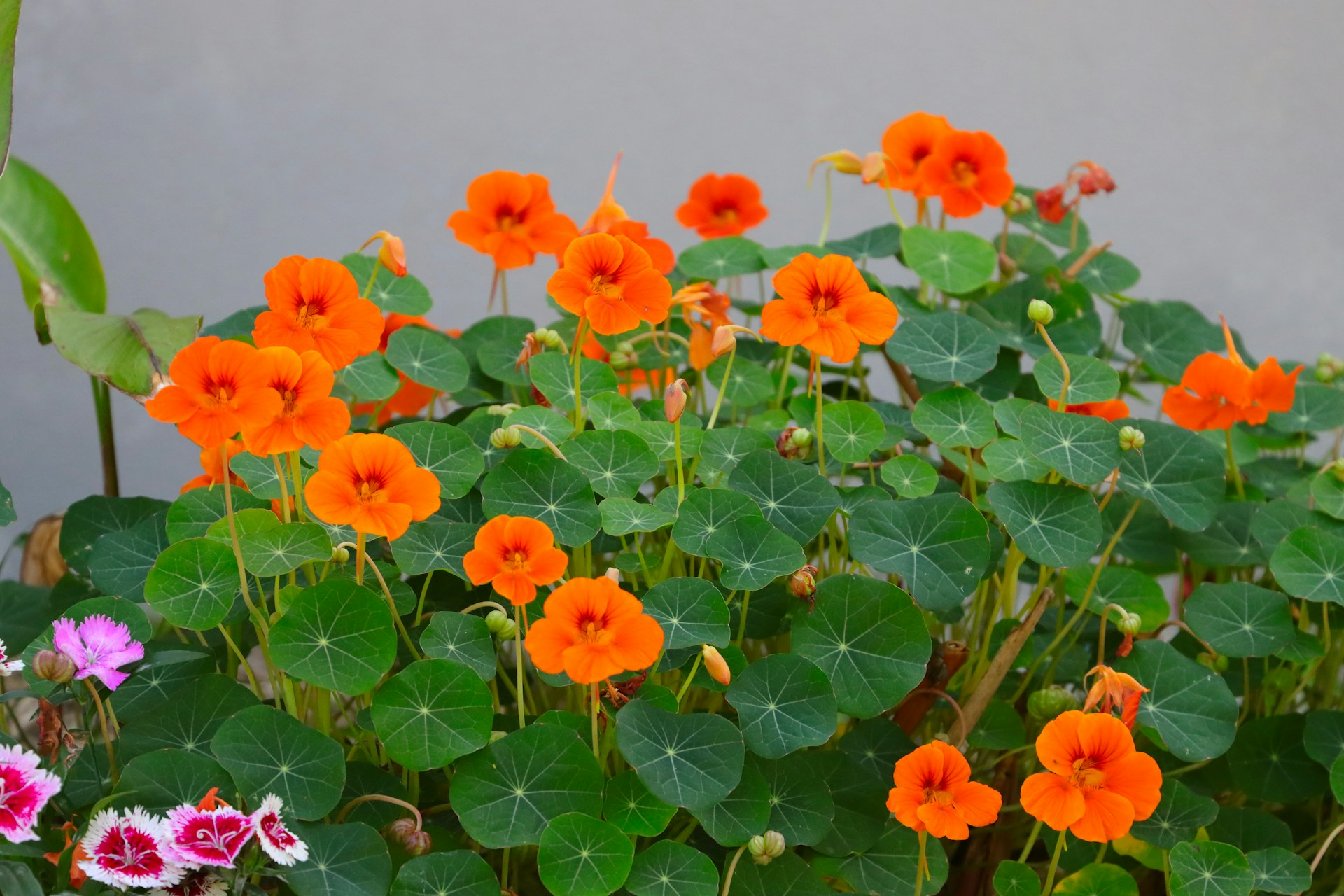
Nasturtiums are one of the most versatile companion plants in the garden, and one of my personal favorites because they’re excellent in the kitchen as well as in the bed. As a companion, they function primarily as a trap crop for aphids, drawing them onto themselves and away from neighboring plants. Their bright flowers then attract larger predatory insects that feed on those aphids.
Beyond aphid control, nasturtiums repel squash bugs, pumpkin beetles, and vine borers, making them essential near members of the squash family. They also deter common brassica pests like whitefly. Plant them at the base of squash plants, around brassica bed borders, and anywhere you’ve had aphid problems in previous seasons.
The whole plant is edible: flowers and leaves have a peppery flavor that works well in salads, and the seeds can be pickled as a caper substitute. On a homestead, that kind of multi-functionality is what earns a plant permanent space in the garden.
What Should You Avoid Companion Planting With Nasturtiums?
Nothing. Nasturtiums are safe companions for any herb or vegetable. Their trap cropping function is effective enough that you don’t need to worry about aphids migrating from nasturtiums to neighboring crops.
7. Companion Planting Dill With Squash and Brassicas
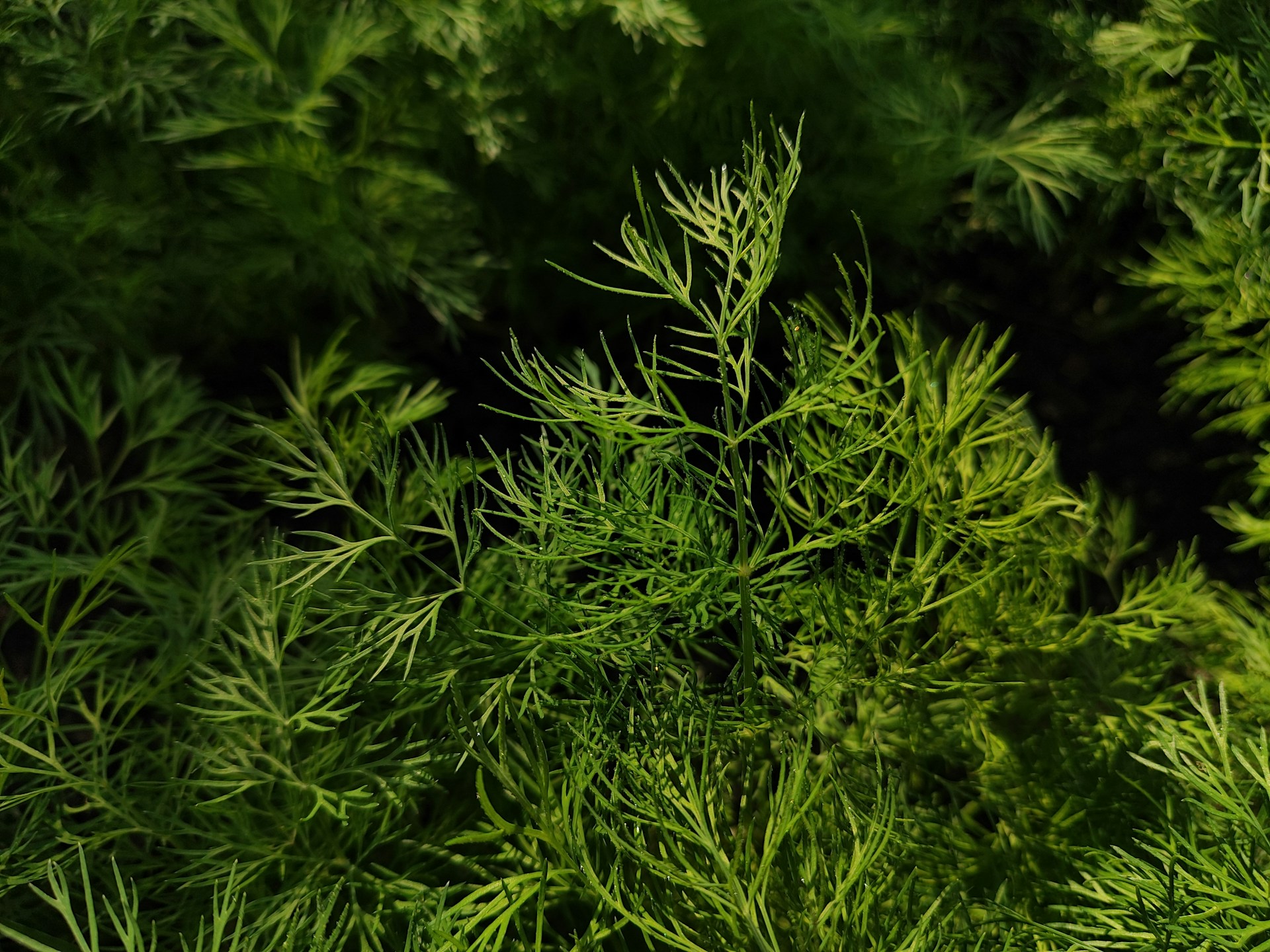
Dill is a strong choice for brassica growers because its scent actively deters cabbage worm, cabbage moths, and cabbage loopers. When it comes into flower, it also attracts predatory wasps, ladybugs, lacewings, and hoverflies that eat aphids and beetles attacking your squash and cabbage crops.
Let dill go to flower rather than cutting it back constantly. The flowers are what attract the beneficial insects, and a plant allowed to reach 2 to 3 feet and set its flat-topped flower heads is doing far more work in the garden than one kept trimmed for kitchen use. I grow dedicated companion dill that I don’t harvest, separate from a smaller kitchen patch nearer the house. That distinction is worth making once you understand how much the flowering matters.
Dill is also a versatile companion plant for peppers and improves the health and flavor of brassicas when planted nearby.
RELATED LINK: Companion Planting Peppers
What Should You Not Plant With Dill?
Keep dill away from tomatoes, peppers, and carrots. It attracts tomato hornworm and weakens members of the nightshade family, reducing their health, growth, and crop yield. It also attracts carrot fly, so keep dill and carrot beds well apart.
8. Companion Planting Sage to Deter Pests and Deepen Tomato Flavour
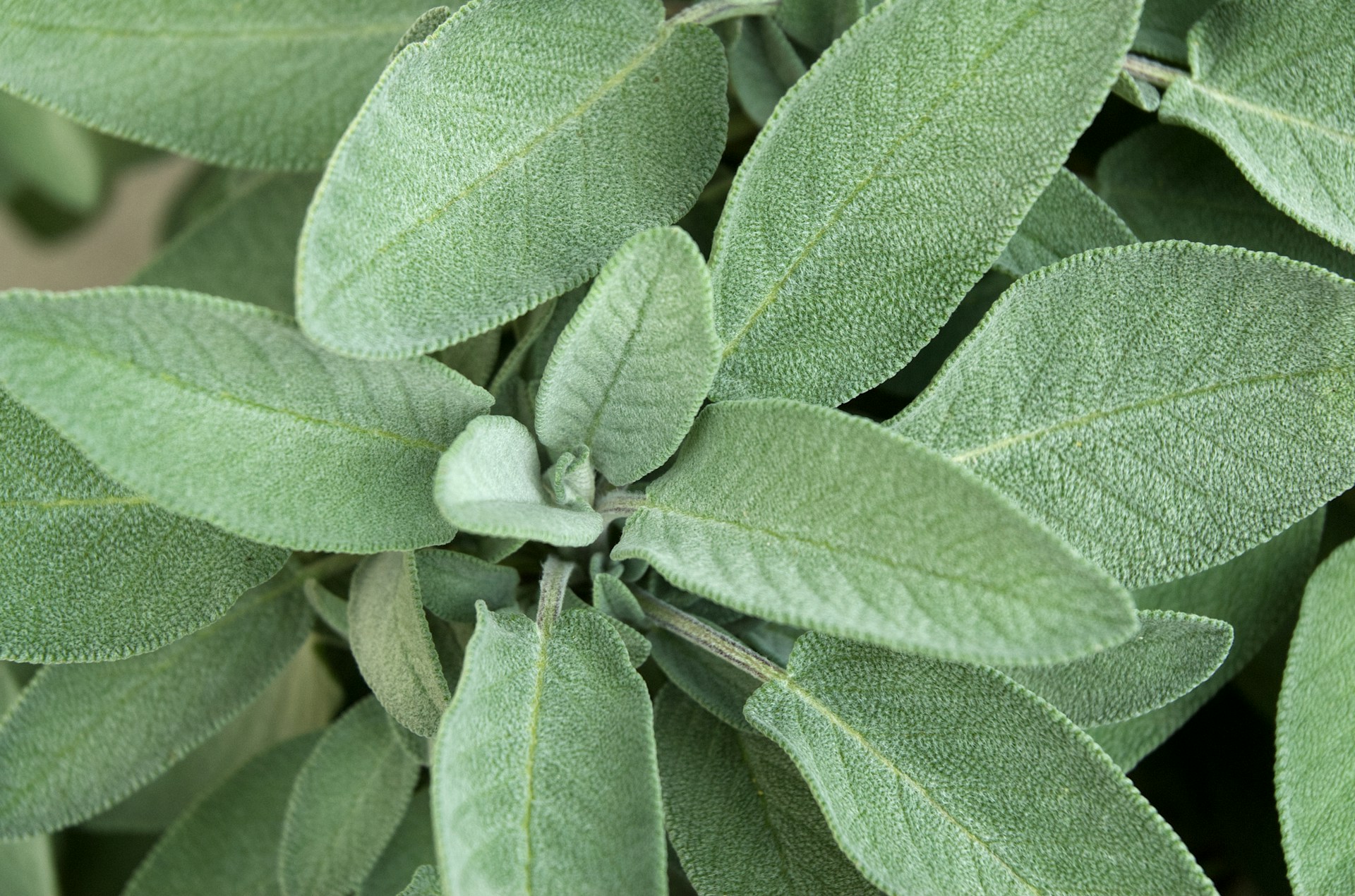
Sage is an outstanding companion for the cabbage family, carrots, and tomatoes, primarily because its strong aromatic compounds ward off cabbage moth, whitefly, and carrot fly. Companion planting sage with tomatoes both repels tomato hornworm and is widely reported by growers to deepen the flavor of the fruit, though the mechanism isn’t fully understood.
I grow several varieties throughout the vegetable garden and it’s worth planting more than you think you need. The aromatic deterrence effect dissipates with distance, so sage positioned only at the end of a long row won’t protect the other end. Interplant it throughout brassica and tomato beds rather than using it as a border plant. Sage is a perennial in most climates and hardy to around zone 4-5, so once established it costs you nothing beyond a hard cut-back in spring.
What Should You Avoid Companion Planting With Sage?
Never plant sage near cucumbers: it inhibits their growth and reduces yield. Also avoid planting it with alliums including onions, garlic, leeks, and chives. Alliums do best in moist conditions while sage requires dry, well-drained soil, so the growing requirements are simply incompatible.
9. Companion Planting Lavender to Repel Moths, Flies, and Mosquitoes
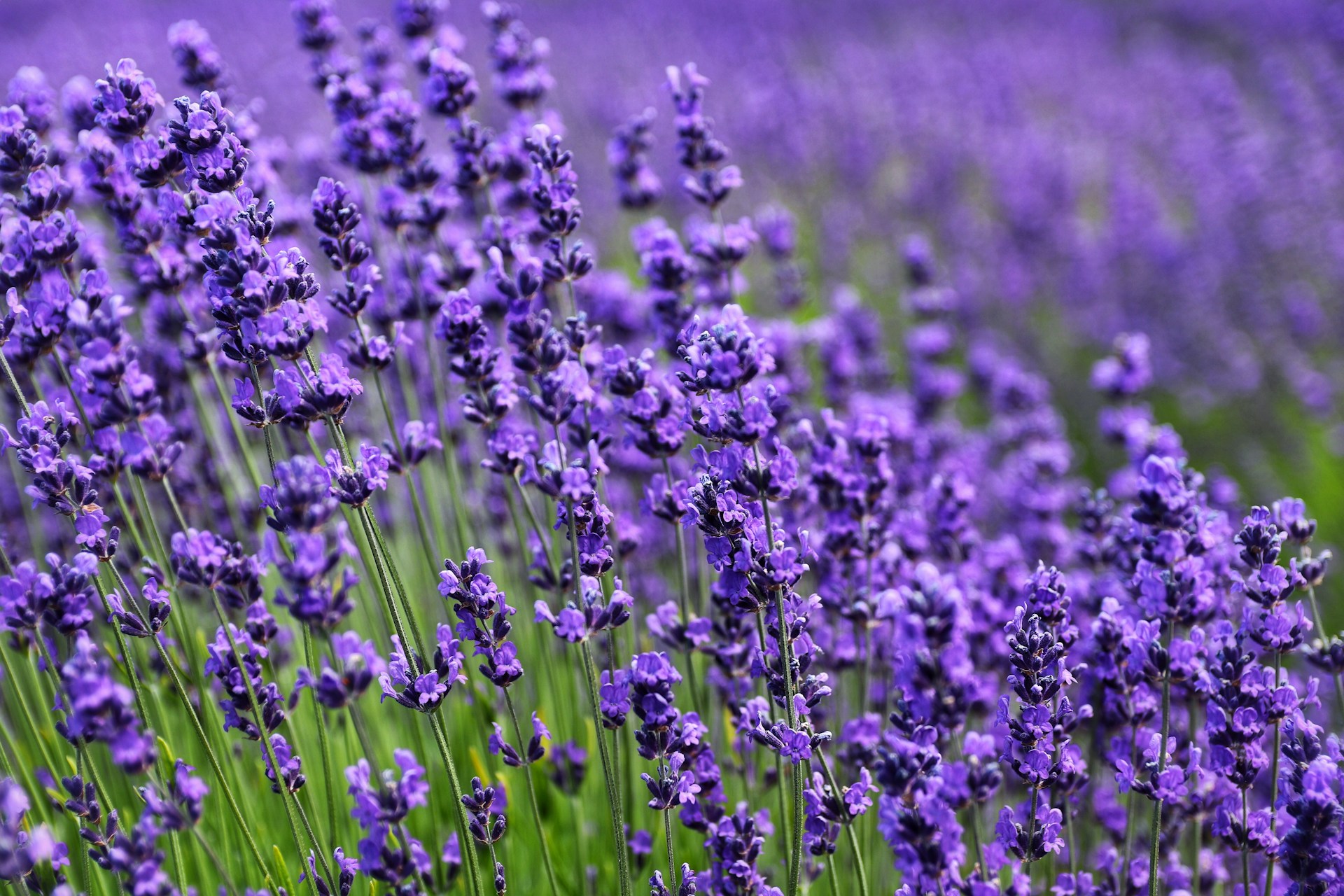
Lavender (Lavandula angustifolia) deters a wide range of flying pests including cabbage moths, flies, fleas, and mosquitoes, while simultaneously being one of the strongest bee attractors you can plant. That combination of pest deterrence and pollinator attraction makes it one of the most efficient companion plants per square foot in the garden.
Plant lavender at the edges of brassica beds to deter cabbage moths, or interplant with carrots and tomatoes for broader pest protection. It grows to about 18 to 24 inches tall and wide at maturity and is hardy in zones 5 to 9, which makes it a permanent fixture rather than an annual expense in most gardens. Once established, it’s extremely drought-tolerant and needs nothing beyond an annual cut-back after flowering.
The flowers are edible and the plant has well-established medicinal and aromatic uses, which is exactly the kind of multi-purpose plant that earns permanent space on a homestead. I use the dried flowers in kitchen preparations and sachets around the house as a natural moth deterrent, so it’s working even when it’s not in the ground.
What Should You Avoid Companion Planting With Lavender?
Lavender needs dry, well-drained soil in full sun. Don’t position it next to moisture-loving vegetables or any companion that needs frequent, heavy watering. It won’t thrive in heavy clay or consistently wet conditions, and planting it alongside water-hungry crops means either the lavender suffers or you compromise your watering regime for everything nearby.
10. Companion Planting Chamomile to Boost Neighbouring Plant Health
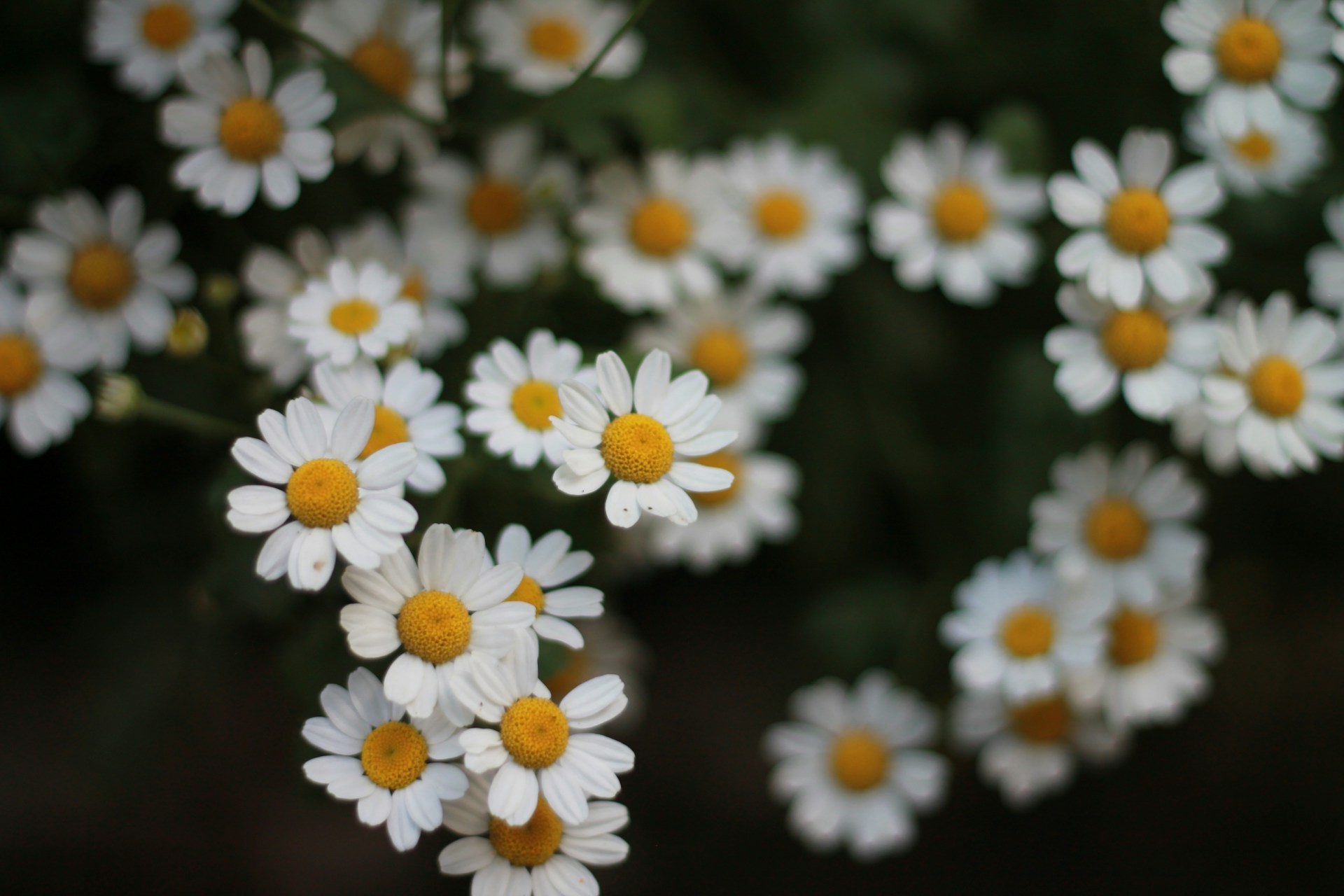
Chamomile has long been called the physician of the garden in permaculture tradition, and it earns that name by actively improving the health and vigor of neighboring plants, particularly brassicas, onions, and cucumbers. It’s said to improve the uptake of calcium and potassium in nearby plants, supporting stronger growth.
Beyond its effect on neighbors, chamomile flowers attract hoverflies and parasitic wasps that prey on aphids and other soft-bodied pests throughout the garden. German chamomile (Matricaria chamomilla) grows to about 24 inches and self-seeds readily; Roman chamomile (Chamaemelum nobile) is a low-growing perennial at 4 to 6 inches that works well as ground cover between taller vegetables.
As a home herbalist, I grow chamomile for the medicine cabinet and kitchen as well as the vegetable garden. The flowers make an excellent calming tea and have well-established anti-inflammatory properties, so the companion planting benefit is almost a bonus. Don’t let it get overcrowded: it needs enough airflow to prevent powdery mildew on its own foliage.
What Should You Avoid Companion Planting With Chamomile?
Chamomile is one of the most beneficial and broadly compatible plants in the garden. The main practical consideration is the self-seeding habit of German chamomile. Deadhead the flowers if you don’t want it spreading throughout the bed, or let it self-seed freely in a designated area where it won’t crowd more valuable crops.
11. Companion Planting Catnip to Repel Insects and Deter Rodents
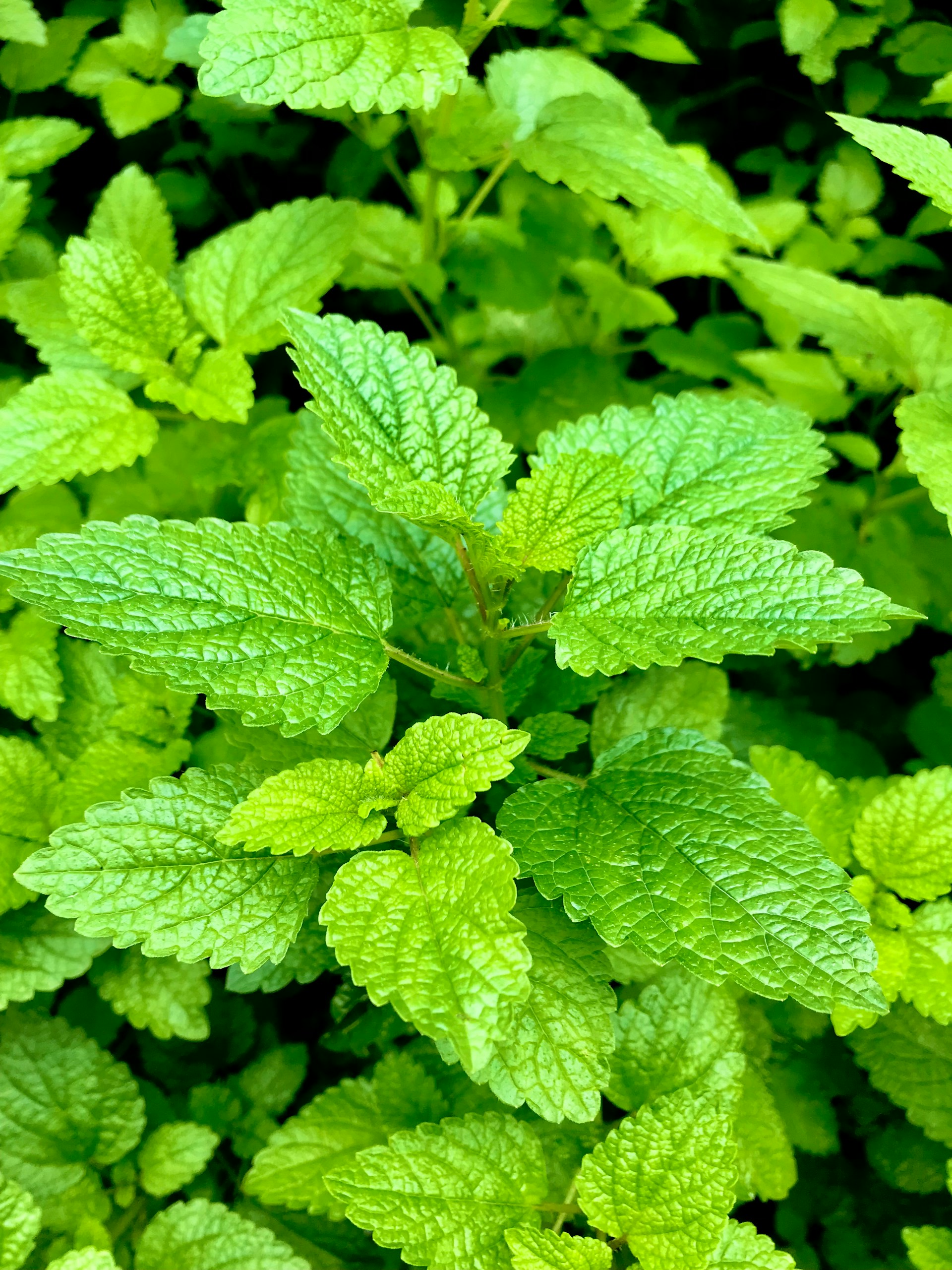
Catnip (Nepeta cataria) repels an impressive list of insect pests including ants, flea beetles, Japanese beetles, Colorado potato beetles, cabbage loopers, weevils, aphids, and squash beetles. The active compound is nepetalactone, a naturally occurring terpene that functions as a potent insect repellent.
Yes, growing catnip does attract cats, but that’s genuinely useful: cats keep rodent populations down, and a cat entranced by a catnip patch is too distracted to dig up your beds. Planting catnip as a border around crops vulnerable to voles and mice works well because rodents loathe the scent. My feeling is that the pungent oils are as abhorrent to mice and rats as they are to insects, though the theory that mice associate it with predators is also plausible.
Plant catnip alongside collards, beets, pumpkins, all squash varieties, brassicas, and potatoes.
What Should You Avoid Companion Planting With Catnip?
Catnip is a member of the mint family and is compatible with most vegetables, but its spreading habit is the thing to manage. Plant it directly in the soil and it will take over a bed within a season. Confine it to roomy containers placed strategically around the vegetable garden. That way you get the pest deterrence without losing a bed to catnip.
12. Companion Planting Yarrow to Attract Predators and Build Soil
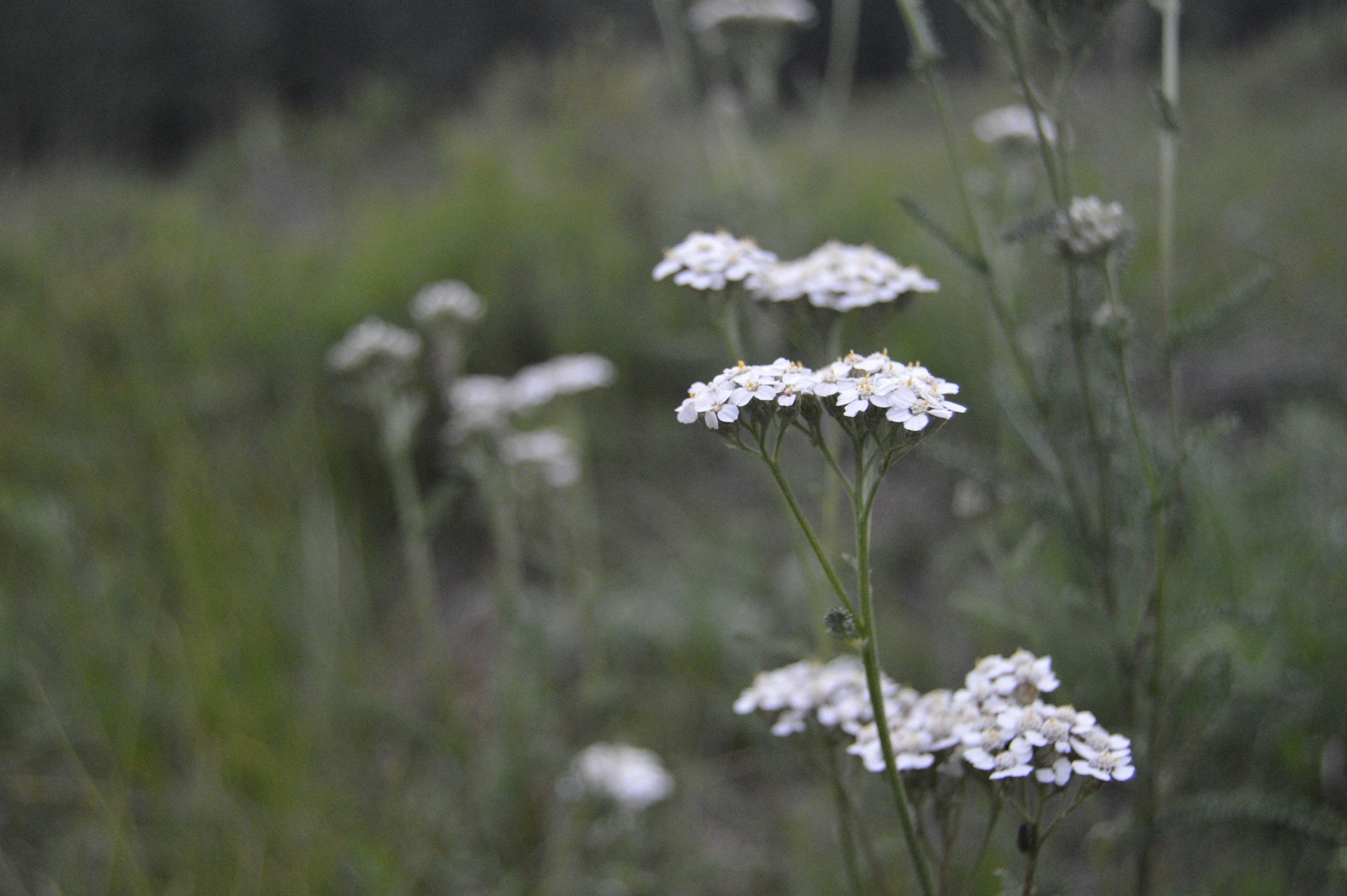
Yarrow (Achillea millefolium) is one of the hardest-working companion plants you can grow, attracting predatory wasps, hoverflies, lacewings, and ladybugs whose larvae and adults consume aphids, hornworms, and other soft-bodied pests in large quantities. Plant it throughout the vegetable garden rather than only at the perimeter, so beneficial insects have short distances to travel between their yarrow feeding station and your crops.
Beyond insect attraction, yarrow acts as an organic fertilizer, returning significant nutrients to the soil, and its deep, feathery root system actively improves the drainage and structure of heavy clay. If you have a compacted patch that nothing will grow in, plant yarrow there for a season or two as green manure before introducing vegetables.
I grow red, yellow, and white varieties. Yellow and white are more common, but I love the red for the bold color and grow the white specifically for herbal remedies as well as companion planting. Yarrow has a long tradition of medicinal use and is another plant that earns its space many times over. It stimulates the growth of aromatic herbs and helps keep brassicas, squashes, melons, beans, and spinach healthy and relatively pest-free.
What Should You Never Plant With Yarrow?
Yarrow grows happily with most plants in the garden. One important safety note: if you grow it for medicinal use, never plant yarrow near poison hemlock. They look remarkably similar, particularly to an inexperienced eye, and poison hemlock is lethal if ingested.
13. Companion Planting Chrysanthemums to Repel Insects
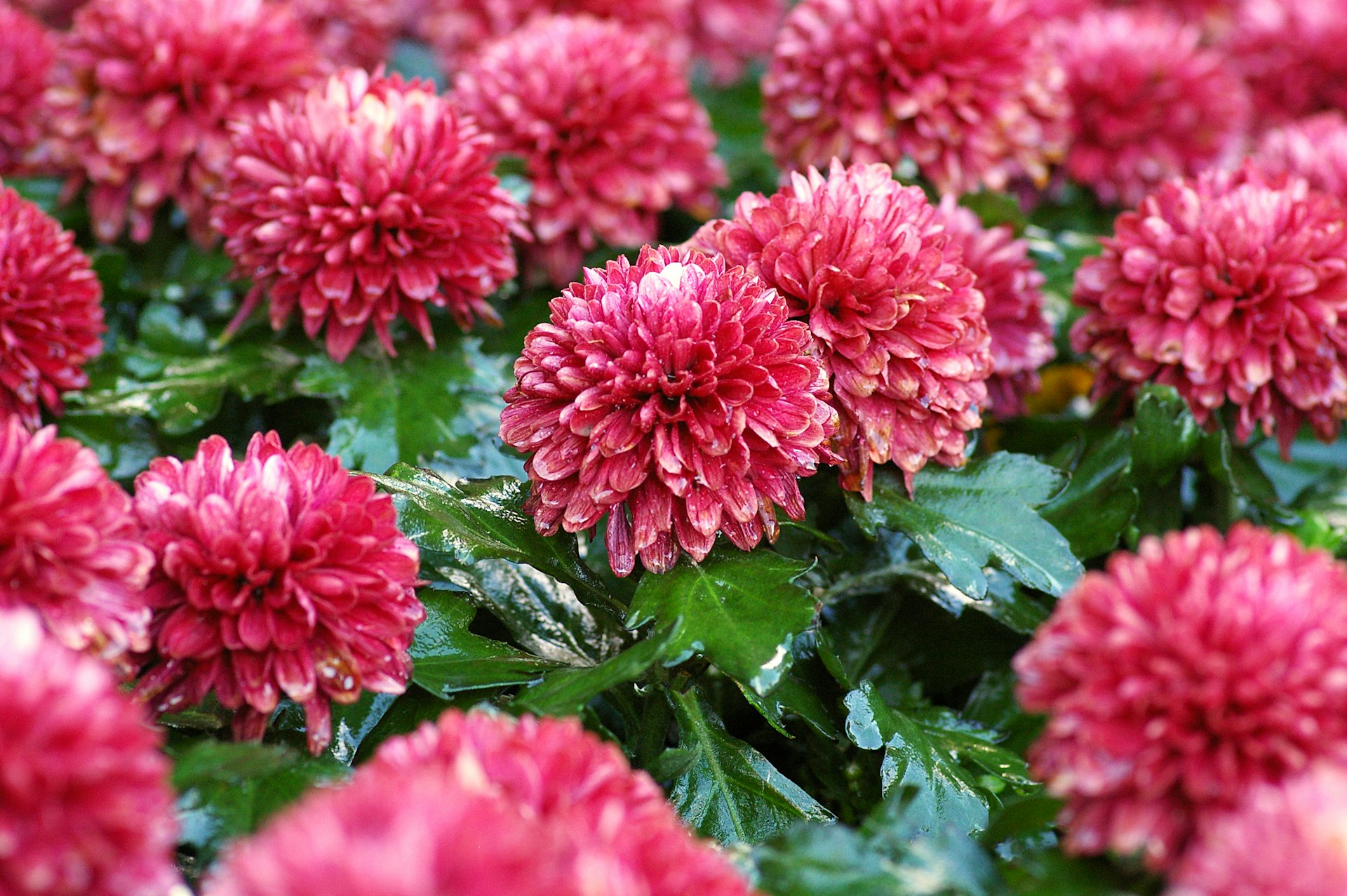
Certain chrysanthemum varieties are among the most powerful natural insecticides you can grow because they contain pyrethrum, a compound made up of six distinct pyrethrins that kill a wide range of insect pests on contact. Chrysanthemum coccineum (painted daisy) and C. cinerariaefolium both contain high concentrations and repel root nematodes as well as a broad spectrum of insects including Japanese beetles, silverfish, ticks, lice, and roaches.
You can make your own organic pesticide by drying the flowers and grinding them to a fine powder with a mortar and pestle. Sprinkle the powder directly on infested plants or steep it in hot water to make a spray. It kills by contact and ingestion, is particularly effective against soft-bodied pests like aphids, leaves no residue, and is non-toxic to humans and pets. That’s a powerful, on-demand pesticide you can produce entirely from your own garden.
The one limitation is that pyrethrum doesn’t discriminate: it will affect beneficial insects including bees. Grow chrysanthemums where their repellent effect is most needed rather than immediately adjacent to plants that depend on heavy pollinator activity.
What Should Not Be Planted With Chrysanthemums?
Chrysanthemums are broadly beneficial to vegetable crops. Their main requirement is moist, free-draining soil and at least 6 hours of full sun daily. Site them with that in mind and they’ll work well alongside almost anything.
14. Companion Planting Dahlias to Repel Soil Nematodes
Timo C. Dinger via Unsplash
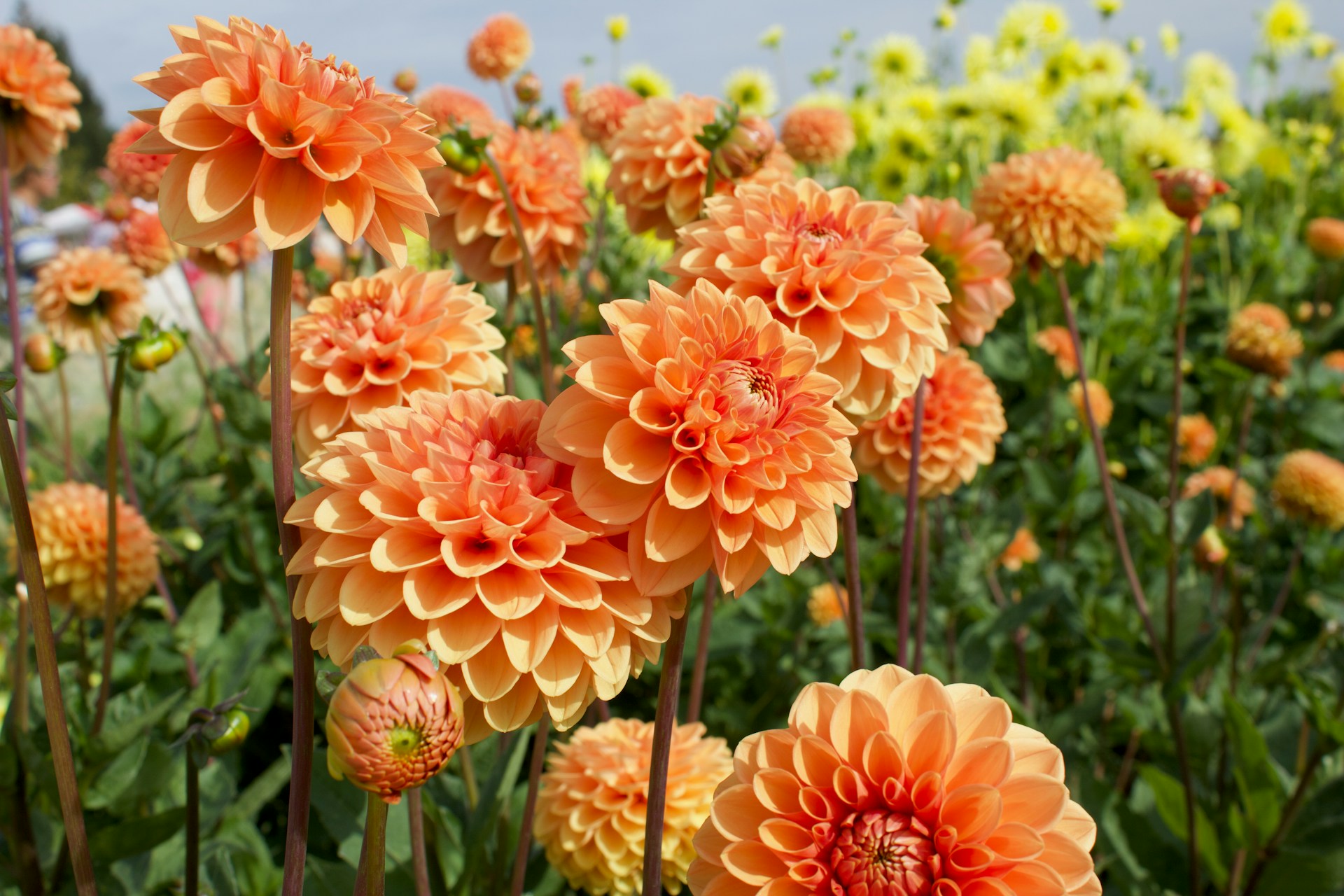
Dahlias repel root nematodes through a mechanism similar to Tagetes marigolds: their roots produce terthienyl compounds that are toxic to nematodes in the surrounding soil. Their large blooms are also excellent pollinator attractors, bringing in bumblebees and butterflies in particular, which benefits any crop needing strong pollination.
The earwig situation with dahlias is worth understanding properly. Earwigs are attracted to dahlia flowers, but most earwig species are actually beneficial because they eat aphids and other soft-bodied pests. They’re omnivorous though, and will eat certain vegetable crops given the opportunity. That makes dahlias a strategic placement decision rather than a plant-anywhere choice.
Stake tall dahlia varieties when they reach about 12 to 18 inches, before they get heavy with foliage and blooms. Deadhead regularly to extend flowering throughout the season and keep them producing.
What Vegetables Should Never Be Planted Near Dahlias?
Keep dahlias away from corn, potatoes, sweet potatoes, leafy greens, and peanuts. All of these are favored by earwigs, and dahlias will draw earwigs toward them. If you grow any of these crops, plant dahlias in a separate area of the garden to function as a trap, pulling earwig activity away from your edibles.
15. Companion Planting Geraniums for General Pest Control
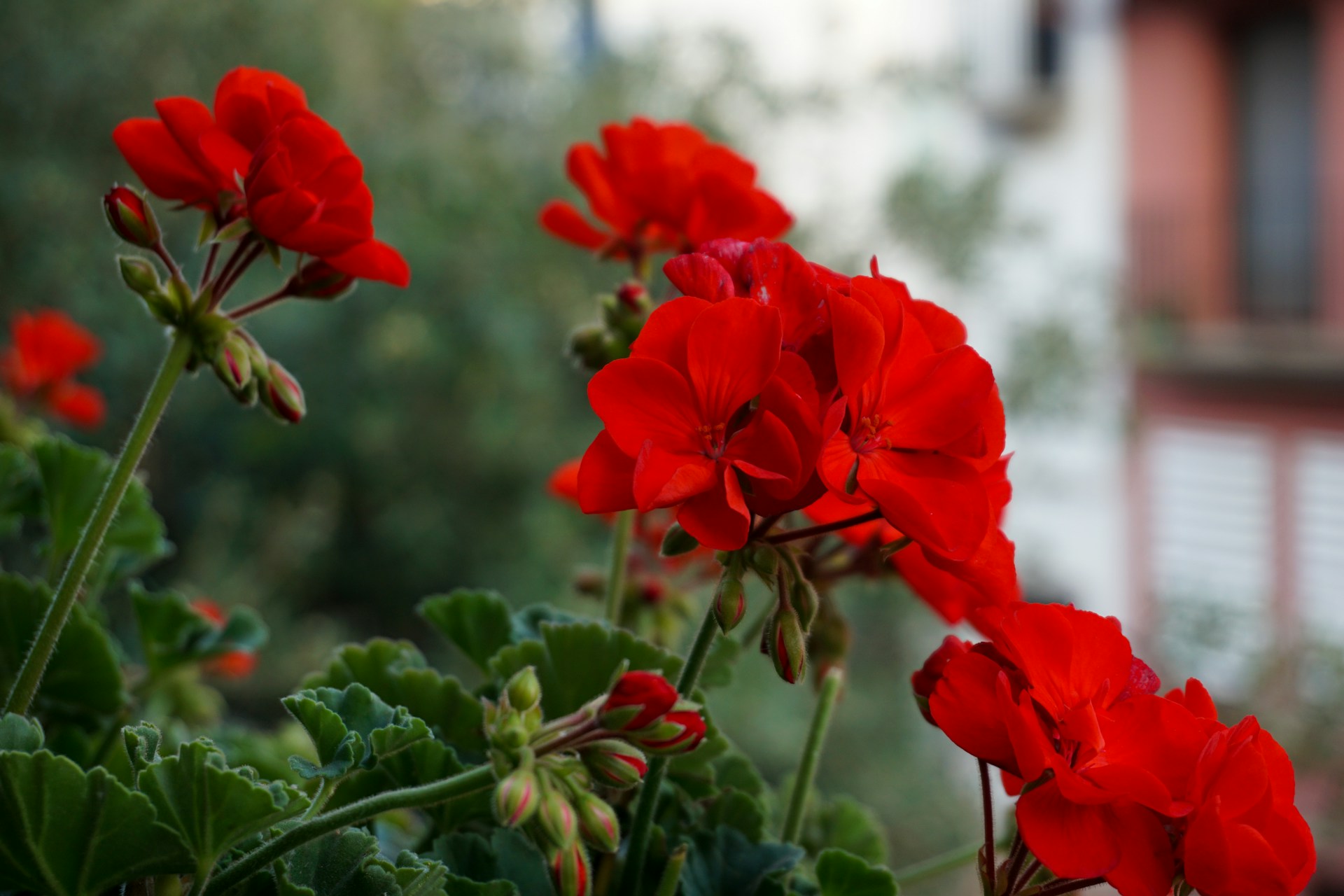
Geraniums are effective, versatile pest deterrents and among the most attractive additions to a vegetable garden. Companion planting geraniums with cabbage repels cabbage worms, while white geraniums specifically deter Japanese beetles, earworms, and beet leafhoppers, making them a strong match for corn, asparagus, beans, and okra.
Scented geraniums of the Pelargonium genus (not true geraniums, though commonly sold as such) repel spider mites and cotton aphids, which is particularly valuable if your area is prone to spider mite infestations during hot, dry summers. The two types do different jobs, so it’s worth knowing which you have before you plant them.
As a practical bonus, both types also repel mosquitoes. That’s not a vegetable garden benefit in the strict sense, but if you’re spending long evenings harvesting or weeding, you’ll appreciate it.
What Should You Never Plant With Geraniums?
Geraniums don’t negatively impact any vegetable plants and are about as close to universally compatible as companion plants get. Position them wherever you need their specific pest deterrence and they’ll fit in.
16. Companion Planting Basil for Healthy, Pest-Free Tomatoes and More
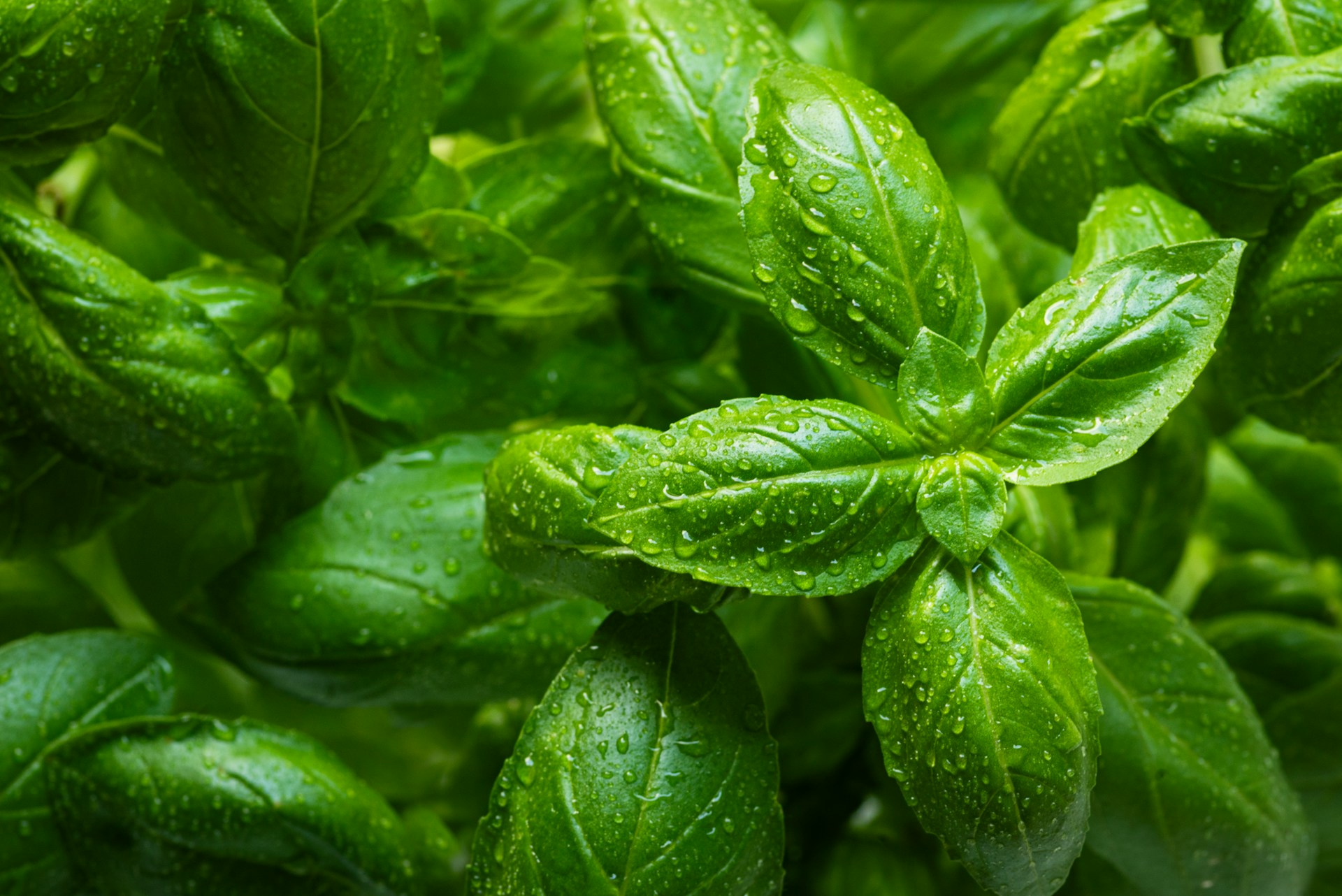
Basil is the most important companion plant for tomatoes, deterring tomato hornworm, whitefly, aphids, asparagus beetles, and mosquitoes while also being widely reported to improve tomato flavor and increase overall crop yield. Tomatoes and basil also share almost identical requirements for water, sun, and soil, which makes them natural garden partners as well as kitchen ones.
Plant robust, easy-to-grow basil seeds among your tomatoes, peppers, and asparagus for best results. Beets, potatoes, and pole and bush beans also benefit from nearby basil. Basil is particularly good for peppers because its dense leafy growth traps heat and moisture at ground level, which peppers genuinely appreciate.
To boost basil’s effectiveness as a pest deterrent, plant chives, chamomile, or oregano nearby. These herbs intensify basil’s aromatic compounds, making it a stronger pest barrier as well as a more flavorful kitchen crop.
What Should You Never Plant With Basil?
Keep basil away from cucumbers: it taints their flavor and inhibits their growth. Don’t plant it near brassicas either, because basil attracts butterflies whose caterpillars become cabbage worms. Aromatic herbs like rue and sage also inhibit basil’s growth through root compounds, so keep those separate. Within the herb bed, basil’s best companions are chives, chamomile, and oregano.
RELATED POST: Companion Planting Basil
Companion Planting at a Glance
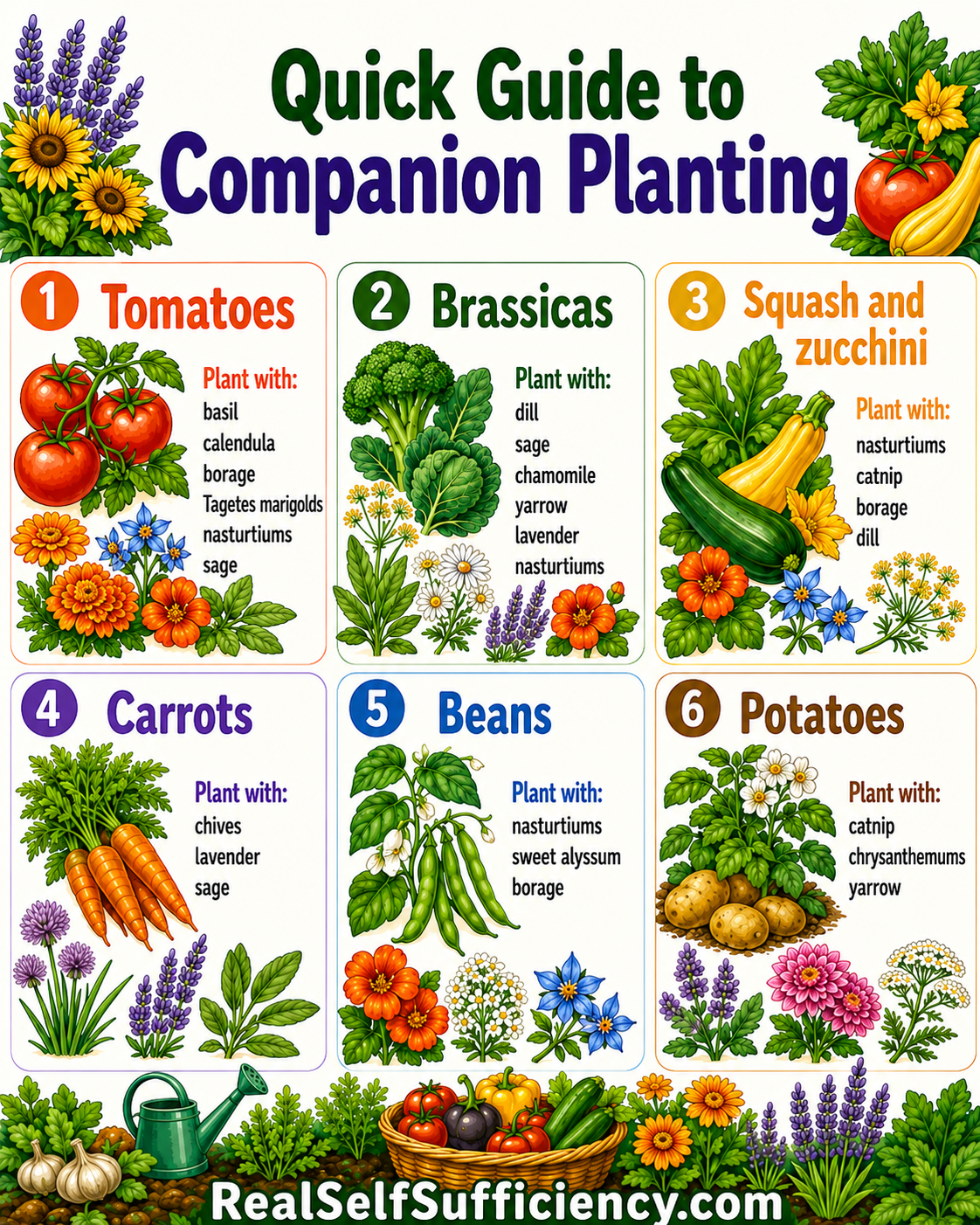
For tomatoes: basil, calendula, borage, Tagetes marigolds, nasturtiums, and sage give you overlapping pest deterrence covering hornworm, aphids, whitefly, and nematodes. Basil and borage do the most work, but all six together mean very little makes it through.
For brassicas (cabbage, broccoli, kale, Brussels sprouts): dill, sage, chamomile, yarrow, lavender, and nasturtiums cover cabbage moth, cabbage worm, whitefly, and aphids. Interplant throughout the bed rather than at borders only. The aromatic deterrence fades with distance.
For squash and zucchini: nasturtiums, catnip, borage, and dill address squash bugs, vine borers, and pollination simultaneously. Borage is particularly important here because squash needs strong bee activity for consistent fruit set.
For carrots: chives and lavender are the primary choices, both targeting carrot fly. Sage adds whitefly protection if you have space for all three.
For beans: nasturtiums as an aphid trap crop, sweet alyssum for hoverfly attraction, and borage for pollinator support.
For potatoes: catnip for Colorado potato beetle, chrysanthemums for nematodes and general insect deterrence, yarrow for predatory insect attraction.
FAQs
What is the most effective companion plant for tomatoes?
Basil is the most effective single companion plant for tomatoes, deterring hornworm, whitefly, and aphids while improving flavor and increasing yield. For the strongest protection, combine basil with calendula as an aphid trap crop, borage for hornworm deterrence and pollinator support, and Tagetes marigolds at the bed edge for nematode suppression. Those four together cover most of the major threats to the tomato crop.
Can companion planting actually improve vegetable flavor?
Yes, for certain combinations. The most consistently reported pairing is basil and tomatoes, with sage and tomatoes and basil and peppers also widely cited by growers. The hypothesis is that aromatic herbs alter the volatile compounds in neighboring plants. The scientific evidence is less robust than for pest deterrence, but it holds up consistently in practice and in my own garden, so I plant for flavor as well as pest control.
Which herbs should every organic vegetable garden include?
Basil, chives, dill, and sage give you the strongest pest deterrence coverage across the widest range of vegetable crops. If you can only start with four herbs, those are the ones. Add chamomile and lavender as your next choices for beneficial insect attraction and broader deterrence, and you’ll have covered most situations.
Do companion plants work in raised beds?
Yes, and they often work particularly well in raised beds because the close planting typical of raised bed growing means companion plants are always within effective range of the crops they’re protecting. Use the same combinations as in-ground planting. Sweet alyssum is especially useful in raised beds as a low-growing edge plant that suppresses weeds between main crop plants.
Can I plant zinnias in my vegetable garden?
Yes. Zinnias attract pollinators, particularly bees, and add excellent color to the vegetable garden through the season. The one caution: they also attract butterflies, which lay eggs that become caterpillars, so keep them away from cabbages and other brassicas.
Can I plant sunflowers in my vegetable garden?
Yes. Sunflowers are genuinely useful companions: they provide support for climbing beans, attract pollinators, and cast light shade for crops that struggle in full afternoon sun. The birds that come to eat the seeds will also eat many of the insect pests that attack your vegetables.
What flowers can I plant with rosemary?
Rosemary grows well with sweet alyssum, Tagetes marigolds, and nasturtiums, all of which complement its pest deterrence while sharing compatible growing requirements. Lavender is also an excellent companion, with similar sun and drainage needs and complementary aromatic pest deterrence.
You might also like…
Companion Planting Strawberry Plants


Companion planting has been my go-to in the garden for 15 years now. Every year I learn something new! While I knew that certain plants were sensitive to sunflowers–most dislike them, but oddly bush beans do not object, while pole & lima beans do–this year I want to find out more about flowers. I have a section in the middle of the garden devoted to pollinators, so any flowers not mentioned here as specifically beneficial will either go there or in another bare spot.
Borage is a nice flower that draws pollinators to plants that need it. These days, squashes of all kinds seem to need a little boost with pollination, so I’ll be transplanting several of my little seedling borages here & there–and to the cucumbers, the watermelon, & the cabbage beds. I’ll probably have plenty left for anyone else who needs a friend!
I’ve heard that the orange French marigolds are the most potent at repelling, entrapping, and killing nematodes.
Catnip repels mice; so do all of the mints. These and almost all culinary herbs except fennel, parsley, anise, dill (none of which should be planted together), and tarragon all belong to the mint family botanically. You can tell by their square stems and alternating pairs of opposite leaves. Once you take a look it’s easy to see the “family face”…kind of like roses, apples, and all the stone fruits.
–Catnip and catmint are great to plant around roses, by the way. They repel Japanese beetles and the clouds of lavender-blue flowers over gray-green foliage are lovely with any color rose.
These are great extra tips for companion planting, thank you so much! My readers will definitely benefit from these 🙂
Yes, I agree that the whole squash family needs help with pollination nowadays – that’s what comes of awful pesticides killing off all the pollinators. When necessary, I go and pollinate by hand with a soft paintbrush.
I love reading about companion planting. I finally tried it last year and was impressed. The tomatoes planted in a raised bed with basil did not get worms, the ones planted by themselves did. I enjoyed the experiment!
That’s great! I always think it’s quite amazing how simply considering what you plant together can have such an impact on pests, diseases, and crop yield. And just like you, I love experimenting with new companions! Good luck with your tomatoes this year. 🙂