Affiliate disclosure: This post may contain affiliate links. Please see full disclosure.
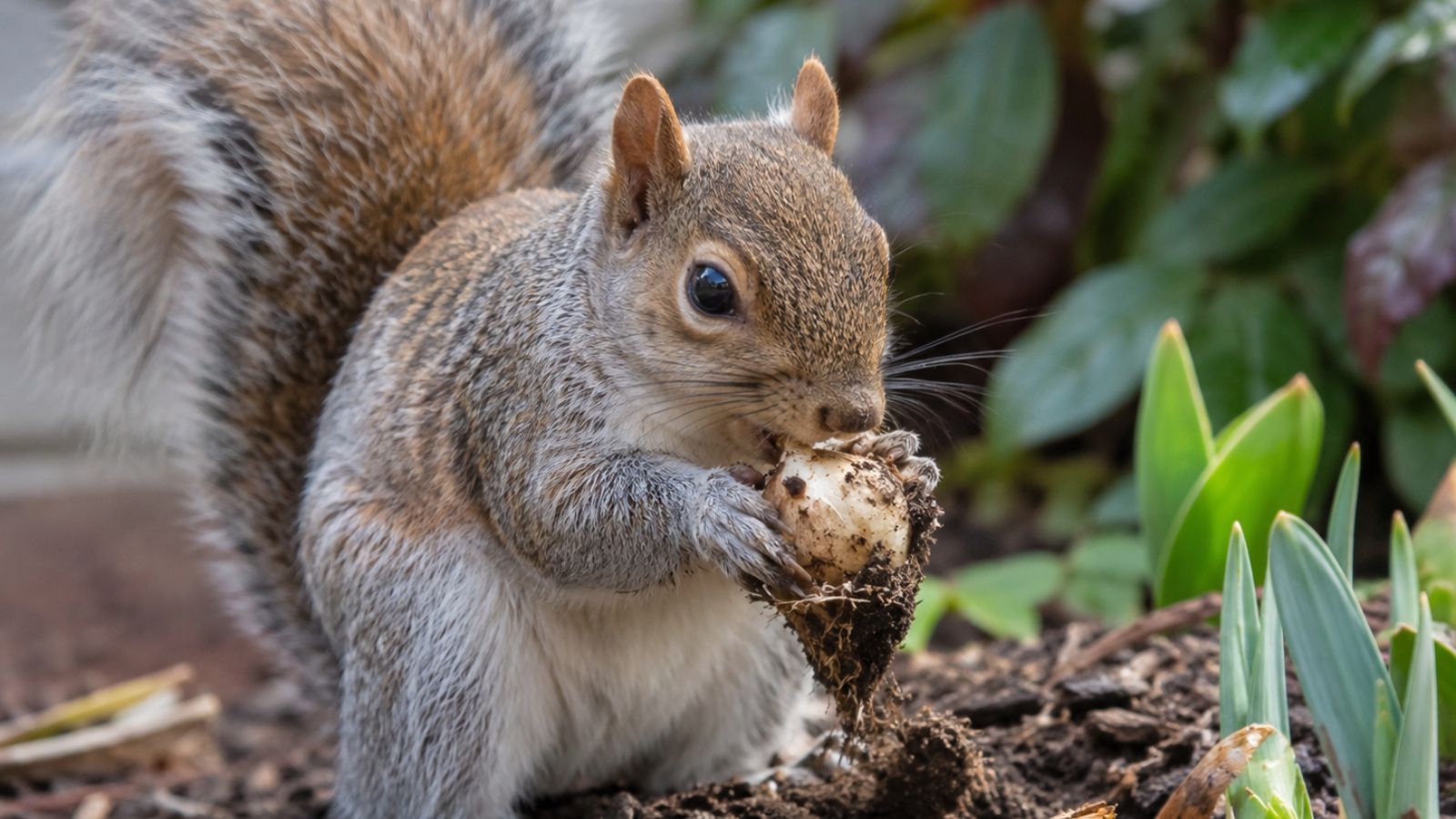
You spend an afternoon planting tulips and crocuses, tidy everything up, and go inside feeling wonderfully organized. The next morning, the bed looks like somebody attacked it with a teaspoon. There are little holes everywhere, soil scattered across the path, and at least one expensive tulip bulb sitting on the surface looking betrayed.
Squirrels are extremely good at finding newly planted bulbs, and unfortunately, some spring bulbs are particularly tempting. Tulips and crocuses are among the bulbs most commonly dug up by squirrels and other rodents, so a freshly planted bed can turn into an all-you-can-eat buffet remarkably quickly.
The good news is that you don’t need to wage war on every squirrel in the neighborhood. A physical barrier, correct planting depth, a little cleanup, and some smarter bulb choices will prevent most of the damage without hurting the squirrels or turning your flower beds into Fort Knox.
Cover newly planted bulbs with wire mesh
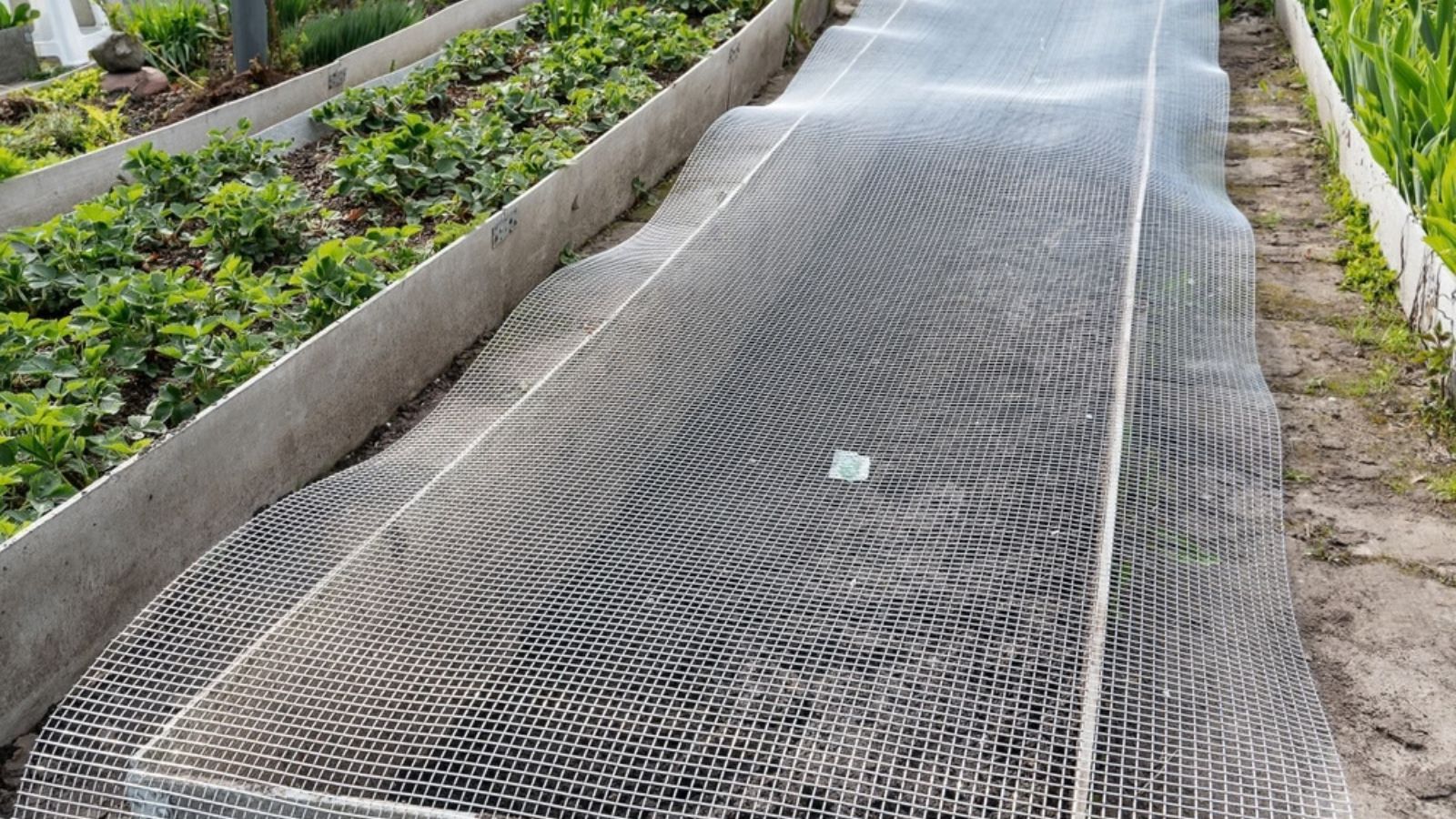
If squirrels are already digging in your beds, this is the method I’d use first because it physically stops them reaching the bulbs.
After planting, lay chicken wire or hardware cloth flat over the soil and pin it down securely around the edges. Wire mesh laid over a newly planted bulb bed makes it difficult for squirrels and chipmunks to dig while still allowing the shoots to grow through the openings. You can then put your usual mulch over the top so you’re not staring at wire all winter.
Don’t just drop a loose piece of mesh over the bed and hope for the best. A determined squirrel can get underneath an unsecured edge surprisingly easily, so I use landscape staples, tent-style pegs, or bent lengths of sturdy wire to hold it firmly against the ground.
If you’re using hardware cloth, 1/2-inch mesh is a useful size. Half-inch hardware cloth can be buried over a bulb bed and still gives emerging leaves and flower stalks enough room to grow through it. That’s particularly handy if you’ve had serious problems in previous years and want something sturdier than ordinary chicken wire.
You can protect a whole group of bulbs underground
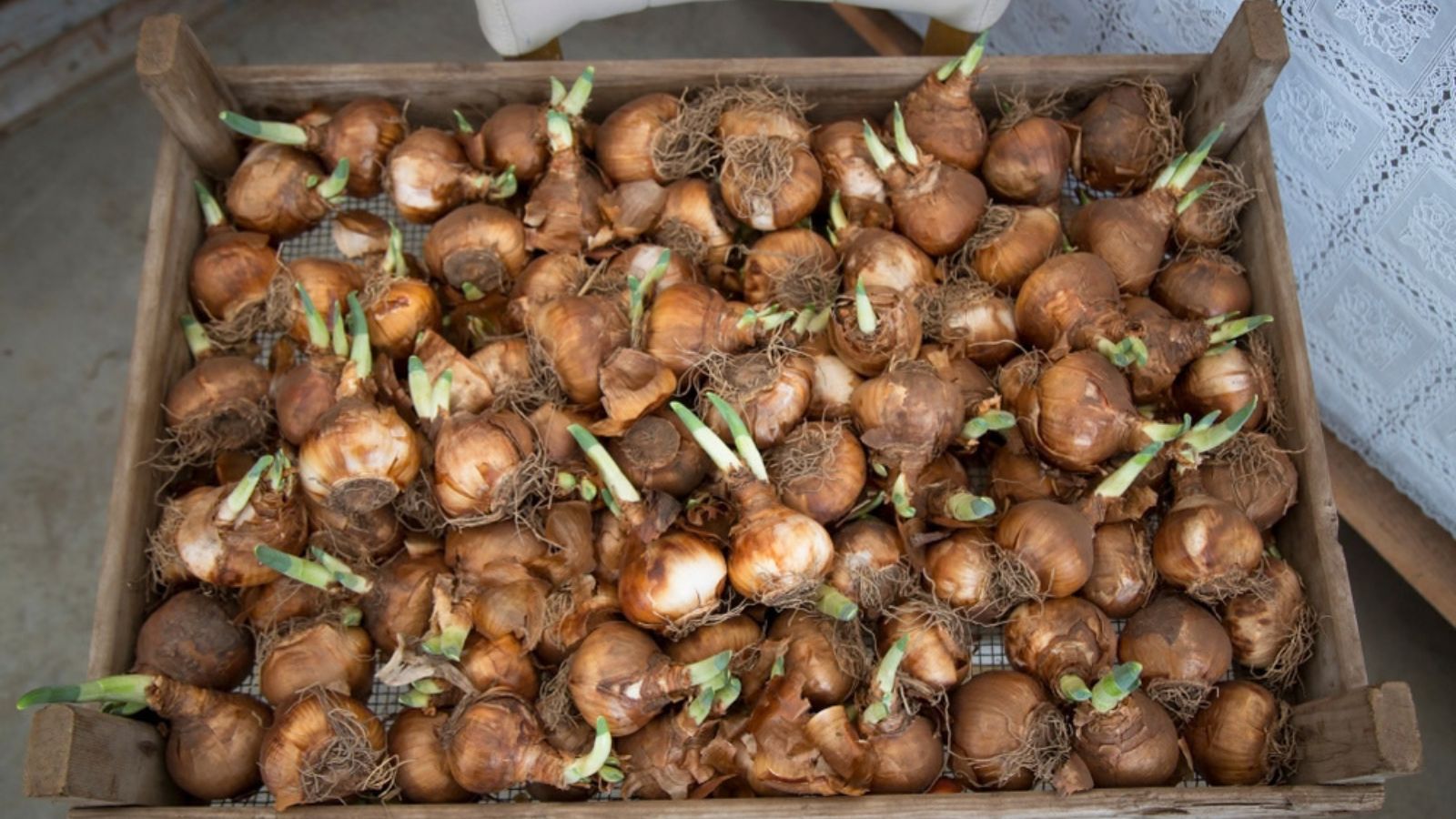
For a small patch of particularly valuable tulips, you can take the wire idea a step further and make a simple cage.
Dig out the entire planting area, set the bulbs at their proper depth, and surround them with hardware cloth rather than protecting only the surface. Bulbs can be planted inside wire cages or baskets so rodents can’t reach them while the roots and shoots continue growing through the mesh.
I wouldn’t bother doing this for hundreds of inexpensive daffodils because life is too short, but it can make sense for special tulips or bulbs you’ve paid a small fortune for. You can also buy ready-made bulb baskets, although making a simple cage from leftover hardware cloth is considerably cheaper if you already have some in the shed.
Just remember that squirrels aren’t the only animals that eat bulbs. If your problem is something tunneling underground rather than digging down from the surface, protecting only the top of the bed won’t solve it, whereas a full cage gives you protection from the sides and underneath as well.
Plant your bulbs at the proper depth
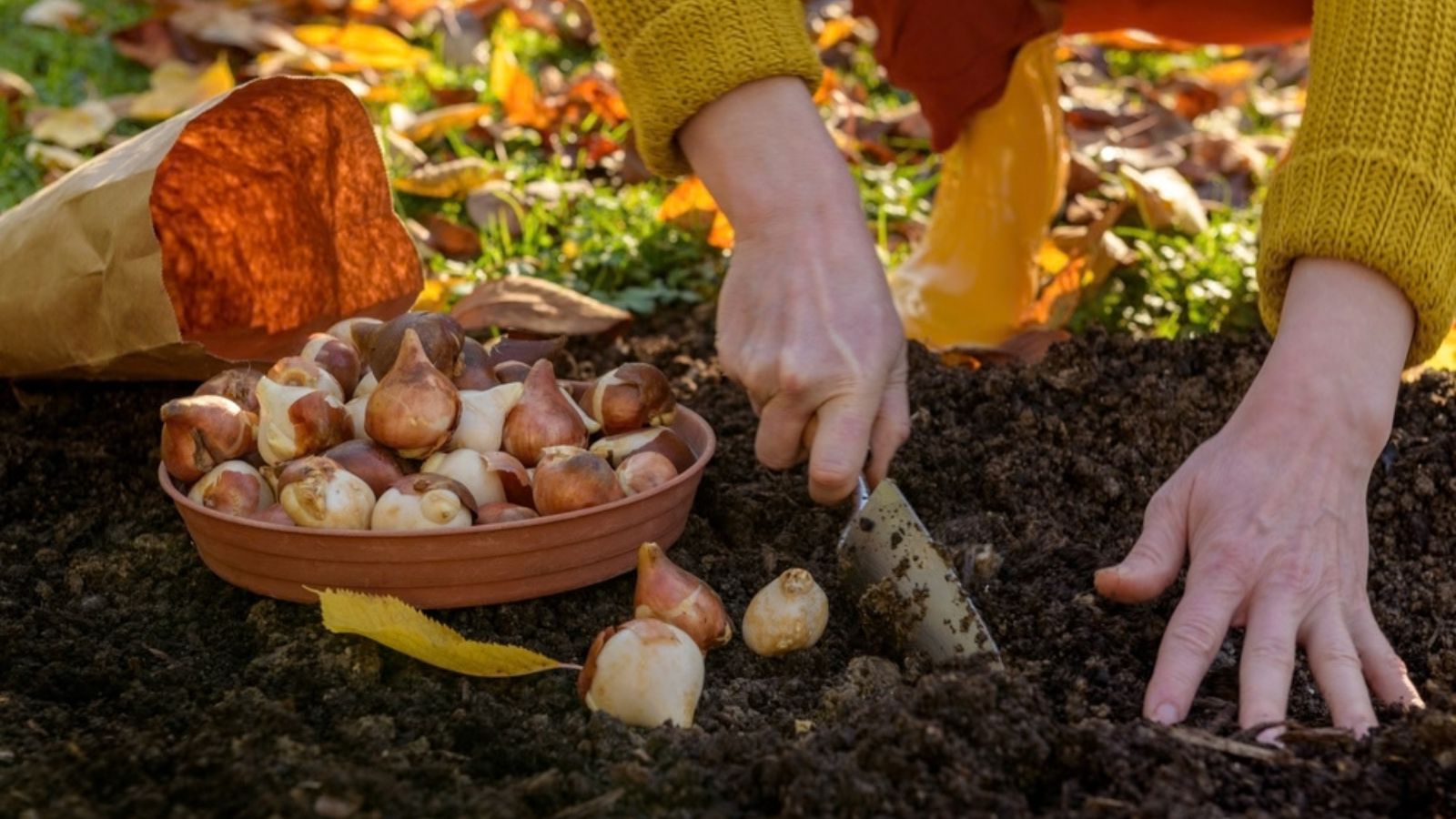
Planting too shallowly makes bulbs much easier to uncover. It can also cause flowering problems later, so this isn’t one of those cases where “close enough” is necessarily good enough.
As a general rule, most spring-flowering bulbs should be planted around two to three times as deep as the bulb is tall. That means a large bulb such as a tulip or daffodil usually goes considerably deeper than a tiny crocus.
You should still check the instructions for the particular bulb you’re planting because species and soil conditions make a difference. Sandy soil generally allows slightly deeper planting, while very heavy clay may call for slightly shallower planting because drainage becomes more important.
Don’t take the squirrel problem as an excuse to bury everything 12 inches underground, either. Going dramatically deeper than the bulb needs isn’t clever pest control; it’s just another way to give the plant a difficult start. Correct depth makes the bulb less easy to uncover, while the mesh provides the actual protection.
Firm the soil and hide the evidence
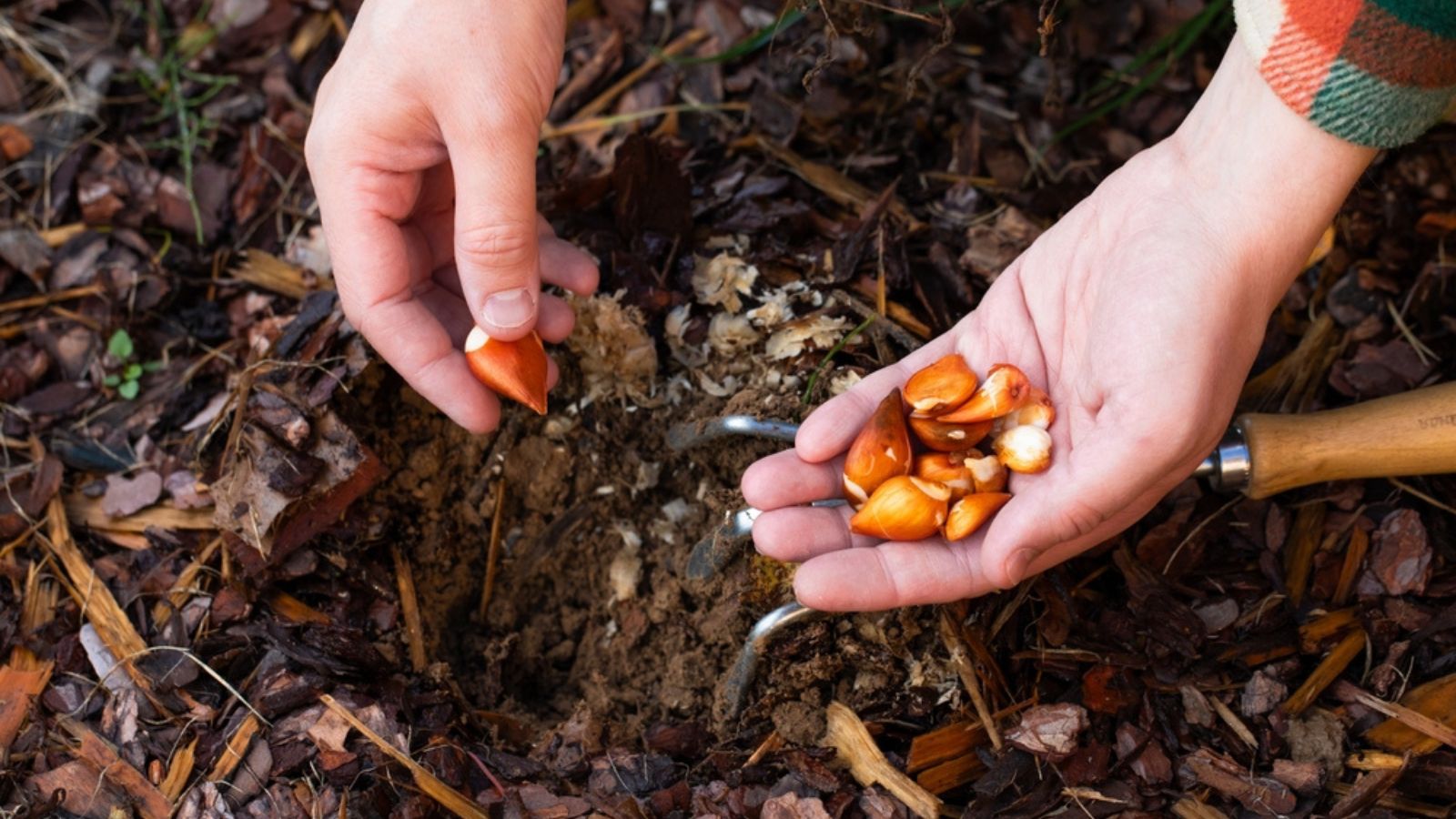
Freshly dug soil is basically a sign saying, “Something interesting happened here.”
Newly disturbed soil can encourage squirrels and chipmunks to investigate, so firming the soil, watering it to settle the surface, and disguising the disturbed area with mulch can reduce scavenging. I do this anyway because settling the soil removes large air pockets around the bulbs and leaves the bed looking properly finished rather than freshly excavated.
Rake the soil level after planting, water it in, then add your usual layer of mulch. You’re not trying to compact the bed into concrete, but you also don’t want a loose mound of freshly turned earth that a squirrel can dismantle with two swipes of its front feet.
Then come back and look at the bed from squirrel height. If it still looks as though somebody has very obviously buried something there, smooth it out a little more.
Clean up the bulb skins and other scraps
This takes about two minutes and costs nothing, so there’s really no reason not to do it.
When you’re separating and planting bulbs, it’s easy to leave papery skins, broken pieces, roots, labels, and bits from the bulb bag lying around the bed. Papery bulb tunics and other bulb debris can help draw squirrels to a freshly planted area, so clearing up after planting removes another obvious clue.
I keep a bucket or garden trug beside me while I plant and throw the rubbish straight into that. It also stops me doing my usual trick of leaving plastic plant labels and empty mesh bulb bags blowing around the garden until I have to chase them across the lawn.
And if you find a damaged or rotten bulb while you’re planting, don’t leave that sitting beside the bed either. Dispose of it and carry on with the healthy ones.
Be careful what you add to the planting hole
You don’t need to turn every bulb planting session into a feeding frenzy.
In particular, I’d avoid dumping strong-smelling animal-based fertilizers into a bed you’re already trying to hide from digging animals. Bone meal and fish-based fertilizers can attract squirrels and chipmunks to newly planted bulb beds, which is the exact opposite of what you want.
If your soil genuinely needs improving, do that because the soil needs it rather than because you’ve heard every bulb requires a handful of something sprinkled underneath it. Good soil, correct drainage, and proper planting depth matter much more than adding a smelly dinner invitation for the local wildlife.
This is another reason I like building decent soil over time with compost and organic matter. You don’t have to micromanage every individual planting hole when the whole bed is already in good condition.
Choose bulbs squirrels aren’t so interested in
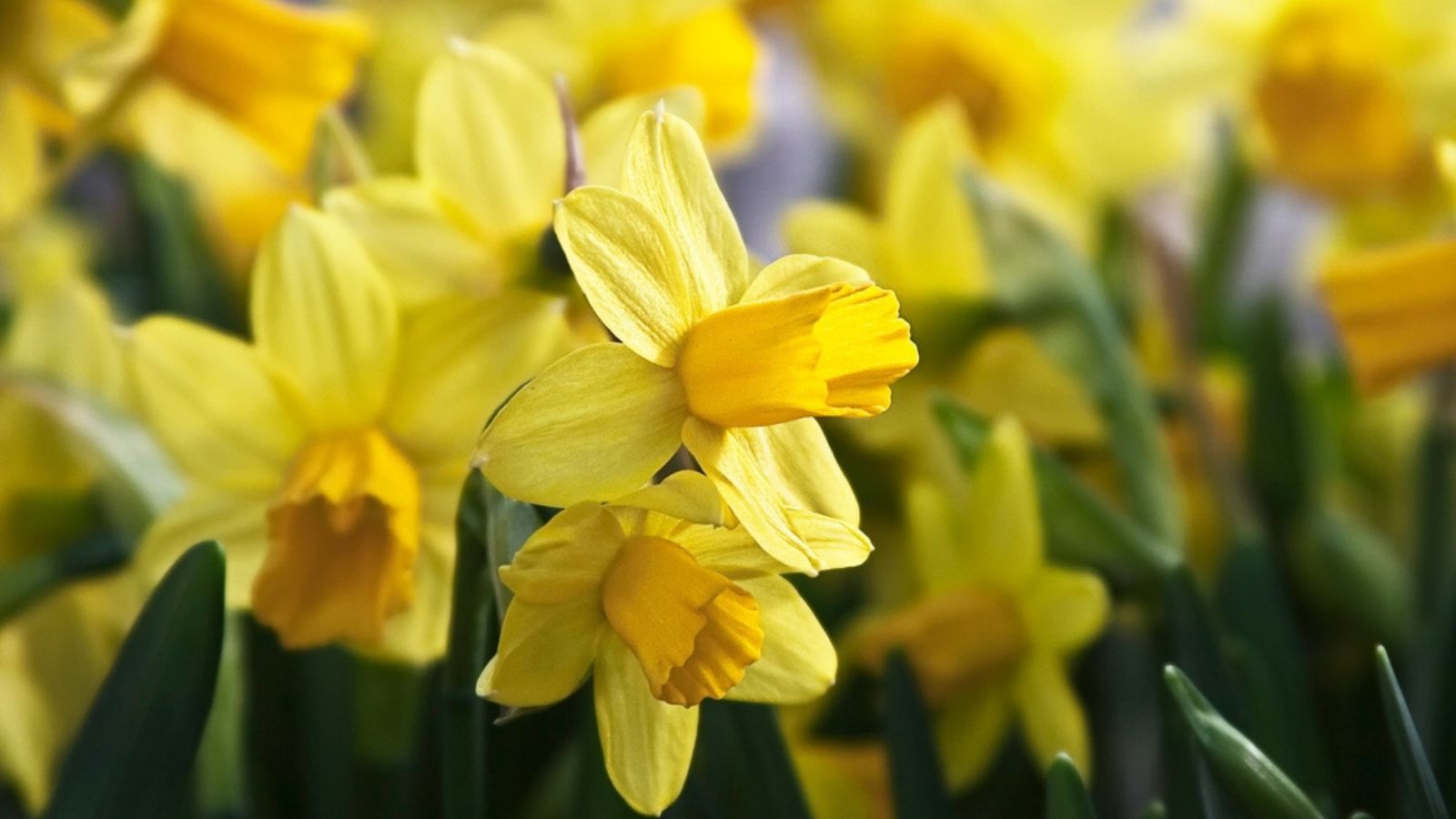
If squirrels are a constant problem in your garden, you can save yourself a lot of aggravation simply by planting fewer of their favorites.
Tulips and crocuses are lovely, but they’re also frequent targets. Daffodils, alliums, scilla, and hyacinths tend to be left alone much more often than tulips and crocuses, so they’re useful choices for gardens where squirrel damage is particularly bad.
I wouldn’t interpret “squirrel resistant” as “physically impossible for a squirrel to touch,” because wildlife does not read gardening books and hungry animals can always surprise you. But planting less appealing bulbs definitely shifts the odds in your favor.
Daffodils are particularly useful because there are so many shapes, colors, heights, and flowering times available that you’re hardly settling for a boring garden. Alliums are another favorite of mine because the flowers are fabulous for pollinators later in spring and early summer, so they earn their space twice.
Mix resistant bulbs around the ones squirrels love
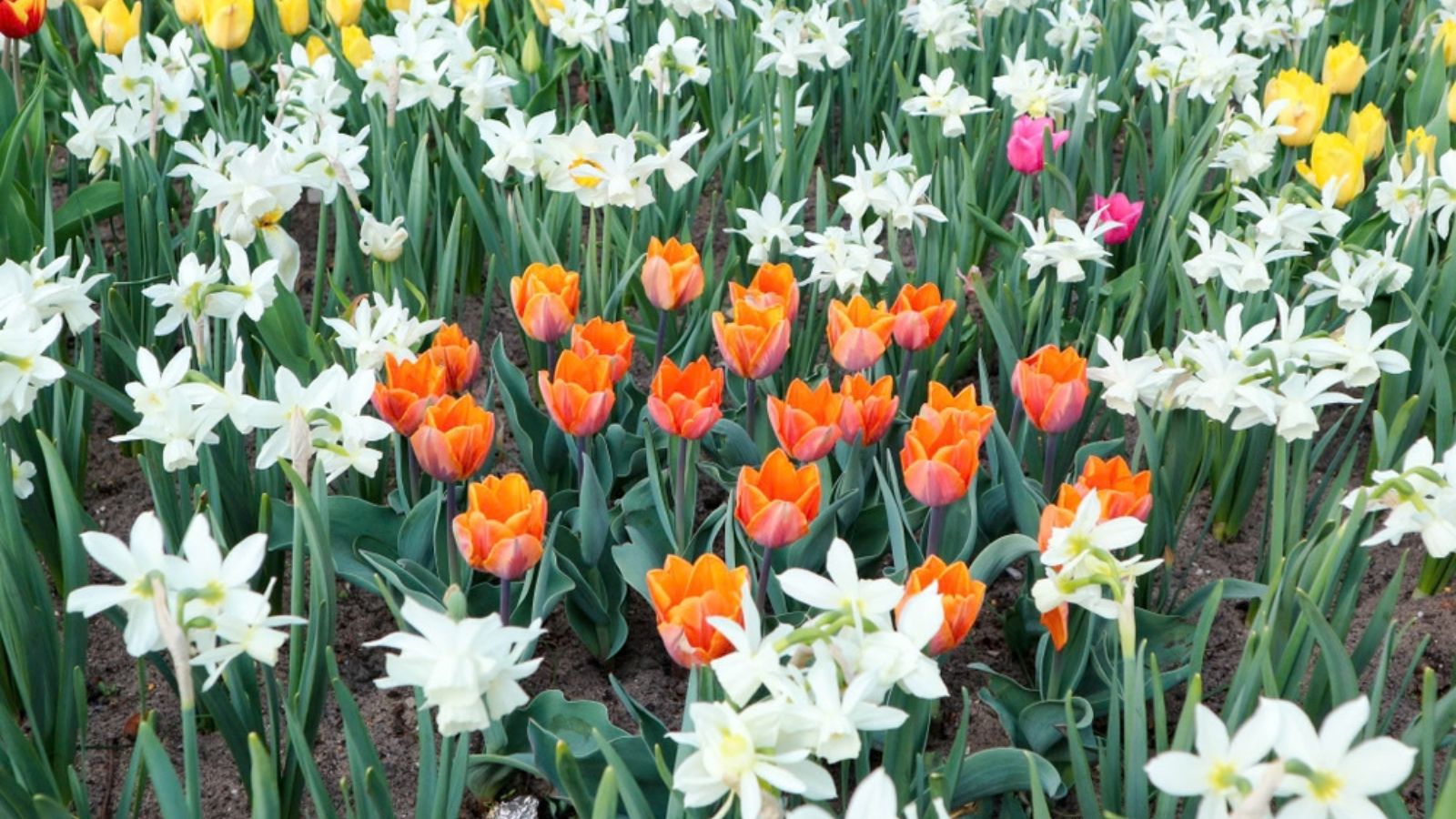
You don’t necessarily need to give up tulips completely.
If I wanted a big tulip display in a garden where squirrels were a nuisance, I’d still use wire over the newly planted bed, but I’d also mix in less attractive bulbs around them. Interplanting tulips with daffodils can help reduce squirrel losses because squirrels generally avoid the daffodil bulbs.
You could do the same sort of thing with alliums or hyacinths, depending on the flowering effect you want. It won’t create some magical invisible squirrel force field around the tulips, but it gives you a more resilient planting and means the entire display isn’t made up of the bulbs most likely to disappear.
Mixed planting also looks much more natural than one enormous block of a single bulb. I like having early, midseason, and later flowers overlapping anyway because it gives you weeks of color instead of one glorious fortnight followed by a bed full of leaves.
Protect containers too
Pots aren’t automatically safe just because they’re sitting beside the house.
A container full of freshly disturbed compost is ridiculously easy for a squirrel to dig through, and a pot planted with twenty tulips represents a lot of bulbs packed into one convenient little location. A chicken-wire cover secured over a newly planted bulb container will stop squirrels digging into the compost and can be removed once the shoots begin emerging.
Cut the wire slightly wider than the pot, bend the edges so it sits securely, and make sure there aren’t sharp bits sticking out where you’ll catch your hands every time you walk past. You can disguise it with a light layer of mulch if you don’t like looking at the mesh.
Once the bulbs have rooted properly and growth is appearing, digging tends to become less of an issue. At that point I remove any temporary covers that might interfere with the developing foliage.
Don’t put too much faith in squirrel repellents
There are plenty of squirrel deterrents for sale, along with an almost endless supply of homemade remedies involving hot pepper, strange smells, shiny objects, and things dangling from sticks.
Some may work briefly. I just wouldn’t trust next spring’s tulip display to them.
Scent repellents and frightening devices generally provide only short-term protection from squirrels, whereas a properly secured piece of wire is still there doing its job after rain, frost, and a particularly determined squirrel have all taken their turn.
That’s why I start with physical exclusion. If I can prevent an animal reaching something rather than repeatedly trying to persuade it not to want the thing, I usually get much more reliable results.
Check the bed for the next few days
Don’t assume everything is sorted simply because the bulbs survived their first night.
Squirrels are persistent, and if they’ve already discovered a freshly planted area, they may come back for another investigation. Check the bed for several days after planting and replant any sound bulbs that have been pulled out before they dry out or get damaged.
This is also when you’ll discover whether you’ve pinned your wire down properly. If one corner has mysteriously folded back and there’s a squirrel-sized excavation directly underneath it, you’ve found the weak point.
Once the soil has settled, the bulbs are rooted, and the bed no longer looks freshly disturbed, the risk drops. Until then, a quick check while you’re outside takes seconds and can save a surprising number of bulbs.
You don’t need to get rid of the squirrels
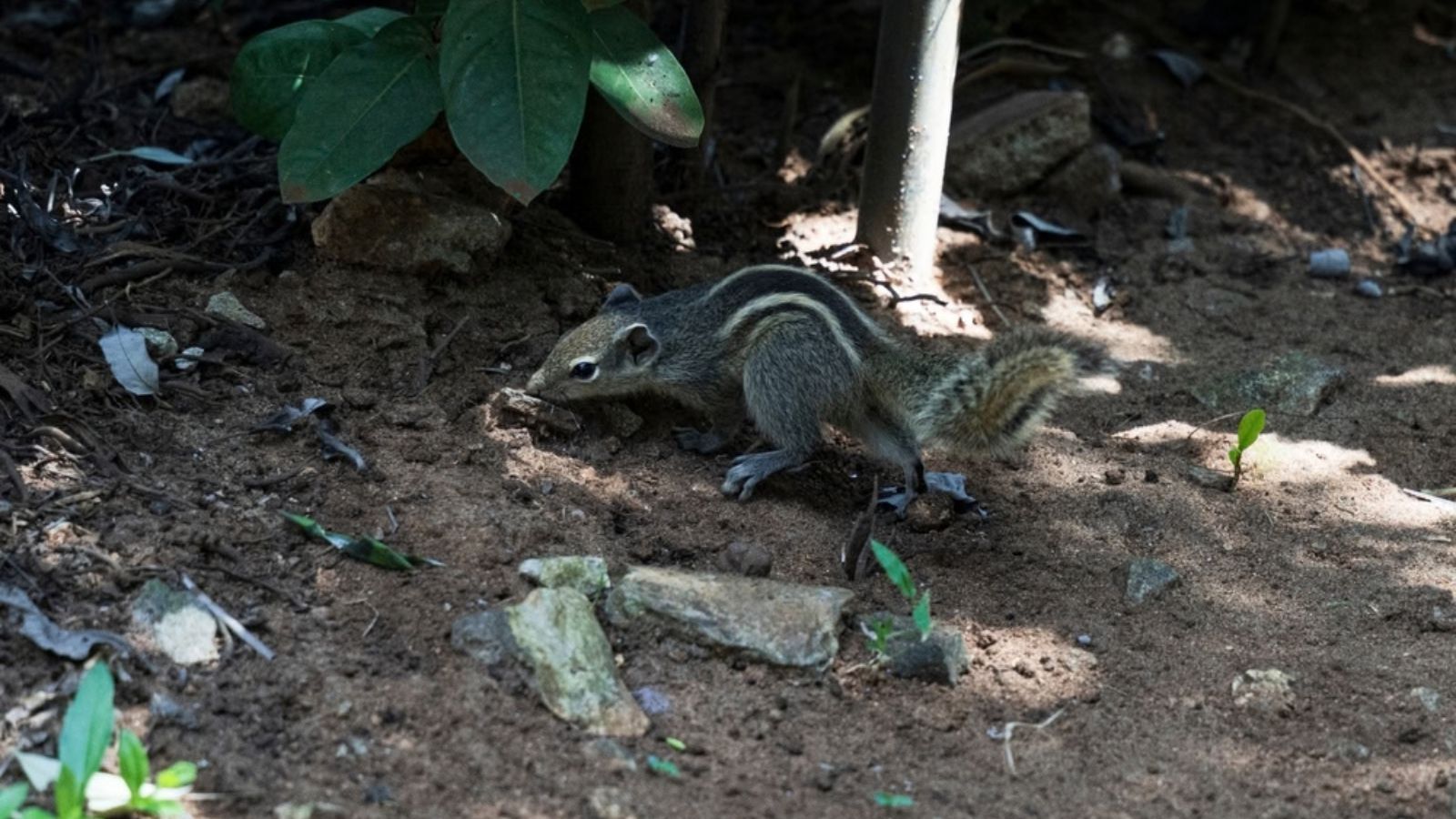
I actually like having wildlife in the garden, even when some of it drives me slightly nuts. A garden with birds, insects, frogs, squirrels, and everything else passing through is a much healthier and more interesting place than a sterile patch where nothing moves.
That doesn’t mean I’m donating all my bulbs to the cause.
If squirrels are digging up your bulbs, concentrate on making the bulbs difficult to reach rather than trying to eliminate the squirrels themselves. Plant at the proper depth, smooth and clean up the bed, pin wire mesh over vulnerable plantings, and use more daffodils, alliums, scilla, and other less appealing bulbs where the problem is severe.
It’s simple, cheap, and doesn’t require chemicals. More importantly, when spring finally arrives, your bulbs should still be where you put them rather than buried three yards away under a squirrel’s favorite tree.
You might also like…
How To Stop Squirrels Raiding Your Bird Feeder (It’s Not A Baffle)