

Affiliate disclosure: This post may contain affiliate links. Please see full disclosure.
Blue Cornflower is the pattern most CorningWare collectors are hoping to spot on a thrift store shelf, and the twist is that it’s also the easiest one to find. Corning made it from 1958 until production wound down in 1988, in numbers big enough that it still turns up in donation bins more than almost any other kitchenware pattern in America. Huge supply and steady demand at the same time is a strange combination, and it’s exactly what keeps this pattern at the top of every collector’s list.
Blue Cornflower Is The Pattern Every Collector Watches For
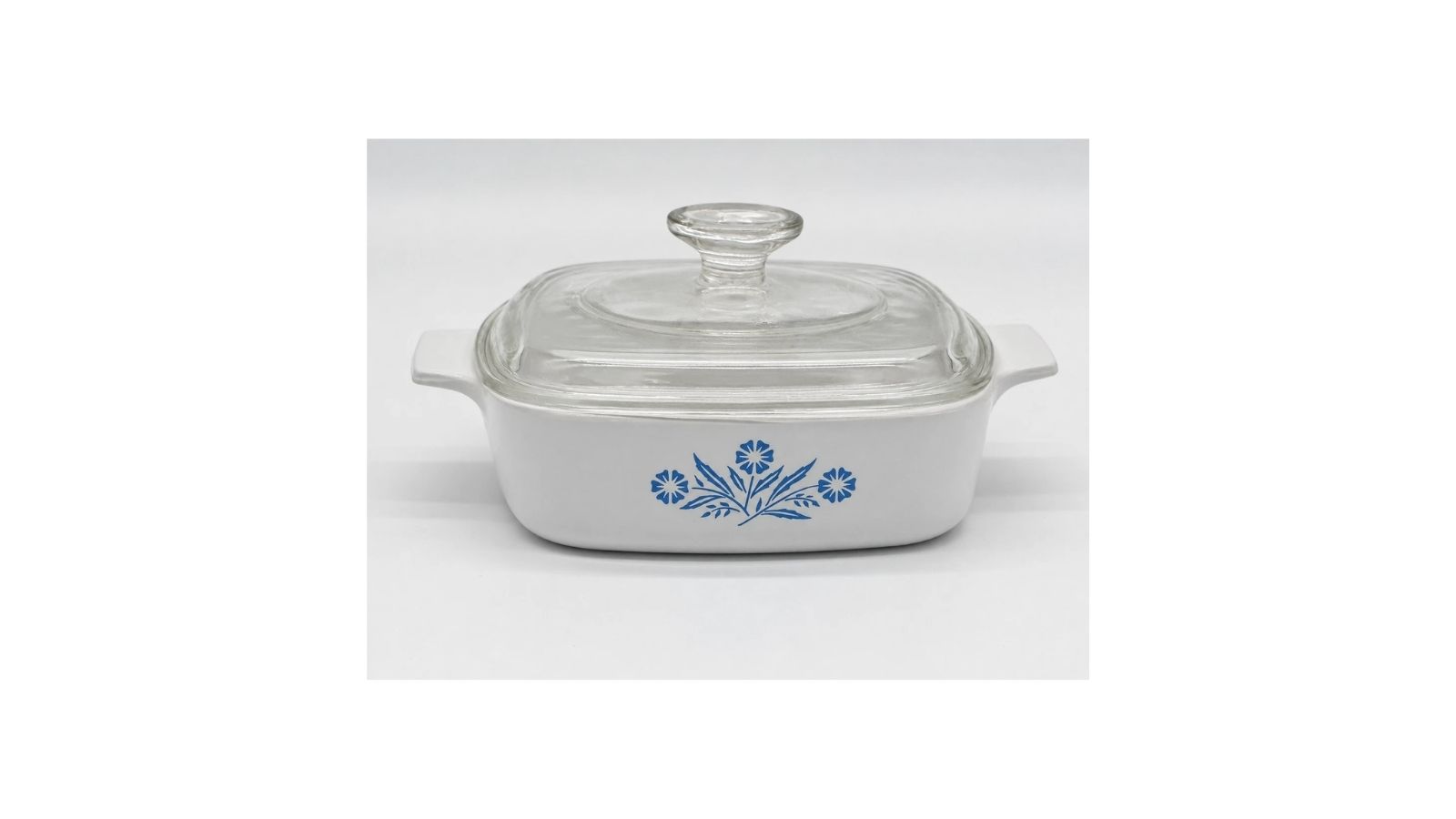
Blue Cornflower is CorningWare’s original design, a print of three blue flower blossoms on white Pyroceram, released the same year the whole product line launched. Pyroceram is the glass ceramic material Corning developed that can go from the freezer straight into a hot oven without cracking, and Blue Cornflower is the pattern that introduced it to American kitchens.
Corning commissioned artist Joseph Baum, working for the Charles Brunelle Advertising Agency in Hartford, to design the print, and it stayed on shelves for three decades, an unusually long run for any kitchenware pattern. I picked up my first piece for $4 at a thrift store, a small round casserole with the lid still intact, and it’s the dish I reach for more often than the stoneware I paid four times as much for.
The Earliest Pieces Have Small Handles And Sloped Sides
The oldest Blue Cornflower pieces, made roughly between 1958 and the early 1970s, have small tab handles and gently sloped sides, while pieces from the 1980s have larger, blockier handles and straighter walls. That handle shape is the fastest way to guess a piece’s age without flipping it over.
Once you do flip it over, check the backstamp for “CorningWare,” “Made in USA,” and a pattern name stamped into the base. Earlier lids tend to be clear glass rather than the frosted glass used later on, and that’s another quick tell. A small chip on the rim barely touches the price of an otherwise good piece, but a hairline crack in the Pyroceram body kills it, so run your thumb around the edges before you buy.
Most Pieces Sell For Pocket Change, But Not All
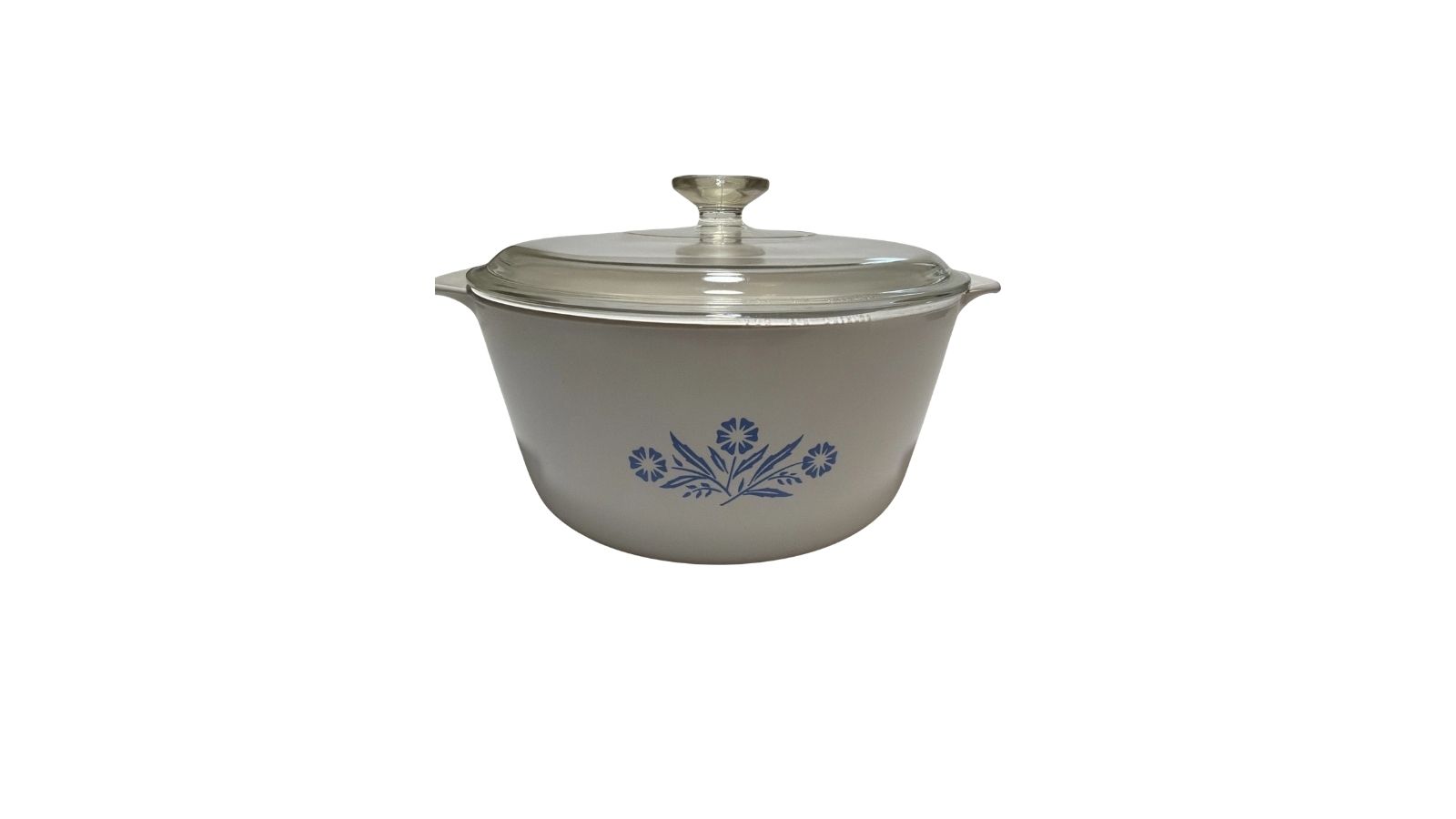
A single Blue Cornflower casserole in decent condition typically sells for $3 to $10 at a thrift store, and that’s true whether it dates from 1962 or 1982. The real money is in complete matching sets with their original lids, which can bring $30 to $100, along with the handful of shapes Corning made in smaller numbers. A range topper is a CorningWare shape built to sit directly on a stovetop burner rather than just in the oven, and it regularly sells for well over $100 when it turns up complete.
You’ll see screenshots online of single pieces listed for thousands of dollars. Almost all of those are asking prices from sellers hoping to get lucky, not confirmed sales, so don’t let a $2,000 eBay listing set your expectations for the $6 dish sitting on the shelf in front of you.
Check Thrift Shelves And Estate Sale Kitchen Tables First
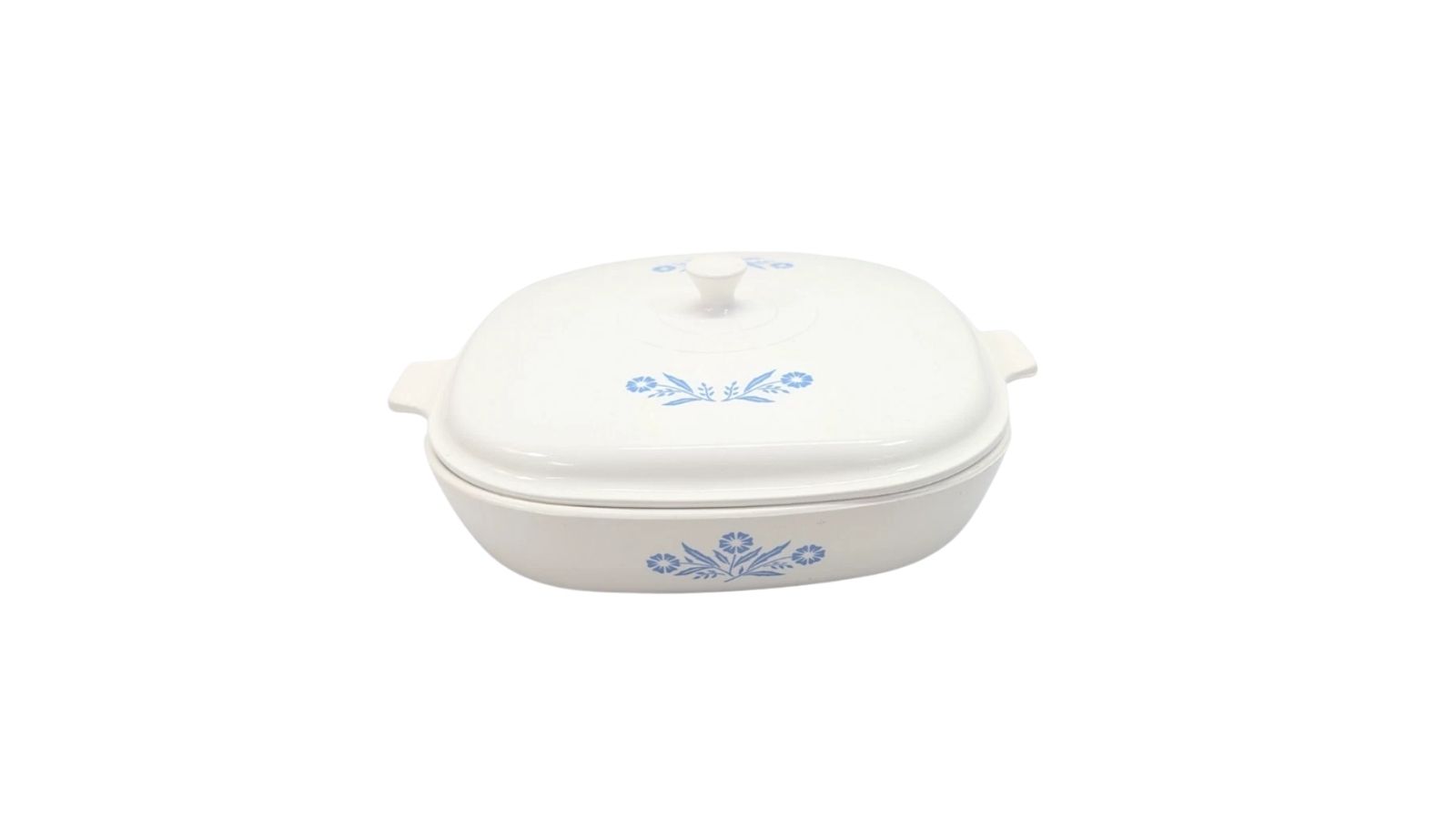
Thrift stores are still the cheapest and most reliable place to find Blue Cornflower, because it’s one of the most commonly donated pieces of kitchenware in the country. Estate sales are the better bet for complete sets and the older shapes, especially in the Midwest and Northeast, where CorningWare was a wedding registry staple for decades.
Go early on the first morning of an estate sale. The kitchen table clears out fast, and lids get separated from their bases more often than you’d think, so it’s worth checking every lid on the table against every base rather than assuming they’re already paired up.
Frequently Asked Questions About CorningWare Blue Cornflower
Is CorningWare Blue Cornflower actually worth anything?
Most individual pieces are worth $3 to $10, so it won’t fund your retirement, but complete sets, early small-handle pieces, and rarer shapes like the range topper can be worth considerably more. Condition and completeness, meaning whether it still has its matching lid, matter more than age on its own.
How can I tell if my CorningWare is vintage?
Flip the piece over and check the handles and the backstamp. Small, narrow handles and sloped sides point to production before the early 1970s, while larger, blockier handles usually mean it’s from the late 1970s or 1980s, and the backstamp should read “CorningWare” with “Made in USA” and a pattern name.
Why do collectors want a pattern that’s this common?
Because supply doesn’t kill demand when a pattern carries real nostalgia and still earns its keep in a modern kitchen. Blue Cornflower sat in millions of American kitchens for three decades, it still performs in a hot oven today, and a lot of collectors are replacing a piece their mother or grandmother owned rather than starting a collection from nothing.
Is it safe to cook in vintage CorningWare?
Vintage Pyroceram pieces in good condition are generally fine for oven use, but skip the stovetop unless the piece is a range topper made for that purpose, and avoid extreme temperature swings like pulling a dish straight from the freezer into a very hot oven. Check any secondhand piece closely for hairline cracks before you cook with it, and if you’re ever unsure about a specific piece, a local appraiser or a CorningWare collector group online can help you confirm what you’ve got.
Final Thought
Next time you’re scanning a thrift store shelf and spot a chip-free Blue Cornflower casserole for a few dollars, grab it. Whether you use it for tonight’s dinner or start hunting for the small-handle pieces that add up to real value, you’re holding onto a piece of kitchen history that’s earned its spot for almost seventy years.
